Working with Human Service Organisations 2nd edition aims to equip potential and current workers within human service organisations with the range of tools they need to think critically and work effectively within their employing agency. It discusses how to be active and dynamic in organisational relationships, how to use critical and reflective thinking and how to be prepared when faced with tough situations in organisational life. It contains a lot of case studies and examples that raise issues about practice and promote critical reflection.
Journeying Home is intended for those interested in their own inner journey - especially for those who feel they have lost their way or who feel trapped by their past and separated from God. Drawing on a rich blend of biblical and literary narritives, case studies and practical suggestions, Fiono Gardner offers an invitation to make changes, to be open to ways of healing and to make a choice between staying partly living in the past, to be more fully available in the present.
Blending material from social work with religious and spiritual sources, this book makes explicit that engaging with spirituality in its broadest sense is an essential aspect of socially just social work practice. Gardner connects shared understandings of spiritual/religious traditions, critically reflective social work, First Nations relational world views, green and relational approaches.Through multiple unique case studies, Embedding Spirituality and Religion in Social Work Practice: A Socially Just Approach outlines the theoretical framework of critical spirituality, which is explored as a way of workers’ understanding their own and others’ sense of meaning, whether it is spiritual and/or religious, and to encourage workers to be mindful, open, humble and energised as workers.Combining the theoretical and practical, this book outlines strategies and processes to ensure social workers embed spirituality in their practice constructively and inclusively across all areas of practice. This book will be of interest to those engaged in the wider field of social work, from direct service to policy development.
Blending material from social work with religious and spiritual sources, this book makes explicit that engaging with spirituality in its broadest sense is an essential aspect of socially just social work practice. Gardner connects shared understandings of spiritual/religious traditions, critically reflective social work, First Nations relational world views, green and relational approaches.Through multiple unique case studies, Embedding Spirituality and Religion in Social Work Practice: A Socially Just Approach outlines the theoretical framework of critical spirituality, which is explored as a way of workers’ understanding their own and others’ sense of meaning, whether it is spiritual and/or religious, and to encourage workers to be mindful, open, humble and energised as workers.Combining the theoretical and practical, this book outlines strategies and processes to ensure social workers embed spirituality in their practice constructively and inclusively across all areas of practice. This book will be of interest to those engaged in the wider field of social work, from direct service to policy development.
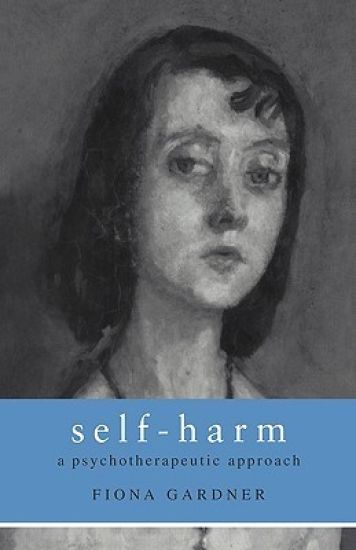
Self-harm is worryingly common in young women, and is often used as a way of easing emotional suffering. Self-Harm: A Psychotherapeutic Approach explores the issues involved from the perspective of a psychoanalytical psychotherapist. Fiona Gardner examines these issues through extensive clinical material and an analysis of the social and cultural influences behind self-harm. This book will be of interest to all those working with those who are harming themselves, including psychotherapists, school counsellors, social workers and mental health clinicians.
In The Only Mind Worth Having, Fiona Gardner takes Thomas Merton's belief that the child mind is "the only mind worth having" and explores it in the context of Jesus' challenging, paradoxical, and enigmatic command to become like small children. She demonstrates how Merton's belief and Jesus' command can be understood as part of contemporary spirituality and spiritual practice. To follow Christ's command requires a great leap of the imagination. Gardner examines what it might mean to make this leap when one is an adult without it becoming sentimental and mawkish, or regressive and pathological. Using both psychological and spiritual insights, and drawing on the experiences of Thomas Merton and others, Gardner suggests that in some mysterious and paradoxical way recovering a sense of childhood spirituality is the path towards spiritual maturity. The move from childhood spirituality to adulthood and on to a spiritual maturity through the child mind is a move from innocence to experience to organised innocence, or from dependence to independence to a state of being in-dependence with God.
Given their rhetoric on safeguarding, the response of religious organisations to abuse by the clergy - sexual, physical and spiritual - has been inept, thoughtless, mean, and without any sense of urgency. Sex, Power, Control explores the underlying reasons for the mishandling of recent abuse cases. Using psychoanalytical and sociological insights, and including her own experiences as shown in the BBC documentary Exposed: The Church's Darkest Secret, Gardner asks why the Churches find themselves in such a crisis, and how issues of power and control have contributed to secrecy, deception and heartache. Drawing on survivor accounts and delving into the psychology of clergy abusers, she reveals a culture of avoidance and denial, while an examination of power dynamics highlights institutional narcissism and a hierarchical structure based on deference, with defensive assumptions linked to sex, gender and class. Sex, Power, Control is an invaluable resource for all those in the church or similar institutions, and for anyone concerned about child abuse.
Many students and practitioners are familiar with critical reflection but struggle to make space for it in their everyday practice. This book provides an accessible and practical introduction not only to doing critical reflection, but to being critically reflective.- It demonstrates how reflective capacity can be developed in different practice contexts and applied productively to supervision, teamwork and interprofessional working. - It outlines the different theoretical underpinnings and methods of critical reflection, exploring the use of visual images, writing techniques and group meetings.- It is rich with engaging case studies and questions for the reader that will help them to make critical reflection an integral part of their everyday practice.This book is an ideal guide to dealing with challenge and change across a range of social and healthcare services, including social work, nursing, youth and community work, counselling and allied healthcare professions.
Critical spirituality is a way of naming a desire to work with what is meaningful in the context of enabling a socially just, diverse and inclusive society. Critical spirituality means seeing people holistically, seeking to understand where they are coming from and what matters to them at a fundamental level; the level that is part of the everyday but also transcends it. What is important in critical spirituality is to combine a postmodern valuing of individual experience of spirituality with all its diversity with a critical perspective that asserts the importance of living harmoniously and respectfully at an individual, family and community level. Human service professionals currently wrestle with the gradually increasing expectation to work with spirituality often without feeling capable of undertaking such practice. Some work with people experiencing major trauma or change such as palliative care or rehabilitation where people ask meaning of life questions to which they feel ill equipped to respond. Others work with individuals, families and communities experiencing conflict about spiritual issues. Increased migration and movement of refugees increases contact with people for whom spirituality is central. Such experiences raise a number of issues for existing professionals as well as students: what do we mean by spiritual? How does this relate to religion? How do we work with the spiritual in ways that recognise and value difference, without accepting abusive relationships? What are the limits to spiritual tolerance, if any? This book explores these issues and addresses the dilemmas and challenges experienced by professionals. It also provides a number of practical tools such as possible questions to ask to assess for spiritual issues; to see spirituality as part of a web of relationships.
Critical spirituality is a way of naming a desire to work with what is meaningful in the context of enabling a socially just, diverse and inclusive society. Critical spirituality means seeing people holistically, seeking to understand where they are coming from and what matters to them at a fundamental level; the level that is part of the everyday but also transcends it. What is important in critical spirituality is to combine a postmodern valuing of individual experience of spirituality with all its diversity with a critical perspective that asserts the importance of living harmoniously and respectfully at an individual, family and community level. Human service professionals currently wrestle with the gradually increasing expectation to work with spirituality often without feeling capable of undertaking such practice. Some work with people experiencing major trauma or change such as palliative care or rehabilitation where people ask meaning of life questions to which they feel ill equipped to respond. Others work with individuals, families and communities experiencing conflict about spiritual issues. Increased migration and movement of refugees increases contact with people for whom spirituality is central. Such experiences raise a number of issues for existing professionals as well as students: what do we mean by spiritual? How does this relate to religion? How do we work with the spiritual in ways that recognise and value difference, without accepting abusive relationships? What are the limits to spiritual tolerance, if any? This book explores these issues and addresses the dilemmas and challenges experienced by professionals. It also provides a number of practical tools such as possible questions to ask to assess for spiritual issues; to see spirituality as part of a web of relationships.
The meaning and mystery of life is ultimately found in personal relationship, sometimes with another and, for those who search, sometimes with God. In Taking Heart the experiences of four people who are spiritually searching and looking for a direct experience of God are explored, and their different journeys through self-doubt to self-acceptance and to the heart of faith are discussed. These four people are neither especially religious nor spiritual, and nor are they famous. They are ordinary people on an extraordinary search for meaning. As with all journeys there is discovery but also an uncovering and a recovering. All heart journeys are an exodus that takes us out of captivity and are also the passion story which is at the heart of the mystery of faith, a journey through the very worst and towards the very best. And, throughout the spiritual journey, God is shaping and forming our inner life in the unknown depths of our heart.
Although originally daunted at being asked to present the 2020 James Backhouse Lecture to Australian Friends, Fiona Gardner came to find that the opportunity encouraged her to reflect more deeply on her own journey and what might usefully be shared with others. For over twenty years, Fiona has participated in facilitating the Meeting for Learning (a year-long program for spiritual nurture, designed to explore Spirit and Quaker ways), and lives with her partner in a small intentional community that has been a place of spiritual nurture and learning. She has worked as a social worker for many years and now as a university teacher, particularly in fostering critical reflection and spirituality for social workers and critical spirituality for pastoral care workers. A continuing challenge in her spiritual life has been how to integrate her spiritual being in all of these aspects of her life. "Why seek to live life in union with Spirit? Such a life, in my experience and that of many others, is a fuller, richer, meaning filled and deeper life, connected to that which is eternal. It means moving from what is often called the 'divided life', beyond opposing forces to a place of wholeness, to integrating all of who we are in all that we do. To do this means holding together these opposites." Fiona Gardner is a longstanding member of Victoria Regional Meeting, based within the Bendigo Worshiping Group. She has also played a significant role nationally in the development of Meeting for Learning over the years, as a facilitator and coordinator. Her professional work is as a social worker primarily in rural areas, and for the last seven years she has been coordinator of the Department of Social Work at La Trobe University Rural Health School, and researching and writing related to the place of spirituality in social work and allied health. She also teaches a unit in critical spirituality at Stirling Theological College with pastoral care workers and ministers, mainly from a variety of Christian traditions. Fiona Gardner came to the Religious Society of Friends in her mid-thirties, convinced by the depth and power of silent worship, the warmth and welcome of Quaker community and social commitment. She is part of a small worshipping group in rural Victoria and has been fortunate to be a facilitator of Meeting for Learning since its beginning in 1996.
Field Education: Creating Successful Placements introduces students to the experiences of those involved in social work field education placements in a variety of settings, including rural and international placements. The book identifies key processes and frameworks and how these can be used in practice. Understanding what makes a successful placement is critical to informing the planning, development and ongoing coordination of field education, and by extension ensuring that social work graduates have high quality learning experiences. Field Education: Creating Successful Placements looks at what makes a successful placement from four different perspectives - lecturer, field educator, laision person and student - helping to better prepare students for the rigours of social work and human services work. It encourages integrating theory with practice and provides an insight into the diverse organisations and practitioners involved in Field Education.
How can professionals learn more easily from their own experience?How can critical reflection be performed in a structured way?How can professionals maintain a critically reflective stance when contexts may be restrictive?Critical reflection in professional practice is popular across many different professions as a way of ensuring ongoing scrutiny and improved practice skills. This accessible handbook focuses on a description and analysis of the theoretical input as well as the approach involved in critical reflection. It also demonstrates some skills, strategies and tools which might be used to practise it. The cross-disciplinary approach taken by the authors will appeal to a wide range of students and professionals and combines neatly with useful discussion of the complex educational and professional issues which arise from the practice of critical reflection.An innovative website containing a variety of useful resources accompanies the book www.openup.co.uk/fook&gardner. Resources include:Extracts from workshops, interviews and lectures Additional articles and readings Sample material for workshop preparation Throughout the book, the authors provide pertinent examples from their own practice, referring to relevant literature, providing annotated bibliographies, and noting where additional resource materials are available to provide further illustration. Practising Critical Reflection is key reading for a variety of students across social work, health sciences and nursing, as well as health care and social welfare professionals.
"... the book makes an excellent contributionto the library of those keen to delve further intothe realm of critical reflection, understand variousinterpretations of interdisciplinary practices, anduse these to aid their own and others’ professionalpractice, exploration and development."Learning in Health and Social CareHow can professionals reflect critically on the aspects of their work they take for granted? How can professionals practise with creativity, intelligence and compassion?What current methods and frameworks are available to assist professionals to reflect critically on their practice?The use of critical reflection in professional practice is becoming increasingly popular across the health professions as a way of ensuring ongoing scrutiny and improved concrete practice - skills transferable across a variety of settings in the health, social care and social work fields. This book showcases current work within the field of critical reflection throughout the world and across disciplines in health and social care as well as analyzing the literature in the field. Critical Reflection in Health and Social Care reflects the transformative potential of critical reflection and provides practitioners, students, educators and researchers with the key concepts and methods necessary to improve practice through effective critical reflection.Contributors: Gurid Aga Askeland, Andy Bilson, Fran Crawford, Jan Fook, Lynn Froggett , Sue Frost, Fiona Gardner, Jennifer Lehmann, Marceline Naudi, Bairbre Redmond, Gerhard Reimann, Colin Stuart, Pauline Sung-Chan, Carolyn Taylor, Susan White, Elizabeth Whitmore, Angelina Yuen-Tsang.