Kirjojen hintavertailu. Mukana 11 717 486 kirjaa ja 12 kauppaa.

Kirjahaku

Etsi kirjoja tekijän nimen, kirjan nimen tai ISBN:n perusteella.

3 kirjaa tekijältä Florian Rabitz

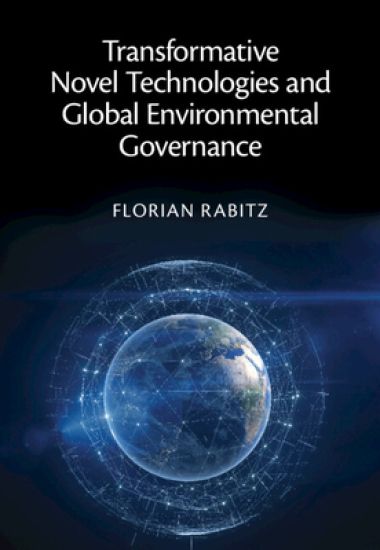
Transformative Novel Technologies and Global Environmental Governance
Transformative Novel Technologies are potential gamechangers for confronting climate change, biodiversity loss, and many other elements of the global environmental crisis, allowing us to achieve a more sustainable future. The contemporary and future international governance of these technologies has crucial implications for managing the global transition towards sustainability. This book is the first to present a comprehensive assessment of the impact of these technologies on international politics. The author examines the responses of international institutions to the emergence of these technologies, focusing on three broad domains: biotechnology, climate engineering, and mineral extraction in areas beyond national jurisdiction (the ocean floor or near-Earth asteroids). This book is aimed at a non-specialist, academic audience with interest in the international and environmental politics of sustainability and technology. This title is part of the Flip it Open Programme and may also be available Open Access. Check our website - Cambridge Core - for details.
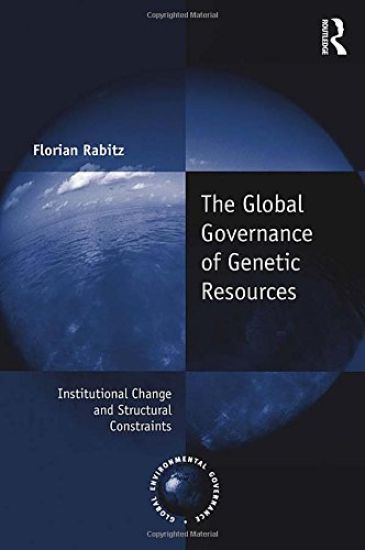
The Global Governance of Genetic Resources

The Global Governance of Genetic Resources

Florian Rabitz

TAYLOR FRANCIS LTD
2021
nidottu
Multi-institutional governance architectures are increasingly common in world politics, yet how do they evolve over time? This book develops a fresh conceptual approach by distinguishing two main types of institutional change and by proposing the strategic context within which governments make decisions regarding international cooperation as the main driving factor. Applying this theoretical framework to the case of genetic resources, it shows how the scope for change has persistently been circumscribed by asymmetries in the global biotechnology sector. Taking a broad view of the underlying technological, legal and economic factors, the book analyzes the formation of international regimes linking access to genetic resources to the fair and equitable sharing of the benefits arising out of their utilization. Covering negotiations in the areas of seeds, intellectual property rights, pandemic influenza viruses and marine genetic resources, the author shows how governments have persistently faced the problem of ensuring cooperation among actors with widely differing interests. This led them to opt for a strategy of institutional layering, whereby new international instruments are gradually built upon pre-existing ones. In addition to giving a comprehensive overview of the international governance of Access and Benefit-sharing within the wider context of modern biotechnology, the argument developed here enables a new perspective for studying institutional change in multi-institutional governance architectures.
The Global Governance of Genetic Resources
Multi-institutional governance architectures are increasingly common in world politics, yet how do they evolve over time? This book develops a fresh conceptual approach by distinguishing two main types of institutional change and by proposing the strategic context within which governments make decisions regarding international cooperation as the main driving factor. Applying this theoretical framework to the case of genetic resources, it shows how the scope for change has persistently been circumscribed by asymmetries in the global biotechnology sector. Taking a broad view of the underlying technological, legal and economic factors, the book analyzes the formation of international regimes linking access to genetic resources to the fair and equitable sharing of the benefits arising out of their utilization. Covering negotiations in the areas of seeds, intellectual property rights, pandemic influenza viruses and marine genetic resources, the author shows how governments have persistently faced the problem of ensuring cooperation among actors with widely differing interests. This led them to opt for a strategy of institutional layering, whereby new international instruments are gradually built upon pre-existing ones. In addition to giving a comprehensive overview of the international governance of Access and Benefit-sharing within the wider context of modern biotechnology, the argument developed here enables a new perspective for studying institutional change in multi-institutional governance architectures.