Kirjojen hintavertailu. Mukana 11 627 670 kirjaa ja 12 kauppaa.

Kirjahaku

Etsi kirjoja tekijän nimen, kirjan nimen tai ISBN:n perusteella.

9 kirjaa tekijältä Forrest D. Colburn

My Car in Managua

My Car in Managua

Forrest D. Colburn

University of Texas Press
1991
pokkari
Histories of revolutions often focus on military, political, or economic upheavals but sometimes neglect to connect these larger events to the daily lives of "ordinary" people. Yet the peoples' perception that "things are worse than before" can topple revolutionary governments, as shown by the recent defeat of the Sandinista regime in Nicaragua and the governments of Eastern Europe. Providing the kind of prosaic, revealing details that more formal histories have excluded, My Car in Managua offers an objective, often humorous description of the great difficulties and occasional pleasures of life in Nicaragua during the Sandinista revolution.During a year's work (1985-1986) at the Instituto Centroamericano de AdministraciÓn de Empresas (INCAE), Forrest Colburn purchased a dilapidated car-and with it an introduction to everyday life in Nicaragua. His discoveries of the length of time required to register the car (approximately six weeks), the impossibility of finding spare parts (except when U.S. dollars were applied to the search), and the fact that "anyone getting into a car in Managua can be charged a small fee [for car watching] by anyone else" all suggest the difficulties most Nicaraguans faced living in a devastated economy.Drawing on experiences from visits throughout the revolutionary period (1979-1989), Colburn also sheds light on how the Revolution affected social customs and language, gender roles and family relationships, equality and authority, the availability of goods and services, the status of ethnic minorities, and governmental and other institutions. Illustrations by Nicaragua's celebrated political cartoonist RÓger SÁnchez Flores enliven the lucid text.
Managing the Commanding Heights

Managing the Commanding Heights

Forrest D. Colburn

University of California Press
2018
pokkari
Revolutions have often occurred in poor countries. Although triumphant revolutionaries may lack the resources to assume complete responsibility for their country’s economy, they do tend to nationalize what Lenin called the “commanding heights”—those enterprises that meet the strategic needs of the polity. How these enterprises are administered is consequential, and at times decisive, for the course of revolutionary change. In Managing the Commanding Heights, Forrest D. Colburn explores the Sandinistas’ management of Nicaragua’s state enterprises, with an emphasis on the critical agrarian sector. Central to the book are three lively and instructive case studies that provide a penetrating glimpse into life in post-revolutionary Nicaragua. In analyzing these cases, Colburn explains the intentions of the Sandinista elite and links them with choices made at individual enterprises. Colburn argues that state enterprises have been politically useful but economically unsuccessful. Even with the unseen political advantages of state enterprises, the pronounced financial losses of nationalized farms and factories exacerbate the economic—and ultimately political—vulnerability of a regime already weakened by counterrevolution. The evidence demonstrates trenchant limitations to a revolutionary state’s capacity to improve popular welfare. State capacity is undermined by multiple factors: international constraints on the autonomy of post-revolutionary regimes, sheer poverty, the unintended but inevitable political manipulation of the economy, the lack of managerial ability among even well-intentioned elites, and a revolutionary mentalité that erodes rationality. These same difficulties have bedeviled other post-revolutionary regimes, notably those in Africa. Managing the Commanding Heights is essential reading for anyone interested in the dynamics of revolutionary regimes and the possibilities for radical change in poor countries. This title is part of UC Press's Voices Revived program, which commemorates University of California Press’s mission to seek out and cultivate the brightest minds and give them voice, reach, and impact. Drawing on a backlist dating to 1893, Voices Revived makes high-quality, peer-reviewed scholarship accessible once again using print-on-demand technology. This title was originally published in 1990.
Post-Revolutionary Nicaragua

Post-Revolutionary Nicaragua

Forrest D. Colburn

University of California Press
2022
pokkari
This title is part of UC Press's Voices Revived program, which commemorates University of California Press’s mission to seek out and cultivate the brightest minds and give them voice, reach, and impact. Drawing on a backlist dating to 1893, Voices Revived makes high-quality, peer-reviewed scholarship accessible once again using print-on-demand technology. This title was originally published in 1986.
Post-Revolutionary Nicaragua

Post-Revolutionary Nicaragua

Forrest D. Colburn

University of California Press
2022
sidottu
This title is part of UC Press's Voices Revived program, which commemorates University of California Press’s mission to seek out and cultivate the brightest minds and give them voice, reach, and impact. Drawing on a backlist dating to 1893, Voices Revived makes high-quality, peer-reviewed scholarship accessible once again using print-on-demand technology. This title was originally published in 1986.
Managing the Commanding Heights

Managing the Commanding Heights

Forrest D. Colburn

University of California Press
2024
sidottu
Revolutions have often occurred in poor countries. Although triumphant revolutionaries may lack the resources to assume complete responsibility for their country’s economy, they do tend to nationalize what Lenin called the “commanding heights”—those enterprises that meet the strategic needs of the polity. How these enterprises are administered is consequential, and at times decisive, for the course of revolutionary change. In Managing the Commanding Heights, Forrest D. Colburn explores the Sandinistas’ management of Nicaragua’s state enterprises, with an emphasis on the critical agrarian sector. Central to the book are three lively and instructive case studies that provide a penetrating glimpse into life in post-revolutionary Nicaragua. In analyzing these cases, Colburn explains the intentions of the Sandinista elite and links them with choices made at individual enterprises. Colburn argues that state enterprises have been politically useful but economically unsuccessful. Even with the unseen political advantages of state enterprises, the pronounced financial losses of nationalized farms and factories exacerbate the economic—and ultimately political—vulnerability of a regime already weakened by counterrevolution. The evidence demonstrates trenchant limitations to a revolutionary state’s capacity to improve popular welfare. State capacity is undermined by multiple factors: international constraints on the autonomy of post-revolutionary regimes, sheer poverty, the unintended but inevitable political manipulation of the economy, the lack of managerial ability among even well-intentioned elites, and a revolutionary mentalité that erodes rationality. These same difficulties have bedeviled other post-revolutionary regimes, notably those in Africa. Managing the Commanding Heights is essential reading for anyone interested in the dynamics of revolutionary regimes and the possibilities for radical change in poor countries. This title is part of UC Press's Voices Revived program, which commemorates University of California Press’s mission to seek out and cultivate the brightest minds and give them voice, reach, and impact. Drawing on a backlist dating to 1893, Voices Revived makes high-quality, peer-reviewed scholarship accessible once again using print-on-demand technology. This title was originally published in 1990.
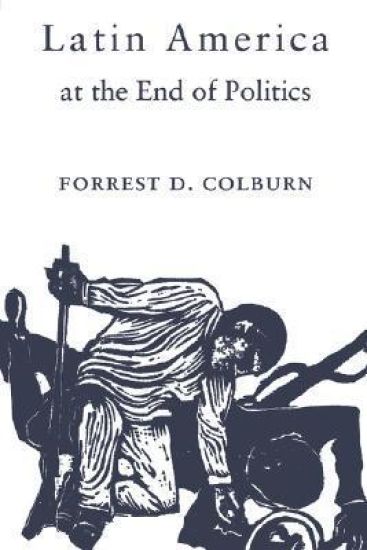
Latin America at the End of Politics

Latin America at the End of Politics

Forrest D. Colburn

Princeton University Press
2002
pokkari
After decades of ideological struggle, much of it in the service of an elusive socialist ideal, Latin America has embraced liberalism--democracy and unfettered markets. But liberalism has triumphed more by default than through exuberance. The region's democracies are fragile and lethargic. Despite pronounced social inequality, widespread poverty, and other difficulties, the populace is not engaged in deep discussions about state and society. The end of ideological contests has dampened political conflict, but likewise lessened the sense of urgency for solving trenchant problems. Political fatigue and devotion to acquisition have smothered egalitarianism as even an ideal. There is an uneasy social indifference. Latin America at the End of Politics explores this period of circumscribed political passions through deft portrayals of crucial political, economic, social, and cultural issues: governance, entrepreneurs and markets, urban bias, poverty, the struggle for women's equality, consumerism, crime, environmental degradation, art, and migration of the poor. Discussions of these issues are enriched by the poignant narratives of emblematic individuals, many of whom are disoriented by the ideological void of the era. Forrest Colburn's highly original analysis draws on his deep scholarly and personal familiarity with Latin America. The collage of issues discussed, set in a provocative framework, offers a compelling interpretation of Latin America in the aftermath of the last century's ideological battles--and a way to begin to talk about the region's future.
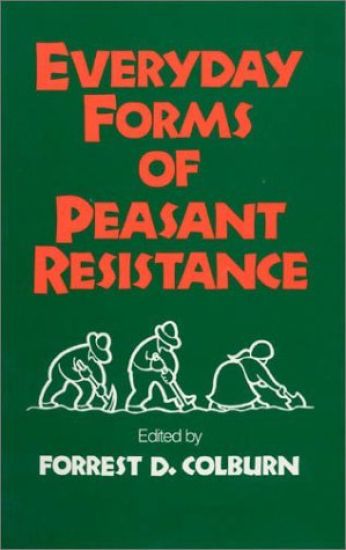
Everyday Forms of Peasant Resistance

Everyday Forms of Peasant Resistance

Forrest D. Colburn

M.E. Sharpe
1990
sidottu
Peasant rebellions are uncommon. "Everyday Forms of Peasant Resistance" explores peasants' foot dragging, feigned ingorance, false compliance, manipulation, flight, slander, theft, arson, sabotage, and similar prosaic forms of struggle. These kinds of resistance stop well short of collective defiance, a strategy usually suicidal for the subordinate. The central argument about peasant resistance is presented in the opening chapter by James Scott in which he summarizes and extends the thesis of his book on Malaysia's peasantry, "Weapons of the Weak". Scott's ideas are employed and refined in the ensuing seven country studies of peasant resistance: Poland, India, Egypt, Colombia, China, Nicaragua and Zimbabwe.
Colonialism, Independence, and the Construction of Nation-States

Colonialism, Independence, and the Construction of Nation-States

Forrest D. Colburn

Springer Nature Switzerland AG
2020
sidottu
This book investigates studies on colonialism and anti-colonialism from Africa, the Middle East, Asia, and Latin America. The author begins by recounting the deleterious impact of colonialism and then focuses on the heady days of anti-colonialism nationalism. He traces how the system fell apart: leaders, especially those of the second-generation, often turned out to be inept and corrupt; structural obstacles led poor countries to continue to depend on the export of commodities; advanced countries promised to help, but did not prove useful; when growth was possible, here and there, the fruits of development were seldom distributed widely. This project will appeal to the academics, researchers, and students in the fields of comparative politics, development studies, government, and economics.