Kirjojen hintavertailu. Mukana 12 016 292 kirjaa ja 12 kauppaa.

Kirjahaku

Etsi kirjoja tekijän nimen, kirjan nimen tai ISBN:n perusteella.

2 kirjaa tekijältä Forrest L. Marion

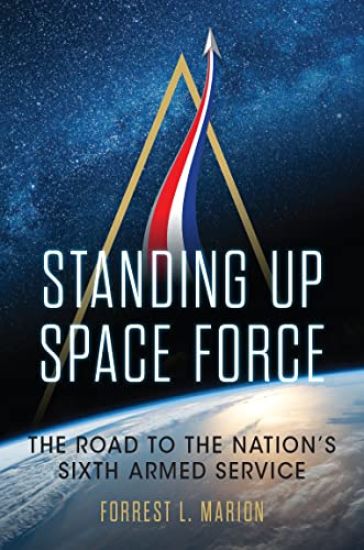
Standing Up Space Force

Standing Up Space Force

Forrest L. Marion

Naval Institute Press
2024
sidottu
Although the United States won the race to the moon, the Soviets were far more active in space than Americans during the decade that followed. By the 1980s, some space experts feared the United States was in danger of being surpassed in space, including dual-use systems that might be employed offensively in a military confrontation. A few experts, looking ahead, recommended a space force within roughly two decades.Standing up Space Force is organized chronologically by presidential administration, beginning in the middle of the Clinton years and progressing through the Trump administration. During the Clinton and George W. Bush years, the move to national security space was incremental. The Obama presidency witnessed the rise of NewSpace entrepreneurs whose impressive space activities facilitated their initial partnering with U.S. government National Security Space (NSS) missions helping the United States keep pace with China and Russia. During the Trump administration, all necessary elements finally came together – most significantly, presidential-congressional leadership and bipartisan support – to eventually produce the fiscal 2020 national defense authorization act (NDAA). Because the NDAA authorized and provided for the Space Force, when the President signed the defense bill on 20 December 2019, at the same moment he officially established the nation’s sixth armed service.
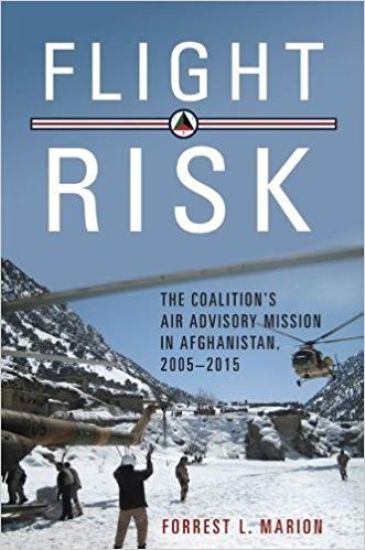
Flight Risk

Flight Risk

Forrest L. Marion

Naval Institute Press
2018
sidottu
From the 1920s Afghanistan maintained a small air arm that depended heavily upon outside assistance. Starting in 2005, the United States led an air advisory campaign to rebuild the Afghan Air Force (AAF). In 2007 a formal joint/combined entity, led by a U.S. Air Force brigadier general, began air advisor work with Afghan airmen. Between 2007 and 2011, these efforts made modest progress in terms of infrastructures, personnel and aircraft accessions, and various training courses. But by 2010, advisors increasingly viewed AAF command and control (C2) as a problem area that required significant improvement if a professional air force was to be built. In the spring of 2011, major institutional changes to AAF C2 procedures were being introduced when nine U.S. air advisors were killed. The attack was the worst single-incident loss of U.S. Air Force personnel in a deployed location since 1996 and the worst insider-attack since 2001. From the day of that tragic event, the cultural chasm between Afghanistan and the West became more apparent. This dilemma continues with no end in sight to an air advisory mission of uncertain long-term value.