Kirjojen hintavertailu. Mukana 11 244 527 kirjaa ja 12 kauppaa.

Kirjahaku

Etsi kirjoja tekijän nimen, kirjan nimen tai ISBN:n perusteella.

13 kirjaa tekijältä Forrest McDonald

Conversation with Forrest McDonald DVD

Conversation with Forrest McDonald DVD

Forrest McDonald

Liberty Fund Inc
2010
muu
Forrest McDonald is considered one of the most original and influential historians writing on the American Founding period. With interviewer Bill Jersey, McDonald shares reflections on his life and examines his intellectual formation in Texas in the 1950s, which led him to write "We The People: Economic Origins of the Constitution". When published, his landmark book challenged the long-standing theory proposed by Charles A Beard. He also exposes the drama of the American cultural turbulence of the 1960s through his experiences at Brown University and Wayne State University. McDonald discloses the motivations and theories behind several of his most celebrated books, including Novus Ordo Seclorum: The Intellectual Origins of the Constitution and E Pluribus Unum: The Formation of the American Republic, 1776-1790, which is published by Liberty Fund. In this DVD Forrest McDonald discusses his radical reinterpretations of Alexander Hamilton and Thomas Jefferson, among other founding figures. From his home in Alabama, he speaks about his sense of the nature of the American Republic, the role of the Presidency, the status of the Bill of Rights, the interaction between economics and history, and the effect his reading of history has had on the field and his legacy. Approximate running time: 59 minutes.
Alexander Hamilton

Alexander Hamilton

Forrest McDonald

WW Norton Co
1984
nidottu
The founders of the American republic were ardently concerned with the judgment of posterity. Had they known what a fickle muse Clio would prove to be, they might have been more anxious. The making of myths and legends, complete with a hagiology and demonology, is inherent in the process of evolution toward nationhood. Consequently, individual actors in the original drama have often been consigned by History to roles they did not actually play, and the most important of them have played shifting roles, being heroes in one generation and villains in the next. It is therefore not surprising that Alexander Hamilton—along with Washington, Jefferson, Adams, and Madison—has had his ups and downs at the hands of historians.
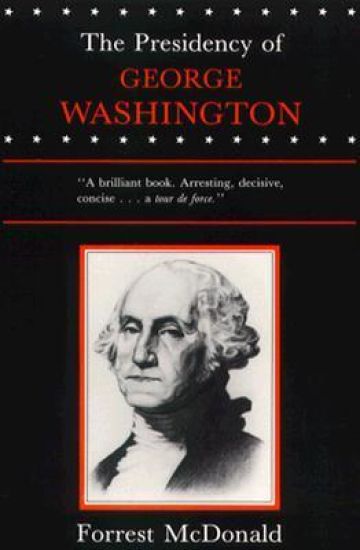
The Presidency of George Washington

The Presidency of George Washington

Forrest McDonald

University Press of Kansas
1974
sidottu
In this volume, Forrest McDonald admits that George Washington was no executive genius, and notes that a number of his advisers and cabinet members were considerably more important in formulating programs and policies than he was. Nevertheless, he maintains that, but for Washington, the office of president might not exist today. McDonald asserts that Washington's reputation as a man of integrity, dignity, candor, and republican virtue was well-deserved, and that he contributed best by serving as a symbol. The book covers the central concerns of Washington's administration: a complex tangle of war debts; the organization of the Bank of the United States; geographical and social factionalism; the emergence of strong national partisan politics; adjustments in federal-state relations; the effort to remain neutral in the face of European tumult; the opening of the Mississippi River; and the removal of the threat of Indians and British in the Northwest Territory. McDonald also describes the rivalry between Washington's two most important department heads, Thomas Jefferson and Alexander Hamilton.
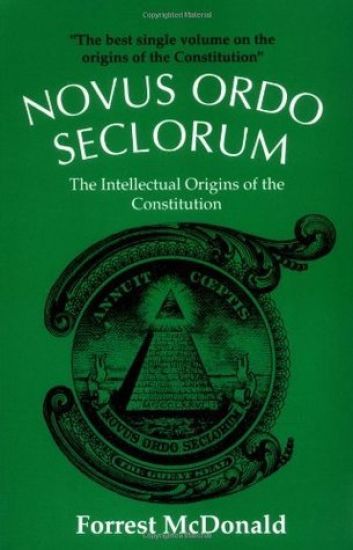
Novus Ordo Seclorum

Novus Ordo Seclorum

Forrest McDonald

University Press of Kansas
1985
nidottu
This is the first major interpretation of the framing of the Constitution to appear in more than two decades. Forrest McDonald, widely considered one of the foremost historians of the Constitution and of the early national period, reconstructs the intellectual world of the Founding Fathers—including their understanding of law, history political philosophy, and political economy, and their firsthand experience in public affairs—and then analyzes their behavior in the Constitutional Convention of 1787 in light of that world. No one has attempted to do so on such a scale before. McDonald's principal conclusion is that, though the Framers brought a variety of ideological and philosophical positions to bear upon their task of building a "new order of the ages," they were guided primarily by their own experience, their wisdom, and their common sense.
The Presidency of Thomas Jefferson

The Presidency of Thomas Jefferson

Forrest McDonald

University Press of Kansas
1976
nidottu
Thomas Jefferson occupies a special niche in the hagiology of American Founding Fathers. His name is invoked for a staggering range of causes; statists and libertarians, nationalists and States' righters, conservatives and radicals all claim his blessing. In this book, Forrest McDonald examines Jefferson's performance as the nation's leader, evaluating his ability as a policy-maker, administrator, and diplomat. He delineates, carefully and sympathetically, the Jeffersonian ideology and the agrarian ideal that underlay it; he traces the steps by which the ideology was transformed into a program of action; and he concludes that the interplay between the ideology and the action accounted both for the unparalleled success of Jefferson's first term in office, and for the unmitigated failure of the second term. Jefferson as president was a man whose ideological commitments prevented him from reversing calamitous policy stances, a man who could be ruthless in suppressing civil rights when it was politically expedient, a man who was rarely, in the conventional sense of the word, a Jeffersonian. McDonald's portrait reveals him to be at once greater, simpler, and more complexly human than the mere "apostle of liberty" or "spokesman for democracy" that his adulators have relegated him to being.
The Presidency of George Washington

The Presidency of George Washington

Forrest McDonald

University Press of Kansas
1974
nidottu
In this volume, Forrest McDonald admits that George Washington was no executive genius, and notes that a number of his advisers and cabinet members were considerably more important in formulating programs and policies than he was. Nevertheless, he maintains that, but for Washington, the office of president might not exist today. McDonald asserts that Washington's reputation as a man of integrity, dignity, candor, and republican virtue was well-deserved, and that he contributed best by serving as a symbol. The book covers the central concerns of Washington's administration: a complex tangle of war debts; the organization of the Bank of the United States; geographical and social factionalism; the emergence of strong national partisan politics; adjustments in federal-state relations; the effort to remain neutral in the face of European tumult; the opening of the Mississippi River; and the removal of the threat of Indians and British in the Northwest Territory. McDonald also describes the rivalry between Washington's two most important department heads, Thomas Jefferson and Alexander Hamilton.
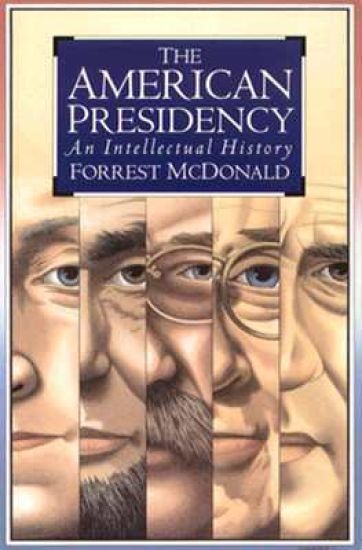
The American Presidency

The American Presidency

Forrest McDonald

University Press of Kansas
1994
nidottu
This is a provocative essay on the ambiguities and dilemmas of the American presidency. It offers observations on the issues and controversies surrounding high office, questioning what a president does and by what right he or she does it. This book was named one of the Year's Best Books on Politics by the ""Chicago Sun-Times"".
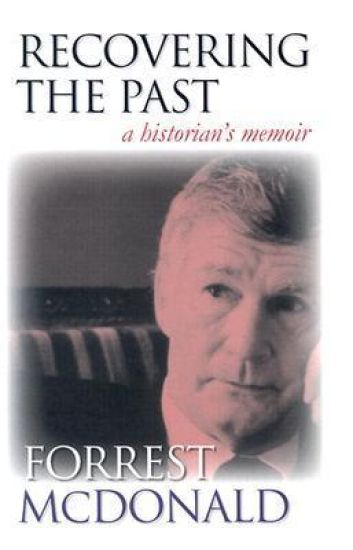
Recovering the Past

Recovering the Past

Forrest McDonald

University Press of Kansas
2004
sidottu
Forrest McDonald is a legend in his own time. The NEH's sixteenth Jefferson Lecturer he is one of our most eminent historians and the author of numerous provocative works on the early American republic, the Constitution, and the American presidency. Renowned for his sly wit and iconoclasm, he is also a conservative in a mostly liberal profession, a man who believes that his discipline has been subverted by those who serve public policy agendas. He now candidly recounts and reconsiders his own career, mixing in equal measure autobiography with a sharp critique of the historical craft. Beginning in 1949, McDonald has traversed a sometimes rocky academic road from Brown University to Wayne State and finally the University of Alabama. He rose to prominence by arguing against the popular histories of Prederick Jackson Turner and Charles Beard, and his rebuttal of the latter was published as his seminal book We the People. Recovering the Past carries forward this critical tradition with McDonald's pointed comments on fellow historians from Kenneth Stampp to William Appleton Williams, and his admiration for Oscar Handlin's book Truth in History
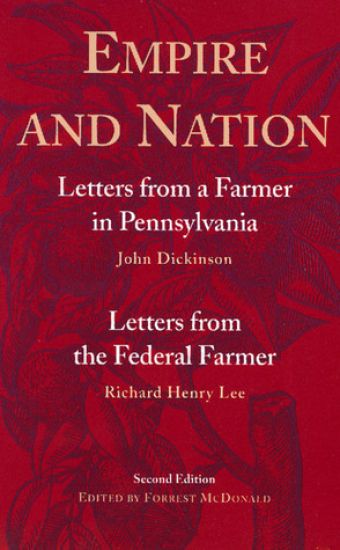
Empire & Nation, 2nd Edition

Empire & Nation, 2nd Edition

Forrest McDonald

Liberty Fund Inc
1999
nidottu
Two series of letters described as "the wellsprings of nearly all ensuing debate on the limits of governmental power in the United States" address the whole remarkable range of issues provoked by the crisis of British policies in North America out of which a new nation emerged from an overreaching empire.
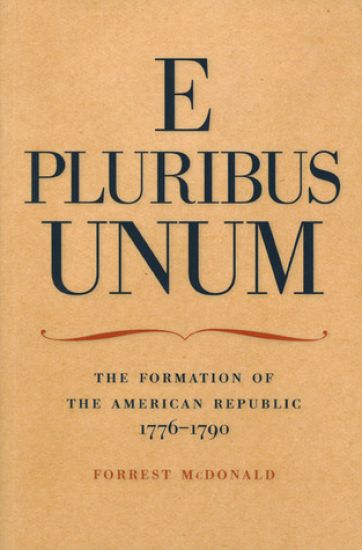
E Pluribus Unum

E Pluribus Unum

Forrest McDonald

Liberty Fund Inc
1979
nidottu
Having won independence from England, America faced a new question: Would this be politically one nation, or would it not? E Pluribus Unum is a spirited look at how that question came to be answered. That the American people introduced a governmental system adequate to check the very forces unleashed by the Revolutionthis, writes Professor McDonald, "was the miracle of the age. . . . The French, the Russians, the Italians, the Germans, all the planet's peoples in their turn, would become so unrestrained as to lose contact with sanity. The Americans might have suffered a similar history had they followed the lead of those who, in 1787 and 1788, spoke in the name . . . of popular 'rights.' But there were giants on the earth in those days, and they spoke in the name of the nation. . . ."
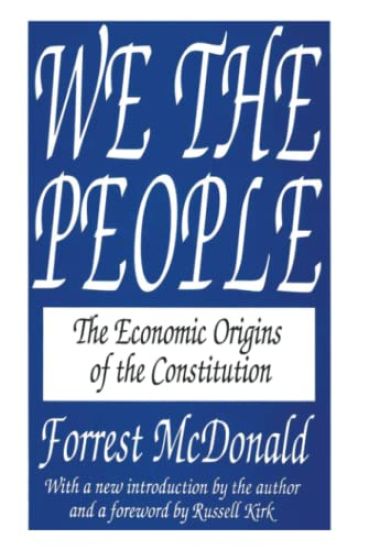
We the People

We the People

Forrest McDonald

Routledge
2017
sidottu
Charles A. Beard's An Economic Interpretation of the United States Constitution was a work of such powerful persuasiveness as to alter the course of American historiography. No historian who followed in studying the making of the Constitution was entirely free from Beard's radical interpretation of the document as serving the economic interests of the Framers as members of the propertied class. Forrest McDonald's We the People was the first major challenge to Beard's thesis. This superbly researched and documented volume restored the Constitution as the work of principled and prudential men. It did much to invalidate the crude economic determinism that had become endemic in the writing of American history.We the People fills in the details that Beard had overlooked in his fragmentary book. MacDonald's work is based on an exhaustive comparative examination of the economic biographies of the 55 members of the Constitutional Convention and the 1,750 members of the state ratifying conventions. His conclusion is that on the basis of evidence, Beard's economic interpretation does not hold. McDonald demonstrates conclusively that the interplay of conditioning or determining factors at work in the making of the Constitution was extremely complex and cannot be rendered intelligible in terms of any single system of interpretation.McDonald's classic work, while never denying economic motivation as a factor, also demonstrates how the rich cultural and political mosaic of the colonies was an independent and dominant factor in the decision making that led to the first new nation. In its pluralistic approach to economic factors and analytic richness, We the People is both a major work of American history and a significant document in the history of ideas. It continues to be an essential volume for historians, political scientists, economists, and American studies specialists.
We the People

We the People

Forrest McDonald

Transaction Publishers
1991
nidottu
Charles A. Bear's An Economic Interpretation of the United States Constitution was a work of such powerful persuasiveness as to alter the course of American historiography. No historian who followed in studying the making of the Constitution was entirely free from Beard's radical interpretation of the document as serving the economic interests of the Framers as members of the propertied class. Forrest McDonald's We the People was the first major challenge to Beard's thesis. This superbly researched and documented volume restored the Constitution as the work of principled and prudential men. It did much to invalidate the crude economic determinism that had become endemic in the writing of American history.We the People fills in the details that Beard had overlooked in his fragmentary book. MacDonald's work is based on an exhaustive comparative examination of the economic biographies of the 55 members of the Constitutional Convention and the 1,750 members of the state ratifying conventions. His conclusion is that on the basis of evidence, Beard's economic interpretation does not hold. McDonald demonstrates conclusively that the interplay of conditioning or determining factors at work in the making of the Constitution was extremely complex and cannot be rendered intelligible in terms of any single system of interpretation.McDonald's classic work, while never denying economic motivation as a factor, also demonstrates how the rich cultural and political mosaic of the colonies was an independent and dominant factor in the decision making that led to the first new nation. In its pluralistic approach to economic factors and analytic richness, We the People is both a major work of American history and a significant document in the history of ideas. It continues to be an essential volume for historians, political scientists, economists, and American studies specialists.
Insull

Insull

Forrest McDonald

Beard Books
2004
pokkari
This is a reprint of a previosly published work. It dewals with Samuel Insull, who was Thomas Edison's private secretary and founded the business of centralized electric supply. He organized the Edison General Electric Company.