Kirjojen hintavertailu. Mukana 11 342 296 kirjaa ja 12 kauppaa.

Kirjahaku

Etsi kirjoja tekijän nimen, kirjan nimen tai ISBN:n perusteella.

5 kirjaa tekijältä Fran O'Rourke

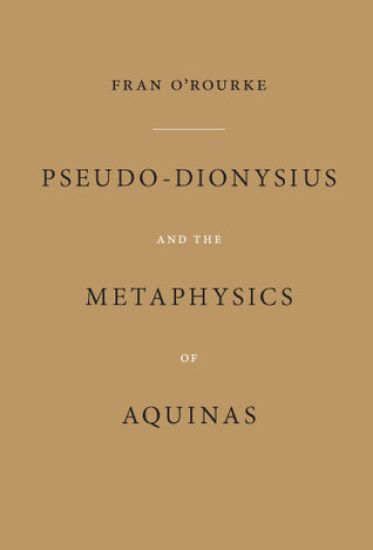
Pseudo-Dionysius and the Metaphysics of Aquinas

Pseudo-Dionysius and the Metaphysics of Aquinas

Fran O'Rourke

University of Notre Dame Press
2005
nidottu
Although Pseudo-Dionysius was, after Aristotle, the author whom Thomas Aquinas quoted most frequently, surprisingly little attention has been paid to the role of this Neoplatonist thinker in the formation of Aquinas' philosophy. Fran O'Rourke's book is the only available work that investigates the pervasive influence of Pseudo-Dionysius on Aquinas, while at the same time examining the latter's profound originality. Central themes discussed by O'Rourke include knowledge of the absolute, existence as the first and most universal perfection, the diffusion of creation, the hierarchy of creatures, and their return to God as final end. O'Rourke devotes special attention to the Neoplatonist element in Aquinas' notion of "being" as intensity or degree of perfection. He also considers the relation of being and goodness in light of Aquinas' nuanced reversal of Dionysius' theory of the primacy of the good, and Aquinas' arguments for the transcendental nature of goodness.
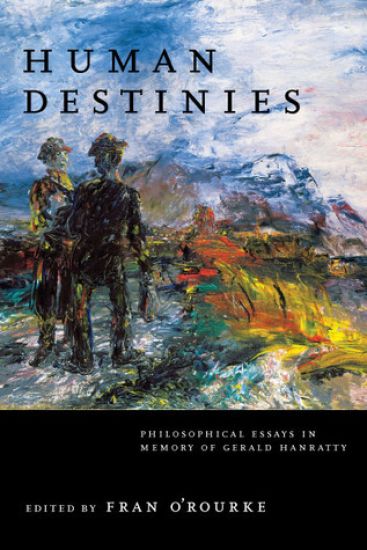
Human Destinies

Human Destinies

Fran O'Rourke

University of Notre Dame Press
2012
sidottu
From 1968 until his death in 2003, Gerald Hanratty was professor of philosophy at University College Dublin. In this volume dedicated to his memory, Fran O'Rourke has assembled twenty-six essays reflecting Hanratty's broad philosophical interests, dealing with central questions of human existence and the ultimate meaning of the universe. Whether engaged in historical investigations into Gnosticism or the Enlightenment, Hanratty was concerned with fundamental themes in the philosophy of religion and philosophical anthropology. Human Destinies brings together a wide range of approaches to these central questions. Included are historical studies of classical thinkers of the ancient and medieval periods (Aristotle, Plotinus, Augustine, Aquinas) and studies of numerous modern authors (among them, Kant, Husserl, Heidegger, Marcel, Adorno, Derrida, Plantinga, Scruton, and many others). Contributors: Fran O'Rourke, Peter L. P. Simpson, Rowland Stout, Andrew Smith, Eoin G. Cassidy, Cyril O'Regan, Michael Nolan, Patrick Masterson, Tim Lynch, James R. O'Shea, Ciarán McGlynn, Maria Baghramian, Mark Dooley, Brendan Purcell, Brendan Sweetman, Ciarán Benson, Richard Kearney, Dermot Moran, Belinda McKeon, Brian Elliott, Eileen Brennan, Liberato Santoro-Brienza, Brian O'Connor, Timothy Mooney, David Walsh, and Gerard Casey.
Pseudo-Dionysius and the Metaphysics of Aquinas

Pseudo-Dionysius and the Metaphysics of Aquinas

Fran O'Rourke

UNIVERSITY OF NOTRE DAME PRESS
2022
sidottu
Although Pseudo-Dionysius was, after Aristotle, the author whom Thomas Aquinas quoted most frequently, surprisingly little attention has been paid to the role of this Neoplatonist thinker in the formation of Aquinas' philosophy. Fran O'Rourke's book is the only available work that investigates the pervasive influence of Pseudo-Dionysius on Aquinas, while at the same time examining the latter's profound originality. Central themes discussed by O'Rourke include knowledge of the absolute, existence as the first and most universal perfection, the diffusion of creation, the hierarchy of creatures, and their return to God as final end. O'Rourke devotes special attention to the Neoplatonist element in Aquinas' notion of "being" as intensity or degree of perfection. He also considers the relation of being and goodness in light of Aquinas' nuanced reversal of Dionysius' theory of the primacy of the good, and Aquinas' arguments for the transcendental nature of goodness.
Joyce, Aristotle, and Aquinas

Joyce, Aristotle, and Aquinas

Fran O'Rourke

University Press of Florida
2022
pokkari
A rich examination of the influence of Aristotle and Thomas Aquinas on James JoyceIn this book, Fran O'Rourke examines the influence of Aristotle and Thomas Aquinas on James Joyce, arguing that both thinkers fundamentally shaped the philosophical outlook which pervades the author's oeuvre. O'Rourke demonstrates that Joyce was a philosophical writer who engaged creatively with questions of diversity and unity, identity, permanence and change, and the reliability of knowledge.Beginning with an introduction to each thinker, the book traces Joyce's discovery of their works and his concrete engagement with their thought. Aristotle and Aquinas equipped Joyce with fundamental principles regarding reality, knowledge, and the soul, which allowed him to shape his literary characters. Joyce appropriated Thomistic concepts to elaborate an original and personal aesthetic theory. O'Rourke provides an annotated commentary on quotations from Aristotle which Joyce entered into his famous Early Commonplace Book and outlines their crucial significance for his writings. He also provides an authoritative evaluation of Joyce's application of Aquinas's aesthetic principles.The first book to comprehensively illuminate the profound impact of both the ancient and medieval thinker on the modernist writer, Joyce, Aristotle, and Aquinas offers readers a rich understanding of the intellectual background and philosophical underpinnings of Joyce's work.
Joyce, Aristotle, and Aquinas

Joyce, Aristotle, and Aquinas

Fran O'Rourke

University Press of Florida
2022
sidottu
A rich examination of the influence of Aristotle and Thomas Aquinas on James JoyceIn this book, Fran O'Rourke examines the influence of Aristotle and Thomas Aquinas on James Joyce, arguing that both thinkers fundamentally shaped the philosophical outlook which pervades the author's oeuvre. O'Rourke demonstrates that Joyce was a philosophical writer who engaged creatively with questions of diversity and unity, identity, permanence and change, and the reliability of knowledge.Beginning with an introduction to each thinker, the book traces Joyce's discovery of their works and his concrete engagement with their thought. Aristotle and Aquinas equipped Joyce with fundamental principles regarding reality, knowledge, and the soul, which allowed him to shape his literary characters. Joyce appropriated Thomistic concepts to elaborate an original and personal aesthetic theory. O'Rourke provides an annotated commentary on quotations from Aristotle which Joyce entered into his famous Early Commonplace Book and outlines their crucial significance for his writings. He also provides an authoritative evaluation of Joyce's application of Aquinas's aesthetic principles.The first book to comprehensively illuminate the profound impact of both the ancient and medieval thinker on the modernist writer, Joyce, Aristotle, and Aquinas offers readers a rich understanding of the intellectual background and philosophical underpinnings of Joyce's work.