Kirjojen hintavertailu. Mukana 11 244 527 kirjaa ja 12 kauppaa.

Kirjahaku

Etsi kirjoja tekijän nimen, kirjan nimen tai ISBN:n perusteella.

5 kirjaa tekijältä Frances Knight

Ebenezer Howard

Ebenezer Howard

Frances Knight

Oxford University Press
2023
sidottu
Ebenezer Howard (1850-1928) is famous worldwide for founding the Garden City movement, and he continues to be frequently cited by planners and theorists. When he was dying, he urged his prospective biographer to remember that 'the spiritual dimension' had always been central to his life and work. He wanted this to be prominently brought out in any biography. Almost a century after his death, Ebenezer Howard: Inventor of the Garden City is the first book that does justice to that wish. Frances Knight has written a very readable biography, the first since the 1980s, with a properly contextualized analysis of Howard's religious views. Shaped in the world of London Congregationalism, he became a keen seeker after unity and peace. He grafted new religious ideas, particularly from spiritualism, and later from Theosophy, into his biblically-informed, Protestant faith. Prone to spiritual epiphanies, he believed that he had been raised up to preach the 'gospel of the garden city' and to tackle the housing crisis by beginning to build the New Jerusalem in the Hertfordshire countryside. Although he sometimes appeared naïve, he was astute, and highly skilled at combining different, and sometimes conflicting, ideas in a way that built consensus and gained support from people across the social and political spectrum. As well as explaining the remarkable sequence of events that led from the publication of his ideas to the foundation of Letchworth as the world's first garden city, just five years later, this book investigates other neglected aspects of Howard's life including: the years he spent in America, his career as a shorthand writer, and his relationship with his first wife Lizzie - herself an important garden city pioneer. Howard wanted his garden cities to be places of spiritual exploration, and as this book shows, early Letchworth certainly lived up to those expectations.
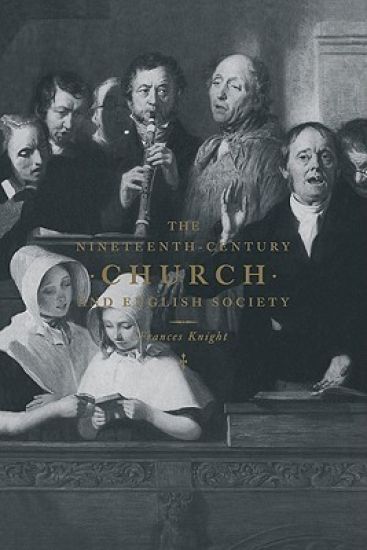
The Nineteenth-Century Church and English Society

The Nineteenth-Century Church and English Society

Frances Knight

Cambridge University Press
1999
pokkari
This is the first study to consider the meaning of Anglicanism for ordinary people in nineteenth-century England. Drawing extensively on unpublished sources, particularly those for rural areas, Frances Knight analyses the beliefs and practices of lay Anglicans and of the clergy who ministered to them. Building on arguments that the Church of England was in transition from state church to denomination, she argues that strong continuities with the past nevertheless remained. Through an examination of denominational identity, personal piety, Sunday church-going, and Anglican rites of passage she shows that the Church continued to cater for the beliefs and values of many Christians. Far from becoming a minority sect, the Anglican Church in the mid-Victorian period continued to claim the allegiance of one in four English people.
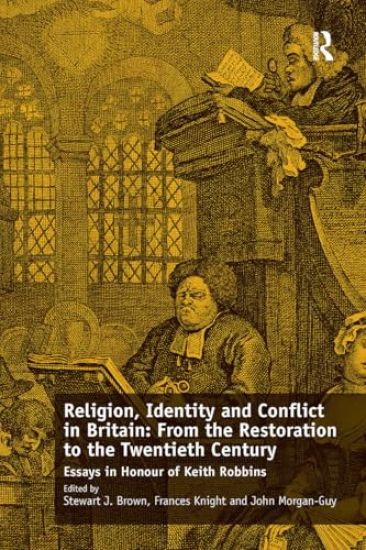
Religion, Identity and Conflict in Britain: From the Restoration to the Twentieth Century
The British state between the mid-seventeenth century to the early twentieth century was essentially a Christian state. Christianity permeated society, defining the rites of passage - baptism, first communion, marriage and burial - that shaped individual lives, providing a sense of continuity between past, present and future generations, and informing social institutions and voluntary associations. Yet this religious conception of state and society was also the source of conflict. The Restoration of the monarchy in 1660 brought limited toleration for Protestant Dissenters, who felt unable to worship in the established Church, and there were challenges to faith raised by biblical and historical scholarship, science, moral questioning and social dislocations and unrest. This book brings together a distinguished team of authors who explore the interactions of religion, politics and culture that shaped and defined modern Britain. They consider expressions of civic consciousness in the expanding towns and cities, the growth of Welsh national identity, movements for popular education and temperance reform, and the influence of organised sport, popular journalism, and historical writing in defining national life. Most importantly, the contributors highlight the vital role of religious faith and religious institutions in the understanding of the modern British state.
Religion, Identity and Conflict in Britain: From the Restoration to the Twentieth Century
The British state between the mid-seventeenth century to the early twentieth century was essentially a Christian state. Christianity permeated society, defining the rites of passage - baptism, first communion, marriage and burial - that shaped individual lives, providing a sense of continuity between past, present and future generations, and informing social institutions and voluntary associations. Yet this religious conception of state and society was also the source of conflict. The Restoration of the monarchy in 1660 brought limited toleration for Protestant Dissenters, who felt unable to worship in the established Church, and there were challenges to faith raised by biblical and historical scholarship, science, moral questioning and social dislocations and unrest. This book brings together a distinguished team of authors who explore the interactions of religion, politics and culture that shaped and defined modern Britain. They consider expressions of civic consciousness in the expanding towns and cities, the growth of Welsh national identity, movements for popular education and temperance reform, and the influence of organised sport, popular journalism, and historical writing in defining national life. Most importantly, the contributors highlight the vital role of religious faith and religious institutions in the understanding of the modern British state.
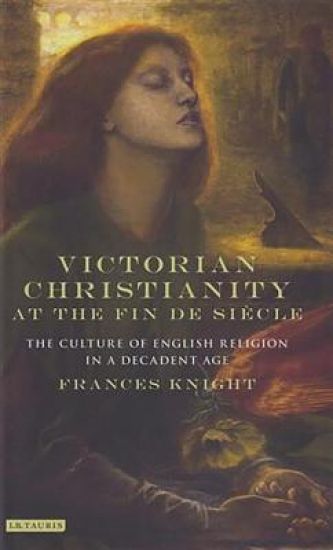
Victorian Christianity at the Fin de Siècle
The period known as the fin de siecle - defined in this groundbreaking book as chiefly the period between1885 and 1901 - was a fluid and unsettling epoch of optimism and pessimism, endings and beginnings, aswell as of new forms of creativity and anxiety. The end of the century has attracted much interest from scholars of literary and cultural studies, who regard it as a critical moment in the history of their disciplines; but it has been relatively ignored by religious historians. Frances Knight here sets right that neglect. She shows how late Victorian society (often said to be one of the most intensely Christian cultures the world has ever seen) reacted to the bold agendas being set by the thinkers of the fin de siecle; and how prominent Church figures during the era first identified many of the concerns that have preoccupied Christians latterly. These include an active interest in social justice and the creation of new types of communities; increasingly open discussion of the sexual exploitation of children; debates about society's 'decadence'; new ideas about the role of women; and the belief in the redemptive powers of art, pioneered by figures as diverse as P.T.Forsyth, Percy Dearmer and Samuel and Henrietta Barnett.Examining in particular the Christian world of fin de siecle London, the author offers penetrating insights intoa society in which the ritual and culture of Christianity sometimes permeated the aesthetic movement andwhere devotees of the aesthetic movement - like Walter Pater, Oscar Wilde and their disciples - often revealed a fascination with Christianity. She argues that the 'long 1890s' was a decisive decade in which various sections of Christian opinion, both on the progressive and the more conservative wings of the faith, began to express views which set the tone for attitudes which would become commonplace in the twentieth century. Victorian Christianity at the Fin de Siecle is the focussed treatment of religion and culture at the end of the nineteenth century that the field has long needed. It will be welcomed by scholars of church history, social and cultural history and the history of ideas.