Kirjojen hintavertailu. Mukana 11 244 527 kirjaa ja 12 kauppaa.

Kirjahaku

Etsi kirjoja tekijän nimen, kirjan nimen tai ISBN:n perusteella.

11 kirjaa tekijältä Frances Spalding

John Piper, Myfanwy Piper

John Piper, Myfanwy Piper

Frances Spalding

Oxford University Press
2017
nidottu
This book is about a shared journey made by John and Myfanwy Piper who early on settled down in a small hamlet on the edge of the Chilterns, whence they proceeded to produce work which placed them centre stage in the cultural landscape of the twentieth century. Here, too, they fed and entertained many visitors, among them Kenneth Clark, John Betjeman, Osbert Lancaster, Benjamin Britten, and the Queen Mother. Their creative partnership encompasses not only a long marriage and numerous private and professional vicissitudes, but also a genuine legacy of lasting achievements in the visual arts, literature and music. Frances Spalding also sheds new light on the story of British art in the 1930s. In the middle of this decade John Piper and Myfanwy Evans (they did not marry until 1937) were at the forefront of avant-garde activities in England, Myfanwy editing the most advanced art magazine of the day and John working alongside Ben Nicholson, Barbara Hepworth, Henry Moore, and others. But as the decade progressed and the political situation in Europe worsened, they changed their allegiances, John Piper investigating in his art a sense of place, belonging, history, memory, and the nature of national identity, all issues that are very much to the fore in today's world. Myfanwy Piper is best known as 'Golden Myfanwy', Betjeman's muse and for her work as librettist with Benjamin Britten. John Piper was an extraordinarily prolific artist in many media, his fertile career stretching over six decades and involving him in many changes of style. Having been an abstract painter in the 1930s, he became best known for his landscapes and architectural scenes in a romantic style. This core interest, in the English and Welsh landscape and the built environment, developed in him a sensibility that took in almost everything, from gin palaces to painted quoins, from ruined cottages to country houses, from Victorian shop fronts to what is nowadays called industrial archeology. His capacious and divided sensibility made him defender of many aspects of the English landscape and the built environment, while in his art he became an heir of that great tradition encompassing Wordsworth and Blake, Turner, Ruskin, and Samuel Palmer. He was torn between the pleasures of an abstract language liberated from time and place and those embedded in the locale, in buildings, geography, and history. Today, this expansive contradictoriness seems quintessentially modern, his divided response finding an echo in our own ambivalence towards modernity. Both Pipers created what seemed to many observers an ideal way of life, involving children, friendships, good food, humour, the pleasures of a garden, work, and creativity. Running through their lives is a fertile tension between a commitment to the new and a desire to reinvigorate certain native traditions. This tension produced work that is passionate and experimental. 'Only those who live most vividly in the present', John Russell observed of John and Myfanwy Piper, 'deserve to inherit the past'.
The Real and the Romantic: English Art Between Two World Wars – A Times Best Art Book of 2022
The Times and Sunday Times Art Book of the Year 'Superb ... Spalding is a lucid and revealing guide who wears her scholarship lightly' Sunday Times 'Spalding’s prose is as clear as a Ravilious greenhouse, her thoughts as orderly as a Ben Nicholson white relief' The Times A fresh look at a period of English art that has surged in interest and popularity in recent years, authored by one of Britain's leading art historians and critics. The 21st century has seen a surge of interest in English art of the interwar years. Women artists, such as Winifred Knights, Frances Hodgkins and Evelyn Dunbar, have come to the fore, while familiar names – Paul Nash, Eric Ravilious and Stanley Spencer – have reached new audiences. High-profile exhibitions have attracted recordbreaking visitor numbers and challenged received opinion. In The Real and the Romantic, Frances Spalding, one of Britain’s leading art historians and critics, takes a fresh and timely look at this rich period in English art. The devastation of the First World War left the art world decentred and directionless. This book is about its recovery. Spalding explores how exciting new ideas co-existed with a desire for continuity and a renewed interest in the past. We see the challenge to English artists represented by Cézanne and Picasso, and the role played by museums and galleries in this period. Women artists, writers and curators contributed to the emergence of a new avant-garde. The English landscape was revisited in modern terms. The 1930s marked a high point in the history of modernism in Britain, but the mood darkened with the prospect of a return to war. The former advance towards abstraction and internationalism was replaced by a renewed concern with history, place, memory and a sense of belonging. Native traditions were revived in modern terms but in ways that also let in the past. Surrealism further disturbed the ascetic purity of high modernism and fed into the British love of the strange. Throughout these years, the pursuit of ‘the real’ was set against, and sometimes merged with, an inclination towards the ‘romantic’, as English artists sought to respond to their subjects and their times.
Duncan Grant

Duncan Grant

Frances Spalding

Vintage
1998
pokkari
The life of the painter and designer Duncan Grant spanned great changes in society and art, from Edwardian Britain to the 1970s, from Alma-Tadema to Gilbert and George.
Vanessa Bell

Vanessa Bell

Frances Spalding

The History Press Ltd
2006
nidottu
Vanessa Bell was a central figure within the Bloomsbury Group and lent to it a stability and coherence it might otherwise have lacked. A talented artist, she held sway with her acuity, integrity and a sense of humour. This biography draws upon documents to reveal Vanessa Bell's achievements, in both her art and her increasingly unorthodox life.
Vanessa Bell

Vanessa Bell

Frances Spalding

Tauris Parke
2018
nidottu
The definitive and authorised biography of the artist Vanessa Bell.Even through the lens of the twenty-first century, the story of Vanessa Bell’s life is unorthodox. A powerful magnetic figure, Bell lived at the heart of the Bloomsbury Group and was often the core figure around which the disparate individuals of the movement revolved.Her art and designs – so often overshadowed by her sister Virginia Woolf’s writings and fame and by the interest in her own unconventional life – made a significant contribution to the history of the Bloomsbury Group. Yet, until this authorised biography was written, she has remained a largely silent and enigmatic figure.In this captivating account, acclaimed art historian and biographer Frances Spalding restores Bell to the heart of the Bloomsbury Group, illuminating an exceptional life and the free-spirited circle among which she lived.
Stevie Smith

Stevie Smith

Frances Spalding

THE HISTORY PRESS LTD
2025
pokkari
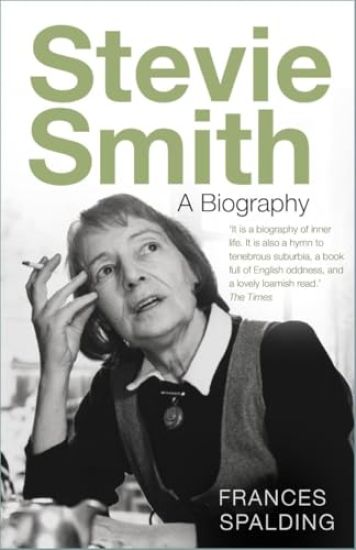
‘Confident and very readable . . . one of Frances Spalding’s achievements in this book is to display Stevie Smith’s frailties without destroying her dignity’ – Victoria Glendinning, Literary Review‘A careful, informative and worthwhile book’ – Hermione Lee, The Observer‘It is a biography of inner life. It is also a hymn to tenebrous suburbia, a book full of English oddness, and a lovely loamish read.’ – The TimesStevie Smith had a unique literary voice: her idiosyncratic, wonderfully funny and poignant poems established her as one of the most individual of English modern poets. She claimed her own life was ‘precious dull’, but Frances Spalding’s acclaimed biography reveals a far from conventional woman.While she lived in suburbia with her beloved ‘Lion Aunt’, Stevie Smith was from the early 1930s a vibrant figure on London’s intellectual and literary scene, mixing with artists and writers, among them Olivia Manning, Rosamond Lehmann and George Orwell. She was noted for her wit – often maliciously directed at friends – and occasional public tantrums. Her use of real people in her writing angered many of her friends and brought the threat of libel.Always feeling herself out of step with the world, she was haunted by her father’s absence during her childhood and her mother’s early death; she longed for love yet was sexually ambivalent. In exploring the intimate relationship between Stevie Smith’s life and work, Frances Spalding gives a new insight into a writer who always saw death as a friend, yet was also one of the great celebrators of life, whether commonplace or extraordinary.
Gwen Raverat

Gwen Raverat

Frances Spalding

Pimlico
2021
pokkari
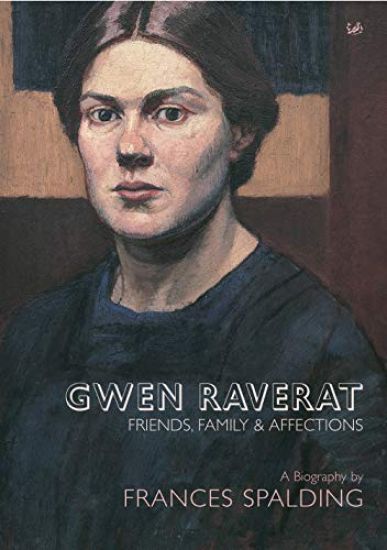
'The best of these Darwins is that they are cut out of rock - three taps is enough to convince one how immense is their solidarity.' So wrote Virginia Woolf affectionately of Gwen Raverat, the granddaughter of Charles Darwin. In this first full biography, Frances Spalding looks beyond the artist Gwen Raverat's childhood memoir; Period Piece, and creates a fascinating and moving portrait of Charles Darwin's granddaughter. She explores her Darwin inheritance; her conflicts when she moves beyond her home environment to enter the Slade School of Art; her encounter with post-Impressionism; and her friendships with Stanley Spencer, Rupert Brooke and members of the Bloomsbury set. At each stage, Gwen's artistic creativity is interwoven with her relationships and circumstances. She helps revive the medium of wood-engraving and with her husband, Jacques Raverat, celebrates the South of France in the art they produce while living in Venice. Drawing on a huge cache of unpublished papers, Spalding brings us a life lived with bravery, humour; realism and integrity, surrounded by a remarkable cast of relatives, friends and associates.
The Illustrated Letters of Virginia Woolf
The moving story of the life and work of novelist Virginia Woolf, revealed through her own letters to those closest to her.Virginia Woolf is considered by many to be one of the greatest British writers and one of the foremost modernists of the twentieth century. As well as writing her novels, Woolf was a tireless correspondent, penning as many as six letters a day.This collection of Virginia Woolf's letters offers a fascinating insight into her life, illuminating the complex personality of the novelist herself. The letters range from witty and irreverent to melancholy and introspective, with intimations of the bouts of mental illness that were to lead her to take her own life. She was a writer of genius; and through her correspondence we come close to one of the most brilliant and high-spirited minds of the twentieth century. ‘A true letter’, she insisted, ‘should be like a film of wax pressed close to the graving of the mind’.The book contains background information on Virginia Woolf’s life along with real samples of her handwriting. There are also biographical notes on the main recipients of the letters, together with a family tree for keeping track of names.The letters are beautifully illustrated throughout with photographs, paintings and sketches of the people and places with which Virginia Woolf was most closely connected – many by members of the Bloomsbury Group, such as Woolf's sister Vanessa Bell, Roger Fry and Duncan Grant.
Virginia Woolf

Virginia Woolf

Frances Spalding

National Portrait Gallery Publications
2014
nidottu
Virginia Woolf’s many novels, notably Night and Day (1919), Jacob’s Room (1922), Mrs Dalloway (1925), To the Lighthouse (1927) and The Waves (1931), transformed ideas about structure, plot and characterisation. The third child of Leslie and Julia Stephen, and sister of Vanessa (later Bell), Woolf was a central figure in the Bloomsbury Group: that union of friends who revolutionised British culture with their innovative approach to art, design and society in the early years of the twentieth century. Portraiture figured greatly in Woolf’s life. Portraits by G.F. Watts and photographs made by her aunt, Julia Margaret Cameron, furnished rooms in which she lived. Written portraits were produced in the family home; her father, Leslie Stephen, published short biographies of Samuel Johnson, Pope, Swift, George Eliot and Thomas Hobbes, while editing the first twenty-six volumes of the Dictionary of National Biography. Throughout her life, Woolf, a sharp observer and a brilliant wordsmith, composed memorable vignettes-in-words of people she knew or encountered, and was herself portrayed by artists and photographers on many occasions. Illustrated with over a hundred works from public and private collections, documentary photographs and extracts from her writings, this book catches Woolf’s appearance and that of the world around her. It also points to her pursuit of the hidden, the fleeting and the obscure, in her desire to understand better the place and moment in time and in history in which she lived. In charting some of the milestones in Woolf’s life, author Frances Spalding acknowledges the seen and unseen aspects of her subject; the outer and the inner, the recognisable and the concealed.
The Bloomsbury Group

The Bloomsbury Group

Frances Spalding

National Portrait Gallery Publications
2021
sidottu
‘A delightful introduction to an enduring subject’ – Angela Wintle, Sussex Life The most constructive and creative influence on English taste between the two wars, 'The Bloomsbury Group' was a union of friends who transformed British culture with their approach to art, design and society.The Group began the twentieth century with a desire to rebel and challenge what they felt were the religious, artistic, social and sexual taboos of Victorian England. Together they created a revolution in British style that resonates with contemporary painters, writers, actors, designers, fashion editors and publishers. This book explores the impact of Bloomsbury personalities on each other, as well as their legacy to the twenty-first century. Author Frances Spalding demonstrates how this network of artists, lovers and patrons recorded one another obsessively in both words and images. She presents twenty fascinating biographies, all of which are illustrated with paintings and intimate photographs created by members of the Group. Highlighted in her revealing account are: Virginia and Leonard Woolf, Vanessa and Clive Bell, Duncan Grant, Lady Ottoline Morrell, Roger Fry, J.M. Keynes, Lytton Strachey and Dora Carrington.