Kirjojen hintavertailu. Mukana 11 244 527 kirjaa ja 12 kauppaa.

Kirjahaku

Etsi kirjoja tekijän nimen, kirjan nimen tai ISBN:n perusteella.

454 kirjaa tekijältä Francis Bacon

The Oxford Francis Bacon VI

The Oxford Francis Bacon VI

Francis Bacon

Clarendon Press
1996
sidottu
This volume inaugurates a new critical edition of the writings of the great English philosopher and sage Francis Bacon (1561-1626) - the first such complete edition for more than a hundred years. It contains six of Bacon's Latin scientific works, each accompanied by entirely new facing-page translations which, together with the extensive introduction and commentaries, offer fresh insights into one of the great minds of the early seventeenth century.
The Oxford Francis Bacon IV

The Oxford Francis Bacon IV

Francis Bacon

Clarendon Press
2000
sidottu
This is the first critical edition since the nineteenth century of Bacon's principal philosophical work in English, The Twoo Bookes of Francis Bacon. Of the proficience and advancement of Learning, divine and humane - traditionally known as The Advancement of Learning.
The Oxford Francis Bacon XIII

The Oxford Francis Bacon XIII

Francis Bacon

Clarendon Press
2000
sidottu
This volume belongs to the first new critical edition of the works of Francis Bacon (1561-1626) to have been produced since the nineteenth century. The edition presents the works in broadly chronological order and according to the best principles of modern textual scholarship. The seven works in the present volume belong to the final completed stages (Parts III-V) of Bacon's hugely ambitious six-part sequence of philosophical works, collectively entitled Instauratio magna (1620-6). All are presented in the original Latin with new facing-page translations. Three of the seven texts (substantial works in two cases, and all sharing a startlingly improbable textual history) are published and translated here for the first time: these are an early version of the Historia densi, the 'lost' Abecedarium, and the Historia de animato & inanimato. Another - the Prodromi sive anticipationes philosophiae secundae - has likewise never been translated before. Together with their commentaries and the introduction they open the way to important new understandings of Bacon's mature philosophical thought.
The Oxford Francis Bacon XV

The Oxford Francis Bacon XV

Francis Bacon

Clarendon Press
2000
sidottu
Bacon's essays reflect the experience and wide reading of a Renaissance man - philosopher, historian, judge, politician, adviser to the Prince - above all, astute observer of human nature. With uncompromising candour, he exposes man as he is, not as he ought to be, examining such givens of Renaissance power as negotiating for position, expediting a personal suit, speaking effectively, and the role of dissimulation in social and political situations. He scrutinizes judicial prerogatives and probes the causes and dangers of atheism and superstition. Even such topics as boldness or love or deformity have a practical bent. In Bacon's own phrase, these essays 'come home to Mens Businesse and Bosomes.' It is especially through their matchless style that they come home–with imaginative vigour, concrete language, and the colloquial force of individual sentences. An introduction places the essays in their original context, examines their evolution over Bacon's lifetime, and elucidates their form and prose style; a commentary examines his sources and relates essays to his other writings; a glossary and index are also included.
Francis Bacon

Francis Bacon

Francis Bacon

Oxford University Press
2008
nidottu
This authoritative edition was originally published in the acclaimed Oxford Authors series under the general editorship of Frank Kermode. It brings together an extensive collection of Bacon's writing - the major prose in full, together with sixteen other pieces not otherwise available - to give the essence of his work and thinking. Although he had a distinguished career as a lawyer and statesman, Francis Bacon's lifelong goal was to improve and extend human knowledge. In The Advancement of Learning (1605) he made a brilliant critique of the deficiencies of previous systems of thought and proposed improvements to knowledge in every area of human life. He conceived the Essays (1597, much enlarged in 1625) as a study of the formative influences on human behaviour, psychological and social. In The New Atlantis (1626) he outlined his plan for a scientific research institute in the form of a Utopian fable. In addition to these major English works this edition includes 'Of Tribute', an important early work here printed complete for the first time, and a revealing selection of his legal and political writings, together with his poetry. A special feature of the edition is its extensive annotation which identifies Bacon's sources and allusions, and glosses his vocabulary. ABOUT THE SERIES: For over 100 years Oxford World's Classics has made available the widest range of literature from around the globe. Each affordable volume reflects Oxford's commitment to scholarship, providing the most accurate text plus a wealth of other valuable features, including expert introductions by leading authorities, helpful notes to clarify the text, up-to-date bibliographies for further study, and much more.
Francis Bacon: The New Organon

Francis Bacon: The New Organon

Francis Bacon

Cambridge University Press
2000
sidottu
When the New Organon appeared in 1620, part of a six-part programme of scientific inquiry entitled 'The Great Renewal of Learning', Francis Bacon was at the high point of his political career, and his ambitious work was groundbreaking in its attempt to give formal philosophical shape to a new and rapidly emerging experimentally-based science. Bacon combines theoretical scientific epistemology with examples from applied science, examining phenomena as various as magnetism, gravity, and the ebb and flow of the tides, and anticipating later experimental work by Robert Boyle and others. His work challenges the entire edifice of the philosophy and learning of his time, and has left its mark on all subsequent philosophical discussions of scientific method. This volume presents a new translation of the text into modern English by Michael Silverthorne, and an introduction by Lisa Jardine that sets the work in the context of Bacon's scientific and philosophical activities.
The Works of Francis Bacon

The Works of Francis Bacon

Francis Bacon

Cambridge University Press
2011
pokkari
Francis Bacon (1561–1626), the English philosopher, statesman and jurist, is best known for developing the empiricist method which forms the basis of modern science. Bacon's writings concentrated on philosophy and judicial reform. His most significant work is the Instauratio Magna comprising two parts - The Advancement of Learning and the Novum Organum. The first part is noteworthy as the first major philosophical work published in English (1605). James Spedding (1808–81) and his co-editors arranged this fourteen-volume edition, published in London between 1857 and 1874, not in chronological order but by subject matter, so that different volumes would appeal to different audiences. The material is divided into three parts: philosophy and general literature; legal works; and letters, speeches and tracts relating to politics. Volume 1, published 1857, contains the biography by Bacon's secretary, William Rawley (c.1588–1667), and part 1 of the philosophical works included in the Instauratio Magna.
The Works of Francis Bacon

The Works of Francis Bacon

Francis Bacon

Cambridge University Press
2011
pokkari
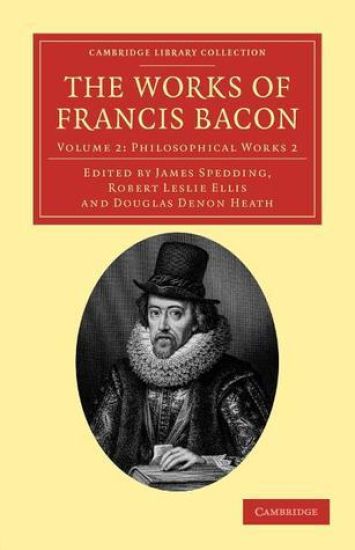
Francis Bacon (1561–1626), the English philosopher, statesman and jurist, is best known for developing the empiricist method which forms the basis of modern science. Bacon's writings concentrated on philosophy and judicial reform. His most significant work is the Instauratio Magna comprising two parts - The Advancement of Learning and the Novum Organum. The first part is noteworthy as the first major philosophical work published in English (1605). James Spedding (1808–81) and his co-editors arranged this fourteen-volume edition, published in London between 1857 and 1874, not in chronological order but by subject matter, so that different volumes would appeal to different audiences. The material is divided into three parts: philosophy and general literature; legal works; and letters, speeches and tracts relating to politics. Volume 2, published in 1857, continues part 1 of Bacon's Latin writings intended to be included as part of the Instauratio Magna.
The Works of Francis Bacon

The Works of Francis Bacon

Francis Bacon

Cambridge University Press
2011
pokkari
Francis Bacon (1561–1626), the English philosopher, statesman and jurist, is best known for developing the empiricist method which forms the basis of modern science. Bacon's writings concentrated on philosophy and judicial reform. His most significant work is the Instauratio Magna comprising two parts - The Advancement of Learning and the Novum Organum. The first part is noteworthy as the first major philosophical work published in English (1605). James Spedding (1808–81) and his co-editors arranged this fourteen-volume edition, published in London between 1857 and 1874, not in chronological order but by subject matter, so that different volumes would appeal to different audiences. The material is divided into three parts: philosophy and general literature; legal works; and letters, speeches and tracts relating to politics. Volume 3, published in 1857, contains Bacon's philosophical works in Latin that either were not intended to be part of the Instauratio Magna or were abandoned.
The Works of Francis Bacon

The Works of Francis Bacon

Francis Bacon

Cambridge University Press
2011
pokkari
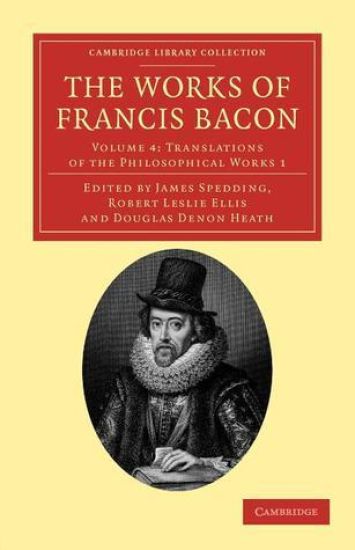
Francis Bacon (1561–1626), the English philosopher, statesman and jurist, is best known for developing the empiricist method which forms the basis of modern science. Bacon's writings concentrated on philosophy and judicial reform. His most significant work is the Instauratio Magna comprising two parts - The Advancement of Learning and the Novum Organum. The first part is noteworthy as the first major philosophical work published in English (1605). James Spedding (1808–81) and his co-editors arranged this fourteen-volume edition, published in London between 1857 and 1874, not in chronological order but by subject matter, so that different volumes would appeal to different audiences. The material is divided into three parts: philosophy and general literature; legal works; and letters, speeches and tracts relating to politics. Volume 4, published in 1858, contains the English translation of Bacon's philosophical works that formed part of the Instauratio Magna.
The Works of Francis Bacon

The Works of Francis Bacon

Francis Bacon

Cambridge University Press
2011
pokkari
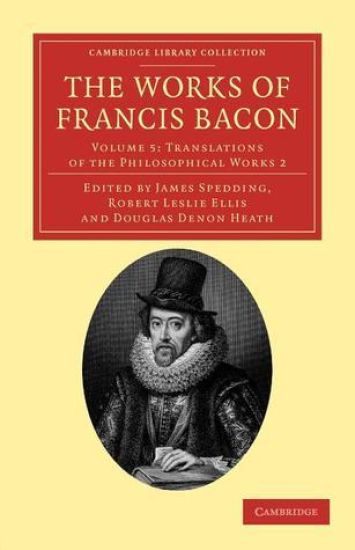
Francis Bacon (1561–1626), the English philosopher, statesman and jurist, is best known for developing the empiricist method which forms the basis of modern science. Bacon's writings concentrated on philosophy and judicial reform. His most significant work is the Instauratio Magna comprising two parts - The Advancement of Learning and the Novum Organum. The first part is noteworthy as the first major philosophical work published in English (1605). James Spedding (1808–81) and his co-editors arranged this fourteen-volume edition, published in London between 1857 and 1874, not in chronological order but by subject matter, so that different volumes would appeal to different audiences. The material is divided into three parts: philosophy and general literature; legal works; and letters, speeches and tracts relating to politics. Volume 5, published in 1858, contains the English translations of the remainder of the Instauratio Magna and his other philosophical writings.
The Works of Francis Bacon

The Works of Francis Bacon

Francis Bacon

Cambridge University Press
2011
pokkari
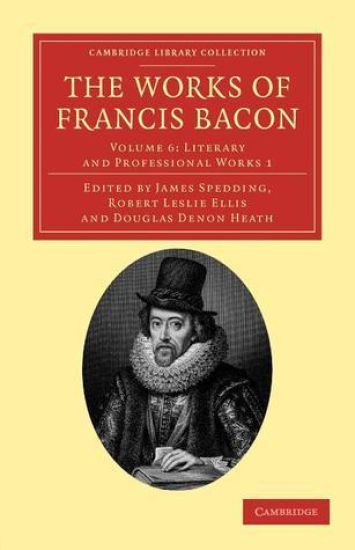
Francis Bacon (1561–1626), the English philosopher, statesman and jurist, is best known for developing the empiricist method which forms the basis of modern science. Bacon's writings concentrated on philosophy and judicial reform. His most significant work is the Instauratio Magna comprising two parts - The Advancement of Learning and the Novum Organum. The first part is noteworthy as the first major philosophical work published in English (1605). James Spedding (1808–81) and his co-editors arranged this fourteen-volume edition, published in London between 1857 and 1874, not in chronological order but by subject matter, so that different volumes would appeal to different audiences. The material is divided into three parts: philosophy and general literature; legal works; and letters, speeches and tracts relating to politics. Volume 6, published in 1858, contains the first part of Bacon's literary works, including his histories in English and Essays or Counsels Civil and Moral in Latin.
The Works of Francis Bacon

The Works of Francis Bacon

Francis Bacon

Cambridge University Press
2011
pokkari
Francis Bacon (1561–1626), the English philosopher, statesman and jurist, is best known for developing the empiricist method which forms the basis of modern science. Bacon's writings concentrated on philosophy and judicial reform. His most significant work is the Instauratio Magna comprising two parts - The Advancement of Learning and the Novum Organum. The first part is noteworthy as the first major philosophical work published in English (1605). James Spedding (1808–81) and his co-editors arranged this fourteen-volume edition, published in London between 1857 and 1874, not in chronological order but by subject matter, so that different volumes would appeal to different audiences. The material is divided into three parts: philosophy and general literature; legal works; and letters, speeches and tracts relating to politics. Volume 7, published in 1859, continues Bacon's literary works including his writings on religion, and contains his professional works on the law.
The Works of Francis Bacon

The Works of Francis Bacon

Francis Bacon

Cambridge University Press
2011
pokkari
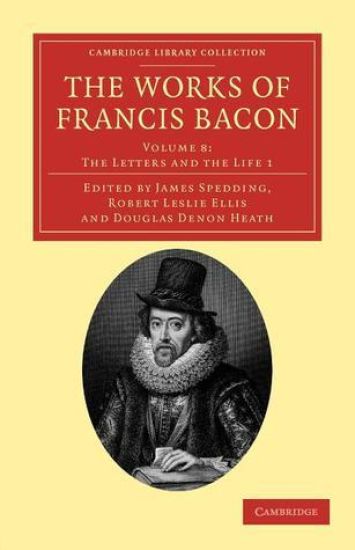
Francis Bacon (1561–1626), the English philosopher, statesman and jurist, is best known for developing the empiricist method which forms the basis of modern science. Bacon's writings concentrated on philosophy and judicial reform. His most significant work is the Instauratio Magna comprising two parts - The Advancement of Learning and the Novum Organum. The first part is noteworthy as the first major philosophical work published in English (1605). James Spedding (1808–81) and his co-editors arranged this fourteen-volume edition, published in London between 1857 and 1874, not in chronological order but by subject matter, so that different volumes would appeal to different audiences. The material is divided into three parts: philosophy and general literature; legal works; and letters, speeches and tracts relating to politics. Volume 8, published in 1862, contains letters, and miscellaneous writings relating to Bacon's political duties from 1561 to 1594, offering a valuable insight into Elizabethan statecraft.
The Works of Francis Bacon

The Works of Francis Bacon

Francis Bacon

Cambridge University Press
2011
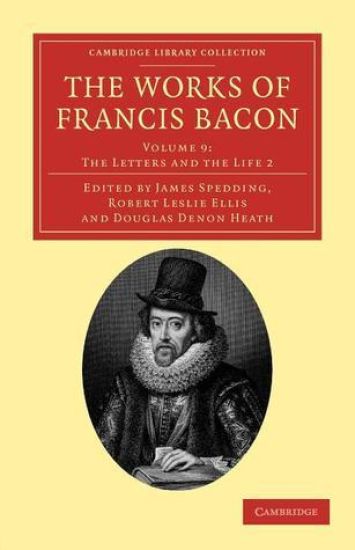
pokkari
Francis Bacon (1561–1626), the English philosopher, statesman and jurist, is best known for developing the empiricist method which forms the basis of modern science. Bacon's writings concentrated on philosophy and judicial reform. His most significant work is the Instauratio Magna comprising two parts - The Advancement of Learning and the Novum Organum. The first part is noteworthy as the first major philosophical work published in English (1605). James Spedding (1808–81) and his co-editors arranged this fourteen-volume edition, published in London between 1857 and 1874, not in chronological order but by subject matter, so that different volumes would appeal to different audiences. The material is divided into three parts: philosophy and general literature; legal works; and letters, speeches and tracts relating to politics. Volume 9, published in 1862, contains letters and political writings from 1595 to 1601, including papers relating to the treason trial of Robert Devereux, Earl of Essex.