Kirjojen hintavertailu. Mukana 12 595 353 kirjaa ja 12 kauppaa.

Kirjahaku

Etsi kirjoja tekijän nimen, kirjan nimen tai ISBN:n perusteella.

9 kirjaa tekijältä Francis Wheen

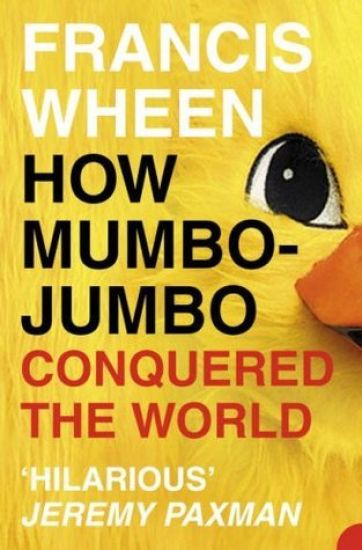
How Mumbo-Jumbo Conquered the World

How Mumbo-Jumbo Conquered the World

Francis Wheen

HARPERCOLLINS PUBLISHERS
2004
nidottu
An entertaining, impassioned polemic on the retreat of reason in the late 20th century. An intellectual call to arms, Francis Wheen’s Sunday Times bestseller is one of 2004’s most talked about books. In 1979 two events occurred that would shape the next twenty-five years. In Britain, an era of weary consensualist politics was displaced by the arrival of Margaret Thatcher, whose ambition was to reassert 'Victorian values'. In Iran, the fundamentalist cleric Ayatollah Ruhollah Khomeini set out to restore a regime that had last existed almost 1,300 years ago. Between them they succeeded in bringing the twentieth century to a premature close. By 1989, Francis Fukuyama was declaring that we had now reached the End of History. What colonised the space recently vacated by notions of history, progress and reason? Cults, quackery, gurus, irrational panics, moral confusion and an epidemic of mumbo-jumbo. Modernity was challenged by a gruesome alliance of pre-modernists and post-modernists, medieval theocrats and New Age mystics. It was as if the Enlightenment had never happened. Francis Wheen, winner of the George Orwell prize, evokes the key personalities of the post-political era – including Princess Diana and Deepak Chopra, Osama Bin-Laden and Nancy Reagan's astrologer – while charting the extraordinary rise in superstition, relativism and emotional hysteria over the past quarter of a century. From UFO scares to dotcom mania, his hilarious and gloriously impassioned polemic describes a period in the world's history when everything began to stop making sense.
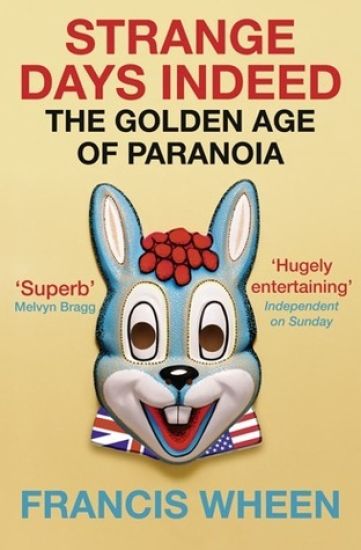
Strange Days Indeed

Strange Days Indeed

Francis Wheen

Fourth Estate Paperbacks
2010
pokkari
â??If the 1960s were a wild weekend and the 1980s a hectic day at the office, the 1970s were a long Sunday evening in winter, with cold leftovers for supper and a power cut expected at any moment.â?? A jaw-droppingly brilliant account of how the seventies was defined by mass paranoia told with Francis Wheenâ??s wonderfully acute sense of the absurd.
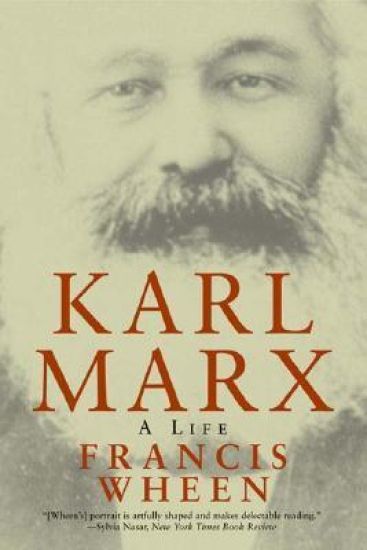
Karl Marx

Karl Marx

Francis Wheen

WW Norton Co
2001
pokkari
In this stunning book, the first comprehensive biography of Marx since the end of the Cold War, Francis Wheen gives us not a socialist ogre but a fascinating, ultimately humane man, while still examining the criticisms of his detractors. A study in contradictions, Karl Marx was at once a reserved scholar, a fiery agitator, and a gregarious socialite, while his intellect and ideology were once described as "Rousseau, Voltaire, and Hegel fused into one person." He lived both at the center and on the fringes of his age, and his oratory and writing continue to change the contemporary world. In his entertaining, offbeat style, Wheen offers an eminently readable biography of one of history's most unforgettable figures. "Wheen's portrait of Marx's life is artfully shaped and makes delectable reading." New York Times "A magnificent portrait of Marx.... Bravo!" A. N. Wilson "[E]xpertly researched, admirably objective, eminently humane, and plenty entertaining." Boston Book Review"
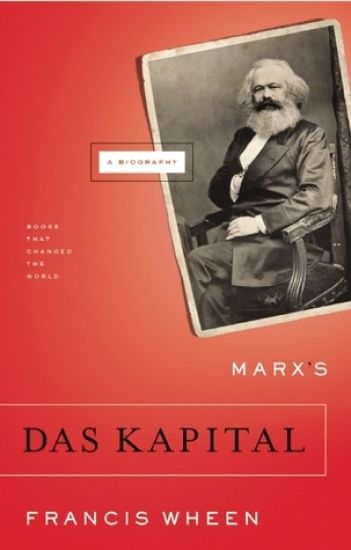
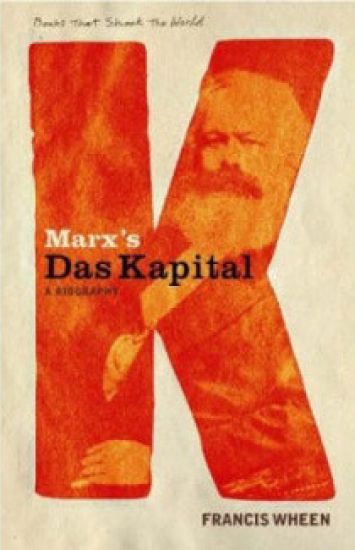
Marx's Das Kapital

Marx's Das Kapital

Francis Wheen

Grove Press / Atlantic Monthly Press
2008
nidottu
In vivid detail, Francis Wheen tells the story of Das Kapital and Karl Marx's twenty-year struggle to complete his unfinished masterpiece. Born in a two-room flat in London's Soho amid political squabbles and personal tragedy, the first volume of Das Kapital was published in 1867, to muted praise. But after Marx's death, the book went on to influence thinkers, writers, and revolutionaries, from George Bernard Shaw to V. I. Lenin, changing the direction of twentieth-century history. Wheen's captivating, accessible book shows that, far from being a dry economic treatise, Das Kapital is like a vast Gothic novel whose heroes are enslaved by the monster they created: capitalism. Furthermore, Wheen argues, as long as capitalism endures, Das Kapital demands to be read and understood.
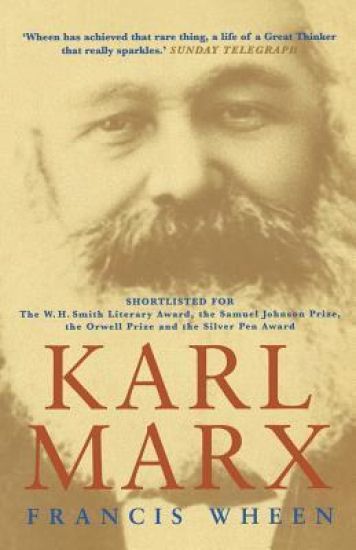
Karl Marx

Karl Marx

Francis Wheen

HARPERCOLLINS PUBLISHERS
2000
nidottu
A major biography of the man who, more than any other, made the twentieth century. Written by an author of great repute. The history of the 20th century is Marx's legacy. Not since Jesus Christ has an obscure pauper inspired such global devotion – or been so calamitously misinterpreted. The end of the century is a good moment to strip away the mythology and try to rediscover Marx the man. There have been many thousands of books on Marxism, but almost all are written by academics and zealots for whom it is a near blaspemy to treat him as a figure of flesh and blood. In the past few years there have been excellent and successful biographies of many eminent Victorians and yet the most influential of them has remained untouched. In this book Francis Wheen, for the first time, presens Marx the man in all his brilliance and frailty – as a poverty-stricken Prussian emigre who became a middle-class English gentleman; as an angry agitator who spent much of his adult life in scholarly silence in the British Museum Reading Room; as a gregarious and convivial host who fell out with almost all his friends; as a devoted family man who impregnated his housemaid; as a deeply earnest philosopher who loved drink, cigars and jokes.
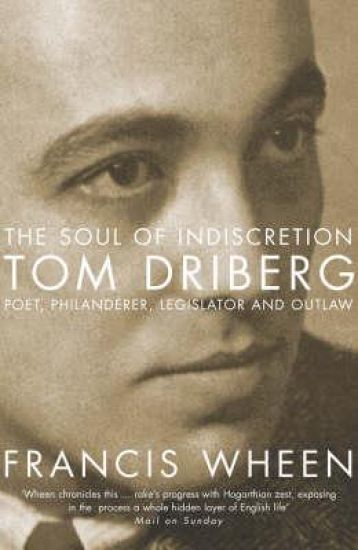
The Soul of Indiscretion

The Soul of Indiscretion

Francis Wheen

Fourth Estate Ltd
2001
nidottu
Francis Wheen’s brilliantly comic portrait of one of the 20th-century’s great characters, Tom Driberg: wit, parliamentarian, serial cottager, alleged communist spy and friend to the Kray brothers. There are few people for whom marriage was so ill-suited yet well attended: at Tom Driberg’s were cabinet ministers and mobsters, Betjeman and Waugh, but it was Osbert Lancaster who commemorated the sheer extraordinariness of the occasion, and with it celebrated the social life of Driberg, and an era of Englishness now passed into history when the Brideshead generation sang the ‘Red Flag’: Friends of yours and friends of mine, Friends we always thought were deadFriends who toe the party line, Friends we know are off their headLabour friends who’re gratified Girl-friends, boy-friends, friends ambiguousAt being allowed to kiss the bride. Coloured friends from the AntiguasArtistic friends, a few of whom Friends ordained and friends unfrocked,Are rather keen to kiss the groom. Friends who leave us slightly shocked,Friends from Oxford, friends from pubs, All determined not to missAnd even friends from Wormwood scrubs. So rare a spectacle as this!
Marx's Das Kapital

Marx's Das Kapital

Francis Wheen

Atlantic Books
2007
nidottu
'The philosophers have only interpreted the world, in various ways; the point is to change it,' wrote Karl Marx in 1845. This is the essence of Das Kapital, a blazing expose of the new capitalist world of the Victorian era, whose ideas would affect the lives of millions, and alter the course of world history. In vivid detail, Francis Wheen tells the story of Marx's twenty-year fight to complete his unfinished masterpiece. Das Kapital was born in a two-room flat in Soho amid political squabbles and personal tragedy. The first volume was published in 1867, to muted praise, but, after Marx's death, went on to influence thinkers, writers and revolutionaries, from George Bernard Shaw to Lenin. Wheen's brilliant and accessible book shows that, far from being a dry economic treatise, Das Kapital is like a vast Gothic novel, whose heroes are enslaved by the monster they created: capitalism. Furthermore, Wheen argues, as long as capitalism endures, Das Kapital demands to be read and understood.
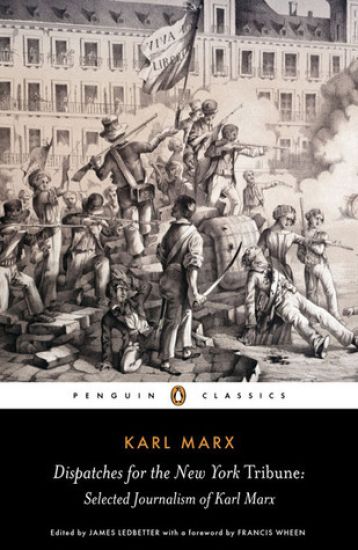
Dispatches for the New York Tribune

Dispatches for the New York Tribune

Karl Marx; Francis Wheen

Penguin Classics
2007
pokkari
Karl Marx (1818-1883) is arguably the most famous political philosopher of all time, but he was also one of the great foreign correspondents of the nineteenth century. During his eleven years writing for the "New York Tribune", Marx tackled an abundance of topics, from issues of class and the state to world affairs.