Kirjojen hintavertailu. Mukana 11 627 220 kirjaa ja 12 kauppaa.

Kirjahaku

Etsi kirjoja tekijän nimen, kirjan nimen tai ISBN:n perusteella.

15 kirjaa tekijältä Frank Baker

Close Reading the Media

Close Reading the Media

Frank Baker

Routledge
2017
sidottu
Teach middle school students to become savvy consumers of the TV, print, and online media bombarding them every day. In this timely book copublished by Routledge and MiddleWeb, media literacy expert Frank W. Baker offers thematic lessons for every month of the school year, so you can engage students in learning by having them analyze the real world around them. Students will learn to think critically about photos, advertisements, and other media and consider the intended purposes and messages. Topics include: Helping students detect fake news; Unraveling the messages in TV advertising; Looking at truth vs propaganda in political ads and debates; Revealing how big media influences the news we read; Understanding how pictures changed America during the Civil Rights Movement; Exploring the language of film and the symbols of costume design; Thinking about how media appeals to our emotions; Examining branding, product placement, and the role of celebrity; Reading and interpreting iconic news images; And much, much more!In addition, the book’s lesson plans contain connections to key standards and step-by-step activities you can use immediately. With this practical book, you’ll have all the tools and ideas you need to help today’s students successfully navigate their media-filled world.
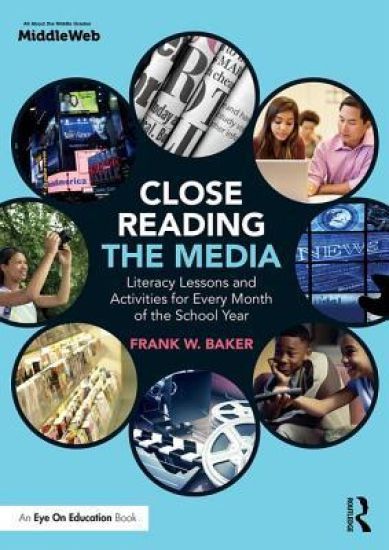
Close Reading the Media

Close Reading the Media

Frank Baker

Routledge
2017
nidottu
Teach middle school students to become savvy consumers of the TV, print, and online media bombarding them every day. In this timely book copublished by Routledge and MiddleWeb, media literacy expert Frank W. Baker offers thematic lessons for every month of the school year, so you can engage students in learning by having them analyze the real world around them. Students will learn to think critically about photos, advertisements, and other media and consider the intended purposes and messages. Topics include: Helping students detect fake news; Unraveling the messages in TV advertising; Looking at truth vs propaganda in political ads and debates; Revealing how big media influences the news we read; Understanding how pictures changed America during the Civil Rights Movement; Exploring the language of film and the symbols of costume design; Thinking about how media appeals to our emotions; Examining branding, product placement, and the role of celebrity; Reading and interpreting iconic news images; And much, much more!In addition, the book’s lesson plans contain connections to key standards and step-by-step activities you can use immediately. With this practical book, you’ll have all the tools and ideas you need to help today’s students successfully navigate their media-filled world.
Random Fascinating Facts About Everything
Welcome to this book Random Fascinating Facts About Anything: Interesting Facts about Pop Culture, Science, History and Everything Else. Here you will read about a selection of specially chosen facts about a wide variety of topics - and hopefully learn something new about the world
Miss Hargreaves

Miss Hargreaves

Frank Baker

Bloomsbury Publishing PLC
2009
nidottu
When, on the spur of a moment, Norman Huntley and his friend Henry invent an eighty-three year-old woman called Miss Hargreaves, they are inspired to post a letter to their new fictional friend. It is only meant to be a silly, harmless game - until Miss Hargreaves arrives on their doorstep, complete with her cockatoo, her harp and - last but not least - her bath. She is, to Norman's utter disbelief, exactly as he had imagined her: enchanting, eccentric and endlessly astounding. He hadn't imagined, however, how much havoc an imaginary octogenarian could wreak in his sleepy Buckinghamshire home town, Cornford. Norman has some explaining to do, but how will he begin to explain to his friends, family and girlfriend where Miss Hargreaves came from when he hasn't the faintest clue himself? Will his once-ordinary, once-peaceful life ever be the same again? And, what's more, does he want it to? Miss Hargreaves is part of The Bloomsbury Group, a new library of books from the early twentieth-century chosen by readers for readers.
Charles Wesley

Charles Wesley

Frank Baker

Wipf Stock Publishers
2017
nidottu
"Charles Wesley is not as well known, even amongst Methodists, as he deserves to be. This seems at first very surprising, in view of the generally acknowledged fact that his hymns were such a strong formative influence in the Methodist Revival, and have since become the treasured possession of the Church Universal. The main reason for the comparative neglect of Charles Wesley is, of course, John Wesley. John has completely overshadowed his younger brother. Reasons are not far to seek. John Wesley's was the more dominant personality. His gift of leadership was far greater. Their views on the relationship between the Methodist societies and the Church of England differed considerably, John being led almost without knowing it--certainly without acknowledging it--into a separation, from which Charles was continually striving to pull him back, occasionally with a severe scolding thrown in. Similarly Charles Wesley did not favor the enhanced status which was accorded by his brother to their lay helpers. Because of these differences Charles kept the peace by retiring into semi-obscurity, a course to which he was urged by the breakdown in his health, and also in a lesser degree by family responsibilities. So it was the Methodism came to be identified both with the views and with the person of John Wesley, whilst 'brother Charles' remained for most people very much in the background." -- From the Introduction
Charles Wesley

Charles Wesley

Frank Baker

Wipf Stock Publishers
2017
sidottu
"Charles Wesley is not as well known, even amongst Methodists, as he deserves to be. This seems at first very surprising, in view of the generally acknowledged fact that his hymns were such a strong formative influence in the Methodist Revival, and have since become the treasured possession of the Church Universal. The main reason for the comparative neglect of Charles Wesley is, of course, John Wesley. John has completely overshadowed his younger brother. Reasons are not far to seek. John Wesley's was the more dominant personality. His gift of leadership was far greater. Their views on the relationship between the Methodist societies and the Church of England differed considerably, John being led almost without knowing it--certainly without acknowledging it--into a separation, from which Charles was continually striving to pull him back, occasionally with a severe scolding thrown in. Similarly Charles Wesley did not favor the enhanced status which was accorded by his brother to their lay helpers. Because of these differences Charles kept the peace by retiring into semi-obscurity, a course to which he was urged by the breakdown in his health, and also in a lesser degree by family responsibilities. So it was the Methodism came to be identified both with the views and with the person of John Wesley, whilst 'brother Charles' remained for most people very much in the background." -- From the Introduction
Representative Verse of Charles Wesley

Representative Verse of Charles Wesley

Frank Baker

Regent College Publishing
2022
pokkari
Charles Wesley was a writer not only of hymns, but of poems of many kinds-devotional, whimsical, satirical, political, controversial, topical, and personal. Their volume is enormous. He himself published 4,600 poems, another 3,000 were published posthumously, and there are still over 1,300 that have so far not been published at all, making a total of over 180,000 lines of verse.The aim of this volume is to provide the means for an adequate appreciation of Charles Wesley as a poet. The verse is divided into three equal sections, "Hymns," "Sacred Poems," and "Miscellaneous Poems." It gives the text of 330 compositions, including examples of a hundred different verse-forms, and many poems that have never been published before.Rev. Dr. Frank Baker (1910-1999), a native of Hull, England, joined the faculty of Duke University in 1960 and assumed the role of general editor of the newly-launched Wesley Works Editorial Project. Over the next twenty years Baker established himself as a premier scholar of the Wesleyan traditions. In addition to his work as a teacher, editor, and bibliophile, Frank Baker published over 250 items focused on Wesley and Methodist Studies.
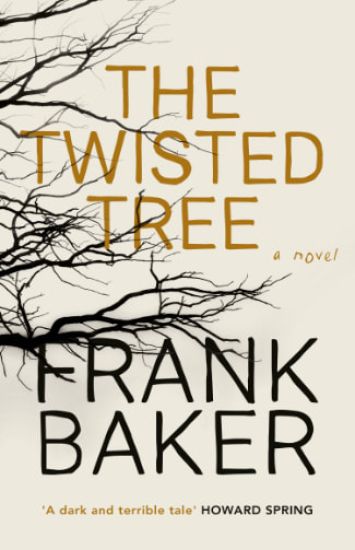
The Twisted Tree (Valancourt 20th Century Classics)
The "twisted tree" is a blackthorn branch, picked by Tansy Penderil, a naive young Cornish girl, on the same day she meets the handsome but diabolical Roger Chailey in the woods for the first time. But it is not the only souvenir of their encounter: eighteen years later, Tansy's son, David, is the living image of Chailey, sharing not only his father's good looks but also his immoral ways. David's resemblance to her first lover triggers powerful feelings in Tansy and leads to a strange relationship between mother and son, as well as a terrible and shocking conclusion . . .The Twisted Tree (1935) is the extremely rare first novel by Frank Baker (1908-1983), best known for his avian apocalypse novel The Birds (1936) and his classic fantasy Miss Hargreaves (1940). A story that one critic said might have been "written by the ghost of D. H. Lawrence seated on the grave of Mary Webb," Baker's brooding Gothic drama is an important rediscovery that remains a gripping and powerful read."A dark and terrible tale." - Howard Spring"An imaginative novel told with a haunting sense of subconscious evil . . . The climax comes with startling effect. A vivid and stirring book." - Manchester Evening News"A thoroughly interesting and often moving tale." - Compton Mackenzie