Kirjojen hintavertailu. Mukana 12 390 323 kirjaa ja 12 kauppaa.

Kirjahaku

Etsi kirjoja tekijän nimen, kirjan nimen tai ISBN:n perusteella.

6 kirjaa tekijältä Frank G. Bosman

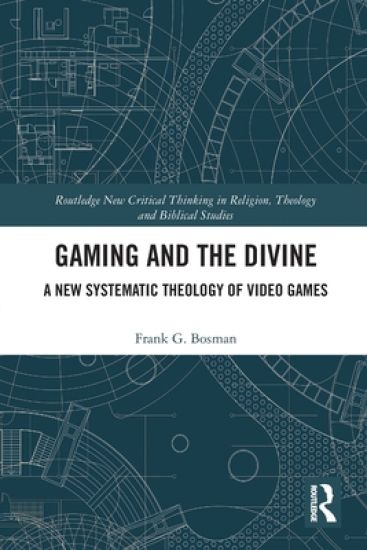
Gaming and the Divine

Gaming and the Divine

Frank G. Bosman

Routledge
2021
nidottu
This book formulates a new theological approach to the study of religion in gaming. Video games have become one of the most important cultural artifacts of modern society, both as mediators of cultural, social, and religious values and in terms of commercial success. This has led to a significant increase in the critical analysis of this relatively new medium, but theology as an academic discipline is noticeably behind the other humanities on this subject. The book first covers the fundamentals of cultural theology and video games. It then moves on to set out a Christian systematic theology of gaming, focusing on creational theology, Christology, anthropology, evil, moral theology, and thanatology. Each chapter introduces case studies from video games connected to the specific theme. In contrast to many studies which focus on online multiplayer games, the examples considered are largely single player games with distinct narratives and ‘end of game’ moments. The book concludes by synthesizing these themes into a new theology of video games. This study addresses a significant aspect of contemporary society that has yet to be discussed in any depth by theologians. It is, therefore, a fantastic resource for any scholar engaging with the religious aspects of digital and popular culture.
Moral Conversion and Video Games

Moral Conversion and Video Games

Frank G. Bosman

TAYLOR FRANCIS LTD
2025
sidottu
Moral Conversion and Video Games is an in-depth exploration of Spec Ops: The Line, a critically acclaimed video game that subverts its genre by confronting players with the psychological and moral consequences of war. Disguised as a standard third-person shooter, the game gradually reveals a dark, self-critical narrative in which the player’s choices, though seemingly free, lead to horrifying outcomes, most notably a white phosphorus attack on civilians. Praised for its story, aesthetic, and philosophical depth, the game has been interpreted as a critique of glorified violence, American exceptionalism, and the illusion of meaningful choice in video games. Its use of cognitive and ludo-narrative dissonance forces players to reflect on their own complicity in virtual violence. The game’s mirrored reference to Raphael’s Sistine Madonna, recast as a burned mother and child, deepens its ethical and even theological resonance. This insightful and in-depth study will interest researchers and students of video game studies, moral philosophy, and cultural theology.
Gaming and the Divine

Gaming and the Divine

Frank G. Bosman

Routledge
2019
sidottu
This book formulates a new theological approach to the study of religion in gaming. Video games have become one of the most important cultural artifacts of modern society, both as mediators of cultural, social, and religious values and in terms of commercial success. This has led to a significant increase in the critical analysis of this relatively new medium, but theology as an academic discipline is noticeably behind the other humanities on this subject. The book first covers the fundamentals of cultural theology and video games. It then moves on to set out a Christian systematic theology of gaming, focusing on creational theology, Christology, anthropology, evil, moral theology, and thanatology. Each chapter introduces case studies from video games connected to the specific theme. In contrast to many studies which focus on online multiplayer games, the examples considered are largely single player games with distinct narratives and ‘end of game’ moments. The book concludes by synthesizing these themes into a new theology of video games. This study addresses a significant aspect of contemporary society that has yet to be discussed in any depth by theologians. It is, therefore, a fantastic resource for any scholar engaging with the religious aspects of digital and popular culture.
Nazi Occultism, Jewish Mysticism, and Christian Theology in the Video Game Series Wolfenstein
The critically acclaimed if controversial game series Wolfenstein is famous for its inclusion of historical objects and figures from the realm of Nazi Occultism, including the Swastika, the Spear of Destiny, the Thule Medallion, Heinrich Himmler, Helena Blavatsky, and Karl Wiligut. The series was criticized for its alleged Nazi glorification and for completely neglecting primary victims of the Second World War, the Jewish people. But since its reboot with Wolfenstein: New Order in 2014, the series has a new, distinct filo semitic flavor, including a number of explicit Jewish characters, a playable concentration camp level, and several theological discussions on God and the existence of evil. In Nazi Occultism, Jewish Mysticism, and Christian Theology in the Video Game Series Wolfenstein, game theologian Frank G. Bosman critically examines both the Nazi occultist and Judaist inspirations and aspirations of the game series, putting forth the question if the series has not invertedly ventured into implicit antisemitic territory by including the Da’at Yichud, a fictional, ancient, and distinct Jewish organization harboring the great minds of history.
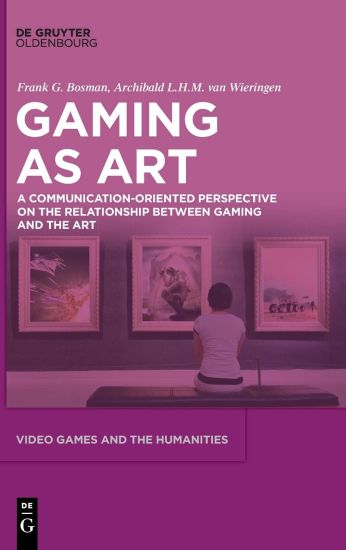
Video Games as Art

Video Games as Art

Frank G. Bosman; Archibald L.H.M. van Wieringen

De Gruyter
2022
sidottu
Video games are a relative late arrival on the cultural stage. While the academic discipline of game studies has evolved quickly since the nineties of the last century, the academia is only beginning to grasp the intellectual, philosophical, aesthetical, and existential potency of the new medium. The same applies to the question whether video games are (or are not) art in and on themselves. Based on the Communication-Oriented Analysis, the authors assess the plausibility of games-as-art and define the domains associted with this question.
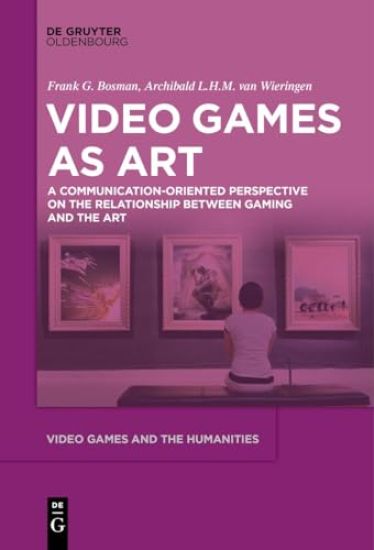
Video Games as Art

Video Games as Art

Frank G. Bosman; Archibald L.H.M. Wieringen

De Gruyter
2024
isokokoinen pokkari
Video games are a relative late arrival on the cultural stage. While the academic discipline of game studies has evolved quickly since the nineties of the last century, the academia is only beginning to grasp the intellectual, philosophical, aesthetical, and existential potency of the new medium. The same applies to the question whether video games are (or are not) art in and on themselves. Based on the Communication-Oriented Analysis, the authors assess the plausibility of games-as-art and define the domains associted with this question.