Kirjojen hintavertailu. Mukana 11 342 296 kirjaa ja 12 kauppaa.

Kirjahaku

Etsi kirjoja tekijän nimen, kirjan nimen tai ISBN:n perusteella.

17 kirjaa tekijältä Frank Kermode

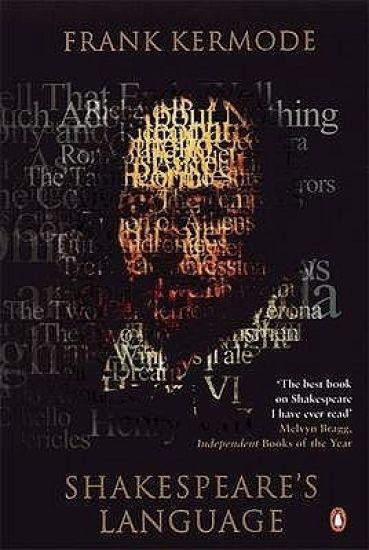
Shakespeare's Language

Shakespeare's Language

Frank Kermode

Penguin Books Ltd
2001
pokkari
The true biography of Shakespeare - and the only one we really need to care about - is in the plays. Sir Frank Kermode, Britain's most distinguished literary critic, has been thinking about them all his life. This book is a distillation of that lifetime's thinking. The great English tragedies were all written in the first decade of the seventeenth century. They are often in language that is difficult to us, and must have been hard even for contemporaries. How and why did Shakespeare's language develop as it did? Kermode argues that the resources of English underwent major change around 1600. The originality of Kermodes's writing, and the intelligence of his discussion, make this book a landmark.
The Sense of an Ending

The Sense of an Ending

Frank Kermode

Oxford University Press Inc
2000
nidottu
Frank Kermode is one of our most distinguished and beloved critics of English literature. Here, he contributes a new epilogue to his collection of classic lectures on the relationship of fiction to age-old concepts of apocalyptic chaos and crisis. Prompted by the approach of the millennium, he revisits the book which brings his highly concentrated insights to bear on some of the most unyielding philosophical and aesthetic enigmas. Examining the works of writers from Plato to William Burroughs, Kermode shows how they have persistently imposed their "fictions" upon the face of eternity and how these have reflected the apocalyptic spirit. Kermode then discusses literature at a time when new fictive explanations, as used by Spenser and Shakespeare, were being devised to fit a world of uncertain beginning and end. He goes on to deal perceptively with modern literature - with "traditionalists" such as Yeats, Eliot, and Joyce, as well as contemporary "schismatics," the French "new novelists," and such seminal figures as Jean-Paul Sartre and Samuel Beckett. Whether weighing the difference between modern and earlier modes of apocalyptic thought, considering the degeneration of fiction into myth, or commenting on the vogue of the Absurd, Kermode is distinctly lucid, persuasive, witty, and prodigal of ideas.
Pleasure and Change

Pleasure and Change

Frank Kermode

Oxford University Press Inc
2006
nidottu
The question of the canon has been the subject of debate in academic circles for over fifteen years. Pleasure and Change contains two lectures on this important subject by the distinguished literary critic Sir Frank Kermode. In essays that were originally delivered as Tanner Lectures at Berkeley in November of 2001, Kermode reinterprets the question of canon formation in light of two related and central notions: pleasure and change. He asks how aesthetic pleasure informs what we find valuable, and how this perception changes over time. Kermode also explores the role of chance, observing the connections between canon formation and unintentional and sometimes even random circumstance. Geoffrey Hartmann (Yale University), John Guillory (New York University), and Carey Perloff (director of the American Conservatory Theatre) offer incisive comments on these essays, to which Kermode responds in a lively rejoinder. The volume begins with a helpful introduction by Robert Alter. The result is a stimulating and accessible discussion of a highly significant cultural debate.
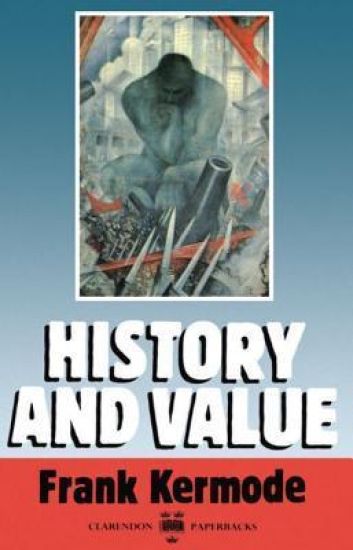
History and Value

History and Value

Frank Kermode

Clarendon Press
1989
nidottu
Frank Kermode returns to the literature of his youth to ask why we appear to have forgotten how urgent and powerful it seemed in a time of economic crisis and imminent world war. The general questions suggested by the title are answered first by a study of bourgeois left wing literature in the 1930s - including a case study of a forgotten novel of the period (Stephen Haggard's Nya, OPB, 1988) - and then by a consideration of the problem of value in work belonging to a period earlier than one's own. The last chapter concentrates on the most recent attempt to make these issues manageable - namely, postmodernism, which rejects all notions of wholeness, and speaks of a catastrophic break with the past.
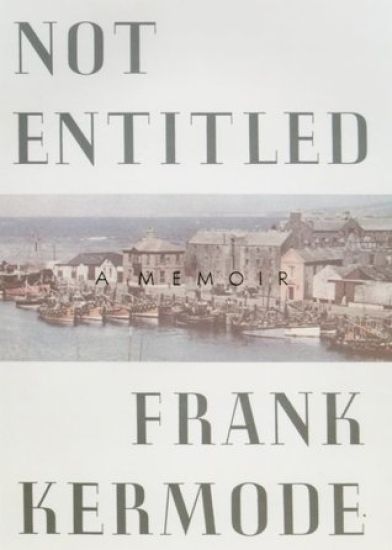
Not Entitled: A Memoir

Not Entitled: A Memoir

Frank Kermode

Farrar, Straus and Giroux
1999
nidottu
From a great critic of english literature, a different kind of text: a luminous account of his own life. Throughout this uniquely personal work, Frank Kermode touches on the deeper, lighter, ineffable issues of autobiography, and he does so with his characteristic grace, precision, and amused wisdom. Tracing his life from his childhood through his six years in the Royal Navy during World War II, from his student days in Liverpool to his battles at Cambridge over the literature curriculum and faculty, he shows us the miraculous connections between life and literature, between the world and the word; more, he transforms and ennobles both.
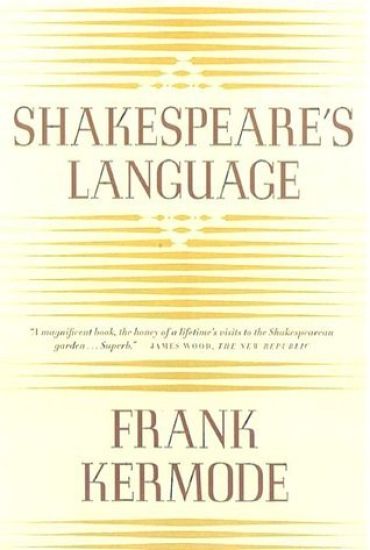
Shakespeare's Language

Shakespeare's Language

Frank Kermode

Farrar Strauss Giroux-3pl
2000
pokkari
A magnum opus from our finest interpreter of The BardThe true biography of Shakespeare--and the only one we need to care about--is in his plays. Frank Kermode, Britain's most distinguished scholar of sixteenth-century and seventeenth-century literature, has been thinking about Shakespeare's plays all his life. This book is a distillation of that lifetime of thinking.The finest tragedies written in English were all composed in the first decade of the seventeenth century, and it is generally accepted that the best ones were Shakespeare's. Their language is often difficult, and it must have been hard even for contemporaries to understand. How did this language develop? How did it happen that Shakespeare's audience could appreciate Hamlet at the beginning of the decade and Coriolanus near the end of it?In this long-awaited work, Kermode argues that something extraordinary started to happen to Shakespeare's language at a date close to 1600, and he sets out to explore the nature and consequences of the dynamic transformation that followed. For it is in the magnificent, suggestive power of the poetic language itself that audiences have always found meaning and value. The originality of Kermode's argument, the elegance and humor of his prose, and the intelligence of his discussion make this a landmark in Shakespearean studies.
Romantic Image

Romantic Image

Frank Kermode

Routledge
2001
sidottu
For the past four decades Frank Kermode, critic and writer, has steadily established himself as one of the most brilliant minds of his generation. Author and editor of over forty books, his prodigious output includes some of the best literary criticism to be published. Questioning the public's harsh perception of 'the artist', Kermode at the same time gently pokes fun at artists' own, often inflated, self-image. He identifies what has become one of the defining characteristics of the Romantic tradition - the artist in isolation and the emerging power of the imagination. The ingeniousness of Kermode's argument and the polish and wit of the writing all serve to identify the book as one of his finest offerings. Back in print after an absence of over a decade, The Romantic Image is quintessential Kermode. Small wonder then that this, one of his earliest works, is such a classic. Enlightenment has seldom been so enjoyable!
Romantic Image

Romantic Image

Frank Kermode

Routledge
2001
nidottu
For the past four decades Frank Kermode, critic and writer, has steadily established himself as one of the most brilliant minds of his generation. Questioning the public's harsh perception of 'the artist', Kermode at the same time gently pokes fun at artists' own, often inflated, self-image. He identifies what has become one of the defining characteristics of the Romantic tradition - the artist in isolation and the emerging power of the imagination. Back in print after an absence of over a decade, The Romantic Image is quintessential Kermode. Enlightenment has seldom been so enjoyable!
Shakespeare, Spenser, Donne

Shakespeare, Spenser, Donne

Frank Kermode

Routledge
2004
sidottu
First published in 1971. This collection of essays discusses some of the central works and areas of literature in the Renaissance period of cultural history. Contents include: Spenser and the Allegorists; The Faerie Queene, I and V; The Cave of Mammon; The Banquet of Sense; John Donne; The Patience of Shakespeare; Survival fo the Classic; Shakespeare's Learning; The Mature Comedies; The Final Plays.
Shakespeare, Spenser, Donne

Shakespeare, Spenser, Donne

Frank Kermode

Routledge
2014
nidottu
First published in 1971. This collection of essays discusses some of the central works and areas of literature in the Renaissance period of cultural history. Contents include: Spenser and the Allegorists; The Faerie Queene, I and V; The Cave of Mammon; The Banquet of Sense; John Donne; The Patience of Shakespeare; Survival fo the Classic; Shakespeare's Learning; The Mature Comedies; The Final Plays.
An Appetite for Poetry

An Appetite for Poetry

Frank Kermode

HARVARD UNIVERSITY PRESS
1989
sidottu
Frank Kermode is the preeminent practitioner of the art of criticism in the English-speaking world. As such his task entails the readiness to evaluate in general terms the widest range of texts, both ancient and modern, and also the ability to make public sense of the seemingly arcane debates about theories of literature as they pertain to the ongoing process of evaluation. It has been Kermode's distinction to make a virtue--as all the best critics have done--of the necessarily occasional nature of his profession. That virtue is evident in every page of this set of essays. This is a book in which Kermode asks the reader to share his pleasure in the literature of a set of major writers--Milton, Eliot, Stevens. He vividly evokes Milton after the Restoration of Charles II, with a fine speculative discussion of the interplay between his personal and political circumstances and the preoccupations of his poetry. He sets before us T. S. Eliot living in a condition of permanent exile, Wallace Stevens in his old age dwelling poetically in Connecticut, and author/critic William Empson, whose singular career was marked by both the pleasure of the text and the delight in conceptual issues that characterizes so much of the contemporary taste for theory. Other essays draw our attention to debates on the literary canon and problems of biblical criticism and their implications for the study of narrative in particular and the interpretation of secular literary texts in general. These are professional essays that nevertheless defy the excesses of modern professionalism. Nowhere is this more evident than in the polemical Prologue to the book, in which Kermode sorts out the good from the meretricious in contemporary criticism. He argues that some proclaimed theorists "seem largely to have lost interest in literature," while the best, like Paul de Man and Jacques Derrida, have never lost what Kermode prizes most highly, the very appetite or hunger for poetry and literature. Always readable, elegant even on gnarled matters, and courteous in contexts where others are bad-tempered, An Appetite for Poetry is the work of one of the most distinguished minds of our time. In reaffirming the professional responsibilities of criticism now being neglected, it displays a generous hospitality to new ideas.
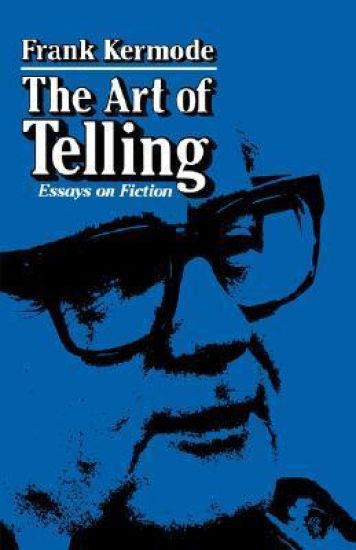
The Art of Telling

The Art of Telling

Frank Kermode

Harvard University Press
1985
pokkari
Kermode assesses the revolutionary transformations in literary criticism over the last fifteen years and places them in historical perspective. Examining novels ranging in scope from a 1907 bestseller to the avant-garde works of various periods, he includes such writers as Conrad, Ford Madox Ford, Michel Butor, and Thomas Pynchon.
The Classic

The Classic

Frank Kermode

Harvard University Press
1983
nidottu
Frank Kermode attempts to determine the criteria for classical literature through an analysis of the social and intellectual importance of great works of the past.
The Genesis of Secrecy

The Genesis of Secrecy

Frank Kermode

Harvard University Press
1980
nidottu
Frank Kermode has long held a distinctive place among modern critics. He brings to the study of literature a fine and fresh critical intelligence that is always richly suggestive, never modish. He offers here an inquiry—elegant in conception and style—into the art of interpretation. His subject quite simply is meanings; how they are revealed and how they are concealed.Drawing on the venerable tradition of biblical interpretation, Mr. Kermode examines some enigmatic passages and episodes in the gospels. From his reading come ideas about what makes interpretation possible—and often impossible. He considers ways in which narratives acquire opacity, and he asks whether there are methods of distinguishing all possible meaning from a central meaning which gives the story its structure. He raises questions concerning the interpretation of single texts in relation to their context in a writer’s work and a tradition; considers the special interpretative problems of historical narration; and tries to relate the activities of the interpreter to interpretation more broadly conceived as a means of living in the world.While discussing the gospels, Mr. Kermode touches upon such literary works as Kafka’s parables, Joyce’s Ulysses, Henry James’s novels, and Pynchon’s Crying of Lot 49. By showing the relationships between religious interpretation and literary criticism, he has enhanced both fields.
The Uses of Error

The Uses of Error

Frank Kermode

HARVARD UNIVERSITY PRESS
1991
sidottu
"The history of interpretation, the skills by which we keep alive in our minds the light and dark of past literature and past humanity, is to an incalculable extent a history of error." So writes Frank Kermode of a history to which he has contributed many luminous pages. This book is a record of Kermode's "error," his wandering through literature past and present. He notes that "in thirty-odd years I have written several hundred reviews, an example I would strongly urge the young not to follow." From these hundreds Kermode has selected the pieces he treasures most, and they provide an example that indeed will be difficult to follow. The Uses of Error contains some of Kermode's very best writing. Again and again he proves himself to be more than a commentator or chronicler; he is rather a creator of cultural value in his interaction with the texts at hand. The appeal of this book is broad. Everything is here from Augustine to Ari s on death and dying, from Wilde to Woolf and writer's block, from Joachim of Fiore to Flaubert's Parrot. In a phrase or an aside on any of these subjects Kermode can open a vista, wither a reputation, or spotlight an intellectual mantrap. The core of the volume is a group of essays on the central figures of modern English literature. Kermode tells more here--about Tennyson, Shaw, Forster, and Eliot--than most people could in twice the space. His brief, vivid, and sympathetic writings extol the range of British writing and mark out the difference between an interest that is solely academic and the richer view of one who writes from inside the culture and shares a common experience with its interpreters. There is also Kermode the man. He saves a set of autobiographical essays until the end, and they are a veritable dessert for those who read the volume straight through. But they will stand first in the reader's memory afterward, because they give body to the mind so clearly in evidence throughout the book. Kermode shows us the means by which he gained the perspective to become a transnational critic--not a critic on the margin, but one who shows us where the margins are. For anyone who is not yet familiar with Frank Kermode's work, this is the place to begin. For those who are already acquainted with it, here is the chance to see the pattern of the whole.
Concerning E.M. Forster

Concerning E.M. Forster

Frank Kermode

Weidenfeld Nicolson
2010
pokkari
A major reassessment of the one of the greatest English novelist of the twentieth century, from celebrated critic Sir Frank Kermode.CONCERNING E.M. FORSTER is a rich, varied and original portrait of a literary great. When Sir Frank Kermode delivered the Clark Lectures at Cambridge University, he chose E.M. Forster as his subject; these lectures form the core of this book. Kermode reappraises the influence and meaning of Forster's oeuvre, offering a fascinating interpretation of his most celebrated work, A PASSAGE TO INDIA.There follows a series of interweaving discussions that bring to life diverse topics - Empire, class, poverty, the condition of the novel, the role of the artist - but always return to our enigmatic subject. Kermode also reflects on Forster's considerable talent and shortcomings, places him within a wider social context, and casts spotlight on his contemporaries, presenting a unique panorama of twentieth-century English literature.
Romantic Image

Romantic Image

Frank Kermode

Routledge
2016
sidottu
For the past four decades Frank Kermode, critic and writer, has steadily established himself as one of the most brilliant minds of his generation. Questioning the public's harsh perception of 'the artist', Kermode at the same time gently pokes fun at artists' own, often inflated, self-image. He identifies what has become one of the defining characteristics of the Romantic tradition - the artist in isolation and the emerging power of the imagination. Back in print after an absence of over a decade, The Romantic Image is quintessential Kermode. Enlightenment has seldom been so enjoyable!