Kirjojen hintavertailu. Mukana 12 016 292 kirjaa ja 12 kauppaa.

Kirjahaku

Etsi kirjoja tekijän nimen, kirjan nimen tai ISBN:n perusteella.

5 kirjaa tekijältä Frank R. Werner

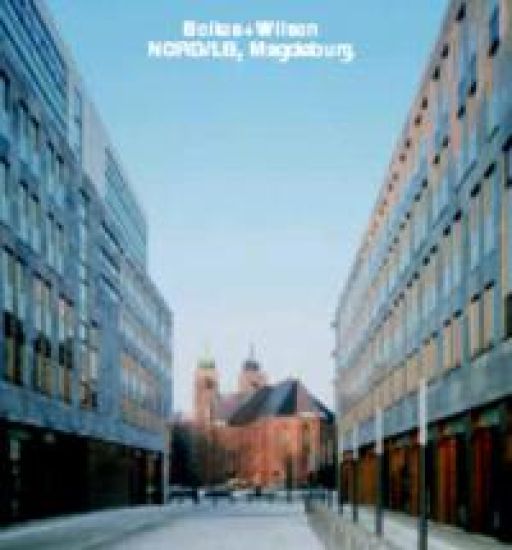
Bolles + Wilson Landeszentralbank, Magdeburg

Bolles + Wilson Landeszentralbank, Magdeburg

Frank R. Werner

Edition Axel Menges
2004
sidottu
Text in English and German. Julia Bolles-Wilson and Peter L Wilson have built a large number of striking, thoroughly detailed cultural and commercial buildings in recent years, all sharing the characteristic that they stubbornly resist superficial stylistic categorisation. Their buildings are articulated and positioned in an unmistakable way in their respective urban spaces, thanks to pointed breaks with rational space configurations, sculptural shapes for architectural silhouettes and the use of polychrome surfaces.
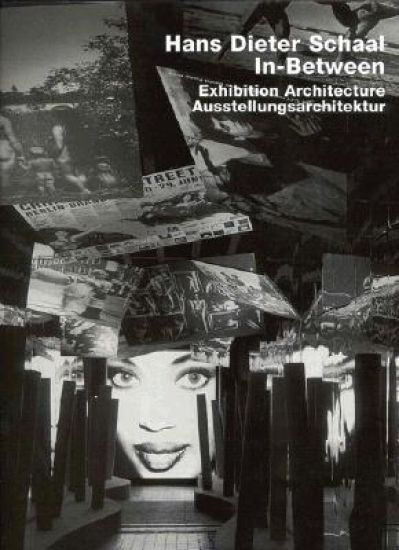
Hans Dieter Schaal

Hans Dieter Schaal

Frank R. Werner

Edition Axel Menges
1998
sidottu
Hans Dieter Schaal is already something of a cultural institution in Germany. Trained as an architect, he always operates outside the "main stream", designing and realizing stage sets, sculptures, cemeteries, parks, squares, spatial installations or book projects, which are often trendsetting in their own field. In the last ten years Schaal has established a focal point that seems to be the sum of all his themes: exhibition architecture. He has provided expansive installations for the broadest possible range of exhibition subjects in such high-volume buildings as the Martin-Gropius-Bau or the Zeughaus in Berlin, the Haus der Geschichte in Bonn, the Kunstvereinsgebäude in Stuttgart, the Deutsches Postmuseum or the Palazzo delle Esposizioni in Rome. His work was never mere exhibition design in these cases. Instead of this he was always concerned to tell spatial stories about the exhibits or their historical background. Of course he was able to draw on his experience in stage-set design here. Admittedly Schaal would not be Schaal, if he were not to use the whole stock of ideas from his decades of lateral thinking or his insatiable search for archetypes and images. On occasions this has meant that Schaal's exhibitions were ad-mired simply of their spatial sensations. It was only the very few people who were prepared to analyse the extraordinarily extensive and complex work more profoundly who found a carefully established subliminal relationship network of selected motifs running through all his exhibition installations like a central theme. Sometimes they come from his own early work, sometimes from literary or cinematic finds, then again from psychological-philosophical footnotes or even private obsessions. Such image particles constitute a thought-edifice perhaps comparable only with Aby Warburg's legendary picture archive which breaks right through the bounds of traditional exhibition architecture. Frank R. Werner has been director of the Institut für Architektur-geschichte und Architekturtheorie at the Bergische Universität in Wuppertal since 1993. He studied painting, architecture and architectural history at the Kunstakademie in Mainz, the Technische Hochschule in Hanover and Stuttgart University.
Ivano Gianola, LAC Lugano Arte e Cultura, Lugano

Ivano Gianola, LAC Lugano Arte e Cultura, Lugano

Frank R. Werner

Edition Axel Menges
2015
sidottu
Text in English & Italian. Ivano Gianola is one of the founding members of the so-called Ticino School. Like the other significant figures of this legendary school he is primarily concerned with urban-development and architectonic quality of building in the Canton of Ticino. The extensive uvre that has sprung from this concern has produced a plethora of intuitively designed, distinctive buildings. After more than ten years of planning and building, Gianola's most extensive project and at the same time the largest project of the Canton of Ticino to date is now open to the public. The new Cultural and Art Centre of Lugano is located directly on the shore of Lake Lugano. The spacious and spatially differentiated new building is an architectonic hybrid that combines a museum for contemporary art, a convention centre, various restaurants and cafés as well as a theatre under one roofscape. The theatre is not only equipped as an optimal venue for operas and theatrical performances, but can also be used as a concert hall or convention auditorium. Moreover the urban configuration of the new complex functions as a most convincing contemporary gateway to the largest city in Ticino. This Opus volume tries to decipher not only the obvious and hidden urban-planning aspects of this major project but also its multilayered formal esthetic and haptic connotations. Thereby the book pays tribute to a high point of contemporary Ticino architecture and to Ivano Gianola's late masterpiece.
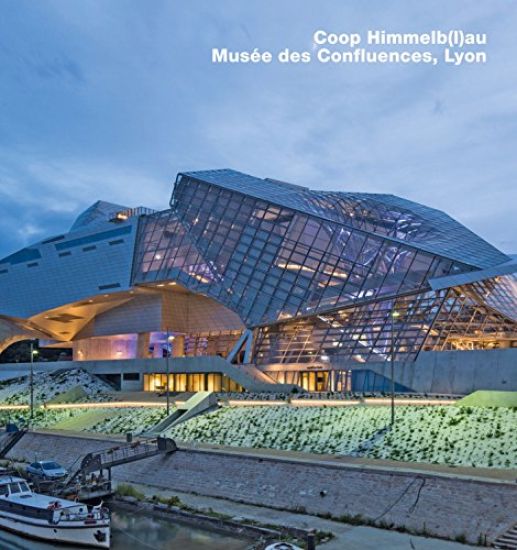
Coop Himmelb(l)au, Musée des Confluences, Lyon

Coop Himmelb(l)au, Musée des Confluences, Lyon

Frank R. Werner

Edition Axel Menges
2015
sidottu
Since the end of the 20th century, an unprecedented number of remarkable museums have been built. None have had bigger worldwide implications than Frank Gehry's Guggenheim Museum in Bilbao (199197). Until, that is, the new Musée des Confluences in Lyon was opened to the public, in late 2014. It was created by Wolf D. Prix of the Coop Himmelb(l)au team, which was founded in the 1970s. Many avant-garde groups from those wild years such as Archigram, Superstudio, Archizoom, Haus-Rucker-Co, and the Japanese Metabolists are now consigned to the past, but the Coop Himmelb(l)au architecture firm, whose special aspiration was always to bring into the world buildings that overcome the pull of the earth buildings 'to float on the horizon like clouds' is more in demand than ever. The finest demonstration of this endeavour to date can now be admired in Lyon. Functioning as a museum of human history, this impressive concrete, metal and glass colossus truly does appear to float above the peninsula at the confluence of the Rhône and the Saône. Like the Guggenheim Museum in Bilbao, this new building, so impossible to overlook, is an inspiration for the revita-lisation of disrupted urban areas and the valorisation of derelict industrial areas within the city precincts, but also far beyond Lyon. This Opus volume deals with the origins, construction, function and formal appearance of the Musée des Confluences, and also offers a preliminary theoretically based evaluation of the architecture of the building. Frank R. Werner was professor of history and architecture theory at the Staatliche Akademie der Bildenden Künste Stuttgart from 1990 until 1994 and director of the Institut für Architekturgeschichte und Architekturtheorie at the Bergische Universität in Wuppertal from 1993 until his retirement in 2012. He studied painting, architecture and history of architecture in Mainz, Hanover and Stuttgart. Christian Richters studied communication design at the Folkwang-schule in Essen. He is one of the most sought-after architecture photographers in Europe. To date he has been represented in the Opus series by 14 volumes, including ones about the embassies of the Nordic countries and the Bode Museum in Berlin, the Nieuwe Luxor Theater in Rotterdam and the BMW Welt in Munich. See also: Opus 66. Coop Himmelb(l)au, BMW Welt, München, Edition Axel Menges 2009.
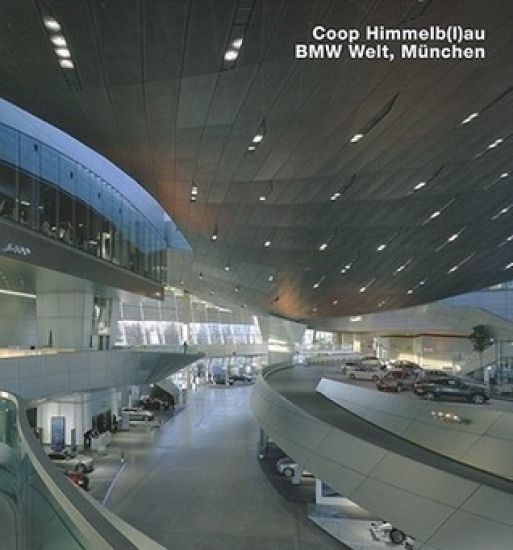
Coop Himmelb(l)au, BMW-Welt, Munchen

Coop Himmelb(l)au, BMW-Welt, Munchen

Frank R. Werner

Edition Axel Menges
2023
sidottu
Text in English & German. The architects in the Viennese Coop Himmelb(l)au team have felt committed to the credo of constructing cities and buildings that float like clouds ever since the practice was founded in 1968, though it did take a while before gently curving, "floating" buildings became a reality. It was not until new, computer-aided design and building methods and the use of innovative building materials came along recently that it became possible to realise even unthinkable architectural hybrids so light that they actually do seem to float. So the new Musée des Confluences is currently under construction in Lyon, a cloud that has been in the planning phase for some years. And a cloud building like this also does exist in reality in Munich in the form of the new BMW World, conceived by Coop Himmelb(l)au and recently opened. This new building completes the spectacular trio of museum buildings, the Mercedes-Benz and the Porsche Museum in Stuttgart, by UNStudio and Delugan Meissl Associated Architects respectively. A series of excellent interior and exterior photographs provide a record of this demonstration project by BMW. The urban-sculptural and internal spatial qualities of the new BMW World are also analysed thoroughly, and dealt with in detail in the contexts of Coop Himmelb(l)au's older and more recent work. The question is also addressed of the extent to which the structural and material shape of the building actually corresponds with an image of something light enough to float. The presentation is rounded off by a digression into the world of "branding", which has learned how to use spectacular architecture more and more directly as a publicity factor, and to convey an image, or as an artefact.