One of the central questions facing anyone involved in education is can you actually teach anyone to think? To begin to answer this question, it is necessary to know what thinking means. Frank Smith is one of the most influential writers in education today. His work on reading in particular has had a seminal effect on classroom practice throughout the English-speaking world. At the core of all his work has been this issue of the nature of thought. In this book, he analyses the language of thinking and then moves on to look at different aspects of the thinking process: everyday thought, creative and critical thought. Finally he looks critically at the various methods currently advocated for teaching children to think, arguing that learning to think is in the end less a matter of instruction than of experience and opportunity.
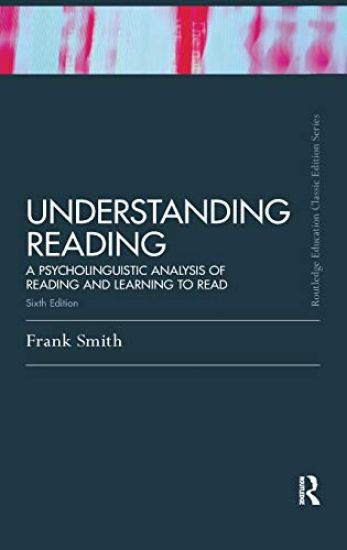
Understanding Reading revolutionized reading research and theory when the first edition appeared in 1971 and continues to be a leader in the field. In the sixth edition of this classic text Smith’s purpose remains the same: to shed light on fundamental aspects of the complex human act of reading – linguistic, physiological, psychological, and social – and of what is involved in learning to read. The text critically examines current theories, instructional practices, and controversies, covering a wide range of disciplines but always remains accessible. Careful attention is given to the ideological clash that continues between whole language and direct instruction and currently permeates every aspect of theory and research into reading and reading instruction. In every edition, including the present one, Smith has steadfastly resisted giving teachers a recipe for teaching reading, while aiming to help them make their own decisions, based on research about reading, which is accessible to anyone, and their experience and personal knowledge of their students, which only they possess. To aid readers in making up their own minds, each chapter concludes with a brief statement of "Issues." Understanding Reading, Sixth Edition is matchless in integrating a wide range of topics relative to reading while, at the same time, being highly readable and user-friendly for instructors, students, and practitioners.
Exploring the relationship between the writer and what he/she happens to be writing, this text by one of the foremost scholars in the field of literacy and cognition is a unique and original examination of writing--as a craft and as a cognitive activity. The book is concerned with the physical activity of writing, the way the nervous system recruits the muscles to move the pen or manipulate the typewriter. It considers the necessary disciplines of writing, such as knowledge of the conventions of grammar, spelling, and punctuation. In particular, there is a concern with how the skills underlying all these aspects of writing are learned and orchestrated. This second edition includes many new insights from the author's significant experience and from recent research, providing a framework for thinking about the act of writing in both theoretical and practical ways. A completely new chapter on computers and writing is included, as well as more about the role of reading in learning to write, about learning to write at all ages, and about such controversial issues as whether and how genre theory should be taught. Written in nontechnical language, this text will continue to be accessible and stimulating to a wide range of readers concerned with writing, literacy, thinking, and education. Furthermore, it has an educational orientation, therefore proving relevant and useful to anyone who teaches about writing or endeavors to teach writing.
Exploring the relationship between the writer and what he/she happens to be writing, this text by one of the foremost scholars in the field of literacy and cognition is a unique and original examination of writing--as a craft and as a cognitive activity. The book is concerned with the physical activity of writing, the way the nervous system recruits the muscles to move the pen or manipulate the typewriter. It considers the necessary disciplines of writing, such as knowledge of the conventions of grammar, spelling, and punctuation. In particular, there is a concern with how the skills underlying all these aspects of writing are learned and orchestrated. This second edition includes many new insights from the author's significant experience and from recent research, providing a framework for thinking about the act of writing in both theoretical and practical ways. A completely new chapter on computers and writing is included, as well as more about the role of reading in learning to write, about learning to write at all ages, and about such controversial issues as whether and how genre theory should be taught. Written in nontechnical language, this text will continue to be accessible and stimulating to a wide range of readers concerned with writing, literacy, thinking, and education. Furthermore, it has an educational orientation, therefore proving relevant and useful to anyone who teaches about writing or endeavors to teach writing.
This book delves into how we come to terms with ourselves, with other people, and with the world in general. It is about how we come to be what we are, and to think the way we do. It is a book about influences on this process. A particular influence to which Smith gives central consideration is language, not just in terms of the communicative networks in which it engages us--the “information” that presents itself to us--but in the largely unsuspected framework for thought that lies within language itself. He also considers deeply the role of technology.This is a book of description, not of explanations--these are two quite different intellectual territories. Smith writes about what can be observed, not philosophized about. Thus he does not discuss the inner workings of the human brain. His claim is that what he is interested in--thinking, learning, understanding, remembering--have never been found in the brain. The aim is to describe the scope and limits for how we can be seen to think, learn, understand, and remember--but not to “explain” such behavior by recourse to hypothetical inner entities.Ourselves speaks especially to educators. It outlines the possibilities and limitations inherent in all of us. It delineates who we are, but also stresses that no two people are the same, that what we become depends on our journeys in life and the people we encounter on the way. The formal part of learning that is called education is particularly sensitive to the role of people who organize critical experiences for us, our teachers. The brief summaries at the end of each chapter reinforce and highlight points that are of particular relevance to teachers. Researchers, professionals, and graduate students across the fields of literacy education, psychology of reading, learning theory, human learning, educational psychology, and psycholinguistics will find this book compelling.
In this thought-provoking book, Frank Smith explains how schools and educational authorities systematically obstruct the powerful inherent learning abilities of children, creating handicaps that often persist through life. The author contrasts a false and fabricated ""official theory"" that learning is work (used to justify the external control of teachers and students through excessive regulation and massive testing) with a correct but officially suppressed ""classic view"" that learning is a social process that can occur naturally and continually through collaborative activities. This book should be of interest in a time whan national authorities continue to blame teachers and students for alleged failures in education. It should help teachers and parents to combat sterile attitudes toward teaching and learning and help them to prevent current practices from doing further harm.
Following his years of studying human intellectual accomplishments such as language, reading, writing, thinking, and learning, Frank Smith now turns his critical lens on the teaching and learning of mathematics. In The Glass Wall, Smith helps us to understand why some people find the world of mathematics so compelling while others find it so difficult. This original volume examines two different worlds: the physical world (our familiar world of objects and events) and the world of mathematics (a completely different domain of experience), and the glass wall that can exist between them. Smith argues that, because the language used to talk about these two worlds is not the same, many people find themselves behind the glass wall, on the outside looking in. Chapters discuss: - What is Mathematics? - Making Sense of Mathematics - The Mathematics in Language - The Meaning of Numbers - Getting Beyond the Glass Wall
Reading Without Nonsense remains a groundbreaking, humanistic antidote to the managed ""systems"" approach to reading instruction. In his extensively revised fourth edition, Frank Smith brings teachers and teacher educators up to date on how reading should not be taught. It is a necessary reminder that reading and learning to read are natural activities. There is a massive assault on the independence of teachers of reading, mandated under the No Child Left Behind legislation, which regards reading as an unnatural act requiring contrived systematic instruction. Now more important than ever, ""Reading Without Nonsense, Fourth Edition"" provides the evidence and arguments that teachers need to resist this mechanistic view. As Frank Smith emphasizes, the act of reading has never changed despite all the changes in materials, procedures, and methodology proposed by people with an interest in how reading is taught. ""Reading Without Nonsense"" remains one of the most authoritative, influential, informative, and accessible texts on reading and learning to read. This bestseller is popular with classroom teachers and university professors as well as administrators, parents, and everyone concerned with literacy and education.
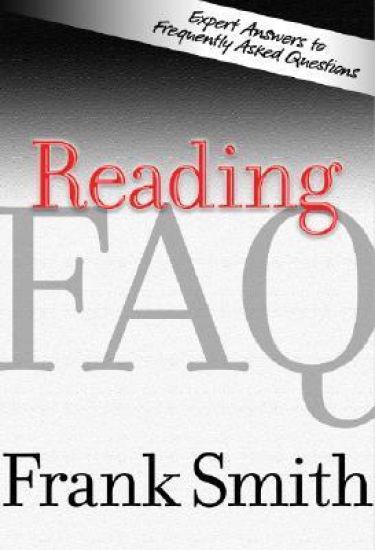
Learning to read should be easy and effortless, but in schools today it often is not. Why is this so? In his characteristically readable and provocative style, Frank Smith examines these and other questions, and provides answers. The author of over 20 books on reading, writing, thinking, and learning, Frank Smith is an acknowledged world leader in clarifying critical issues for teachers. In his latest book, he addresses questions that he is frequently asked at workshops and conferences about learning, prediction, phonics, stories, meaning, writing, and the brain.
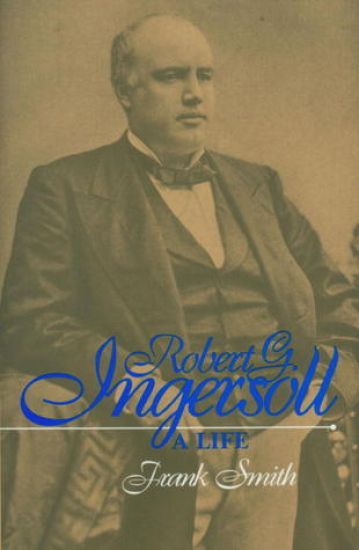
Robert G Ingersoll (1833-1899) was a complex figure - a brilliant lawyer and orator who courageously advanced the concept of free-thought; a magnetic extrovert whose public esteem, eagerly sought, never earned him the private favours he so generously bestowed on others. Ingersoll was a staunch republican in the great tradition of Abraham Lincoln, and he vigorously championed such progressive causes as equal rights for blacks, women, and children; liberal divorce laws; and better wages and conditions for workers. Perhaps Ingersoll's greatest legacy derives from his daring rejection of religious superstition (during an era which saw a tremendous revival of spiritualism and religious fundamentalism) and his ardent belief in humanity.Ingersoll is considered one of the most prominent figures of the 19th century. From about 1880 to his death in 1899, he probably spoke to more Americans in person than anyone before or since; he had daily audiences of as many as three thousand people while he was on tour, several months a year for many years. Despite this, Ingersoll's career has not yet received the attention it clearly merits. In this comprehensive work, Frank Smith explores the life and thought of this charismatic figure, using newspaper accounts of the time and extensive quotations from Ingersoll's correspondence. Ingersoll's words provide a vivid portrait of 19th-century America from the stormy antebellum period to the beginnings of modern industrialism. His life reflects the great current of his age and speaks forcefully to the problems of our own.
Understanding Reading revolutionized reading research and theory when the first edition appeared in 1971 and continues to be a leader in the field. In the sixth edition of this classic text Smith’s purpose remains the same: to shed light on fundamental aspects of the complex human act of reading – linguistic, physiological, psychological, and social – and of what is involved in learning to read. The text critically examines current theories, instructional practices, and controversies, covering a wide range of disciplines but always remains accessible. Careful attention is given to the ideological clash that continues between whole language and direct instruction and currently permeates every aspect of theory and research into reading and reading instruction. In every edition, including the present one, Smith has steadfastly resisted giving teachers a recipe for teaching reading, while aiming to help them make their own decisions, based on research about reading, which is accessible to anyone, and their experience and personal knowledge of their students, which only they possess. To aid readers in making up their own minds, each chapter concludes with a brief statement of "Issues." Understanding Reading, Sixth Edition is matchless in integrating a wide range of topics relative to reading while, at the same time, being highly readable and user-friendly for instructors, students, and practitioners.
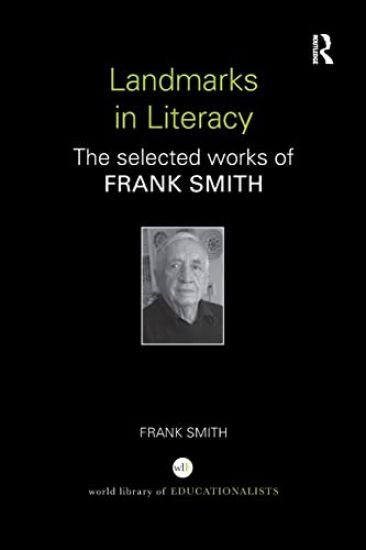
Frank Smith is internationally acclaimed as an essential contributor to research on the nature of reading and as an originator of the modern psycholinguistic approach to reading instruction. In his publications his aim has always been to support teachers, to encourage them to make teaching decisions based on knowledge and understanding, to analyze what their students are trying to do and why what the students are doing doesn’t always correspond with what they are expected to do. Now the major topics addressed in his work are available in one volume, Landmarks in Literacy, a thoughtfully crafted selection of 16 of his key writings. In the World Library of Educationalists, international scholars themselves compile career-long collections of what they judge to be their finest works so the world can read them in a single manageable volume. Readers thus are able to follow the themes and strands of their work and see their contribution to the development of a field, as well as the development of the field itself.
One of the central questions facing anyone involved in education is can you actually teach anyone to think? To begin to answer this question, it is necessary to know what thinking means. Frank Smith is one of the most influential writers in education today. His work on reading in particular has had a seminal effect on classroom practice throughout the English-speaking world. At the core of all his work has been this issue of the nature of thought. In this book, he analyses the language of thinking and then moves on to look at different aspects of the thinking process: everyday thought, creative and critical thought. Finally he looks critically at the various methods currently advocated for teaching children to think, arguing that learning to think is in the end less a matter of instruction than of experience and opportunity.
Frank Smith is internationally acclaimed as an essential contributor to research on the nature of reading and as an originator of the modern psycholinguistic approach to reading instruction. In his publications his aim has always been to support teachers, to encourage them to make teaching decisions based on knowledge and understanding, to analyze what their students are trying to do and why what the students are doing doesn’t always correspond with what they are expected to do. Now the major topics addressed in his work are available in one volume, Landmarks in Literacy, a thoughtfully crafted selection of 16 of his key writings. In the World Library of Educationalists, international scholars themselves compile career-long collections of what they judge to be their finest works so the world can read them in a single manageable volume. Readers thus are able to follow the themes and strands of their work and see their contribution to the development of a field, as well as the development of the field itself.