Kirjojen hintavertailu. Mukana 12 390 323 kirjaa ja 12 kauppaa.

Kirjahaku

Etsi kirjoja tekijän nimen, kirjan nimen tai ISBN:n perusteella.

12 kirjaa tekijältä Frank Trentmann

Empire of Things: How We Became a World of Consumers, from the Fifteenth Century to the Twenty-First
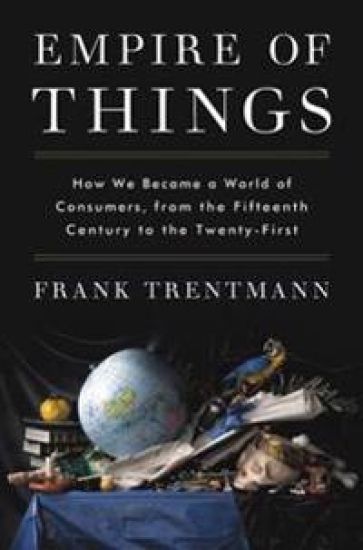
"Empire of Things isn't just an insightful and surprisingly entertaining read, but a crucial one."--NPR What we consume has become a central--perhaps the central--feature of modern life. Our economies live or die by spending, we increasingly define ourselves by our possessions, and this ever-richer lifestyle has had an extraordinary impact on our planet. How have we come to live with so much stuff, and how has this changed the course of history?In Empire of Things, Frank Trentmann unfolds the extraordinary story of our modern material world, from Renaissance Italy and late Ming China to today's global economy. While consumption is often portrayed as a recent American export, this monumental and richly detailed account shows that it is in fact a truly international phenomenon with a much longer and more diverse history. Trentmann traces the influence of trade and empire on tastes, as formerly exotic goods like coffee, tobacco, Indian cotton and Chinese porcelain conquered the world, and explores the growing demand for home furnishings, fashionable clothes and convenience that transformed private and public life. The nineteenth and twentieth centuries brought department stores, credit cards and advertising, but also the rise of the ethical shopper, new generational identities and, eventually, the resurgence of the Asian consumer.With an eye to the present and future, Frank Trentmann provides a long view on the global challenges of our relentless pursuit of more--from waste and debt to stress and inequality. A masterpiece of research and storytelling many years in the making, Empire of Things recounts the epic history of the goods that have seduced, enriched and unsettled our lives over the past six hundred years.
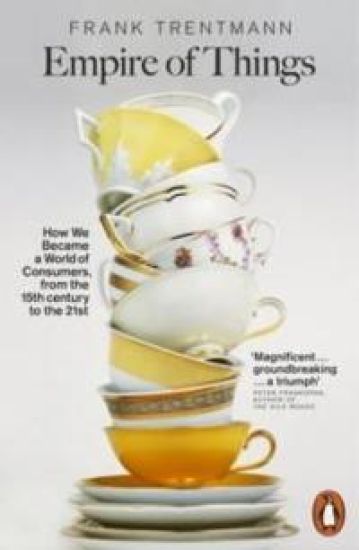
Empire of Things

Empire of Things

Frank Trentmann

Penguin Books Ltd
2017
pokkari
In this monumental study, acclaimed historian Frank Trentmann unfolds the extraordinary history that has shaped our material world, from late Ming China, Renaissance Italy and the British Empire to the present. Astonishingly wide-ranging and richly detailed, Empire of Things explores how we have come to live with so much more, how this changed the course of history, and the global challenges we face as a result.
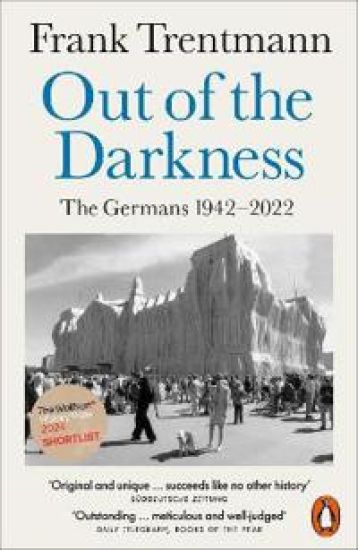
Out of the Darkness

Out of the Darkness

Frank Trentmann

PENGUIN BOOKS LTD
2024
pokkari
Shortlisted for the 2024 Wolfson History PrizeA Telegraph and Der Spiegel Book of the YearSueddeutsche Zeitung's Number One Most Important Political Book of 2023Die Zeit, ZDF, Deutschlandfunk, taz Number One, Best Non-Fiction Books December 2023 and January 2024A Telegraph and Der Spiegel Book of the YearSueddeutsche Zeitung's Number One Most Important Political Book of 2023Die Zeit, ZDF, Deutschlandfunk, taz Number One, Best Non-Fiction Books December 2023 and January 2024A groundbreaking new history of the people at the centre of Europe, from the Second World War to todayIn 1945, Germany lay in ruins, morally and materially. The German people stood condemned by history, responsible for a horrifying genocide and a war of extermination. But by 2015 Germany looked to many to be the moral voice of Europe, welcoming almost one million refugees. At the same time, it pursued a controversially rigid fiscal discipline and made energy deals with a dictator. Many people have asked how Germany descended into the darkness of the Nazis, but this book asks another vital question: how, and how far, have the Germans since reinvented themselves?Trentmann tells the dramatic story of the Germans from the middle of the Second World War, through the Cold War and the division into East and West, to the fall of the Berlin Wall and the reunited nation's search for a place in the world. Their journey is marked by extraordinary moral struggles: guilt, shame and limited amends; wealth versus welfare; tolerance versus racism; compassion and complicity. Through a range of voices - German soldiers and German Jews; environmentalists and coal miners; families and churches; volunteers, migrants and populists - Trentmann paints a remarkable and surprising portrait over 80 years of the conflicted people at the centre of Europe.
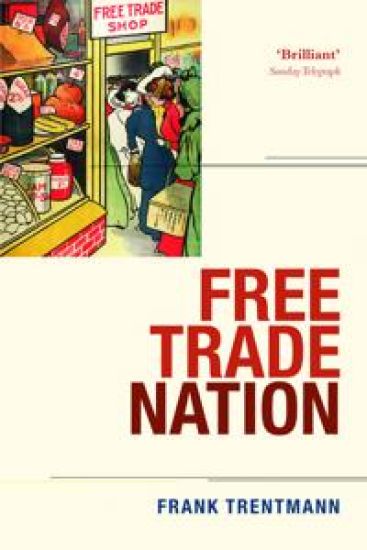
Free Trade Nation

Free Trade Nation

Frank Trentmann

Oxford University Press
2009
nidottu
One of Britain's defining contributions to the modern world, Free Trade united civil society and commerce and gave birth to consumer power. In this book, Frank Trentmann shows how the doctrine of Free Trade contributed to the growth of a democratic culture in Britain - and how it fell apart. Far from the cold economic doctrine of today, in an earlier battle over globalization Free Trade was a passionately held ideal, central to public life and national identity. Free Trade inspired popular entertainment and advertising, in seaside resorts, shows, and shopping streets. It mobilized an alliance of elites and the people, businessmen and working-class women, imperialists and internationalists. Free Trade Nation follows the creation of this culture in nineteenth-century Britain, and its subsequent unravelling in the First World War and the depression of the 1930s, when consumers and internationalists, labour and business now attacked it for sacrificing international stability and domestic welfare at the temple of cheapness. These successful attacks marked the end of a defining chapter in history.The popular culture of Free Trade was never to return. For anyone interested in the current problem of globalization, this book offers a vivid and thought-provoking perspective on the success and failure of Free Trade. For champions of trade liberalization, it is a reminder that culture, ethics and popular communication matter just as much as sound economics. Believers in Fair Trade, by contrast, will be surprised to learn that in the past it was Free Trade, not Fair Trade, that was seen to stand for values such as democracy, justice, and peace.
Out of the Darkness

Out of the Darkness

Frank Trentmann

PENGUIN BOOKS LTD
2023
sidottu
Shortlisted for the 2024 Wolfson History PrizeA Telegraph and Der Spiegel Book of the YearSueddeutsche Zeitung's Number One Most Important Political Book of 2023Die Zeit, ZDF, Deutschlandfunk, taz Number One, Best Non-Fiction Books December 2023 and January 2024A groundbreaking new history of the people at the centre of Europe, from the Second World War to todayIn 1945, Germany lay in ruins, morally and materially. The German people stood condemned by history, responsible for a horrifying genocide and a war of extermination. But by 2015 Germany looked to many to be the moral voice of Europe, welcoming almost one million refugees. At the same time, it pursued a controversially rigid fiscal discipline and made energy deals with a dictator. Many people have asked how Germany descended into the darkness of the Nazis, but this book asks another vital question: how, and how far, have the Germans since reinvented themselves?Trentmann tells the dramatic story of the Germans from the middle of the Second World War, through the Cold War and the division into East and West, to the fall of the Berlin Wall and the reunited nation's search for a place in the world. Their journey is marked by extraordinary moral struggles: guilt, shame and limited amends; wealth versus welfare; tolerance versus racism; compassion and complicity. Through a range of voices - German soldiers and German Jews; environmentalists and coal miners; families and churches; volunteers, migrants and populists - Trentmann paints a remarkable and surprising portrait over 80 years of the conflicted people at the centre of Europe.
Out of the Darkness: The Germans, 1942-2022

Out of the Darkness: The Germans, 1942-2022

Frank Trentmann

Knopf Publishing Group
2024
sidottu
#1 Most Important Political Book of 2023, Sueddeutsche Zeitung (Germany)A Best Book of 2023, The Telegraph (Great Britain) A gripping and nuanced history of the German people from World War II to the war in Ukraine, including revealing new primary source material on Germany's transformation In 1945, Germany lay in ruins, morally and materially. Its citizens stood condemned by history, responsible for a horrifying genocide and war of extermination. But by the end of Angela Merkel's tenure as chancellor in 2021, Germany looked like the moral voice of Europe, welcoming more than one million refugees, holding together the tenuous threads of the European Union, and making military restraint the center of its foreign policy. At the same time, Germany's rigid fiscal discipline and energy deals with Vladimir Putin have cast a shadow over the present. Innumerable scholars have asked how Germany could have degenerated from a nation of scientists, poets, and philosophers into one responsible for genocide. This book raises another vital question: How did a nation whose past has been marked by mass murder, a people who cheered Adolf Hitler, reinvent themselves, and how much? Trentmann tells this dramatic story of the German people from the middle of World War II through the Cold War and the division into East and West to the fall of the Berlin Wall and the struggle to find a place in the world today. This journey is marked by a series of extraordinary moral conflicts: admissions of guilt and shame vying with immediate economic concerns; restitution for some but not others; tolerance versus racism; compassion versus complicity. Through a range of voices--German soldiers and German Jews; displaced persons in limbo; East German women and shopkeepers angry about energy shortages; opponents and supporters of nuclear power; volunteers helping migrants and refugees, and right-wing populists attacking them--Trentmann paints a remarkable and surprising portrait spanning eighty years of the conflicted people at the center of Europe, showing how the Germans became who they are today.