Kirjojen hintavertailu. Mukana 11 342 296 kirjaa ja 12 kauppaa.

Kirjahaku

Etsi kirjoja tekijän nimen, kirjan nimen tai ISBN:n perusteella.

103 kirjaa tekijältä Franz Boas

A Franz Boas Reader

A Franz Boas Reader

Franz Boas

University of Chicago Press
1989
nidottu
"The Shaping of American Anthropology is a book which is outstanding in many respects. Stocking is probably the leading authority on Franz Boas; he understands Boas's contributions to American anthropology, as well as anthropology in general, very well. . . . He is, in a word, the foremost historian of anthropology in the world today. . . . The reader is both a collection of Boas's papers and a solid 23-page introduction to giving the background and basic assumptions of Boasian anthropology."—David Schneider, University of Chicago "While Stocking has not attempted to present a person biography, nevertheless Boas's personal characteristics emerge not only in his scholarly essays, but perhaps more vividly in his personal correspondence. . . . Stocking is to be commended for collecting this material together in a most interesting and enjoyable reader."—Gustav Thaiss, American Anthropologist
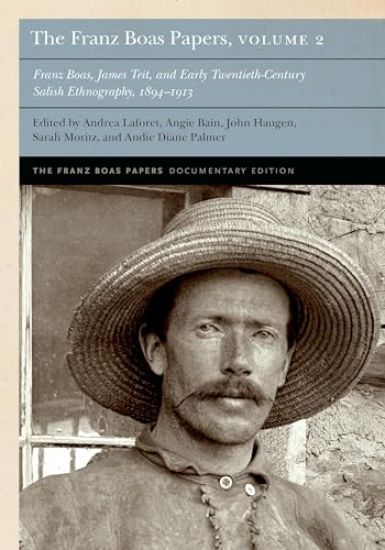
The Franz Boas Papers, Volume 2

The Franz Boas Papers, Volume 2

Franz Boas

University of Nebraska Press
2024
sidottu
The Franz Boas Papers, Volume 2 explores the development of the ethnography of Salishan-speaking societies on the North American Plateau as revealed through the correspondence between Franz Boas and the Scottish-born James Teit, who married into an Interior Salish family and community and became fluent in the Nlaka’pamux language. The letters between Teit (1864–1922) and Boas (1858–1942) chronicle Teit’s varied career as an ethnographer, from shortly after his initial meeting with Boas in 1894 until Teit’s death at the age of fifty-eight. A postscript documents Boas’s contribution to Teit’s legacy through the posthumous publication of the manuscripts Teit left unfinished at his death. Teit made significant contributions to ethnography and the history of southern British Columbia through his photography of the people with whom he worked, his contributions to ethnomusicology and ethnobotany, his anthologies of mythic narrative, and his collections of Interior Salish-primarily Nlaka’pamux-material culture. In addition to collaborating with Boas in the development of Interior Salish ethnography, between 1909 and 1922 Teit worked to support Indigenous groups in British Columbia who were seeking recognition of Aboriginal title and resolution of their outstanding land claims.The Franz Boas Papers, Volume 2 meticulously tracks the impact of the differing career trajectories of Teit and Boas on the primary product of their collaboration-the initial development of the ethnography of societies speaking Interior Salish languages. This second volume of the Franz Boas Papers Documentary Edition is an essential primary source of archival materials for research libraries and for students and scholars of Northwest Coast and Interior Mountain West ethnohistory, Native American and Indigenous studies, history of anthropology, and modern U.S. history. It is also an essential source for Indigenous and settler descendant communities.
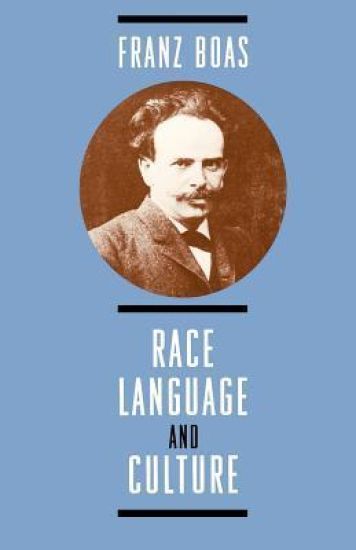
Race, Language, and Culture

Race, Language, and Culture

Franz Boas

University of Chicago Press
1995
nidottu
This volume is a collection of the most important essays written by Franz Boas on the science of anthropology."Franz Boas is the father of American anthropology and one of the founders of the field of modern anthropology. The book, Race, Language, and Culture, is a collection of some of his most important essays."—David Schneider, University of Chicago "An exceptional book. Exceptional because it brings into one volume sixty-two papers written by the most influential figure in American anthropology. . . . Exceptional in that it exhibits the wide range of interests and scientific exactness which made it possible for one man to exert such a profound influence on the growing science of anthropology. . . . This is a volume every student of anthropology will wish to possess; it will also have a wide distribution among other students of the social sciences, and all interested in the problems of race."—Fay-Cooper Cole, American Anthropologist
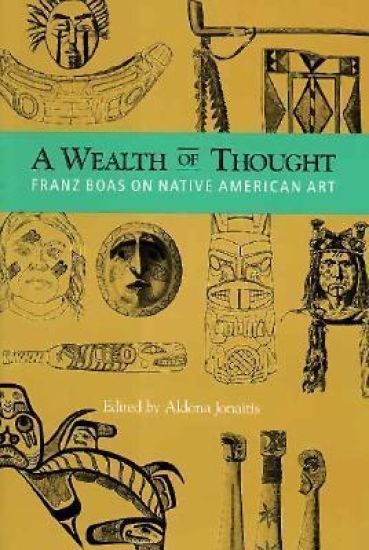
A Wealth of Thought

A Wealth of Thought

Franz Boas

University of Washington Press
1995
pokkari
Although Franz Boas--one of the most influential anthropologists of the twentieth century--is best known for his voluminous writings on cultural, physical, and linguistic anthropology, he is also recognized for breaking new ground in the study of so-called primitive art. His writings on art have major historical value because they embody a profound change in art history.Nineteenth-century scholars assumed that all art lay on a continuum from primitive to advanced: artworks of all nonliterate peoples were therefore examples of early stages of development. But Boas's case studies from his own fieldwork in the Pacific Northwest demonstrated different tenets: the variety of history, the influence of diffusion, the symbolic and stylistic variation in art styles found among groups and sometimes within one group, and the role of imagination and creativity on the part of the artist.This volume presents Boas's most significant writings on art (dated 1889-1916), many originally published in obscure sources now difficult to locate. The original illustrations and an extensive, combined bibliography are included.Aldona Jonaitis's careful compilation of articles and the thorough historical and theoretical framework in which she casts them in her introductory and concluding essays make this volume a valuable reference for students of art history and Northwest anthropology, and a special delight for admirers of Boas.
A Wealth of Thought

A Wealth of Thought

Franz Boas

University of Washington Press
2015
sidottu
Although Franz Boas--one of the most influential anthropologists of the twentieth century--is best known for his voluminous writings on cultural, physical, and linguistic anthropology, he is also recognized for breaking new ground in the study of so-called primitive art. His writings on art have major historical value because they embody a profound change in art history.Nineteenth-century scholars assumed that all art lay on a continuum from primitive to advanced: artworks of all nonliterate peoples were therefore examples of early stages of development. But Boas's case studies from his own fieldwork in the Pacific Northwest demonstrated different tenets: the variety of history, the influence of diffusion, the symbolic and stylistic variation in art styles found among groups and sometimes within one group, and the role of imagination and creativity on the part of the artist.This volume presents Boas's most significant writings on art (dated 1889-1916), many originally published in obscure sources now difficult to locate. The original illustrations and an extensive, combined bibliography are included.Aldona Jonaitis's careful compilation of articles and the thorough historical and theoretical framework in which she casts them in her introductory and concluding essays make this volume a valuable reference for students of art history and Northwest anthropology, and a special delight for admirers of Boas.
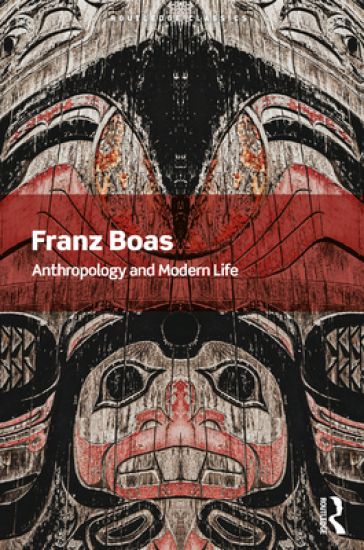
Anthropology and Modern Life

Anthropology and Modern Life

Franz Boas

Routledge
2021
nidottu
Franz Boas (1858–1942) is widely regarded as the founder of American anthropology. He influenced an astonishing variety of scholars and researchers, from the anthropologists Margaret Mead and Ruth Benedict, to the philosopher W. E. B. DuBois, and novelist Zora Neale Hurston. Towards the end of his life he also lectured widely in an attempt to educate the public on the dangers of Nazi ideology.Anthropology and Modern Life demonstrates the incredibly rich and fertile range of Boas’s thought, engaging with controversies that resonate loudly today: the problem of race and racial types; heredity versus environment; the significance of intelligence tests; open versus closed societies; the ‘nature versus nurture debate’; and nationality and nationalism. Believing passionately that science should be used to break down racial and cultural barriers, from the book's very opening Boas shatters the myth that anthropology is simply a collection of ‘curious facts about exotic peoples’. Thanks to Boas's influence, anthropologists and other social scientists began to see that differences among the races resulted not from physiological factors, but from historical events and circumstances, and that race itself was a cultural construct.This Routledge Classics edition includes a new Foreword by Regna Darnell and an Introduction and Afterword by Herbert S. Lewis, who details Franz Boas's life, influence, and ideals."In writing the present book I desired to show that some of the most firmly rooted opinions of our times appear from a wider point of view as prejudices, and that a knowledge of anthropology enables us to look with greater freedom at the problems confronting our civilization." - Franz Boas, Anthropology and Modern Life
Anthropology and Modern Life

Anthropology and Modern Life

Franz Boas

Routledge
2021
sidottu
Franz Boas (1858–1942) is widely regarded as the founder of American anthropology. He influenced an astonishing variety of scholars and researchers, from the anthropologists Margaret Mead and Ruth Benedict, to the philosopher W. E. B. DuBois, and novelist Zora Neale Hurston. Towards the end of his life he also lectured widely in an attempt to educate the public on the dangers of Nazi ideology.Anthropology and Modern Life demonstrates the incredibly rich and fertile range of Boas’s thought, engaging with controversies that resonate loudly today: the problem of race and racial types; heredity versus environment; the significance of intelligence tests; open versus closed societies; the ‘nature versus nurture debate’; and nationality and nationalism. Believing passionately that science should be used to break down racial and cultural barriers, from the book's very opening Boas shatters the myth that anthropology is simply a collection of ‘curious facts about exotic peoples’. Thanks to Boas's influence, anthropologists and other social scientists began to see that differences among the races resulted not from physiological factors, but from historical events and circumstances, and that race itself was a cultural construct.This Routledge Classics edition includes a new Foreword by Regna Darnell and an Introduction and Afterword by Herbert S. Lewis, who details Franz Boas's life, influence, and ideals."In writing the present book I desired to show that some of the most firmly rooted opinions of our times appear from a wider point of view as prejudices, and that a knowledge of anthropology enables us to look with greater freedom at the problems confronting our civilization." - Franz Boas, Anthropology and Modern Life
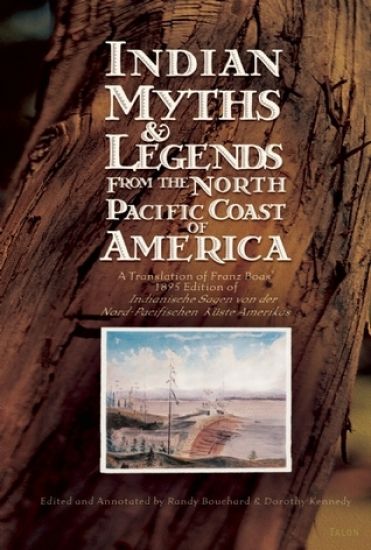
Indian Myths & Legends from the North Pacific Coast of America
With this new paperback edition, readers now have affordable access to what is considered Boas' most important and foundational work. This translation is based on the 1895 German publication of "Indianische Sagen von der Nord-Pacifischen Kuste Amerikas" which gathered together in a single volume his earliest research in British Columbia, consisting of 250 B.C. This work includes first Nations myths and legends.