Kirjojen hintavertailu. Mukana 11 244 527 kirjaa ja 12 kauppaa.

Kirjahaku

Etsi kirjoja tekijän nimen, kirjan nimen tai ISBN:n perusteella.

34 kirjaa tekijältä Frederic G. Reamer

Ethical Dilemmas in Social Service

Ethical Dilemmas in Social Service

Frederic G. Reamer

Columbia University Press
1993
pokkari
Through provocative case studies, Ethical Dilemmas in Social Service introduces social work professionals to a wide range of complex and controversial concerns in ethical theory and practice. Reamer illuminates the ethical concerns involved in working with individuals and families and the design and implementation of social welfare programs and policies. This new edition includes a guide to ethical decisions and a discussion of recent legal precedents regarding confidentiality. Also new are an investigation of the use of peer ethics committees and an examination of the particular ethical concerns of social workers in private practice.
The Philosophical Foundations of Social Work

The Philosophical Foundations of Social Work

Frederic G. Reamer

Columbia University Press
1995
pokkari
Although the field of social work has grown to encompass knowledge and understanding of such issues as mental illness, poverty, aging, substance abuse, and community development, the profession's philosophical foundations have gone largely unexamined. In "The Philosophical Foundations of Social Work", Frederic Reamer explores basic assumptions regarding the purpose, method, and perspective on which the social work profession rests, and demonstrates their far-reaching implications for practice and research. Beginning with an original and succinct assessment of political philosophy - specifically, the state's role in social welfare, distributive justice, equality, and welfare rights - Reamer turns his attention to major themes such as moral philosophy, logic, epistemology, and aesthetics. While Reamer's philosophical framework is nuanced and sophisticated, he never loses sight of the practical applications of his theories in regard to casework, group practice, family intervention, social policy, and administration.
Social Work Research and Evaluation

Social Work Research and Evaluation

Frederic G. Reamer

Columbia University Press
1998
sidottu
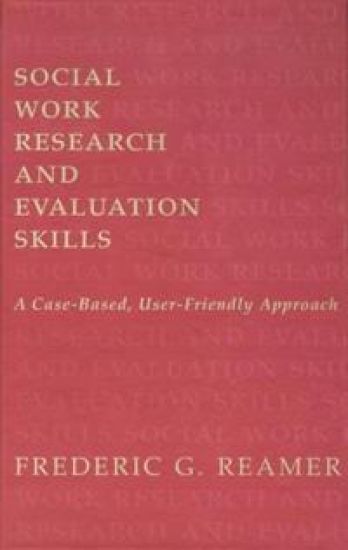
The role of research and evaluation in the field of social work has changed significantly since the 1970s. Practicing social workers are increasingly expected to be able to evaluate a client's progress and to research established methods for dealing with particular issues. moreover, groundbreaking research is no longer the exclusive preserve of academics or professional researchers. Practicing social workers are increasingly depended upon to develop, evaluate, and disseminate new methods and information. This text shows how research issues come about, and are resolved, in the course of daily practice. Reamer uses a single extended example of the fictional Mt. Washington Family Service Agency. The chapters draw on the many issues dealt with by the agency with extensive use of real-life examples, such as drug and alcohol abuse, depression, community organizing and reports to the board of directors. He demonstrates how case-workers, counsellors and administrators evaluate the effectiveness of interventions, conduct needs assessments, draw on empirically-based literature and findings to inform their practice, and finally create and disseminate information for use by other professionals. Clearly written and including humorous anecdotes and cartoon drawing to engage students, this book also provides a picture of the relevance of research and evaluation to any social work practice.
Tangled Relationships

Tangled Relationships

Frederic G. Reamer

Columbia University Press
2001
sidottu
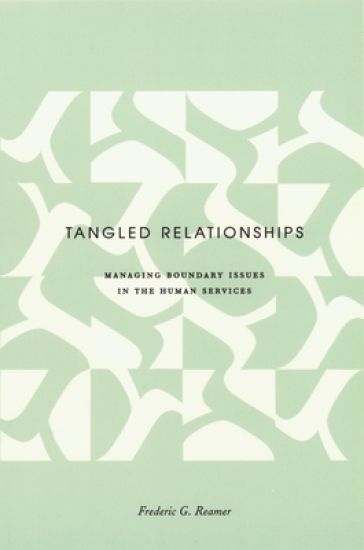
Should a therapist counsel a former lover or accept a client's gift? If so, has a boundary been crossed? Some boundary issues, like beginning a sexual relationship with a client, are obvious pitfalls to avoid, but what about more subtle issues, like hugging a client or disclosing personal information to a client? What are the boundaries of maintaining a friendship with a former client or the relative of a client? When do conflicts of interest overburden the client-practitioner relationship? Frederic Reamer, a leading authority on professional ethics, offers a definitive and up-to-date analysis of boundary issues, a rapidly emerging topic in the field of human services. One of the only works in the field to provide a conceptual framework for the dual relationship between practitioner and client, this book provides an in-depth look at the complex forms these relationships take. It also gives practical risk-management models to aid human service professionals in the prevention of problematic situations and the managing of dual relationships. Reamer examines the ethics involving intimate and sexual relationships with clients and former clients, practitioners' self-disclosure, giving and receiving favors and gifts, bartering for services, and unavoidable and unanticipated circumstances such as social encounters and geographical proximity. Case vignettes that help illustrate important points are also included in each chapter.
Tangled Relationships

Tangled Relationships

Frederic G. Reamer

Columbia University Press
2001
pokkari
Should a therapist counsel a former lover or accept a client's gift? If so, has a boundary been crossed? Some boundary issues, like beginning a sexual relationship with a client, are obvious pitfalls to avoid, but what about more subtle issues, like hugging a client or disclosing personal information to a client? What are the boundaries of maintaining a friendship with a former client or the relative of a client? When do conflicts of interest overburden the client-practitioner relationship? Frederic Reamer, a leading authority on professional ethics, offers a definitive and up-to-date analysis of boundary issues, a rapidly emerging topic in the field of human services. One of the only works in the field to provide a conceptual framework for the dual relationship between practitioner and client, this book provides an in-depth look at the complex forms these relationships take. It also gives practical risk-management models to aid human service professionals in the prevention of problematic situations and the managing of dual relationships. Reamer examines the ethics involving intimate and sexual relationships with clients and former clients, practitioners' self-disclosure, giving and receiving favors and gifts, bartering for services, and unavoidable and unanticipated circumstances such as social encounters and geographical proximity. Case vignettes that help illustrate important points are also included in each chapter.
Social Work Malpractice and Liability

Social Work Malpractice and Liability

Frederic G. Reamer

Columbia University Press
2003
sidottu
Long regarded as the standard text for classroom use and an invaluable reference for agency administrators, social work supervisors, line clinicians, and private practitioners, Social Work Malpractice and Liability has now been updated to include new material on the revised NASW Code of Ethics, recent court decisions related to social work malpractice and liability, boundary issues and dual relationships, and how social workers can conduct an "ethics audit" in the workplace. After introducing the concepts of negligence, malpractice, and liability, Frederic Reamer turns to the subject of risk management. Using recent cases, he describes a wide variety of problems related to privacy and confidentiality, improper treatment and delivery of services, impaired practitioners, supervision, consultation and referral, fraud and deception, and termination of service, concluding with practical suggestions for social workers named as defendants in lawsuits.
Social Work Malpractice and Liability

Social Work Malpractice and Liability

Frederic G. Reamer

Columbia University Press
2003
pokkari
Long regarded as the standard text for classroom use and an invaluable reference for agency administrators, social work supervisors, line clinicians, and private practitioners, Social Work Malpractice and Liability has now been updated to include new material on the revised NASW Code of Ethics, recent court decisions related to social work malpractice and liability, boundary issues and dual relationships, and how social workers can conduct an "ethics audit" in the workplace. After introducing the concepts of negligence, malpractice, and liability, Frederic Reamer turns to the subject of risk management. Using recent cases, he describes a wide variety of problems related to privacy and confidentiality, improper treatment and delivery of services, impaired practitioners, supervision, consultation and referral, fraud and deception, and termination of service, concluding with practical suggestions for social workers named as defendants in lawsuits.
Criminal Lessons

Criminal Lessons

Frederic G. Reamer

Columbia University Press
2003
sidottu
Why do people commit crimes? How can crime be prevented? And what can society and criminal justice professionals do to implement constructive responses to criminal behavior? Summarizing what he has learned about crime and criminals during his long career, one of social work's most distinguished theoreticians speculates about the factors that lead to crime and considers what we can do to prevent and respond to it meaningfully. Criminal Lessons is based on more than thirteen thousand cases in which Frederic G. Reamer has been involved as a parole board member, a role that was supplemented by his earlier experiences working in a federal correctional facility, a state penitentiary, and a forensic unit in a state psychiatric hospital. Reamer presents an original and compelling typology of crime that classifies offenders on the basis of the circumstances that led to their offenses. He isolates seven categories, tracing crime to desperation, greed, rage, revenge, frolic, addiction, or mental illness. Using actual case studies to illustrate these patterns of 'criminal circumstances,' Reamer presents a model for the prevention of, and response to, crime and throughout the book offers recommendations related to social services, criminal justice, and public policy.
Criminal Lessons

Criminal Lessons

Frederic G. Reamer

Columbia University Press
2003
pokkari
Why do people commit crimes? How can crime be prevented? And what can society and criminal justice professionals do to implement constructive responses to criminal behavior? Summarizing what he has learned about crime and criminals during his long career, one of social work's most distinguished theoreticians speculates about the factors that lead to crime and considers what we can do to prevent and respond to it meaningfully. Criminal Lessons is based on more than thirteen thousand cases in which Frederic G. Reamer has been involved as a parole board member, a role that was supplemented by his earlier experiences working in a federal correctional facility, a state penitentiary, and a forensic unit in a state psychiatric hospital. Reamer presents an original and compelling typology of crime that classifies offenders on the basis of the circumstances that led to their offenses. He isolates seven categories, tracing crime to desperation, greed, rage, revenge, frolic, addiction, or mental illness. Using actual case studies to illustrate these patterns of 'criminal circumstances,' Reamer presents a model for the prevention of, and response to, crime and throughout the book offers recommendations related to social services, criminal justice, and public policy.
Heinous Crime

Heinous Crime

Frederic G. Reamer

Columbia University Press
2004
sidottu
What circumstances lead someone to commit murder, rape, or acts of child molestation? Why does society have such a deep-seated wish for vengeance against perpetrators of heinous crimes? Can those found guilty of such crimes ever be rehabilitated? What are the long-term consequences of incarceration, for inmates and society? Officials of the criminal justice system, politicians, and ordinary citizens argue about possible answers to these controversial and vital questions, with little agreement. Violent crime and overflowing prisons continue to be unfortunate aspects of our society as the criminal justice system struggles to develop a coherent strategy to deal with heinous crimes. This book offers innovative perspectives on the difficult issues concerning a civilized society's response to offenders guilty of heinous crimes. It considers specific cases and the chilling accounts of victims and the criminals themselves. In providing detailed strategies for prevention and rehabilitation, Frederic G. Reamer draws on his extensive experience as a member of the Rhode Island Parole Board, where he has heard more than 13,000 cases, and as a social worker in correctional facilities. He examines the psychological and social factors that lead individuals to commit reprehensible crimes, arguing that a fuller understanding of different criminal types is crucial to developing successful answers to the problem of heinous crimes. Closely looking at various criminal typologies, Reamer examines the effectiveness and rationale of various responses, including revenge and retribution, imprisonment for public safety, rehabilitation, and restorative justice.
Heinous Crime

Heinous Crime

Frederic G. Reamer

Columbia University Press
2004
pokkari
What circumstances lead someone to commit murder, rape, or acts of child molestation? Why does society have such a deep-seated wish for vengeance against perpetrators of heinous crimes? Can those found guilty of such crimes ever be rehabilitated? What are the long-term consequences of incarceration, for inmates and society? Officials of the criminal justice system, politicians, and ordinary citizens argue about possible answers to these controversial and vital questions, with little agreement. Violent crime and overflowing prisons continue to be unfortunate aspects of our society as the criminal justice system struggles to develop a coherent strategy to deal with heinous crimes. This book offers innovative perspectives on the difficult issues concerning a civilized society's response to offenders guilty of heinous crimes. It considers specific cases and the chilling accounts of victims and the criminals themselves. In providing detailed strategies for prevention and rehabilitation, Frederic G. Reamer draws on his extensive experience as a member of the Rhode Island Parole Board, where he has heard more than 13,000 cases, and as a social worker in correctional facilities. He examines the psychological and social factors that lead individuals to commit reprehensible crimes, arguing that a fuller understanding of different criminal types is crucial to developing successful answers to the problem of heinous crimes. Closely looking at various criminal typologies, Reamer examines the effectiveness and rationale of various responses, including revenge and retribution, imprisonment for public safety, rehabilitation, and restorative justice.
Social Work Values And Ethics

Social Work Values And Ethics

Frederic G. Reamer

Columbia University Press
2006
sidottu
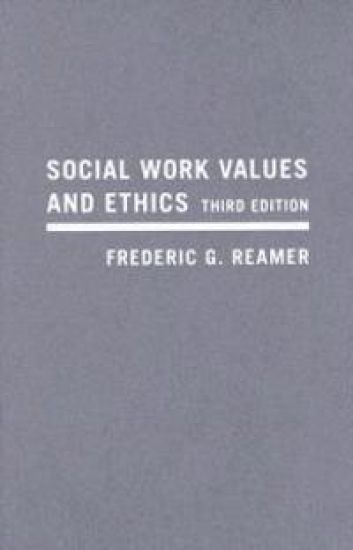
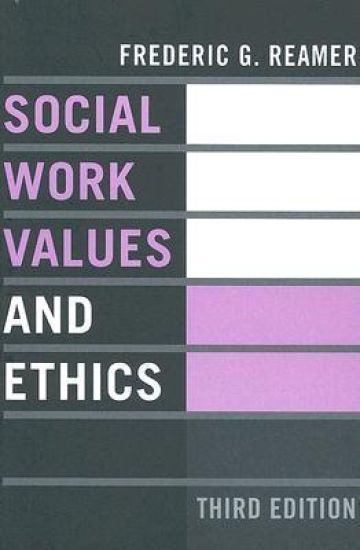
This is the leading introduction 200to professional values and ethics in social work. Frederic G. Reamer provides social workers with a succinct and comprehensive overview of the most critical issues relating to professional values and ethics, including the nature of social work values, ethical dilemmas, and professional misconduct. Conceptually rich and attuned to the complexities of ethical decision making, Social Work Values and Ethics is unique in striking the right balance between history, theory, and practical application. For the third edition, Reamer has updated the content and strengthened the relevance of the case material.Also new to the third edition: o Discussion of the moral dialogue between practitioner and cliento Coverage of virtue ethicso Practical discussion of concepts underlying social work ethicso Expanded application of the National Association of Social Workers Code of Ethics to ethical dilemmas in the professiono A look at the historical evolution of ethical standards in social worko New vignettes, illustrating difficult ethical decisionso More guidance on informed consent and termination of serviceso Discussion questions at the end of each chaptero A section on how to conduct a social work ethics audit
Social Work Values and Ethics

Social Work Values and Ethics

Frederic G. Reamer

Columbia University Press
2006
nidottu
This is the leading introduction 200to professional values and ethics in social work. Frederic G. Reamer provides social workers with a succinct and comprehensive overview of the most critical issues relating to professional values and ethics, including the nature of social work values, ethical dilemmas, and professional misconduct. Conceptually rich and attuned to the complexities of ethical decision making, Social Work Values and Ethics is unique in striking the right balance between history, theory, and practical application. For the third edition, Reamer has updated the content and strengthened the relevance of the case material.Also new to the third edition: o Discussion of the moral dialogue between practitioner and cliento Coverage of virtue ethicso Practical discussion of concepts underlying social work ethicso Expanded application of the National Association of Social Workers Code of Ethics to ethical dilemmas in the professiono A look at the historical evolution of ethical standards in social worko New vignettes, illustrating difficult ethical decisionso More guidance on informed consent and termination of serviceso Discussion questions at the end of each chaptero A section on how to conduct a social work ethics audit
Boundary Issues and Dual Relationships in the Human Services

Boundary Issues and Dual Relationships in the Human Services

Frederic G. Reamer

Columbia University Press
2012
sidottu
Should a therapist disclose personal information to a client, accept a client's gift, or provide a former client with a job? Is it appropriate to exchange email or text messages with clients or correspond with them on social networking websites? Some acts, such as initiating a sexual relationship with a client, are clearly prohibited, yet what about more subtle interactions, such as hugging or accepting invitations to a social event? Is maintaining a friendship with a former client or client's relative a conflict of interest that ultimately subverts the client-practitioner relationship? Frederic G. Reamer, a certified authority on professional ethics, offers a frank analysis of a range of boundary issues and their complex formulations. He confronts the ethics of intimate and sexual relationships with clients and former clients, the healthy parameters of practitioners' self-disclosure, electronic relationships with clients, the giving and receiving of gifts and favors, the bartering of services, and the unavoidable and unanticipated circumstances of social encounters and geographical proximity. With case studies addressing challenges in the mental health field, school contexts, child welfare, addiction programs, home-healthcare, elder services, and prison, rural, and military settings, Reamer offers effective, practical risk-management models that prevent problems and help balance dual relationships.
Boundary Issues and Dual Relationships in the Human Services

Boundary Issues and Dual Relationships in the Human Services

Frederic G. Reamer

Columbia University Press
2012
pokkari
Should a therapist disclose personal information to a client, accept a client's gift, or provide a former client with a job? Is it appropriate to exchange email or text messages with clients or correspond with them on social networking websites? Some acts, such as initiating a sexual relationship with a client, are clearly prohibited, yet what about more subtle interactions, such as hugging or accepting invitations to a social event? Is maintaining a friendship with a former client or client's relative a conflict of interest that ultimately subverts the client-practitioner relationship? Frederic G. Reamer, a certified authority on professional ethics, offers a frank analysis of a range of boundary issues and their complex formulations. He confronts the ethics of intimate and sexual relationships with clients and former clients, the healthy parameters of practitioners' self-disclosure, electronic relationships with clients, the giving and receiving of gifts and favors, the bartering of services, and the unavoidable and unanticipated circumstances of social encounters and geographical proximity. With case studies addressing challenges in the mental health field, school contexts, child welfare, addiction programs, home-healthcare, elder services, and prison, rural, and military settings, Reamer offers effective, practical risk-management models that prevent problems and help balance dual relationships.
Risk Management in Social Work

Risk Management in Social Work

Frederic G. Reamer

Columbia University Press
2014
sidottu
This new text is based on Frederic G. Reamer's key reference for practitioners, Social Work Malpractice and Liability: Strategies for Prevention. Rooted in his own experiences as an expert witness in court and licensing board cases, the volume introduces the concepts of negligence, malpractice, and liability before turning to the subject of risk management. Reflecting on recent legal cases and research, Reamer identifies a variety of problems in the social work field relating to privacy and confidentiality, improper treatment and delivery of services, impaired practitioners, supervision, consultations and referrals, fraud and deception, and termination of service. He also explores the unprecedented ethical challenges created by new digital technologies-such as online counseling, video counseling, and practitioners' use of social networks and social media-and describes current issues relating to HIPAA compliance and access to electronic health records (EHR) and health information exchanges (HIE).He concludes with practical suggestions for social workers named as defendants in lawsuits and respondents in licensing board complaints.
Risk Management in Social Work

Risk Management in Social Work

Frederic G. Reamer

Columbia University Press
2014
pokkari
This new text is based on Frederic G. Reamer's key reference for practitioners, Social Work Malpractice and Liability: Strategies for Prevention. Rooted in his own experiences as an expert witness in court and licensing board cases, the volume introduces the concepts of negligence, malpractice, and liability before turning to the subject of risk management. Reflecting on recent legal cases and research, Reamer identifies a variety of problems in the social work field relating to privacy and confidentiality, improper treatment and delivery of services, impaired practitioners, supervision, consultations and referrals, fraud and deception, and termination of service. He also explores the unprecedented ethical challenges created by new digital technologies-such as online counseling, video counseling, and practitioners' use of social networks and social media-and describes current issues relating to HIPAA compliance and access to electronic health records (EHR) and health information exchanges (HIE).He concludes with practical suggestions for social workers named as defendants in lawsuits and respondents in licensing board complaints.
On the Parole Board

On the Parole Board

Frederic G. Reamer

Columbia University Press
2016
sidottu
Few people experience life inside of prison. Even fewer are charged with the formidable responsibility of deciding whether inmates should be released. In his twenty-four years on the Rhode Island Parole Board, Frederic G. Reamer has judged the fates of thousands of inmates, deciding which are ready to reenter society and which are not. It is a complicated choice that balances injury to victims and their families against an offender's capacity for transformation. With rich retellings of criminal cases-some banal, some brutal-On the Parole Board is a singular book that explains from an insider's perspective how a variety of factors play into the board's decisions: the ongoing effect on victims and their loved ones, the life histories of offenders, the circumstances of the crimes, and the powerful and often extraordinary displays of forgiveness and remorse. Pulling back the curtain on a process largely shrouded in mystery, Reamer lays bare the thorny philosophical issues of crime and justice and their staggering consequences for inmates, victims, and the public at large. Reamer and his colleagues often hope, despite encountering behavior at its worst, that criminals who have made horrible mistakes have the capacity for redemption. Yet that hope must be tempered with a realistic appraisal of risk, given the potentially grave consequences of releasing an inmate who may commit a future crime. This book will appeal to anyone interested in the complexities of the criminal justice system, the need to correct its injustices, and the challenges of those who must decide when justice has been served.
On the Parole Board

On the Parole Board

Frederic G. Reamer

Columbia University Press
2016
pokkari
Few people experience life inside of prison. Even fewer are charged with the formidable responsibility of deciding whether inmates should be released. In his twenty-four years on the Rhode Island Parole Board, Frederic G. Reamer has judged the fates of thousands of inmates, deciding which are ready to reenter society and which are not. It is a complicated choice that balances injury to victims and their families against an offender's capacity for transformation. With rich retellings of criminal cases-some banal, some brutal-On the Parole Board is a singular book that explains from an insider's perspective how a variety of factors play into the board's decisions: the ongoing effect on victims and their loved ones, the life histories of offenders, the circumstances of the crimes, and the powerful and often extraordinary displays of forgiveness and remorse. Pulling back the curtain on a process largely shrouded in mystery, Reamer lays bare the thorny philosophical issues of crime and justice and their staggering consequences for inmates, victims, and the public at large. Reamer and his colleagues often hope, despite encountering behavior at its worst, that criminals who have made horrible mistakes have the capacity for redemption. Yet that hope must be tempered with a realistic appraisal of risk, given the potentially grave consequences of releasing an inmate who may commit a future crime. This book will appeal to anyone interested in the complexities of the criminal justice system, the need to correct its injustices, and the challenges of those who must decide when justice has been served.
Social Work Values and Ethics

Social Work Values and Ethics

Frederic G. Reamer

Columbia University Press
2018
sidottu
For decades, teachers and practitioners have turned to Frederic G. Reamer’s Social Work Values and Ethics as the leading introduction to ethical decision making, dilemmas, and professional conduct in practice. A case-driven, concise, and comprehensive textbook for undergraduate and graduate social work programs, this book surveys the most critical issues for social work practitioners.The fifth edition incorporates significant updates to the National Association of Social Workers Code of Ethics and new practice and model regulatory standards used by social service and licensing agencies around the world. Reamer also focuses on how social workers should navigate the digital world through discussion of the ethical issues that arise from practitioner use of online services and social networking sites to deliver services, communicate with clients, and provide information to the public, and what standards will protect confidential information transmitted electronically. He highlights potential conflicts between professional ethics and legal guidelines and expands discussions of informed consent, confidentiality and privileged communication, boundaries and dual relationships, documentation, conflicts of interest, and risk management. Conceptually rich and attuned to the complexities of ethical decision making, Social Work Values and Ethics is unique in striking the right balance among history, theory, and practical application.