Kirjojen hintavertailu. Mukana 11 627 373 kirjaa ja 12 kauppaa.

Kirjahaku

Etsi kirjoja tekijän nimen, kirjan nimen tai ISBN:n perusteella.

4 kirjaa tekijältä Frederick C Teiwes; Warren Sun

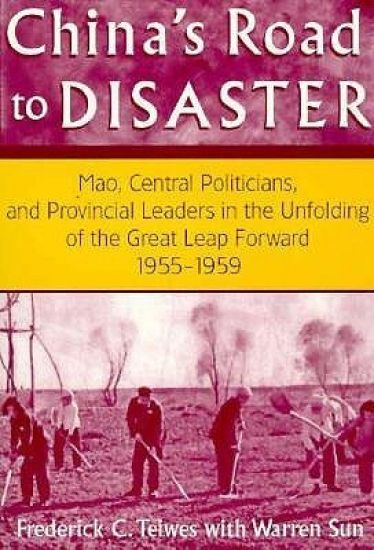
China's Road to Disaster: Mao, Central Politicians and Provincial Leaders in the Great Leap Forward, 1955-59
This text analyzes the dramatic shifts in Chinese Communist Party economic policy during the mid to late 1950s which eventually resulted in 30 to 45 million deaths through starvation as a result of the failed policies of the Great Leap Forward. Teiwes examines both the substance and the process of economic policy-making in that period, explaining how the rational policies of opposing rash advance in 1956-57 gave way to the fanciful policies of the Great Leap, and assessing responsibility for the failure to adjust adequately those policies even as signs of disaster began to reach higher level decision makers. In telling this story, Teiwes focuses on key participants in the process throughout both "rational" and "utopian" phases - Mao, other top leaders, central economic bureaucracies and local party leaders. The analysis rejects both of the existing influential explanations in the field, the long dominant power politics approach focusing on alleged clashes within the top leadership, and David Bachman's recent institutional interpretation of the origins of the Great Leap. Instead, this study presents a detailed picture of an exceptionally Mao-dominated process, where no other actor challenged his position, where the boldest step any actor took was to try and influence his preferences, and where the system in effect became paralyzed while Mao kept changing signals as disaster unfolded.
China's Road to Disaster: Mao, Central Politicians and Provincial Leaders in the Great Leap Forward, 1955-59
This text analyzes the dramatic shifts in Chinese Communist Party economic policy during the mid to late 1950s which eventually resulted in 30 to 45 million deaths through starvation as a result of the failed policies of the Great Leap Forward. Teiwes examines both the substance and the process of economic policy-making in that period, explaining how the rational policies of opposing rash advance in 1956-57 gave way to the fanciful policies of the Great Leap, and assessing responsibility for the failure to adjust adequately those policies even as signs of disaster began to reach higher level decision makers. In telling this story, Teiwes focuses on key participants in the process throughout both "rational" and "utopian" phases - Mao, other top leaders, central economic bureaucracies and local party leaders. The analysis rejects both of the existing influential explanations in the field, the long dominant power politics approach focusing on alleged clashes within the top leadership, and David Bachman's recent institutional interpretation of the origins of the Great Leap. Instead, this study presents a detailed picture of an exceptionally Mao-dominated process, where no other actor challenged his position, where the boldest step any actor took was to try and influence his preferences, and where the system in effect became paralyzed while Mao kept changing signals as disaster unfolded.
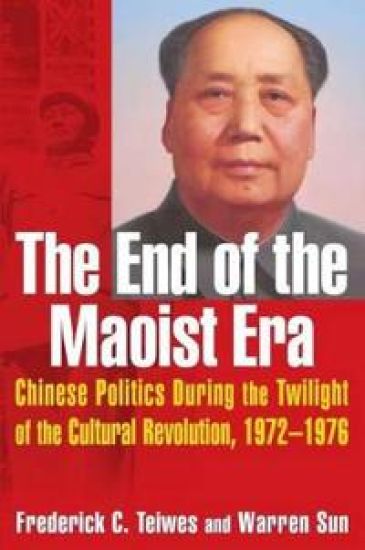
The End of the Maoist Era: Chinese Politics During the Twilight of the Cultural Revolution, 1972-1976
This book launches an ambitious reexamination of the elite politics behind one of the most remarkable transformations in the late twentieth century. As the first part of a new interpretation of the evolution of Chinese politics during the years 1972-82, it provides a detailed study of the end of the Maoist era, demonstrating Mao's continuing dominance even as his ability to control events ebbed away. The tensions within the "gang of four," the different treatment of Zhou Enlai and Deng Xiaoping, and the largely unexamined role of younger radicals are analyzed to reveal a view of the dynamic of elite politics that is at odds with accepted scholarship. The authors draw upon newly available documentary sources and extensive interviews with Chinese participants and historians to develop their challenging interpretation of one of the most poorly understood periods in the history of the People's Republic of China.
The End of the Maoist Era: Chinese Politics During the Twilight of the Cultural Revolution, 1972-1976
This book launches an ambitious reexamination of the elite politics behind one of the most remarkable transformations in the late twentieth century. As the first part of a new interpretation of the evolution of Chinese politics during the years 1972-82, it provides a detailed study of the end of the Maoist era, demonstrating Mao's continuing dominance even as his ability to control events ebbed away. The tensions within the "gang of four," the different treatment of Zhou Enlai and Deng Xiaoping, and the largely unexamined role of younger radicals are analyzed to reveal a view of the dynamic of elite politics that is at odds with accepted scholarship. The authors draw upon newly available documentary sources and extensive interviews with Chinese participants and historians to develop their challenging interpretation of one of the most poorly understood periods in the history of the People's Republic of China.