Kirjojen hintavertailu. Mukana 11 627 461 kirjaa ja 12 kauppaa.

Kirjahaku

Etsi kirjoja tekijän nimen, kirjan nimen tai ISBN:n perusteella.

27 kirjaa tekijältä Frederick Luis Aldama

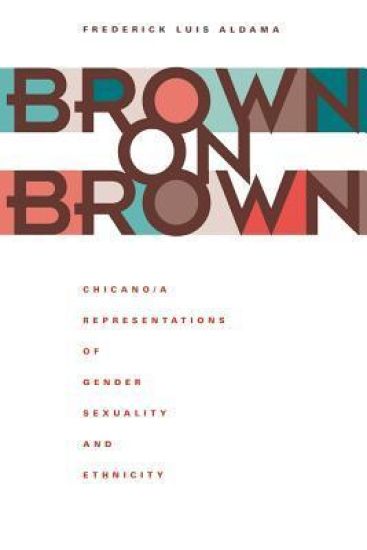
Brown on Brown

Brown on Brown

Frederick Luis Aldama

University of Texas Press
2005
pokkari
Common conceptions permeating U.S. ethnic queer theory tend to confuse aesthetics with real-world acts and politics. Often Chicano/a representations of gay and lesbian experiences in literature and film are analyzed simply as propaganda. The cognitive, emotional, and narrational ingredients (that is, the subject matter and the formal traits) of those representations are frequently reduced to a priori agendas that emphasize a politics of difference. In this book, Frederick Luis Aldama follows an entirely different approach. He investigates the ways in which race and gay/lesbian sexuality intersect and operate in Chicano/a literature and film while taking into full account their imaginative nature and therefore the specific kind of work invested in them. Also, Aldama frames his analyses within today's larger (globalized) context of postcolonial literary and filmic canons that seek to normalize heterosexual identity and experience. Throughout the book, Aldama applies his innovative approach to throw new light on the work of authors Arturo Islas, Richard Rodriguez, John Rechy, Ana Castillo, and Sheila Ortiz Taylor, as well as that of film director Edward James Olmos. In doing so, Aldama aims to integrate and deepen Chicano literary and filmic studies within a comparative perspective. Aldama's unusual juxtapositions of narrative materials and cultural personae, and his premise that literature and film produce fictional examples of a social and historical reality concerned with ethnic and sexual issues largely unresolved, make this book relevant to a wide range of readers.
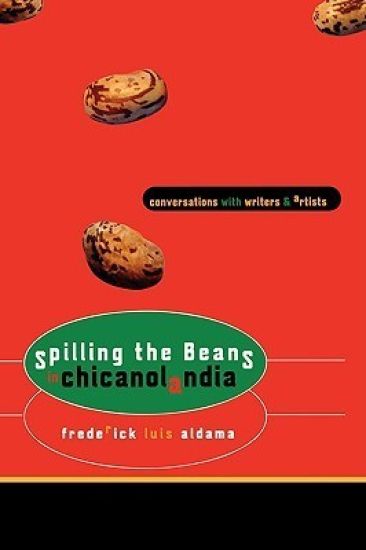
Spilling the Beans in Chicanolandia

Spilling the Beans in Chicanolandia

Frederick Luis Aldama

University of Texas Press
2006
pokkari
Since the 1980s, a prolific "second wave" of Chicano/a writers and artists has tremendously expanded the range of genres and subject matter in Chicano/a literature and art. Building on the pioneering work of their predecessors, whose artistic creations were often tied to political activism and the civil rights struggle, today's Chicano/a writers and artists feel free to focus as much on the aesthetic quality of their work as on its social content. They use novels, short stories, poetry, drama, documentary films, and comic books to shape the raw materials of life into art objects that cause us to participate empathetically in an increasingly complex Chicano/a identity and experience.This book presents far-ranging interviews with twenty-one "second wave" Chicano/a poets, fiction writers, dramatists, documentary filmmakers, and playwrights. Some are mainstream, widely recognized creators, while others work from the margins because of their sexual orientations or their controversial positions. Frederick Luis Aldama draws out the artists and authors on both the aesthetic and the sociopolitical concerns that animate their work. Their conversations delve into such areas as how the artists' or writers' life experiences have molded their work, why they choose to work in certain genres and how they have transformed them, what it means to be Chicano/a in today's pluralistic society, and how Chicano/a identity influences and is influenced by contact with ethnic and racial identities from around the world.
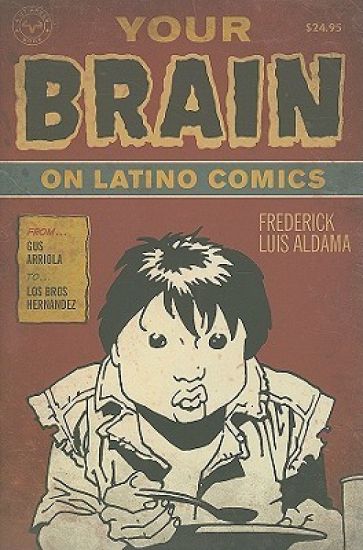
Your Brain on Latino Comics

Your Brain on Latino Comics

Frederick Luis Aldama

University of Texas Press
2009
pokkari
Though the field of comic book studies has burgeoned in recent years, Latino characters and creators have received little attention. Putting the spotlight on this vibrant segment, Your Brain on Latino Comics illuminates the world of superheroes Firebird, Vibe, and the new Blue Beetle while also examining the effects on readers who are challenged to envision such worlds. Exploring mainstream companies such as Marvel and DC as well as rising stars from other segments of the industry, Frederick Aldama provides a new reading of race, ethnicity, and the relatively new storytelling medium of comics themselves. Overview chapters cover the evolution of Latino influences in comics, innovations, and representations of women, demonstrating Latino transcendence of many mainstream techniques. The author then probes the rich and complex ways in which such artists affect the cognitive and emotional responses of readers as they imagine past, present, and future worlds. Twenty-one interviews with Latino comic book and comic strip authors and artists, including Laura Molina, Frank Espinosa, and Rafael Navarro, complete the study, yielding captivating commentary on the current state of the trade, cultural perceptions, and the intentions of creative individuals who shape their readers in powerful ways.
Postethnic Narrative Criticism

Postethnic Narrative Criticism

Frederick Luis Aldama

University of Texas Press
2003
pokkari
Magical realism has become almost synonymous with Latin American fiction, but this way of representing the layered and often contradictory reality of the topsy-turvy, late-capitalist, globalizing world finds equally vivid expression in U.S. multiethnic and British postcolonial literature and film. Writers and filmmakers such as Oscar "Zeta" Acosta, Ana Castillo, Julie Dash, Hanif Kureishi, and Salman Rushdie have made brilliant use of magical realism to articulate the trauma of dislocation and the legacies of colonialism that people of color experience in the postcolonial, multiethnic world. This book seeks to redeem and refine the theory of magical realism in U.S. multiethnic and British postcolonial literature and film. Frederick Aldama engages in theoretically sophisticated readings of Ana Castillo's So Far from God, Oscar "Zeta" Acosta's Autobiography of a Brown Buffalo, Salman Rushdie's Midnight's Children, Shame, The Satanic Verses, and The Moor's Last Sigh, Julie Dash's Daughters of the Dust, and Stephen Frears and Hanif Kureishi's Sammy and Rosie Get Laid. Coining the term "magicorealism" to characterize these works, Aldama not only creates a postethnic critical methodology for enlarging the contact zone between the genres of novel, film, and autobiography, but also shatters the interpretive lens that traditionally confuses the transcription of the real world, where truth and falsity apply, with narrative modes governed by other criteria.
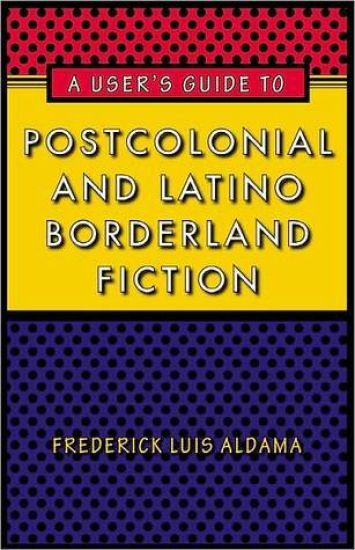
A User's Guide to Postcolonial and Latino Borderland Fiction

A User's Guide to Postcolonial and Latino Borderland Fiction

Frederick Luis Aldama

University of Texas Press
2009
pokkari
Why are so many people attracted to narrative fiction? How do authors in this genre reframe experiences, people, and environments anchored to the real world without duplicating "real life"? In which ways does fiction differ from reality? What might fictional narrative and reality have in common-if anything?By analyzing novels such as Arundhati Roy's The God of Small Things, Amitav Ghosh's The Glass Palace, Zadie Smith's White Teeth, and Hari Kunzru's The Impressionist, along with selected Latino comic books and short fiction, this book explores the peculiarities of the production and reception of postcolonial and Latino borderland fiction. Frederick Luis Aldama uses tools from disciplines such as film studies and cognitive science that allow the reader to establish how a fictional narrative is built, how it functions, and how it defines the boundaries of concepts that appear susceptible to limitless interpretations.Aldama emphasizes how postcolonial and Latino borderland narrative fiction authors and artists use narrative devices to create their aesthetic blueprints in ways that loosely guide their readers' imagination and emotion. In A User's Guide to Postcolonial and Latino Borderland Fiction, he argues that the study of ethnic-identified narrative fiction must acknowledge its active engagement with world narrative fictional genres, storytelling modes, and techniques, as well as the way such fictions work to move their audiences.
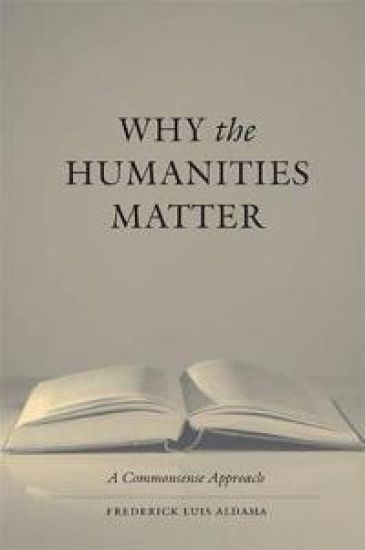
Why the Humanities Matter

Why the Humanities Matter

Frederick Luis Aldama

University of Texas Press
2008
pokkari
Is there life after postmodernism? Many claim that it sounded the death knell for history, art, ideology, science, possibly all of Western philosophy, and certainly for the concept of reality itself. Responding to essential questions regarding whether the humanities can remain politically and academically relevant amid this twenty-first-century uncertainty, Why the Humanities Matter offers a guided tour of the modern condition, calling upon thinkers in a variety of disciplines to affirm essential concepts such as truth, goodness, and beauty.Offering a lens of "new humanism," Frederick Aldama also provides a liberating examination of the current cultural repercussions of assertions by such revolutionary theorists as Said, Foucault, Lacan, and Derrida, as well as Latin Americanists such as Sommer and Mignolo. Emphasizing pedagogy and popular culture with equal verve, and writing in colloquial yet multifaceted prose, Aldama presents an enlightening way to explore what "culture" actually does-who generates it and how it shapes our identities-and the role of academia in sustaining it.
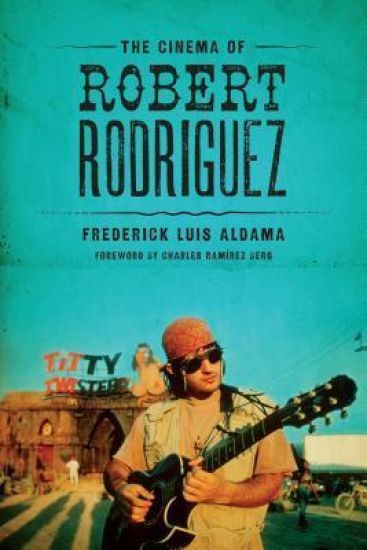
The Cinema of Robert Rodriguez

The Cinema of Robert Rodriguez

Frederick Luis Aldama

University of Texas Press
2014
pokkari
Robert Rodriguez stands alone as the most successful U.S. Latino filmmaker today, whose work has single-handedly brought U.S. Latino filmmaking into the mainstream of twenty-first-century global cinema. Rodriguez is a prolific (eighteen films in twenty-one years) and all-encompassing filmmaker who has scripted, directed, shot, edited, and scored nearly all his films since his first breakout success, El Mariachi, in 1992. With new films constantly coming out and the launch of his El Rey Network television channel, he receives unceasing coverage in the entertainment media, but systematic scholarly study of Rodriguez’s films is only just beginning.The Cinema of Robert Rodriguez offers the first extended investigation of this important filmmaker’s art. Accessibly written for fans as well as scholars, it addresses all of Rodriguez’s feature films through Spy Kids 4 and Machete Kills, and his filmmaking process from initial inspiration, to script, to film (with its myriad visual and auditory elements and choices), to final product, to (usually) critical and commercial success. In addition to his close analysis of Rodriguez’s work, Frederick Luis Aldama presents an original interview with the filmmaker, in which they discuss his career and his relationship to the film industry. This entertaining and much-needed scholarly overview of Rodriguez’s work shines new light on several key topics, including the filmmaker’s creative, low-cost, efficient approach to filmmaking; the acceptance of Latino films and filmmakers in mainstream cinema; and the consumption and reception of film in the twenty-first century.
Comics Studies

Comics Studies

Frederick Luis Aldama

TAYLOR FRANCIS LTD
2026
sidottu
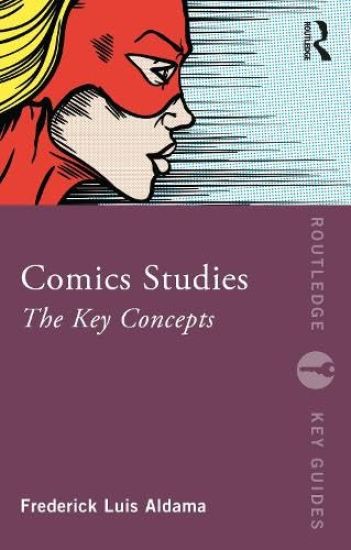
An accessible guide to the central concepts and issues that inform Comics Studies. It summarizes, explains, contextualizes, and assesses key critical concepts, perspectives, developments, and debates in the field. At once comprehensive in coverage and detailed and specific in examples analyzed, the book’s entries provide an essential overview of the key concepts in the field of Comics Studies, as shaped by historical, social, cultural, regional, and global contexts. The 22 concepts covered include: • Adaptation • Aesthetics • Animals • Architecture • Autobiography • Censorship • Convergence • Empire & Postcolonial • Feminism • History • Indigeneity • Intersectionality • Language • LGBTQ • Memoir • Mind/Bodies • Race • Regionalism • Sacred • Social Movements • Speculative • Youth Fully cross-referenced and complete with suggestions for further reading and a glossary, Comics Studies: The Key Concepts is an essential guide for students of media and cultural studies, art and visual culture, gender and women’s studies, and literature that are studying comics and graphic novels.
Comics Studies

Comics Studies

Frederick Luis Aldama

TAYLOR FRANCIS LTD
2026
nidottu
An accessible guide to the central concepts and issues that inform Comics Studies. It summarizes, explains, contextualizes, and assesses key critical concepts, perspectives, developments, and debates in the field. At once comprehensive in coverage and detailed and specific in examples analyzed, the book’s entries provide an essential overview of the key concepts in the field of Comics Studies, as shaped by historical, social, cultural, regional, and global contexts. The 22 concepts covered include: • Adaptation • Aesthetics • Animals • Architecture • Autobiography • Censorship • Convergence • Empire & Postcolonial • Feminism • History • Indigeneity • Intersectionality • Language • LGBTQ • Memoir • Mind/Bodies • Race • Regionalism • Sacred • Social Movements • Speculative • Youth Fully cross-referenced and complete with suggestions for further reading and a glossary, Comics Studies: The Key Concepts is an essential guide for students of media and cultural studies, art and visual culture, gender and women’s studies, and literature that are studying comics and graphic novels.
The Routledge Concise History of Latino/a Literature
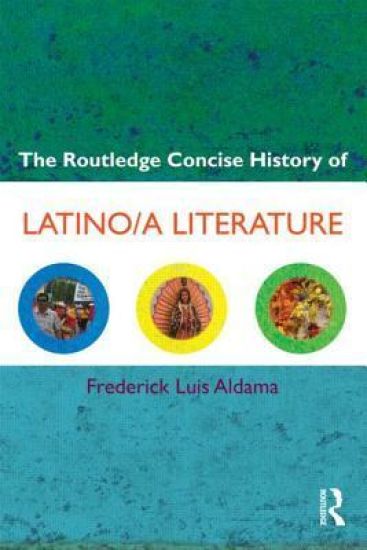
The Routledge Concise History of Latino/a Literature presents the first comprehensive overview of these popular, experimental and diverse literary cultures. Frederick Luis Aldama traces a historical path through Latino/a literature, examining both the historical and political contexts of the works, as well as their authors and the readership. He also provides an enlightening analysis of: the differing sub-groups of Latino/a literature, including Mexican American, Cuban American, Puerto Rican American, Dominican American, and Central and South American émigré authors established and emerging literary trends such as the postmodern, historical, chica-lit storytelling formats and the graphic novel key literary themes, including gender and sexuality, feminist and queer voices, and migration and borderlands.The author’s methodology and interpretation of a wealth of information will put this rich and diverse area of literary culture into a new light for scholars. The book’s student-friendly features such as a glossary, guide to further reading, explanatory text boxes and chapter summaries, make this the ideal text for anyone approaching the area for the first time.
The Routledge Concise History of Latino/a Literature
The Routledge Concise History of Latino/a Literature presents the first comprehensive overview of these popular, experimental and diverse literary cultures. Frederick Luis Aldama traces a historical path through Latino/a literature, examining both the historical and political contexts of the works, as well as their authors and the readership. He also provides an enlightening analysis of: the differing sub-groups of Latino/a literature, including Mexican American, Cuban American, Puerto Rican American, Dominican American, and Central and South American émigré authors established and emerging literary trends such as the postmodern, historical, chica-lit storytelling formats and the graphic novel key literary themes, including gender and sexuality, feminist and queer voices, and migration and borderlands.The author’s methodology and interpretation of a wealth of information will put this rich and diverse area of literary culture into a new light for scholars. The book’s student-friendly features such as a glossary, guide to further reading, explanatory text boxes and chapter summaries, make this the ideal text for anyone approaching the area for the first time.
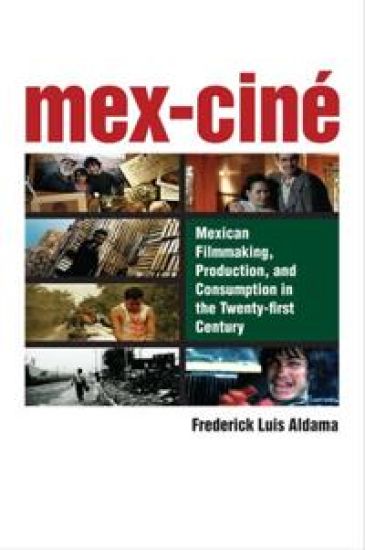
Mex-Ciné

Mex-Ciné

Frederick Luis Aldama

The University of Michigan Press
2013
nidottu
Mex-Ciné offers an accessibly written, multidisciplinary investigation of contemporary Mexican cinema that combines industrial, technical, and sociopolitical analysis with analyses of modes of reception through cognitive theory. Mex-Ciné aims to make visible the twenty-first century Mexican film industry, its blueprints, and the cognitive and emotive faculties involved in making and consuming its corpus. A sustained, free-flowing book-length meditation, Mex-Ciné enriches our understanding of the way contemporary Mexican directors use specific technical devices, structures, and characterizations in making films in ways that guide the perceptual, emotive, and cognitive faculties of their ideal audiences, while providing the historical contexts in which these films are made and consumed.
Mex-Ciné

Mex-Ciné

Frederick Luis Aldama

The University of Michigan Press
2013
sidottu
Mex-Ciné offers an accessibly written, multidisciplinary investigation of contemporary Mexican cinema that combines industrial, technical, and sociopolitical analysis with analyses of modes of reception through cognitive theory. Mex-Ciné aims to make visible the twenty-first century Mexican film industry, its blueprints, and the cognitive and emotive faculties involved in making and consuming its corpus. A sustained, free-flowing book-length meditation, Mex-Ciné enriches our understanding of the way contemporary Mexican directors use specific technical devices, structures, and characterizations in making films in ways that guide the perceptual, emotive, and cognitive faculties of their ideal audiences, while providing the historical contexts in which these films are made and consumed.
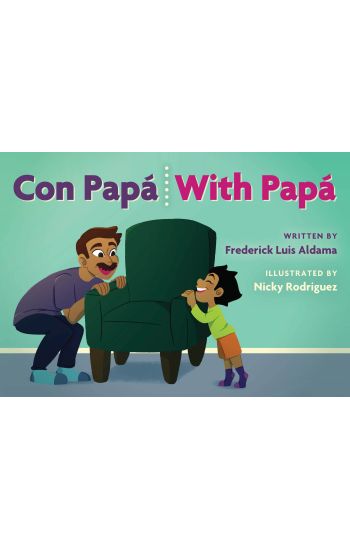
Con Papá / With Papá

Con Papá / With Papá

Frederick Luis Aldama

Mad Creek Books
2022
sidottu
Con pap todo es posible Con ilustraciones divertidas e im genes ricas, este amable libro biling e para las edades de 3-8 celebra a los padres, les ni es y la identidad Latinx mientras lleva a los lectores en un viaje de crecimiento y descubrimiento de la ni ez. Desde la entrega de las alas del dios serpiente a los brazos seguros de Pap hasta presenciar el tapiz m gico de las estrellas, Con Pap / With Pap nos muestra el mundo a trav s de los ojos de une ni e, de la mano de Pap , hasta que est n listos para emprender sus propias aventuras. With Pap , anything is possible With playful illustrations and rich imagery, this gentle bilingual story for ages 3-8 celebrates fathers, children, and Latinx identity as it takes readers on a childhood journey of growth and discovery. From delivery from the serpent god's wings to Pap 's safe arms to witnessing the magical tapestry of stars, Con Pap / With Pap shows us the world through a child's eyes, hand in hand with Pap , until they are ready to set off on their own adventures.
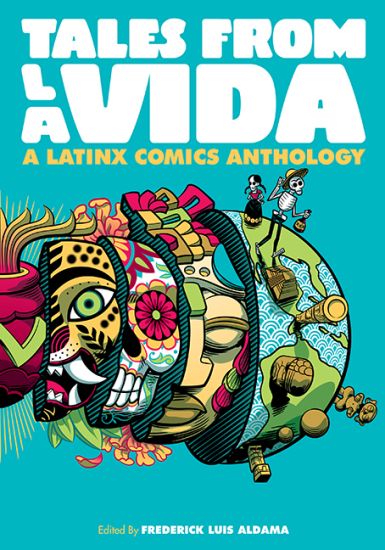
Tales from La Vida: A Latinx Comics Anthology

Tales from La Vida: A Latinx Comics Anthology

Frederick Luis Aldama

Mad Creek Books
2018
nidottu
In the Latinx comics community, there is much to celebrate today, with more Latinx comic book artists than ever before. The resplendent visual-verbal storyworlds of these artists reach into and radically transform so many visual and storytelling genres. Tales from la Vida celebrates this space by bringing together more than eighty contributions by extraordinary Latinx creators. Their short visual-verbal narratives spring from autobiographical experience as situated within the language, culture, and history that inform Latinx identity and life. Tales from la Vida showcases the huge variety of styles and worldviews of today's Latinx comic book and visual creators.Whether it's detailing the complexities of growing up--mono- or multilingual, bicultural, straight, queer, or feminist Latinx--or focusing on aspects of pop culture, these graphic vignettes demonstrate the expansive complexity of Latinx identities. Taken individually and together, these creators--including such legendary artists as Jaime and Gilbert Hernandez, Roberta Gregory, and Kat Fajardo, to name a few--and their works show the world that when it comes to Latinx comics, there are no limits to matters of content and form. As we travel from one story to the next and experience the unique ways that each creator chooses to craft his or her story, our hearts and minds wake to the complex ways that Latinxs live within and actively transform the world.
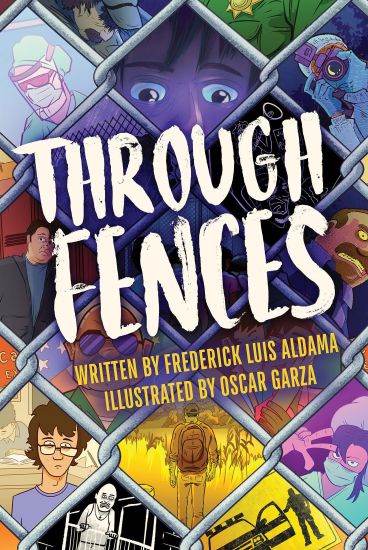
Through Fences

Through Fences

Frederick Luis Aldama

Mad Creek Books
2024
nidottu
Winner, 2025 TACHE Outstanding Book Award in Fiction Honor-winner, 2025 Texas Institute of Letters Jean Flynn Award for Best Young Adult BookThrough Fences follows the ups and downs of Latino kids and young adults in the US-Mexico borderlands: San Ysidro, Calexico, McAllen, and back and forth across the border. A young girl's journey north goes wrong, and now she is in a forbidding new place, away from her parents and brother, where she doesn't understand what the adults in green are saying even as she tries to obey their rules. Rocky, one of the few white kids in town, stands by and watches as Miguel is jumped by two of his friends. Maggie and her parents are separated at the border in a tragic accident. Alberto's son doesn't understand his Mexican father's hatred for illegals or his work as a border patrol agent. Alicia is a TikTok influencer who doesn't want to grow up to be a hospital cleaning lady like her mother, but COVID complicates things. Whatever their challenges, the kids, teens, tweens, and adults in these pages are just trying to survive their everyday lives. Vibrantly illustrated by Oscar Garza, each of these short stories brings a different perspective on the perils of living on the border while brown.
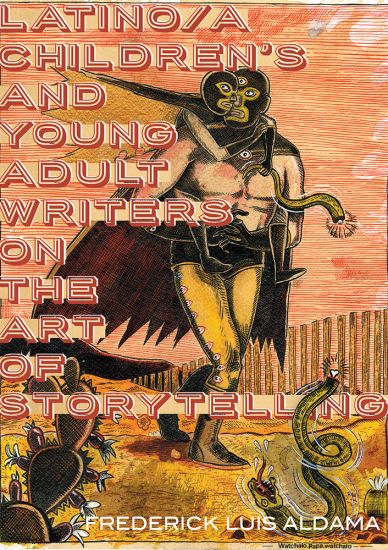
Latino/a Children's and Young Adult Writers on the Art of Storytelling

Latino/a Children's and Young Adult Writers on the Art of Storytelling

Frederick Luis Aldama

University of Pittsburgh Press
2018
nidottu
Children's and young adult literature has become an essential medium for identity formation in contemporary Latino/a culture in the United States. This book is an original collection of more than thirty interviews led by Frederick Luis Aldama with Latino/a authors working in the genre. The conversations revolve around the conveyance of young Latino/a experience, and what that means for the authors as they overcome societal obstacles and aesthetic complexity. The authors also speak extensively about their experiences within the publishing industry and with their audiences. As such, Aldama's collection presents an open forum to contemporary Latino/a writers working in a vital literary category and sheds new light on the myriad formats, distinctive nature, and cultural impact it offers.
Introduction to Latina/o Literature

Introduction to Latina/o Literature

Frederick Luis Aldama

Routledge
2026
sidottu
The topic of Latino/a Literature is not as easily identifiable as it may seem. The definition itself of Latino can change depending on who you are talking to—so, what do we mean in this case, and what will this book explore? In this latest addition to the Routledge Studies in American Literature series, Frederick Luis Aldama, shows the rich, evolving tapestry that makes up "Latino/a literature" across time as well as geographical and institutional spaces, touching on fundamental backdrops like political issues surrounding migration/immigration to the US as well as Central American, South American, and Caribbean political, social and cultural influences that have each added considerable depth, contrast, and variation to the tapestry. This impressive and increasingly influential body of literature that continues to transform the US in countless ways has been underrepresented in the academic community. With the majority minority of the country quickly becoming the majority in some states, Latino/a literature needs more to be given more attention which is exactly what Aldama brilliantly achieves with this new study that covers well know and lesser known works by Latino/a writes of the last few centuries and gives context to the times and environment in which they were written. Offering readers an exceptionally comprehensive review of this vital and under-explored subject, Aldama’s Introduction to Latino/a Literature promises to be an indispensable text.
Introduction to Latina/o Literature

Introduction to Latina/o Literature

Frederick Luis Aldama

Routledge
2026
nidottu
The topic of Latino/a Literature is not as easily identifiable as it may seem. The definition itself of Latino can change depending on who you are talking to—so, what do we mean in this case, and what will this book explore? In this latest addition to the Routledge Studies in American Literature series, Frederick Luis Aldama, shows the rich, evolving tapestry that makes up "Latino/a literature" across time as well as geographical and institutional spaces, touching on fundamental backdrops like political issues surrounding migration/immigration to the US as well as Central American, South American, and Caribbean political, social and cultural influences that have each added considerable depth, contrast, and variation to the tapestry. This impressive and increasingly influential body of literature that continues to transform the US in countless ways has been underrepresented in the academic community. With the majority minority of the country quickly becoming the majority in some states, Latino/a literature needs more to be given more attention which is exactly what Aldama brilliantly achieves with this new study that covers well know and lesser known works by Latino/a writes of the last few centuries and gives context to the times and environment in which they were written. Offering readers an exceptionally comprehensive review of this vital and under-explored subject, Aldama’s Introduction to Latino/a Literature promises to be an indispensable text.
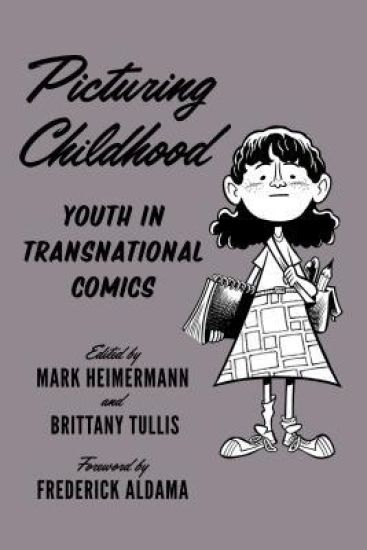
Picturing Childhood

Picturing Childhood

Frederick Luis Aldama

University of Texas Press
2017
sidottu
Comics and childhood have had a richly intertwined history for nearly a century. From Richard Outcault’s Yellow Kid, Winsor McCay’s Little Nemo, and Harold Gray’s Little Orphan Annie to Hergé’s Tintin (Belgium), José Escobar’s Zipi and Zape (Spain), and Wilhelm Busch’s Max and Moritz (Germany), iconic child characters have given both kids and adults not only hours of entertainment but also an important vehicle for exploring children’s lives and the sometimes challenging realities that surround them.Bringing together comic studies and childhood studies, this pioneering collection of essays provides the first wide-ranging account of how children and childhood, as well as the larger cultural forces behind their representations, have been depicted in comics from the 1930s to the present. The authors address issues such as how comics reflect a spectrum of cultural values concerning children, sometimes even resisting dominant cultural constructions of childhood; how sensitive social issues, such as racial discrimination or the construction and enforcement of gender roles, can be explored in comics through the use of child characters; and the ways in which comics use children as metaphors for other issues or concerns. Specific topics discussed in the book include diversity and inclusiveness in Little Audrey comics of the 1950s and 1960s, the fetishization of adolescent girls in Japanese manga, the use of children to build national unity in Finnish wartime comics, and how the animal/child hybrids in Sweet Tooth act as a metaphor for commodification.