Captain Frederick Marryat (10 July 1792 - 9 August 1848) was a British Royal Navy officer, novelist, and an acquaintance of Charles Dickens, noted today as an early pioneer of the sea story. He is now known particularly for the semi-autobiographical novel Mr Midshipman Easy and his children's novel The Children of the New Forest, and for a widely used system of maritime flag signalling, known as Marryat's Code Marryat was born in London, the son of Joseph Marryat, a "merchant prince" and member of Parliament, and his American wife Charlotte, n e von Geyer. After trying to run away to sea several times, Marryat was permitted to enter the Royal Navy in 1806 as a midshipman on board HMS Imperieuse, a frigate commanded by Lord Cochrane (who later served as inspiration for both Marryat and other authors). Marryat's time aboard the Imperieuse included action off the Gironde, the rescue of a fellow midshipman who had fallen overboard, captures of many ships off the Mediterranean coast of Spain, and the capture of the castle of Montgat. The Imperieuse shifted to operations in the Scheldt in 1809, where Marryat contracted malaria; he returned to England on the 74-gun HMS Victorious.
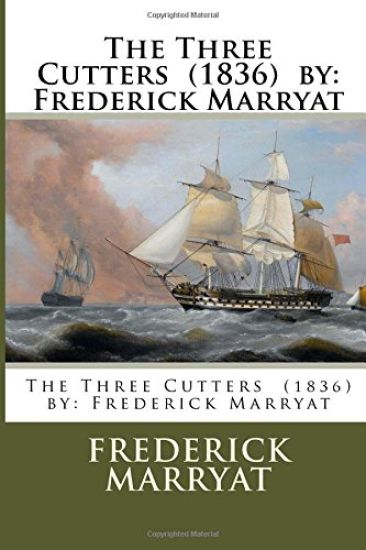
Captain Frederick Marryat (10 July 1792 - 9 August 1848) was a British Royal Navy officer, novelist, and an acquaintance of Charles Dickens, noted today as an early pioneer of the sea story. He is now known particularly for the semi-autobiographical novel Mr Midshipman Easy and his children's novel The Children of the New Forest, and for a widely used system of maritime flag signalling, known as Marryat's Code.Captain Frederick Marryat (1792-1848) was an English novelist, a contemporary and acquaintance of Charles Dickens, noted today as an early pioneer of the sea story. He is now known particularly for the semi-autobiographical novel Mr Midshipman Easy (1836) and his children's novel The Children of the New Forest (1847). After trying to run away to sea several times, he was permitted to enter the Royal Navy in 1806, as a midshipman on board HMS Imperieuse. In 1829 he was commanding the frigate HMS Ariadne on a mission to search for shoals around the Madeira and Canary Islands. This was an uninspiring exercise, and between that and the recent publication of his first novel, The Naval Officer (1829) he decided to resign his commission and take up writing full time. Other works include The King's Own (1830), Newton Forster; or, The Merchant Service (1832), Peter Simple, and The Three Cutters (1834), Jacob Faithful (1834), The Pacha of Many Tales (1835), Japhet, in Search of a Father (1836), The Pirate (1836), The Phantom Ship (1839), Poor Jack (1840), Masterman Ready (1841), Percival Keene (1842), The Privateersman (1846) and The Mission; or, Scenes in Africa (1845). Marryat then turned to scientific studies. He invented a lifeboat, which earned him a gold medal from the Royal Humane Society and the nickname "Lifeboat". Based on his experience in the Napoleonic Wars escorting merchant ships in convoys, he developed a practical, widely used system of maritime flag signalling known as Marryat's Code. During his scientific studies in 1818, he described a new gastropod genus Cyclostrema with the type species Cyclostrema cancellatum Marryat, 1818. In 1819, Marryat married Catherine Shairp, with whom he had four sons (of whom only the youngest Frank outlived him) and seven daughters, including Florence, a prolific novelist and his biographer; Emilia, a writer of moralist adventure novels in her father's vein; and Augusta, also a writer of adventure fiction. Around this time, Marryat collaborated with George Cruikshank the caricaturist to produce The New Union Club, an extravagant satire against abolitionism. In 1820, Marryat commanded the sloop HMS Beaver and temporarily commanded HMS Rosario for the purpose of bringing back to England the despatches announcing the death of Napoleon on Saint Helena. He also took the opportunity to make a sketch of Napoleon's body on his deathbed, which was later published as a lithograph. His artistic skills were modest, but his sketches of shipboard life above and below deck have considerable charm. In 1823, he was appointed to HMS Larne and took part in an expedition against Burma in 1824. (This expedition resulted in large losses due to disease.) He was promoted to command the 28-gun HMS Tees, which gave him the rank of post-captain. He was back in England in 1826. In 1829, he was commanding the frigate HMS Ariadne on a mission to search for shoals around the Madeira and Canary Islands. This was an uninspiring exercise and, between that and the recent publication of his first novel The Naval Officer, he decided to resign his commission in November 1830 and take up writing full time....
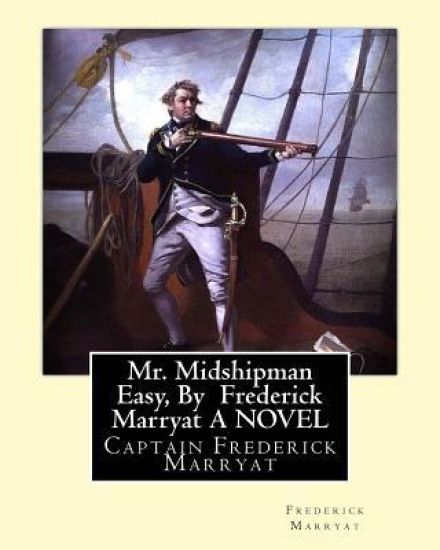
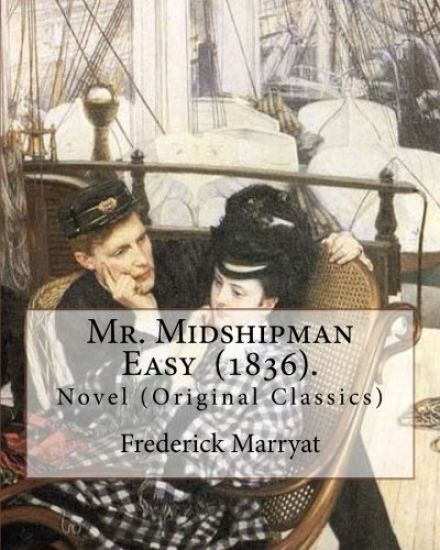
Mr. Midshipman Easy is an 1836 novel by Frederick Marryat, a retired captain in the Royal Navy. The novel is set during the Napoleonic Wars, in which Marryat himself served with distinction.Easy is the son of foolish parents, who spoiled him. His father, in particular, regards himself as a philosopher, with a firm belief in the "rights of man, equality, and all that; how every person was born to inherit his share of the earth, a right at present only admitted to a certain length that is, about six feet, for we all inherit our graves, and are allowed to take possession without dispute. But no one would listen to Mr Easy's philosophy. The women would not acknowledge the rights of men, whom they declared always to be in the wrong; and, as the gentlemen who visited Mr Easy were all men of property, they could not perceive the advantages of sharing with those who had none. However, they allowed him to discuss the question, while they discussed his port wine. The wine was good, if the arguments were not, and we must take things as we find them in this world." By the time he is a teenager Easy has adopted his father's point of view, to the point where he no longer believes in private property. Easy joins the navy, which his father believes to be the best example of an equal society, and Easy becomes friendly with a lower deck seaman named Mesty (Mephistopheles Faust), an escaped slave, who had been a prince in Africa. Mesty is sympathetic to Easy's philosophizing, which seems to offer him a way up from his lowly job of "boiling kettle for de young gentlemen"; but once Mesty is promoted to ship's corporal and put in charge of discipline, he changes his mind: "...now I tink a good deal lately, and by all de power, I tink equality all stuff." "All stuff, Mesty, why? you used to think otherwise." "Yes, Massa Easy, but den I boil de kettle for all young gentleman. Now dat I ship's corporal and hab cane, I tink so no longer." In some way Mesty is the real hero of the novel, as he pulls Easy out of several scrapes the impulsive 17-year-old gets himself into as he cruises the Mediterranean on several British ships. Easy becomes a competent officer, in spite of his notions. Easy's mother dies, and he returns home to find his father is completely mad. Easy senior has developed an apparatus for reducing or enlarging phrenological bumps on the skull, but as he attempts to reduce his own benevolence bump, the machine kills him. Easy throws out the criminal servants his father has employed and puts the estate to rights, demanding back rents from the tenants, and evicting those who will not pay. Using his new-found wealth, he formally quits the navy, rigs out his own privateering vessel, and returns to Sicily to claim his bride Agnes. As he is a wealthy gentleman now, no longer a junior midshipman, her family cannot refuse him, and he and Agnes live happily ever after...
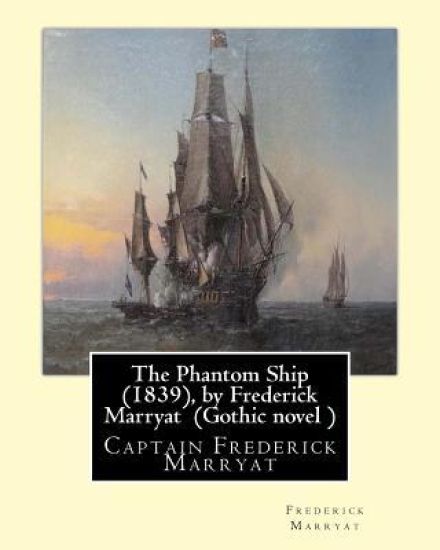
The Phantom Ship (1839) is a Gothic novel by Frederick Marryat which explores the legend of the Flying Dutchman and, in one chapter, features a werewolf.The plot concerns the quest of Philip Vanderdecken of Terneuzen in the Netherlands to save his father - who has been doomed to sail for eternity as the Captain of the Bewitched Phantom Ship, after he made a rash oath to heaven and slew one of the crew whilst attempting to sail round the Cape of Good Hope. Vanderdecken learns upon his mother's death that there exists a way by which his father's disturbed spirit may be laid to rest, and vows to live at sea until he has spoken with his father face to face and accomplished this purpose. Vanderdecken sails around the world in a number of ships, in the employ of the Dutch East India Company, so that he can redeem his father by presenting him with the relic of the Holy Cross he wears round his neck. His quest, however, brings him into conflict with earthly and unearthly powers as the sight of the Flying Dutchman brings doom to all who encounter her. Themes--The legend of the Flying Dutchman forms the background to the story and makes regular appearances throughout the novel, while Marryat adds many other supernatural details. He introduces as the heroine, Amine, the daughter of one Mynheer Poots, a miser. Having Arab blood in her veins, she possesses some of the secrets of Arabian magic, but her incautious use of her magic arts brings her into the dungeons of the Inquisition at Goa.Likewise, there is Schrifter, the demon pilot; and Krantz, with a tale of horrors in the Harz mountains;atrocious monks; and ghosts that will not be drowned. The reviews for the novel were generally poor. The Athenaeum thought that the work "falls sadly short of the racy marine stories by which the author won his first fame". In particular, it noted that Marryat "dashes off scenes of portent and terror with the same familiar and slip-shod style ... and the result is a feebleness of effect, not to be found in his other novels."Likewise in referring to the book, The Dublin Review thought that the "falling off in his last novel ... is very considerable", and stated that "a string of extravagant adventures, carelessly put together, and heavily told, deaden curiosity, -the Flying Dutchman makes his appearance as regularly as a packetboat, and becomes at last almost as tiresome." In recent times S.T. Joshi has called the novel "an aesthetic disaster - appallingly prolix, and written in a stiff, cumbersome style that reads like a bad translation from a foreign language
Poor Jack is a novel by the English author Frederick Marryat, published in 1840. It tells the story of Thomas Saunders, a sailor's son and neglected street urchin struggling to survive in Greenwich, London in the early 19th century. ("Poor Jack" was the title given by the waterfront boys, or mudlarks, to their chief.) In a rags-to-riches story Saunders eventually rises by his own efforts to become a pilot on the Thames, makes his fortune and retires to the life of a wealthy squire. The novel has interesting descriptions of domestic life among the naval lower ranks and contains many anecdotes of seafaring life.
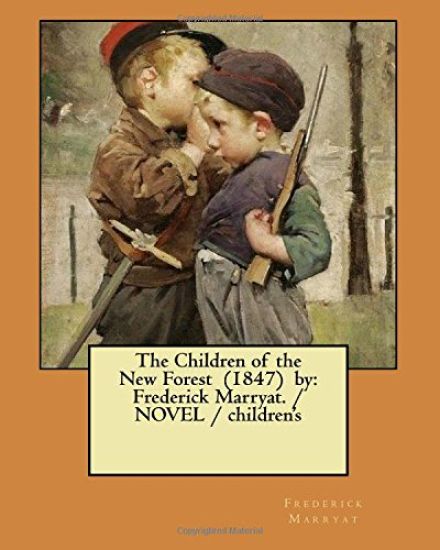
The Children of the New Forest is a children's novel published in 1847 by Frederick Marryat. It is set in the time of the English Civil War and the Commonwealth. The story follows the fortunes of the four Beverley children who are orphaned during the war, and hide from their Roundhead oppressors in the shelter of the New Forest where they learn to live off the land.
Mr. Midshipman Easy is an 1836 novel by Frederick Marryat, a retired captain in the Royal Navy. The novel is set during the Napoleonic Wars, in which Marryat himself served with distinction. Plot summary: Easy is the son of foolish parents, who spoiled him. His father, in particular, regards himself as a philosopher, with a firm belief in the "rights of man, equality, and all that; how every person was born to inherit his share of the earth, a right at present only admitted to a certain length that is, about six feet, for we all inherit our graves, and are allowed to take possession without dispute. But no one would listen to Mr Easy's philosophy. The women would not acknowledge the rights of men, whom they declared always to be in the wrong; and, as the gentlemen who visited Mr Easy were all men of property, they could not perceive the advantages of sharing with those who had none. However, they allowed him to discuss the question, while they discussed his port wine. The wine was good, if the arguments were not, and we must take things as we find them in this world." By the time he is a teenager Easy has adopted his father's point of view, to the point where he no longer believes in private property. Easy joins the navy, which his father believes to be the best example of an equal society, and Easy becomes friendly with a lower deck seaman named Mesty (Mephistopheles Faust), an escaped slave, who had been a prince in Africa. Mesty is sympathetic to Easy's philosophizing, which seems to offer him a way up from his lowly job of "boiling kettle for de young gentlemen"; but once Mesty is promoted to ship's corporal and put in charge of discipline, he changes his mind: "...now I tink a good deal lately, and by all de power, I tink equality all stuff." "All stuff, Mesty, why? you used to think otherwise." "Yes, Massa Easy, but den I boil de kettle for all young gentleman. Now dat I ship's corporal and hab cane, I tink so no longer." In some way Mesty is the real hero of the novel, as he pulls Easy out of several scrapes the impulsive 17-year-old gets himself into as he cruises the Mediterranean on several British ships. Easy becomes a competent officer, in spite of his notions. Easy's mother dies, and he returns home to find his father is completely mad. Easy senior has developed an apparatus for reducing or enlarging phrenological bumps on the skull, but as he attempts to reduce his own benevolence bump, the machine kills him. Easy throws out the criminal servants his father has employed and puts the estate to rights, demanding back rents from the tenants, and evicting those who will not pay. Using his new-found wealth, he formally quits the navy, rigs out his own privateering vessel, and returns to Sicily to claim his bride Agnes. As he is a wealthy gentleman now, no longer a junior midshipman, her family cannot refuse him, and he and Agnes live happily ever after...... Captain Frederick Marryat (10 July 1792 - 9 August 1848) was a British Royal Navy officer, a novelist, and an acquaintance of Charles Dickens. He is noted today as an early pioneer of the sea story, particularly for his semi-autobiographical novel Mr Midshipman Easy (1836), for his children's novel The Children of the New Forest (1847), and for a widely used system of maritime flag signalling, known as Marryat's Code. Early life and naval career: Marryat was born in Great George Street, Westminster, London, the son of Joseph Marryat (1757-1824), a "merchant prince" and member of Parliament, and his American wife Charlotte, n e von Geyer. After trying to run away to sea several times, Marryat was permitted to enter the Royal Navy in 1806 as a midshipman on board HMS Imperieuse, a frigate commanded by Lord Cochrane (who later served as inspiration for Marryat as well as other authors)....
Captain Frederick Marryat (July 10, 1792 - August 9, 1848) was an English novelist, a contemporary and acquaintance of Charles Dickens, noted today as an early pioneer of the sea story.... Captain Frederick Marryat (10 July 1792 - 9 August 1848) was a British Royal Navy officer, a novelist, and an acquaintance of Charles Dickens. He is noted today as an early pioneer of the sea story, particularly for his semi-autobiographical novel Mr Midshipman Easy (1836), for his children's novel The Children of the New Forest (1847), and for a widely used system of maritime flag signalling, known as Marryat's Code. Early life and naval career: Marryat was born in Great George Street, Westminster, London, the son of Joseph Marryat (1757-1824), a "merchant prince" and member of Parliament, and his American wife Charlotte, n e von Geyer. After trying to run away to sea several times, Marryat was permitted to enter the Royal Navy in 1806 as a midshipman on board HMS Imperieuse, a frigate commanded by Lord Cochrane (who later served as inspiration for Marryat as well as other authors). Marryat's time aboard the Imperieuse included action off the Gironde, the rescue of a fellow midshipman who had fallen overboard, captures of many ships off the Mediterranean coast of Spain, and the capture of the castle of Montgat. The Imperieuse shifted to operations in the Scheldt in 1809, where Marryat contracted malaria; he returned to England on the 74-gun HMS Victorious. After recuperating, Marryat returned to the Mediterranean in the 74-gun HMS Centaur and again saved a shipmate by leaping into the sea after him. He then sailed as a passenger to Bermuda in the 64-gun HMS Atlas, and from there to Halifax, Nova Scotia on the schooner HMS Chubb, where he joined the 32-gun frigate HMS Aeolus on 27 April 1811. A few months later, Marryat again earned distinction by leading the effort to cut away the Aeolus's mainyard to save the ship during a storm and, continuing a pattern, he also saved one of the men from the sea. Shortly thereafter, he moved to the frigate HMS Spartan, participating in the capture of a number of American ships (the War of 1812 having begun). On 26 December 1812, he was promoted to lieutenant, and as such served in the sloop HMS Espiegle and in HMS Newcastle. Marryat led four barges from the latter ship on a punishing raid to Orleans, Massachusetts on December 19, 1814, the last combat in New England during the war. The affair had mixed results. Initially, Marryat cut out an American schooner and three sloops, but managed to escape with just one sloop. The local militia avoided casualties while killing one Royal marine. He was promoted to commander on 13 June 1815, just as peace broke out.......... From 1832 to 1835, Marryat edited The Metropolitan Magazine.Additionally, he kept producing novels; his biggest success came with Mr Midshipman Easy in 1836. He lived in Brussels for a year, travelled in Canada and the United States, then moved to London in 1839, where he was in the literary circle of Charles Dickens and others. He was in North America in 1837 when the Rebellion of that year broke out in Lower Canada, and served with the British forces in suppressing it. Marryat was named a Fellow of the Royal Society in recognition of his invention and other achievements. In 1843, he moved to a small farm at Manor Cottage in Norfolk, where he died in 1848. His daughter Florence Marryat later became well known as a writer and actress. His son Francis Samuel Marryat completed his late novel The Little Savage...........
Thomas Hardy (3 March 1752 - 11 October 1832) was an early Radical, and the founder, first Secretary, and Treasurer of the London Corresponding Society... Captain Frederick Marryat (10 July 1792 - 9 August 1848) was a British Royal Navy officer, a novelist, and an acquaintance of Charles Dickens. He is noted today as an early pioneer of the sea story, particularly for his semi-autobiographical novel Mr Midshipman Easy (1836), for his children's novel The Children of the New Forest (1847), and for a widely used system of maritime flag signalling, known as Marryat's Code. Early life and naval career: Marryat was born in Great George Street, Westminster, London, the son of Joseph Marryat (1757-1824), a "merchant prince" and member of Parliament, and his American wife Charlotte, n e von Geyer. After trying to run away to sea several times, Marryat was permitted to enter the Royal Navy in 1806 as a midshipman on board HMS Imperieuse, a frigate commanded by Lord Cochrane (who later served as inspiration for Marryat as well as other authors). Marryat's time aboard the Imperieuse included action off the Gironde, the rescue of a fellow midshipman who had fallen overboard, captures of many ships off the Mediterranean coast of Spain, and the capture of the castle of Montgat. The Imperieuse shifted to operations in the Scheldt in 1809, where Marryat contracted malaria; he returned to England on the 74-gun HMS Victorious. After recuperating, Marryat returned to the Mediterranean in the 74-gun HMS Centaur and again saved a shipmate by leaping into the sea after him. He then sailed as a passenger to Bermuda in the 64-gun HMS Atlas, and from there to Halifax, Nova Scotia on the schooner HMS Chubb, where he joined the 32-gun frigate HMS Aeolus on 27 April 1811. A few months later, Marryat again earned distinction by leading the effort to cut away the Aeolus's mainyard to save the ship during a storm and, continuing a pattern, he also saved one of the men from the sea. Shortly thereafter, he moved to the frigate HMS Spartan, participating in the capture of a number of American ships (the War of 1812 having begun). On 26 December 1812, he was promoted to lieutenant, and as such served in the sloop HMS Espiegle and in HMS Newcastle. Marryat led four barges from the latter ship on a punishing raid to Orleans, Massachusetts on December 19, 1814, the last combat in New England during the war. The affair had mixed results. Initially, Marryat cut out an American schooner and three sloops, but managed to escape with just one sloop. The local militia avoided casualties while killing one Royal marine. He was promoted to commander on 13 June 1815, just as peace broke out..........
Thomas Hardy (3 March 1752 - 11 October 1832) was an early Radical, and the founder, first Secretary, and Treasurer of the London Corresponding Society. Hardy was born on 3 March 1752 in Larbert, Stirlingshire, Scotland, the son of a merchant seaman. His father died in 1760 at sea while Thomas was still a boy. He was sent to school by his maternal grandfather and later apprenticed to a shoemaker in Stirlingshire. He later worked in the Carron Iron Works. As a young man, he came to London just before the American Revolutionary War. On 21 May 1781 he married at St-Martin-in-the-Fields church Lydia Priest, the youngest daughter of a carpenter and builder from Chesham, Buckinghamshire. The couple had six children, all of whom died in infancy. Lydia died in childbirth on 27 August 1794, her child (the sixth) being stillborn: the cause may have been the injuries she had sustained when a loyalist "Church and King" mob attacked the Hardy home some weeks earlier.In 1791, Hardy opened his own boot and shoe shop at 9 Piccadilly, London....... Captain Frederick Marryat (10 July 1792 - 9 August 1848) was a British Royal Navy officer, a novelist, and an acquaintance of Charles Dickens. He is noted today as an early pioneer of the sea story, particularly for his semi-autobiographical novel Mr Midshipman Easy (1836), for his children's novel The Children of the New Forest (1847), and for a widely used system of maritime flag signalling, known as Marryat's Code. Early life and naval career: Marryat was born in Great George Street, Westminster, London, the son of Joseph Marryat (1757-1824), a "merchant prince" and member of Parliament, and his American wife Charlotte, n e von Geyer. After trying to run away to sea several times, Marryat was permitted to enter the Royal Navy in 1806 as a midshipman on board HMS Imperieuse, a frigate commanded by Lord Cochrane (who later served as inspiration for Marryat as well as other authors). Marryat's time aboard the Imperieuse included action off the Gironde, the rescue of a fellow midshipman who had fallen overboard, captures of many ships off the Mediterranean coast of Spain, and the capture of the castle of Montgat. The Imperieuse shifted to operations in the Scheldt in 1809, where Marryat contracted malaria; he returned to England on the 74-gun HMS Victorious. After recuperating, Marryat returned to the Mediterranean in the 74-gun HMS Centaur and again saved a shipmate by leaping into the sea after him. He then sailed as a passenger to Bermuda in the 64-gun HMS Atlas, and from there to Halifax, Nova Scotia on the schooner HMS Chubb, where he joined the 32-gun frigate HMS Aeolus on 27 April 1811. A few months later, Marryat again earned distinction by leading the effort to cut away the Aeolus's mainyard to save the ship during a storm and, continuing a pattern, he also saved one of the men from the sea. Shortly thereafter, he moved to the frigate HMS Spartan, participating in the capture of a number of American ships (the War of 1812 having begun). On 26 December 1812, he was promoted to lieutenant, and as such served in the sloop HMS Espiegle and in HMS Newcastle. Marryat led four barges from the latter ship on a punishing raid to Orleans, Massachusetts on December 19, 1814, the last combat in New England during the war. The affair had mixed results. Initially, Marryat cut out an American schooner and three sloops, but managed to escape with just one sloop. The local militia avoided casualties while killing one Royal marine. He was promoted to commander on 13 June 1815, just as peace broke out.............
Thomas Hardy (3 March 1752 - 11 October 1832) was an early Radical, and the founder, first Secretary, and Treasurer of the London Corresponding Society. Hardy was born on 3 March 1752 in Larbert, Stirlingshire, Scotland, the son of a merchant seaman. His father died in 1760 at sea while Thomas was still a boy. He was sent to school by his maternal grandfather and later apprenticed to a shoemaker in Stirlingshire. He later worked in the Carron Iron Works. As a young man, he came to London just before the American Revolutionary War. On 21 May 1781 he married at St-Martin-in-the-Fields church Lydia Priest, the youngest daughter of a carpenter and builder from Chesham, Buckinghamshire. The couple had six children, all of whom died in infancy. Lydia died in childbirth on 27 August 1794, her child (the sixth) being stillborn: the cause may have been the injuries she had sustained when a loyalist "Church and King" mob attacked the Hardy home some weeks earlier.In 1791, Hardy opened his own boot and shoe shop at 9 Piccadilly, London....... Captain Frederick Marryat (10 July 1792 - 9 August 1848) was a British Royal Navy officer, a novelist, and an acquaintance of Charles Dickens. He is noted today as an early pioneer of the sea story, particularly for his semi-autobiographical novel Mr Midshipman Easy (1836), for his children's novel The Children of the New Forest (1847), and for a widely used system of maritime flag signalling, known as Marryat's Code. Early life and naval career: Marryat was born in Great George Street, Westminster, London, the son of Joseph Marryat (1757-1824), a "merchant prince" and member of Parliament, and his American wife Charlotte, n e von Geyer. After trying to run away to sea several times, Marryat was permitted to enter the Royal Navy in 1806 as a midshipman on board HMS Imperieuse, a frigate commanded by Lord Cochrane (who later served as inspiration for Marryat as well as other authors). Marryat's time aboard the Imperieuse included action off the Gironde, the rescue of a fellow midshipman who had fallen overboard, captures of many ships off the Mediterranean coast of Spain, and the capture of the castle of Montgat. The Imperieuse shifted to operations in the Scheldt in 1809, where Marryat contracted malaria; he returned to England on the 74-gun HMS Victorious. After recuperating, Marryat returned to the Mediterranean in the 74-gun HMS Centaur and again saved a shipmate by leaping into the sea after him. He then sailed as a passenger to Bermuda in the 64-gun HMS Atlas, and from there to Halifax, Nova Scotia on the schooner HMS Chubb, where he joined the 32-gun frigate HMS Aeolus on 27 April 1811. A few months later, Marryat again earned distinction by leading the effort to cut away the Aeolus's mainyard to save the ship during a storm and, continuing a pattern, he also saved one of the men from the sea. Shortly thereafter, he moved to the frigate HMS Spartan, participating in the capture of a number of American ships (the War of 1812 having begun). On 26 December 1812, he was promoted to lieutenant, and as such served in the sloop HMS Espiegle and in HMS Newcastle. Marryat led four barges from the latter ship on a punishing raid to Orleans, Massachusetts on December 19, 1814, the last combat in New England during the war. The affair had mixed results. Initially, Marryat cut out an American schooner and three sloops, but managed to escape with just one sloop. The local militia avoided casualties while killing one Royal marine. He was promoted to commander on 13 June 1815, just as peace broke out...............
Thomas Hardy (3 March 1752 - 11 October 1832) was an early Radical, and the founder, first Secretary, and Treasurer of the London Corresponding Society. Hardy was born on 3 March 1752 in Larbert, Stirlingshire, Scotland, the son of a merchant seaman. His father died in 1760 at sea while Thomas was still a boy. He was sent to school by his maternal grandfather and later apprenticed to a shoemaker in Stirlingshire. He later worked in the Carron Iron Works. As a young man, he came to London just before the American Revolutionary War. On 21 May 1781 he married at St-Martin-in-the-Fields church Lydia Priest, the youngest daughter of a carpenter and builder from Chesham, Buckinghamshire. The couple had six children, all of whom died in infancy. Lydia died in childbirth on 27 August 1794, her child (the sixth) being stillborn: the cause may have been the injuries she had sustained when a loyalist "Church and King" mob attacked the Hardy home some weeks earlier.In 1791, Hardy opened his own boot and shoe shop at 9 Piccadilly, London....... Captain Frederick Marryat (10 July 1792 - 9 August 1848) was a British Royal Navy officer, a novelist, and an acquaintance of Charles Dickens. He is noted today as an early pioneer of the sea story, particularly for his semi-autobiographical novel Mr Midshipman Easy (1836), for his children's novel The Children of the New Forest (1847), and for a widely used system of maritime flag signalling, known as Marryat's Code. Early life and naval career: Marryat was born in Great George Street, Westminster, London, the son of Joseph Marryat (1757-1824), a "merchant prince" and member of Parliament, and his American wife Charlotte, n e von Geyer. After trying to run away to sea several times, Marryat was permitted to enter the Royal Navy in 1806 as a midshipman on board HMS Imperieuse, a frigate commanded by Lord Cochrane (who later served as inspiration for Marryat as well as other authors). Marryat's time aboard the Imperieuse included action off the Gironde, the rescue of a fellow midshipman who had fallen overboard, captures of many ships off the Mediterranean coast of Spain, and the capture of the castle of Montgat. The Imperieuse shifted to operations in the Scheldt in 1809, where Marryat contracted malaria; he returned to England on the 74-gun HMS Victorious. After recuperating, Marryat returned to the Mediterranean in the 74-gun HMS Centaur and again saved a shipmate by leaping into the sea after him. He then sailed as a passenger to Bermuda in the 64-gun HMS Atlas, and from there to Halifax, Nova Scotia on the schooner HMS Chubb, where he joined the 32-gun frigate HMS Aeolus on 27 April 1811. A few months later, Marryat again earned distinction by leading the effort to cut away the Aeolus's mainyard to save the ship during a storm and, continuing a pattern, he also saved one of the men from the sea. Shortly thereafter, he moved to the frigate HMS Spartan, participating in the capture of a number of American ships (the War of 1812 having begun). On 26 December 1812, he was promoted to lieutenant, and as such served in the sloop HMS Espiegle and in HMS Newcastle. Marryat led four barges from the latter ship on a punishing raid to Orleans, Massachusetts on December 19, 1814, the last combat in New England during the war. The affair had mixed results. Initially, Marryat cut out an American schooner and three sloops, but managed to escape with just one sloop. The local militia avoided casualties while killing one Royal marine. He was promoted to commander on 13 June 1815, just as peace broke out...............