Kirjojen hintavertailu. Mukana 11 699 587 kirjaa ja 12 kauppaa.

Kirjahaku

Etsi kirjoja tekijän nimen, kirjan nimen tai ISBN:n perusteella.

5 kirjaa tekijältä Frederick S. Weaver

The United States and the Global Economy

The United States and the Global Economy

Frederick S. Weaver

Rowman Littlefield
2011
sidottu
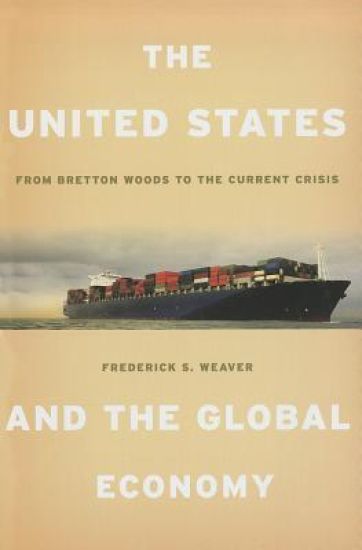
Financial collapse. Global recession. The revival of free-market policies. Massive and increasing inequalities. Housing bubbles and record foreclosures. Severe strain in the European Union. Emergence of China and other major players on the international economic scene. Every day, media outlets bombard us with news and possible explanations for the financial, economic, and political crises. In The United States and the Global Economy, Frederick S. Weaver gives readers a concise introduction to the patterns of change in international financial and trade regimes since World War II in order to clarify recent global economic turmoil. Weaver has compiled a clear chronology of major events in the international economy to show how they have reflected and shaped changes in the domestic economy of the United States. Although U.S. dominance over the world economy is not as complete as it once was, U.S. domestic economic processes continue to have profound effects on global economic affairs. The United States and the Global Economy is serious but not grim, and it familiarizes readers with the vocabulary of key elements of international economic analysis and their relationships, such as balances of trade and balances of payments, foreign direct investment and foreign portfolio investment, and the meaning of most-favored-nation agreements. The United States and the Global Economy is a concise, informative book that is of interest to anyone seeking to understand the current international economic and political disarray.

An Economic History of the United States

An Economic History of the United States

Frederick S. Weaver

Rowman Littlefield
2015
sidottu
The economy of the United States is constantly evolving in response to wars, technological innovations, cultural revolutions, and political maneuverings. Tracing the economic machine of the United States from its first experiments in the colonies to the post–Great Recession era of today, Frederick S. Weaver creates a dynamic narrative of this country’s progression through times of feast and times of famine. Weaver explores diverse areas of the market beyond the financial sector, examining historical fluctuations in distribution of income, how the ebb and flow of specific industries have influenced the shape of the market, and, ultimately, how the economy of the United States has made America the nation we know today. An Economic History of the United States is a thoughtful and accessible introduction to the subject of American economic history, suitable for undergraduate courses in U.S. political and economic history.
An Economic History of the United States

An Economic History of the United States

Frederick S. Weaver

Rowman Littlefield
2015
nidottu
The economy of the United States is constantly evolving in response to wars, technological innovations, cultural revolutions, and political maneuverings. Tracing the economic machine of the United States from its first experiments in the colonies to the post–Great Recession era of today, Frederick S. Weaver creates a dynamic narrative of this country’s progression through times of feast and times of famine. Weaver explores diverse areas of the market beyond the financial sector, examining historical fluctuations in distribution of income, how the ebb and flow of specific industries have influenced the shape of the market, and, ultimately, how the economy of the United States has made America the nation we know today. Conquest, Conflict, and Struggles for Equality: An Economic History of the United States is a thoughtful and accessible introduction to the subject of American economic history, suitable for undergraduate courses in US political and economic history.
Economic Literacy

Economic Literacy

Frederick S. Weaver

Rowman Littlefield
2017
sidottu
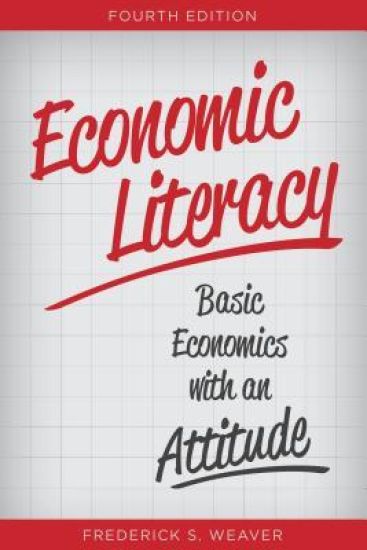
Economic Literacy: Basic Economics with An Attitude, explains the logic, language, and worldview of economic theory while maintaining the engaging and accessible style that has made earlier editions so successful. While covering the fundamentals of the discipline, the author also includes a wide range of new material focusing on the structure, causes and results of the "Great Recession". From microeconomics and macroeconomics to the composition of international and domestic economies, Economic Literacy also makes the key distinction between economics as an academic discipline and the economy as a practical reality. By analyzing this crucial difference, the book encourages students to think critically about the distinctive viewpoint proposed by academic economics and its influence on politics and culture. Using this approach, readers will be enabled to understand both current affairs and professional economics literature, making this book uniquely beneficial for students both practically and theoretically. Never grim, often witty, and frequently insightful into our turbulent financial times, Economic Literacy's fourth edition is a must for students of economics everywhere.
Economic Literacy

Economic Literacy

Frederick S. Weaver

Rowman Littlefield
2017
nidottu
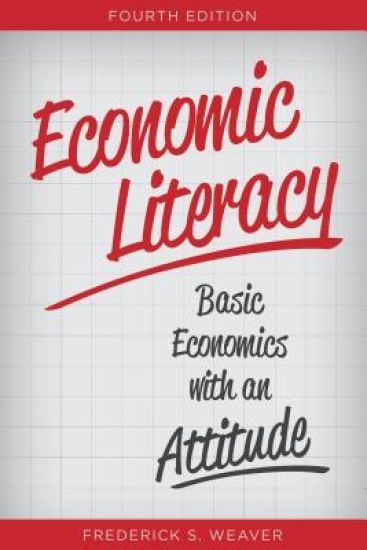
Economic Literacy: Basic Economics with An Attitude, explains the logic, language, and worldview of economic theory while maintaining the engaging and accessible style that has made earlier editions so successful. While covering the fundamentals of the discipline, the author also includes a wide range of new material focusing on the structure, causes and results of the "Great Recession". From microeconomics and macroeconomics to the composition of international and domestic economies, Economic Literacy also makes the key distinction between economics as an academic discipline and the economy as a practical reality. By analyzing this crucial difference, the book encourages students to think critically about the distinctive viewpoint proposed by academic economics and its influence on politics and culture. Using this approach, readers will be enabled to understand both current affairs and professional economics literature, making this book uniquely beneficial for students both practically and theoretically. Never grim, often witty, and frequently insightful into our turbulent financial times, Economic Literacy's fourth edition is a must for students of economics everywhere.