Kirjojen hintavertailu. Mukana 12 016 292 kirjaa ja 12 kauppaa.

Kirjahaku

Etsi kirjoja tekijän nimen, kirjan nimen tai ISBN:n perusteella.

4 kirjaa tekijältä Frederick Whitling

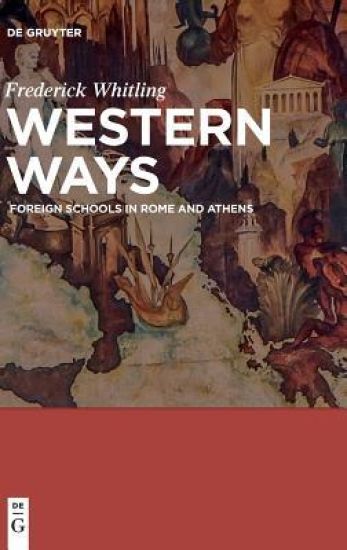
Western Ways

Western Ways

Frederick Whitling

De Gruyter
2018
sidottu
In Western Ways, for the first time, the "foreign schools" in Rome and Athens, institutions dealing primarily with classical archaeology and art history, are discussed in historical terms as vehicles and figureheads of national scholarship. By emphasising the agency and role of individuals in relation to structures and tradition, the book shows how much may be gained by examining science and politics as two sides of the same coin. It sheds light on the scholarly organisation of foreign schools, and through them, on the organisation of classical archaeology and classical studies around the Mediterranean. With its breadth and depth of archival resources, Western Ways offers new perspectives on funding, national prestige and international collaboration in the world of scholarship, and places the foreign schools in a framework of nineteenth and twentieth century Italian and Greek history.
Svensk antikforskning vid Medelhavet : Gustaf VI Adolf och fältarkeologi i historiskt perspektiv
Denna volym ger en överblick av svensk antikforskning i Medelhavsområdet från början av 1800-talet till 1970-talet. Fokus ligger på kung Gustaf VI Adolf (1882-1973) och hans roll som arkeolog och ordförande i ett flertal arkeologiska sällskap, expeditioner och forskningsinstitut under tiden som kronprins, 1907-1950. Konferensvolymen speglar såväl forskningsmässiga utmaningar som en ansats att diskurera svensk arkeologi i Medelhavsområdet i historiskt perspektiv. "Gamle kungens" intressen och inflytande i diverse forskningsnärverk ligger i fokus här. Kungahusförbindelsens roll i termer av exempelvis forskningsinitiering har i det avseendet varit odiskutabel, samtidigt som exempelvis maktspel och samspelet mellan praktik och politik är viktiga faktorer för en mer nyanserad förståelse av detta inflytande. Skriften utgör ett steg på vägen mot en problematisering av Gustaf VI Adolfs roll i detta avseende. Den svenska fältarkeologiska verksamheten placeras i en vid samhällshistorisk, kulturell och politisk kontext. Diverse forskningshistoriska tolkningsnycklar betonas, såsom exempelvis nationalism, politik, rivalitet, kulturarvseffekter, satelliteffekter, initiatörer i relation till strukturer, kulturella, sociala och ekonomiska förutsättningar, samt könsroller och traditionsuppfattningar. Avsikten med konferensvolymen är att möta det stigande intresset för forskningshistoriska perspektiv.
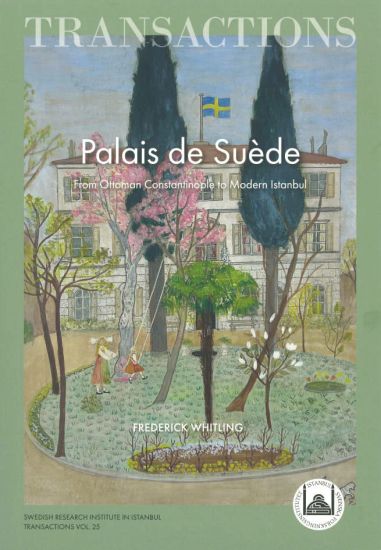
Palais de Suède

Palais de Suède

Frederick Whitling

Svenska Forskningsinstitutet i Istanbul
2023
nidottu
The Palais de Suède in Istanbul is the first Swedish embassy building built on state-owned land abroad, the oldest such Swedish property in the world. The main building, the present Consulate General of Sweden in Istanbul, was completed in 1870-1871 as the legation (embassy) of the United Kingdoms of Sweden and Norway in Constantinople. It housed Sweden's official representation to Turkey until 1934, when the embassy moved to Ankara, the capital of the new Republic of Turkey. With the move of the embassies to Ankara, the "glory" of the erstwhile embassy palaces in Constantinople that in themselves typify European elements of the character of the city and the country was, in the words of the historian and travel writer John Julius Norwich, "stolen away". The Swedish property in Istanbul is situated in pole position on Istiklal Caddesi (Independence Avenue), formerly known as the Grande Rue de Péra. It also houses the Swedish Research Institute in Istanbul, established in 1962. The estate is maintained by the National Property Board of Sweden, the government agency responsible for state-owned properries, land and historic buildings. Its prominent location to some extent reflects an eighteenth-century defense alliance that resulted in the epithet of Sweden as "Turkey's oldest friend". This book traces almost three hundred years of Swedish presence in the former Ottoman capital and modern metropolis, with a focus on the Palais de Suède itself in the wake of its 150th anniversary.