Kirjojen hintavertailu. Mukana 11 342 296 kirjaa ja 12 kauppaa.

Kirjahaku

Etsi kirjoja tekijän nimen, kirjan nimen tai ISBN:n perusteella.

52 kirjaa tekijältä Frithjof Schuon

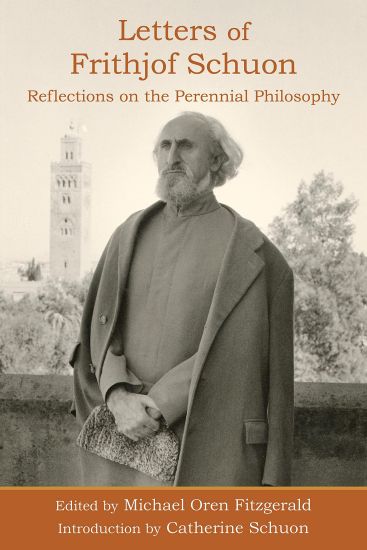
Letters of Frithjof Schuon

Letters of Frithjof Schuon

Frithjof Schuon

World Wisdom Books
2022
nidottu
This collection of letters by Frithjof Schuon, the foremost spokesman of the perennial philosophy, contains nearly 200 newly translated letters from Schuon's youth to old age as written to friends, spiritual seekers, scholars, and others. Among the letters are those that address, in a simpler and more accessible manner, the same metaphysical subjects that continually recur in Schuon's published works. Other letters relate to the spiritual life in its simple and concrete aspects, by answering such fundamental questions as "Why is there evil in the world?", "How can I recognize if I am on a wrong path?", and "What should I do to be saved?" Finally, there are letters that relate to various aspects of Schuon's life, most of which were written to his closest friends. While not a comprehensive autobiography, these letters offer an intimate view of certain key moments in his life. Taken as a whole, the present collection of letters offers insights into the content of Frithjof Schuon's message--his exposition of the perennial philosophy--as well as a glimpse into his life as messenger of that philosophy.
Stations of Wisdom

Stations of Wisdom

Frithjof Schuon

HARPERCOLLINS PUBLISHERS
2025
nidottu
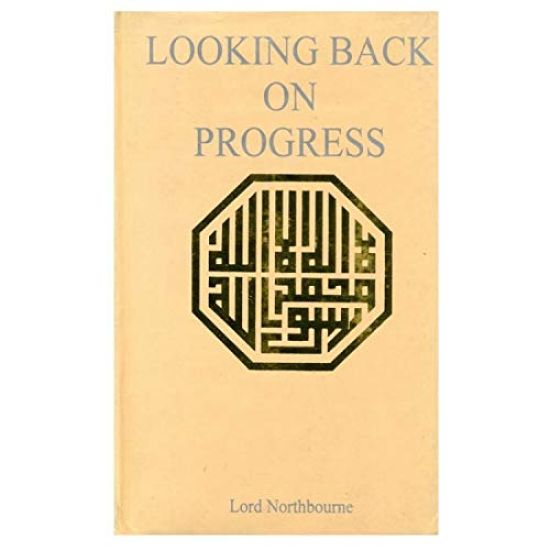
Lord Northbourne (1896-1982), born Walter Ernest Christopher James, Fourth Baron Northbourne of Kent, England, was an agriculturist, educator, translator, and writer on both agriculture and comparative religion. Educated at Oxford, he was for many years Provost of Wye College, the agricultural college of London University. In 2022, Angelico Press republished Lord Northbourne's influential book Look to the Land, in which he introduced to the world the term "organic farming." Northbourne had a gift for expressing the profoundest truths in simple, graceful language. In this book the he does not set out to deal with every aspect of our postmodern predicament (which he so presciently forecast) but instead steps back to diagnose it from several points of view.The penetrating clarity and freshness of the pictures he presents to the reader cannot fail to contribute to a better understanding of the ideology of "progress," both as to its origins and as to its tendencies in today's world. In the absence of some such understanding, even the most well-intentioned actions are likely to be undertaken in vain.
Roots of the Human Condition

Roots of the Human Condition

Frithjof Schuon

World Wisdom Books
2005
nidottu
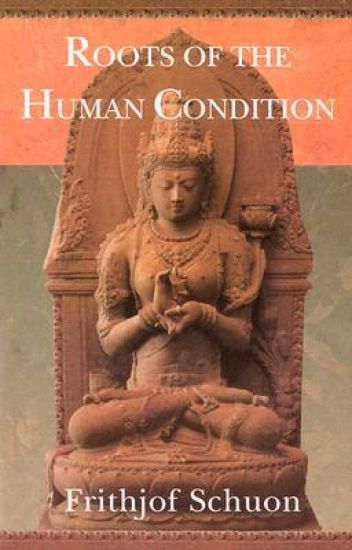
ROOTS OF THE HUMAN CONDITION deals with the fundamental principles of universal and perennial metaphysics and their application on the level of spiritual and moral life. Simply put this book reveals many answers to those seekers questing for knowledge of what lies behind the reality of our world and more particularly our own human souls. The book is divided into three sections. The first deals with metaphysics and epistemology the second concerns esoterism and its interpretation of religions and the third focuses on spiritual and moral life. The reader is provided with an intellectual method-in the truest sense-with which to view the profound questions of existence. Then is shown how authentic esoterism approaches the spiritual realisation of these truths and finally is immersed in compelling considerations of human virtue the almost alchemical result of realising those truths. Schuon writes that people often seek certitude through phenomena of the external world while instead we should be seeking it in our very being. This is where his books have been leading readers for generations to a strong certitude of the realities and purpose of the world and of our own existence. In this and indeed in all his books Schuon leads readers to insights on the roots of the human condition precisely. Schuon's writings appeal to philosophers students of comparative religion and to spiritual seekers among others. ROOTS OF THE HUMAN CONDITION offers each of these an opportunity to be guided through some of the profoundest human questions by one of the greatest intellects of the 20th century.
The Fullness of God

The Fullness of God

Frithjof Schuon

World Wisdom Books
2004
nidottu
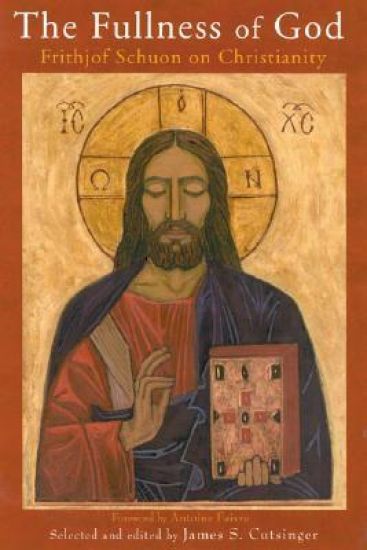
The Fullness Of God is the first in a new series of titles from World Wisdom featuring the essential writings of Frithjof Schuon. Here for the first time in one volume are the most important of Schuon's chapters on the Christian tradition. The Fullness Of God has been organised in such a way as to guide the reader from matters of metaphysical principle, through various theological and hermeneutical issues, to "operative" questions of spiritual practice and method. Specific topics include the relationship between Christianity and non Christian religions; the divergence within Christianity between its main branches, Orthodox, Catholic and Protestant; the place of reason and faith in Christianity and their knowledge or gnosis; the principle and application of a mystical exegesis of Scripture; the central dogmas of the Trinity and Incarnation, as well as Eucharistic and Marian doctrine; and Christian initiation, contemplative practice, and, and "prayer of the heart." The volume concludes with a short appendix of previously unpublished material, including samples from Schuon's correspondence with various Christian seekers. Editor's notes, a glossary of foreign terms and a comprehensive index are, also, included to make this volume a very useful tool for students, as well as a rich mine for seekers after the sacred.
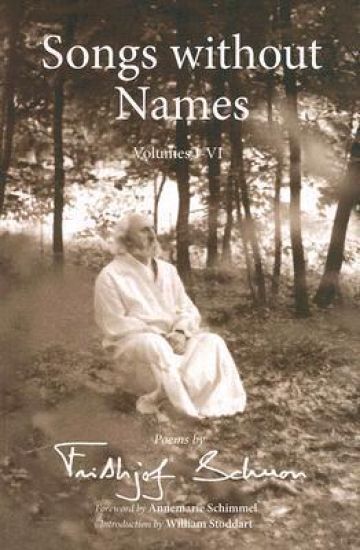
Songs without Names

Songs without Names

Frithjof Schuon

World Wisdom Books
2007
nidottu
During the last three years of his life, Frithjof Schuon wrote approximately 3,500 poems in his mother tongue German. These poems express every conceivable subtlety of spiritual and moral counsel, and the same sharpness of intellect, profundity, comprehensiveness, and compassion which one finds in Schuon's other writings. These four volumes, available for the first time in English, represent a substantial portion of Schuon's poetical work, and will prove irresistible to anyone interested in the poetical expression of the inner spiritual life.
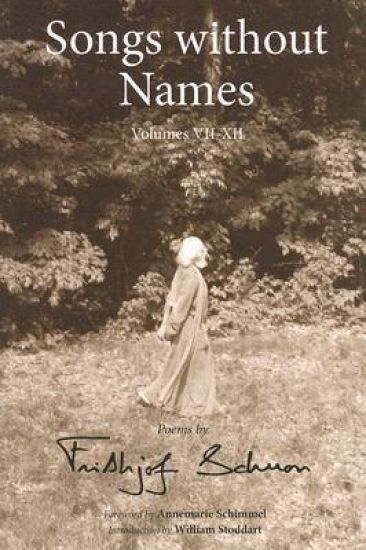
Songs without Names

Songs without Names

Frithjof Schuon

World Wisdom Books
2007
nidottu
During the last three years of his life, Frithjof Schuon wrote approximately 3,500 poems in his mother tongue German. These poems express every conceivable subtlety of spiritual and moral counsel, and the same sharpness of intellect, profundity, comprehensiveness, and compassion which one finds in Schuon's other writings. These four volumes, available for the first time in English, represent a substantial portion of Schuon's poetical work, and will prove irresistible to anyone interested in the poetical expression of the inner spiritual life.
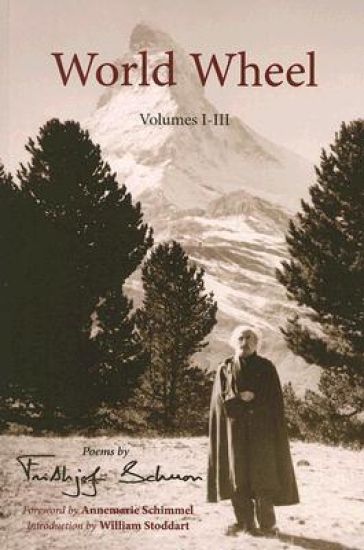
World Wheel

World Wheel

Frithjof Schuon

World Wisdom Books
2007
nidottu
During the last three years of his life, Frithjof Schuon wrote approximately 3,500 poems in his mother tongue German. These poems express every conceivable subtlety of spiritual and moral counsel, and the same sharpness of intellect, profundity, comprehensiveness, and compassion which one finds in Schuon's other writings. These four volumes, available for the first time in English, represent a substantial portion of Schuon's poetical work, and will prove irresistible to anyone interested in the poetical expression of the inner spiritual life.
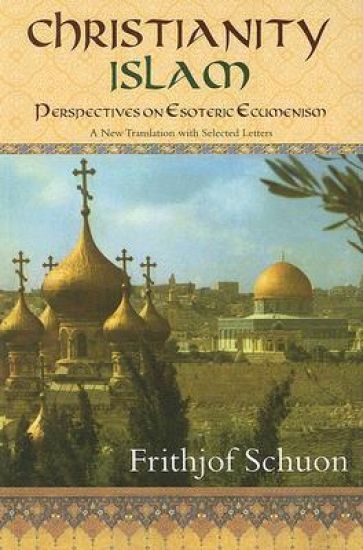
Christianity/Islam

Christianity/Islam

Frithjof Schuon

World Wisdom Books
2008
nidottu
Schuon's articles on the relationship between Christianity and Islam have profound implications for inter-faith dialogue. Several thought-provoking chapters shed light, from an inward dimension, upon the apparent outward contradictions between these two religions, notably in the field of moral divergences. This new edition is a fully revised translation of the original French edition and contains an extensive new Appendix with previously unpublished selections from his letters and other private writings.
In the Face of the Absolute

In the Face of the Absolute

Frithjof Schuon

World Wisdom Books
2014
pokkari
In this revised edition of his classic work, perennialist author Frithjof Schuon addresses diverse aspects of the religious phenomenon with his characteristic authority. In the book's first section, Schuon provides striking insights into age-old religious and philosophical controversies such as the problem of evil, predestination and free will, and the meaning of eternity in the realms of heaven and hell. In the second section, Schuon masterfully harmonizes the divergent theological claims of the three main branches of Christianity-Orthodoxy, Catholicism, and Protestantism-in the light of universal metaphysical truth. The final section contains several chapters relating to Islamic esoterism and concludes with a remarkable chapter on the spiritual substance of the Prophet of Islam. This new edition of In the Face of the Absolute features a fully revised translation from the French original and contains previously unpublished selections from Schuon's letters and other private writings. Also included are extensive editor's notes, a helpful glossary of foreign terms, and an index.
To Have a Center

To Have a Center

Frithjof Schuon

World Wisdom Books
2015
pokkari
In this new edition of his powerfully original work, Schuon covers an array of metaphysical, cosmological, and anthropological subjects. In the book's signature essay, entitled "To Have a Center," the author surveys the ambiguous phenomenon of modern genius, showing how Western humanistic society has replaced the time-honored veneration of the saint and the hero with the cult of individualistic "genius." In other notable essays, Schuon deals with the relation between intelligence and character, the distinction between historical Gnosticism and pure gnosis, the degrees and dimensions of theism, the spiritual messages of David, Shankara, and Honen, and the symbolism of Plains Indian vestments. This revised edition, containing over 65 pages of new material, features a fully revised translation from the French original as well as previously unpublished selections from Schuon's letters and other private writings. Also included are editor's notes, a glossary of foreign terms, and an index.
Treasures of Buddhism

Treasures of Buddhism

Frithjof Schuon

World Wisdom Books
2018
nidottu
In his classic work on the subject, perennialist author Frithjof Schuon explores the vast and varied landscape that is Buddhism. Every reader interested in Buddhism from whatever angle will here find much that speaks to his or her condition. Schuon presents Buddhism not as an historical artifact of the past, but as a living spiritual force. In describing the essentials of Buddhism, he frequently makes use of comparisons with other traditions, including Western religious thought. Th e rich and diverse world of Buddhist art—from its statuary to the tea ceremony—is a subject treated with particular importance. A valuable section on Shinto, the indigenous Japanese tradition of the “way of the gods,” concludes the book.
The Play of Masks

The Play of Masks

Frithjof Schuon

World Wisdom Books
2024
nidottu
This late work of Frithjof Schuon represents a general survey of his metaphysical perspective, which is that of the Sophia perennis, or "perennial wisdom" found at the heart of the world's religions. This new edition of The Play of Masks features a fully revised translation from the French original as well as over 50 pages of new material, including previously unpublished selections from the author's letters and other private writings. Also included is an editor's preface, extensive editor's notes, a glossary of foreign terms and phrases, an index, and biographical notes. Composed of short independent treatises, this book presents readers with fundamental keys for understanding the nature of God, the world, and the human situation. Throughout his writings, Schuon emphasizes the centrality of three elements: Truth, Way, and Virtue. The Truth is what we must know; the Way is what we must do; Virtue is what we must love, become, and be.