Kirjahaku
Etsi kirjoja tekijän nimen, kirjan nimen tai ISBN:n perusteella.
6 kirjaa tekijältä G. N. Devy
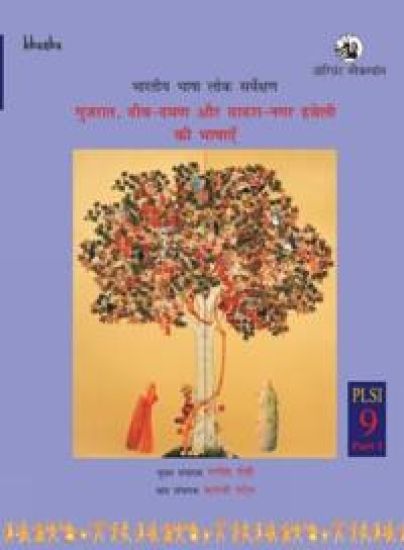
Gujarat, Diu-Daman aur Dadra–Nagar Haveli ki Bhashayen
G. N. Devy
Orient Blackswan Pvt Ltd
2023
sidottu
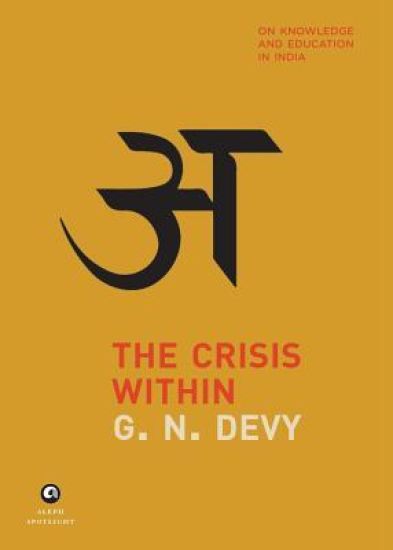
Nearly one in every twelve humans is a young Indian for whom meaningful education is of critical importance. A good education will not only help our youth get jobs and build fulfilling careers, it will also lead to the widening of our collective imagination and the shaping of the way we think; for all these reasons it ought to be an important concern of our time. Unfortunately, this is not the case. There is a lack of infrastructure, adequate funding and genuine autonomy within educational institutions, departments within those institutions, and individuals who teach in those departments. And this is not all. There is also the question of the nature of knowledge that is relevant to our rapidly modernizing country that needs to be dealt with. If knowledge is the core of education and if education lays the very foundation of a nation, the author argues that it is of critical importance that the plight of educational institutions and the need to generate knowledge appropriate to India are addressed without any delay. Original and profound, this book offers a clear picture of the mistakes that have been committed in the past, confronts the present decline of knowledge and education in the country and offers a vision for the future.
In India, kingdoms and dynasties have come and gone, religious sects have formed and dissolved, schools of philosophy have come together and subsequently been replaced by others, yet the Mahabharata has never ceased to excite the Indian imagination. The sheer volume of commentaries on the Mahabharata is awe-inspiring. So, what is it in the Mahabharata that gives it its timeless magic? Is it the mythical characters with which it is replete that makes the epic so enchanting? Or is it the great wealth of philosophical and metaphysical ideas in it that dazzles its audiences? Or could it be a combination of all these that makes it ever-fascinating to scholars and readers around the world? And, most of all, what accounts for its incredible effect on the subconscious of millions of Indians through several generations? Translated into numerous languages, including Marathi, Kannada, Assamese, Tamil, Urdu, Gujarati, Bengali, and Malayalam, Mahabharata: The Epic and the Nation answers many of these questions surrounding the Mahabharata and why it remains, undisputedly, one of India's national epics.
The Indians is one of the most ambitious projects yet undertaken to map the origins, evolution, and present-day reality of India's civilization and people. Written by over one hundred of South Asia's foremost scholars and domain experts, the essays in the book cover a period of some 12,000 years-from the last Ice Age to the twenty-first century. The book is divided into seven sections. The first part looks at the evolution of humans in South Asia through the lens of the early 'Indian' population, their migrations, and the climate. The second part focuses on the emergence of different civilizations in the region through the domestication of plants and animals and other factors and how these civilizations eventually begin to decline. The third part discusses the languages and philosophies that defined ancient India-Buddhism, Jainism, Sanskrit, Indo-Iranian languages, and Pali literature, among others. The fourth part is a detailed study of society and culture in various geographical regions--the North, South, Northeast, the Deccan, East, and West India. The fifth part looks at the advent of colonialism and its impact on the country's economy, social fabric, and knowledge systems. The sixth part looks at Adivasi movements, Ambedkarite politics, Gandhian resistance, and other events that would come to form the bedrock of the independent republic. And, finally, the seventh part looks at contemporary India--the workings of the Constitution and urbanism, liberalization, and other aspects of the modern Indian experience. Taken together, the essays in the book provide remarkable insights into Indian history and society.