Kirjojen hintavertailu. Mukana 11 717 486 kirjaa ja 12 kauppaa.

Kirjahaku

Etsi kirjoja tekijän nimen, kirjan nimen tai ISBN:n perusteella.

4 kirjaa tekijältä Gail L. Thompson

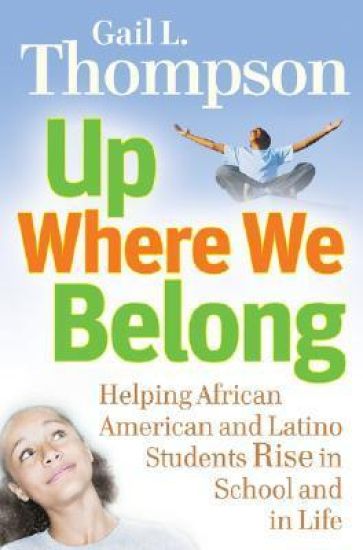
Up Where We Belong

Up Where We Belong

Gail L. Thompson

Jossey-Bass Inc.,U.S.
2007
sidottu
In Up Where We Belong, Gail Thompson asked the students in a low performing school to be candid about their high school experiences. Using this information and relying on data from questionnaires and focus groups, Thompson discovered a huge gap in perception between how teachers and students view their experience of school. The book explores this disparity, and uncovers some of the reasons for students’ low achievement, apathy, and frustration. Most important, she offers vital lessons for transforming schools–especially for underachieving kids and students of color.
African-American Teens Discuss Their Schooling Experiences

African-American Teens Discuss Their Schooling Experiences

Gail L. Thompson

Praeger Publishers Inc
2002
sidottu
For decades, researchers and policymakers have grappled with the issue of the underachievement of African American students. An age-old problem has been that these students on average lag behind their peers of other racial/ethnic groups in math, science, and reading. Recently, California, like some other states, has implemented a high-stakes standardized testing program that has revealed that when test scores are disaggregated along racial/ethnic lines, the scores of African American students continue to trail those of their peers.The study described in this book was undertaken in an effort to uncover schooling practices that are advantageous or detrimental to the achievement of African American students. The study was based on interviews and questionnaire results from nearly 300 African American high school seniors. Most of these students resided in a region that had a low college attendance rate and a high child poverty rate. The students were given an opportunity to discuss numerous issues pertaining to their schooling experiences, including teacher attitudes and expectations, the curriculum, homework practices, the quality of services provided by their high school counselors, racism at school, school safety, parental involvement, and their early reading habits and attitudes about reading. In addition to quantitative results, most chapters include detailed narratives describing the elementary and secondary schooling experiences of the interviewees.
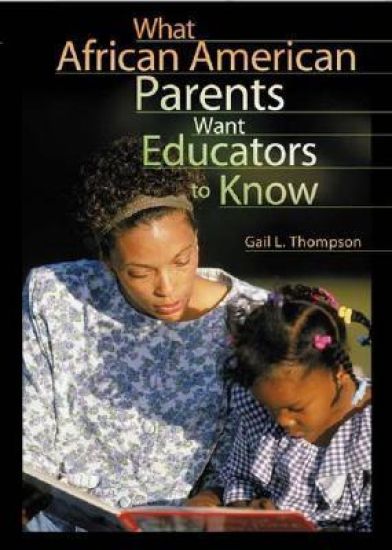
What African American Parents Want Educators to Know

What African American Parents Want Educators to Know

Gail L. Thompson

Praeger Publishers Inc
2003
sidottu
Thompson designed an empirical study to gather feedback from African-American parents on numerous issues pertaining to their children's schooling experiences. The results, discussed in this book, can be utilized to improve the schooling experiences of African-American children nationwide.The African-American parents/guardians who participated in this study were biological parents in two-parent homes, single parents, grandparents, foster parents, and stepparents who were rearing school-age children. Some had been deterred from completing their own formal education as a result of peer pressure, temptation outside of school, or stressful circumstances. Others had positive schooling experiences and stable childhoods. Regardless of the differences in their background experiences, the majority of these parents or guardians were single-minded about wanting a better life for their children, believing that a good K-12 education and college education were crucial to their children's advancement. And while most believed resolutely in the hope offered by the public school system, they recognized that schools couldn't do it all.African-American parents and guardians are willing to work with teachers and administrators to ensure that their children receive a quality education. Yet if the historic achievement gap is ever to be eradicated, teachers, administrators, researchers, and policymakers must be more willing to view African-American parents/guardians as assets. African-American parents/guardians must be invited to verbalize their concerns, and those concerns must be taken seriously to effect meaningful and lasting change in the public school system.
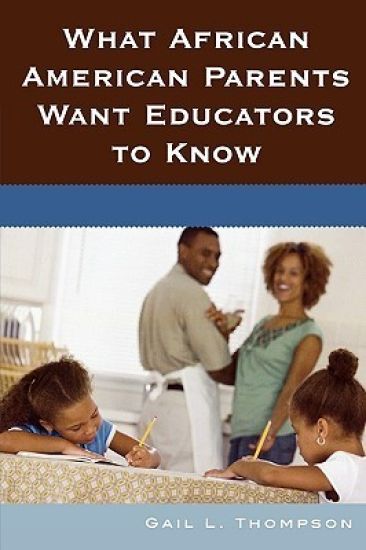
What African American Parents Want Educators to Know

What African American Parents Want Educators to Know

Gail L. Thompson

Rowman Littlefield Education
2008
nidottu
The African-American parents/guardians who participated in this study were biological parents in two-parent homes, single parents, grandparents, foster parents, and stepparents who were rearing school-age children. Some had been deterred from completing their own formal education as a result of peer pressure, temptation outside of school, or stressful circumstances. Others had positive schooling experiences and stable childhoods. Regardless of the differences in their background experiences, the majority of these parents or guardians were single-minded about wanting a better life for their children, believing that a good K-12 education and college education were crucial to their children's advancement. And while most believed resolutely in the hope offered by the public school system, they recognized that schools couldn't do it all. African-American parents and guardians are willing to work with teachers and administrators to ensure that their children receive a quality education. Yet if the historic achievement gap is ever to be eradicated, teachers, administrators, researchers, and policymakers must be more willing to view African-American parents/guardians as assets. African-American parents/guardians must be invited to verbalize their concerns, and those concerns must be taken seriously to effect meaningful and lasting change in the public school system.