Kirjojen hintavertailu. Mukana 12 016 292 kirjaa ja 12 kauppaa.

Kirjahaku

Etsi kirjoja tekijän nimen, kirjan nimen tai ISBN:n perusteella.

2 kirjaa tekijältä Gail Satler

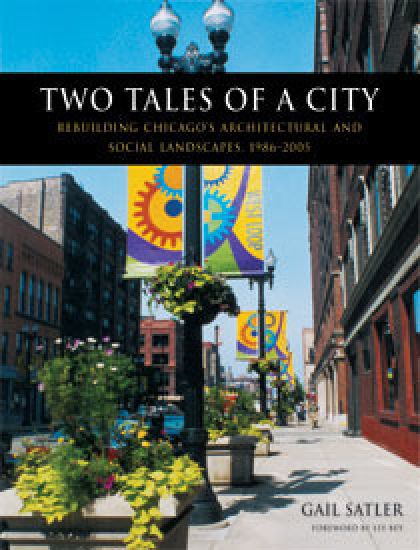
Two Tales of a City

Two Tales of a City

Gail Satler

Northern Illinois University Press
2006
sidottu
Architecture creates a social world. The built environment structures and facilitates the functions of a city and interactions among human beings. Stores, restaurants, theaters, parks, offices, and apartment buildings—all are spaces where people encounter one another as they act out their daily lives. In this insightful study of Chicago's new Central Area, Gail Satler illuminates the ways in which the renovations of the past two decades have reconfigured the social as well as the physical landscape. Tracing the renovation process from concept to construction, Satler examines design plans and interviews officials and architects who envisioned a revitalized Central Area. Then she leads the reader on a tour of State Street, the Chicago River, and Millennium Park with stops at historic and recent landmarks. Along the way, she notes how the mixture of housing, retailing, business, and recreation fosters diverse uses of urban space. At the same time, by drawing from marginal areas and welcoming a diversity of users, the Central Area expands the Chicago community. As Satler so clearly documents, architecture embodies ideology and social relationships. For this reason, it also offers potential for reforming the life of a city. Satler's work is creative and cutting edge, but in this personable, illustrated book, she gently encourages readers to notice architecture and the ways in which it shapes their own world.

Frank Lloyd Wright's Living Space

Frank Lloyd Wright's Living Space

Gail Satler

Northern Illinois University Press
2000
pokkari
This sociological analysis of Wright's architecture examines the interaction between people and the spaces they create. Satler shows how Wright explored a new architectural dimension, the space in which we live. Focusing on the Larkin Building (1904) and Unity Temple (1907), works that Wright considered important but that have received little attention, Satler delineates the social nature of space. She provides an analytic framework through which to understand Wright's buildings and his writings, revealing how the history of such works and cultural landscapes offer a basis for making social, political, and spatial choices about the future. Wright's specific architectural works provide a framework for constructing social histories of places and people because his designs represent a natural way to build and to live within a larger social landscape. This original study will appeal to sociologists, architects, urban and architectural historians, urban planners and anthropologists, and those interested in the work of Frank Lloyd Wright.