Kirjojen hintavertailu. Mukana 12 016 292 kirjaa ja 12 kauppaa.

Kirjahaku

Etsi kirjoja tekijän nimen, kirjan nimen tai ISBN:n perusteella.

19 kirjaa tekijältä Galen Strawson

Selves

Selves

Galen Strawson

Oxford University Press
2009
sidottu
What is the self? Does it exist? If it does exist, what is it like? It's not clear that we even know what we're asking about when we ask these large, metaphysical questions. The idea of the self comes very naturally to us, and it seems rather important, but it's also extremely puzzling. As for the word 'self'-it's been taken in so many different ways that it seems that you can mean more or less what you like by it and come up with almost any answer. Galen Strawson proposes to approach the (seeming) problem of the self by starting from the thing that makes it seem there is a problem in the first place: our experience of the self, our experience of having or being a self, a hidden, inner mental presence or locus of consciousness. He argues that we should consider the phenomenology (experience) of the self before we attempt its metaphysics (its existence and nature). And when we have considered what it's like for human beings (assuming we can generalize about ourselves), we need to consider what it might be like for other possible creatures: what's the very least that might count as experience of oneself as a self? This, he proposes, will give us a good idea of what we ought to be looking for when we go on to ask whether there is such a thing-an idea worth following wherever it leads. It leads Strawson to conclude that selves, inner subjects of experience, do indeed exist. But they bear little resemblance to traditional conceptions of the self.
The Subject of Experience

The Subject of Experience

Galen Strawson

Oxford University Press
2017
sidottu
The Subject of Experience is about the self, the person. It takes the form of a series of essays which draw on literature and psychology as well as philosophy. Galen Strawson discusses the phenomenology or experience of having or being a self (What is the character of self-experience?) and the fundamental metaphysics of the self (Does the self exist? If so, what is its nature? How long do selves last?): he develops an approach to the metaphysical questions out of the results of the phenomenological investigation. He argues that it is legitimate to say that there is such a thing as the self as distinct from the human being. At the same time he raises doubts about how long selves can be supposed to last, insofar as they are distinct from human beings. He also raises a doubt about whether a self (or indeed a human being) can really be said to lose anything in dying. He criticizes the popular notion of the narrative self, and considers the differences between 'Endurers' or 'Diachronic' people, who feel that they are the same person when they consider their past and future, and 'Transients' or 'Episodic' people, who do not feel this. He considers the first-person pronoun 'I' and a number of puzzles raised by the phenomena of self-reference and self-knowledge. He examines Locke's, Hume's and Kant's accounts of the mind and personal identity, and argues that Locke and Hume have been badly misunderstood.
The Subject of Experience

The Subject of Experience

Galen Strawson

Oxford University Press
2019
nidottu
The Subject of Experience is about the self, the person. It takes the form of a series of essays which draw on literature and psychology as well as philosophy. Galen Strawson discusses the phenomenology or experience of having or being a self (What is the character of self-experience?) and the fundamental metaphysics of the self (Does the self exist? If so, what is its nature? How long do selves last?): he develops an approach to the metaphysical questions out of the results of the phenomenological investigation. He argues that it is legitimate to say that there is such a thing as the self as distinct from the human being. At the same time he raises doubts about how long selves can be supposed to last, insofar as they are distinct from human beings. He also raises a doubt about whether a self (or indeed a human being) can really be said to lose anything in dying. He criticizes the popular notion of the narrative self, and considers the differences between 'Endurers' or 'Diachronic' people, who feel that they are the same person when they consider their past and future, and 'Transients' or 'Episodic' people, who do not feel this. He considers the first-person pronoun 'I' and a number of puzzles raised by the phenomena of self-reference and self-knowledge. He examines Locke's, Hume's and Kant's accounts of the mind and personal identity, and argues that Locke and Hume have been badly misunderstood.
Stuff, Quality, Structure

Stuff, Quality, Structure

Galen Strawson

Oxford University Press
2024
sidottu
Stuff, Quality, Structure makes a case for identity metaphysics. It defends categorial monism, the view that there's only one fundamental metaphysical category, which Strawson calls 'stuff'. It argues for the ultimate metaphysical identity of things that other views hold to be irreducibly distinct. It rejects separatism, which posits such irreducible metaphysical differences. The notions of object, process, property, state, and event seem to signal fundamental ontological differences, but these differences are superficial, according to identity metaphysics. The same goes for energy/force/laws of nature/causation/power: according to identity metaphysics, these are different ways of conceptualizing the same phenomenon, the best name for which is simply 'the nature of stuff'. More particularly: identity metaphysics opposes (1) object-property separatism and (2) stuff-law separatism. It then denies that (1) and (2) themselves are fundamentally different issues. Strawson also endorses 'stuff monism', the view that there is only one kind of fundamental stuff, and favours 'thing monism', the view that there is only one fundamental entity in reality. He then considers the place of the notion of structure in an account of concrete reality. Structure considered just as such is an abstract, wholly logico-mathematically characterizable phenomenon. If a structure is concretely realized it must be realized by something that isn't itself just a matter of structure. It is arguable, nevertheless, that a thing's structural nature may--and perhaps must--completely fix its non-structural nature in any world, or at least in any world to which the notion of structure is generally applicable.
Freedom and Belief

Freedom and Belief

Galen Strawson

Oxford University Press
2010
sidottu
This is a revised and updated edition of Galen Strawson's groundbreaking first book, where he argues that there is a fundamental sense in which there is no such thing as free will or true moral responsibility (as this is ordinarily understood). This conclusion is very hard to accept. On the whole we continue to believe firmly both that we have free will and that we are truly morally responsible for what we do. Strawson devotes much of the book to an attempt to explain why this is so. He examines various aspects of the 'cognitive phenomenology' of freedom - the nature, causes, and consequences of our deep commitment to belief in freedom. In particular, he considers at length a number of problems that are raised by the suggestion that, if freedom were possible, believing oneself to be a free agent would be a necessary condition of being a free agent.
Freedom and Belief

Freedom and Belief

Galen Strawson

Oxford University Press
2010
nidottu
This is a revised and updated edition of Galen Strawson's groundbreaking first book, where he argues that there is a fundamental sense in which there is no such thing as free will or true moral responsibility (as this is ordinarily understood). This conclusion is very hard to accept. On the whole we continue to believe firmly both that we have free will and that we are truly morally responsible for what we do. Strawson devotes much of the book to an attempt to explain why this is so. He examines various aspects of the 'cognitive phenomenology' of freedom - the nature, causes, and consequences of our deep commitment to belief in freedom. In particular, he considers at length a number of problems that are raised by the suggestion that, if freedom were possible, believing oneself to be a free agent would be a necessary condition of being a free agent.
Real Materialism

Real Materialism

Galen Strawson

Oxford University Press
2008
sidottu
Real Materialism draws together papers written over twenty years by Galen Strawson in philosophy of mind and metaphysics. Strawson focuses on five main areas of enquiry: [1] the nature of the physical, consciousness, the 'mind-body problem', and the prospects for panpsychism; [2] the self, the subject of experience, self-consciousness, and the 'narrative' self; [3] free will and moral responsibility; [4] the nature of thought and intentionality and their connection with consciousness; [5] the problem of causation with particular reference to the philosophy of David Hume.
Real Materialism

Real Materialism

Galen Strawson

Oxford University Press
2008
nidottu
Real Materialism draws together papers written over twenty years by Galen Strawson in philosophy of mind and metaphysics. Strawson focuses on five main areas of enquiry: [1] the nature of the physical, consciousness, the 'mind-body problem', and the prospects for panpsychism; [2] the self, the subject of experience, self-consciousness, and the 'narrative' self; [3] free will and moral responsibility; [4] the nature of thought and intentionality and their connection with consciousness; [5] the problem of causation with particular reference to the philosophy of David Hume.
The Secret Connexion

The Secret Connexion

Galen Strawson

Oxford University Press
2014
sidottu
In this revised and updated edition of The Secret Connexion, Galen Strawson explores one of the most discussed subjects in all philosophy: David Hume's work on causation. Strawson challenges the standard view of Hume, according to which he thinks that there is no such thing as causal influence, and that there is nothing more to causation than things of one kind regularly following things of another kind. He argues that Hume does believe in causal influence, but insists that we cannot know its nature. The regularity theory of causation is indefensible, and Hume never adopted it in any case.
The Secret Connexion

The Secret Connexion

Galen Strawson

Oxford University Press
2014
nidottu
In this revised and updated edition of The Secret Connexion, Galen Strawson explores one of the most discussed subjects in all philosophy: David Hume's work on causation. Strawson challenges the standard view of Hume, according to which he thinks that there is no such thing as causal influence, and that there is nothing more to causation than things of one kind regularly following things things of another kind. He argues that Hume does believe in causal influence, but insists that we cannot know its nature. The regularity theory of causation is indefensible, and Hume never adopted it in any case.
The Evident Connexion

The Evident Connexion

Galen Strawson

Oxford University Press
2011
sidottu
The Evident Connexion presents a new reading of Hume's 'bundle theory' of the self or mind, and his later rejection of it. Galen Strawson argues that the bundle theory does not claim that there are no subjects of experience, as many have supposed, or that the mind is just a series of experiences. Hume holds only that the 'essence of the mind [is] unknown'. His claim is simply that we have no empirically respectable reason to believe in the existence of a persisting subject, or a mind that is more than a series of experiences (each with its own subject). Why does Hume later reject the bundle theory? Many think he became dissatisfied with his account of how we come to believe in a persisting self, but Strawson suggests that the problem is more serious. The keystone of Hume's philosophy is that our experiences are governed by a 'uniting principle' or 'bond of union'. But a philosophy that takes a bundle of ontologically distinct experiences to be the only legitimate conception of the mind cannot make explanatory use of those notions in the way Hume does. As Hume says in the Appendix to the Treatise of Human Nature: having 'loosen'd all our particular perceptions' in the bundle theory, he is unable to 'explain the principle of connexion, which binds them together'. This lucid book is the first to be wholly dedicated to Hume's theory of personal identity, and presents a bold new interpretation which bears directly on current debates among scholars of Hume's philosophy.
The Evident Connexion

The Evident Connexion

Galen Strawson

Oxford University Press
2013
nidottu
The Evident Connexion presents a new reading of Hume's 'bundle theory' of the self or mind, and his later rejection of it. Galen Strawson argues that the bundle theory does not claim that there are no subjects of experience, as many have supposed, or that the mind is just a series of experiences. Hume holds only that the 'essence of the mind [is] unknown'. His claim is simply that we have no empirically respectable reason to believe in the existence of a persisting subject, or a mind that is more than a series of experiences (each with its own subject). Why does Hume later reject the bundle theory? Many think he became dissatisfied with his account of how we come to believe in a persisting self, but Strawson suggests that the problem is more serious. The keystone of Hume's philosophy is that our experiences are governed by a 'uniting principle' or 'bond of union'. But a philosophy that takes a bundle of ontologically distinct experiences to be the only legitimate conception of the mind cannot make explanatory use of those notions in the way Hume does. As Hume says in the Appendix to the Treatise of Human Nature: having 'loosen'd all our particular perceptions' in the bundle theory, he is unable to 'explain the principle of connexion, which binds them together'. This lucid book is the first to be wholly dedicated to Hume's theory of personal identity, and presents a bold new interpretation which bears directly on current debates among scholars of Hume's philosophy.
Selves

Selves

Galen Strawson

Oxford University Press
2011
nidottu
What is the self? Does it exist? If it does exist, what is it like? It's not clear that we even know what we're asking about when we ask these large, metaphysical questions. The idea of the self comes very naturally to us, and it seems rather important, but it's also extremely puzzling. As for the word 'self'--it's been taken in so many different ways that it seems that you can mean more or less what you like by it and come up with almost any answer. Galen Strawson proposes to approach the (seeming) problem of the self by starting from the thing that makes it seem there is a problem in the first place: our experience of the self, our experience of having or being a self, a hidden, inner mental presence or locus of consciousness. He argues that we should consider the phenomenology (experience) of the self before we attempt its metaphysics (its existence and nature). And when we have considered what it's like for human beings (assuming we can generalize about ourselves), we need to consider what it might be like for other possible creatures: what's the very least that might count as experience of oneself as a self? This, he proposes, will give us a good idea of what we ought to be looking for when we go on to ask whether there is such a thing-an idea worth following wherever it leads. It leads Strawson to conclude that selves, inner subjects of experience, do indeed exist. But they bear little resemblance to traditional conceptions of the self.
Mental Reality

Mental Reality

Galen Strawson

Bradford Books
2009
pokkari
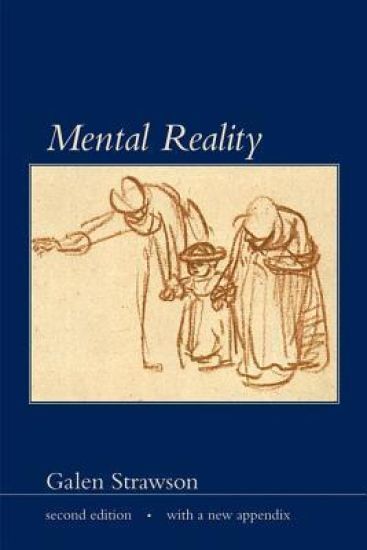
An argument against neobehaviorism and for "naturalized Cartesianism," which couples a wholly materialist approach to the mind with a fully realist attitude to the phenomena of conscious experience.In Mental Reality, Galen Strawson argues that much contemporary philosophy of mind gives undue primacy of place to publicly observable phenomena, nonmental phenomena, and behavioral phenomena (understood as publicly observable phenomena) in its account of the nature of mind. It does so at the expense of the phenomena of conscious experience. Strawson describes an alternative position, "naturalized Cartesianism," which couples the materialist view that mind is entirely natural and wholly physical with a fully realist account of the nature of conscious experience. Naturalized Cartesianism is an adductive (as opposed to reductive) form of materialism. Adductive materialists don't claim that conscious experience is anything less than we ordinarily conceive it to be, in being wholly physical. They claim instead that the physical is something more than we ordinarily conceive it to be, given that many of the wholly physical goings on in the brain constitute-literally are-conscious experiences as we ordinarily conceive them.Since naturalized Cartesianism downgrades the place of reference to nonmental and publicly observable phenomena in an adequate account of mental phenomena, Strawson considers in detail the question of what part such reference still has to play. He argues that it is a mistake to think that all behavioral phenomena are publicly observable phenomena.This revised and expanded edition of Mental Reality includes a new appendix, which thoroughly revises the account of intentionality given in chapter 7.
Locke on Personal Identity

Locke on Personal Identity

Galen Strawson

Princeton University Press
2011
sidottu
John Locke's theory of personal identity underlies all modern discussion of the nature of persons and selves - yet it is widely thought to be wrong. In his new book, Galen Strawson argues that in fact it is Locke's critics who are wrong, and that the famous objections to his theory are invalid. Indeed, far from refuting Locke, they illustrate his fundamental point. Strawson argues that the root error is to take Locke's use of the word "person" only in the ordinary way, as merely a term for a standard persisting thing, like "human being." In actuality, Locke uses "person" primarily as a forensic or legal term geared specifically to questions about praise and blame, punishment and reward. In these terms, your personal identity is roughly a matter of those of your past actions that you are still responsible for because you are still "conscious" of them in Locke's special sense of that word. Clearly and vigorously argued, this is an important contribution both to the history of philosophy and to the contemporary philosophy of personal identity.
Locke on Personal Identity

Locke on Personal Identity

Galen Strawson

Princeton University Press
2014
pokkari
John Locke's theory of personal identity underlies all modern discussion of the nature of persons and selves--yet it is widely thought to be wrong. In this book, Galen Strawson argues that in fact it is Locke's critics who are wrong, and that the famous objections to his theory are invalid. Indeed, far from refuting Locke, they illustrate his fundamental point. Strawson argues that the root error is to take Locke's use of the word "person" as merely a term for a standard persisting thing, like "human being." In actuality, Locke uses "person" primarily as a forensic or legal term geared specifically to questions about praise and blame, punishment and reward. This point is familiar to some philosophers, but its full consequences have not been worked out, partly because of a further error about what Locke means by the word "conscious." When Locke claims that your personal identity is a matter of the actions that you are conscious of, he means the actions that you experience as your own in some fundamental and immediate manner. Clearly and vigorously argued, this is an important contribution both to the history of philosophy and to the contemporary philosophy of personal identity.
Things That Bother Me

Things That Bother Me

Galen Strawson

The New York Review of Books, Inc
2018
nidottu
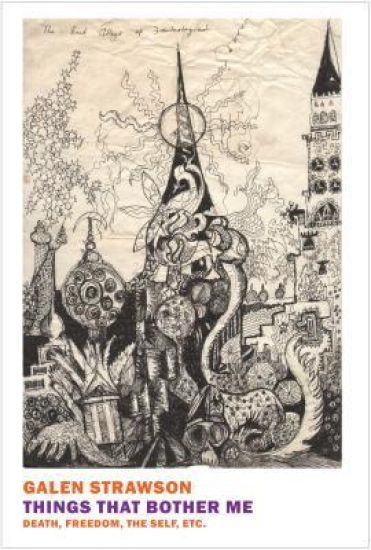
An original collection of lauded philosopher Galen Strawson's writings on the self and consciousness, naturalism and pan-psychism. Galen Strawson might be described as the Montaigne of modern philosophers, endlessly curious, enormously erudite, unafraid of strange, difficult, and provocative propositions, and able to describe them clearly--in other words, he is a true essayist. Strawson also shares with Montaigne a particular fascination with the elastic and elusive nature of the self and of consciousness. Of the essays collected here, "A Fallacy of Our Age" (an inspiration for Vendela Vida's novel Let the Northern Lights Erase Your Name) takes issue with the commencement-address clich that life is a story. Strawson questions whether it is desirable or even meaningful to think about life that way. "The Sense of the Self" offers an alternative account, in part personal, of how a distinct sense of self is not at all incompatible with a sense of the self as discontinuous, leading Strawson to a position that he sees as in some ways Buddhist. "Real Naturalism" argues that a fully naturalist account of consciousness supports a belief in the immanence of consciousness in nature as a whole (also known as panpsychism), while in the final essay Strawson offers a vivid account of coming of age in the 1960s. Drawing on literature and life as much as on philosophy, this is a book that prompts both argument and wonder.