Kirjojen hintavertailu. Mukana 11 699 587 kirjaa ja 12 kauppaa.

Kirjahaku

Etsi kirjoja tekijän nimen, kirjan nimen tai ISBN:n perusteella.

6 kirjaa tekijältä Gareth D. Williams

Pietro Bembo on Etna

Pietro Bembo on Etna

Gareth D. Williams

Oxford University Press Inc
2017
sidottu
This book is centered on the Venetian humanist Pietro Bembo (1470-1547), on his two-year stay in Sicily in 1492-4 to study the ancient Greek language under one of its most distinguished contemporary teachers, the Byzantine émigré Constantine Lascaris, and above all on his ascent of Mount Etna in 1493. The more particular focus of this study is on the imaginative capacities that crucially shape Bembo's elegantly crafted account, in Latin, of his Etna adventure in his so-called De Aetna, published at the Aldine press in Venice in 1496. This work is cast in the form of a dialogue that takes place between the young Bembo and his father Bernardo (himself a prominent Venetian statesman with strong humanist involvements) after Pietro's return to Venice from Sicily in 1494. But De Aetna offers much more than a one-dimensional account of the facts, sights and findings of Pietro's climb. Far more important in the present study is his eye for creative elaboration, or for transforming his literal experience on the mountain into a meditation on his coming-of-age at a remove from the conventional career-path expected of one of his station within the Venetian patriciate. Three mutually informing features that are critical to the artistic originality of De Aetna receive detailed treatment in this study: (i) the stimulus that Pietro drew from the complex history of Mount Etna as treated in the Greco-Roman literary tradition from Pindar onwards; (ii) the striking novelty of De Aetna's status as the first Latin text produced at the nascent Aldine press in the prototype of what modern typography knows as Bembo typeface; and (iii) Pietro's ingenious deployment of Etna as a powerful, multivalent symbol that simultaneously reflects the diverse characterizations of, and the generational differences between, father and son in the course of their dialogical exchanges within De Aetna.
The Cosmic Viewpoint

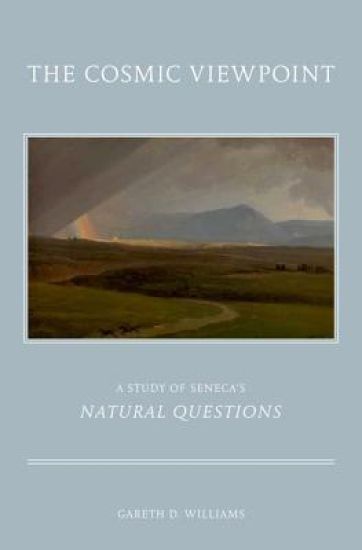
The Cosmic Viewpoint

Gareth D. Williams

Oxford University Press Inc
2016
nidottu
Seneca's Natural Questions is an eight-book disquisition on the nature of meteorological phenomena, ranging inter alia from rainbows to earthquakes, from comets to the winds, from the causes of snow and hail to the reasons why the Nile floods in summer. Much of this material had been treated in the earlier Greco-Roman meteorological tradition, but what notoriously sets Seneca's writing apart is his insertion of extended moralizing sections within his technical discourse. How, if at all, are these outbursts against the luxury and vice that are apparently rampant in Seneca's first-century CE Rome to be reconciled with his main meteorological agenda? In grappling with this familiar question, The Cosmic Viewpoint argues that Seneca is no blinkered or arid meteorological investigator, but a creative explorer into nature's workings who offers a highly idiosyncratic blend of physico-moral investigation across his eight books. At one level, his inquiry into nature impinges on human conduct and morality in its implicit propagation of the familiar Stoic ideal of living in accordance with nature: the moral deviants whom Seneca condemns in the course of the work offer egregious examples of living contrary to nature's balanced way. At a deeper level, however, The Cosmic Viewpoint stresses the literary qualities and complexities that are essential to Seneca's literary art of science: his technical enquiries initiate a form of engagement with nature which distances the reader from the ordinary involvements and fragmentations of everyday life, instead centering our existence in the cosmic whole. From a figurative standpoint, Seneca's meteorological theme raises our gaze from a terrestrial level of existence to a more intuitive plane where literal vision gives way to "higher" conjecture and intuition: in striving to understand meteorological phenomena, we progress in an elevating direction--a conceptual climb that renders the Natural Questions no mere store of technical learning, but a work that actively promotes a change of perspective in its readership.
Pietro Bembo on Etna

Pietro Bembo on Etna

Gareth D. Williams

Oxford University Press Inc
2022
nidottu
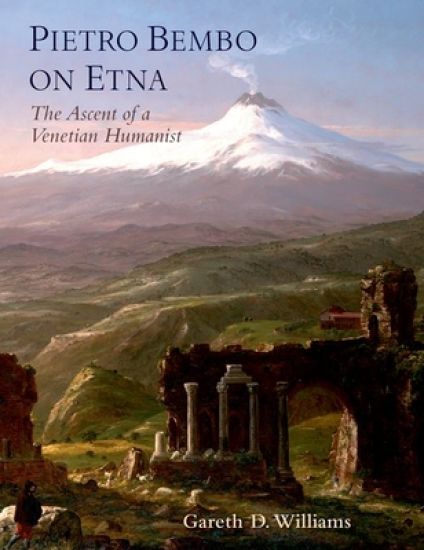
This book is centered on the Venetian humanist Pietro Bembo (1470-1547), on his two-year stay in Sicily in 1492-4 to study the ancient Greek language under one of its most distinguished contemporary teachers, the Byzantine émigré Constantine Lascaris, and above all on his ascent of Mount Etna in 1493. The more particular focus of this study is on the imaginative capacities that crucially shape Bembo's elegantly crafted account, in Latin, of his Etna adventure in his so-called De Aetna, published at the Aldine press in Venice in 1496. This work is cast in the form of a dialogue that takes place between the young Bembo and his father Bernardo (himself a prominent Venetian statesman with strong humanist involvements) after Pietro's return to Venice from Sicily in 1494. But De Aetna offers much more than a one-dimensional account of the facts, sights and findings of Pietro's climb. Far more important in the present study is his eye for creative elaboration, or for transforming his literal experience on the mountain into a meditation on his coming-of-age at a remove from the conventional career-path expected of one of his station within the Venetian patriciate. Three mutually informing features that are critical to the artistic originality of De Aetna receive detailed treatment in this study: (i) the stimulus that Pietro drew from the complex history of Mount Etna as treated in the Greco-Roman literary tradition from Pindar onwards; (ii) the striking novelty of De Aetna's status as the first Latin text produced at the nascent Aldine press in the prototype of what modern typography knows as Bembo typeface; and (iii) Pietro's ingenious deployment of Etna as a powerful, multivalent symbol that simultaneously reflects the diverse characterizations of, and the generational differences between, father and son in the course of their dialogical exchanges within De Aetna.
The Cosmic Viewpoint

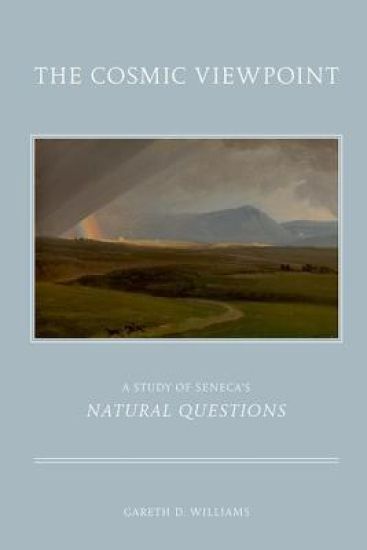
The Cosmic Viewpoint

Gareth D. Williams

Oxford University Press Inc
2012
sidottu
Seneca's Natural Questions is an eight-book disquisition on the nature of meteorological phenomena, ranging inter alia from rainbows to earthquakes, from comets to the winds, from the causes of snow and hail to the reasons why the Nile floods in summer. Much of this material had been treated in the earlier Greco-Roman meteorological tradition, but what notoriously sets Seneca's writing apart is his insertion of extended moralizing sections within his technical discourse. How, if at all, are these outbursts against the luxury and vice that are apparently rampant in Seneca's first-century CE Rome to be reconciled with his main meteorological agenda? In grappling with this familiar question, The Cosmic Viewpoint argues that Seneca is no blinkered or arid meteorological investigator, but a creative explorer into nature's workings who offers a highly idiosyncratic blend of physico-moral investigation across his eight books. At one level, his inquiry into nature impinges on human conduct and morality in its implicit propagation of the familiar Stoic ideal of living in accordance with nature: the moral deviants whom Seneca condemns in the course of the work offer egregious examples of living contrary to nature's balanced way. At a deeper level, however, The Cosmic Viewpoint stresses the literary qualities and complexities that are essential to Seneca's literary art of science: his technical enquiries initiate a form of engagement with nature which distances the reader from the ordinary involvements and fragmentations of everyday life, instead centering our existence in the cosmic whole. From a figurative standpoint, Seneca's meteorological theme raises our gaze from a terrestrial level of existence to a more intuitive plane where literal vision gives way to 'higher' conjecture and intuition: in striving to understand meteorological phenomena, we progress in an elevating direction - a conceptual climb that renders the Natural Questions no mere store of technical learning, but a work that actively promotes a change of perspective in its readership.
Banished Voices

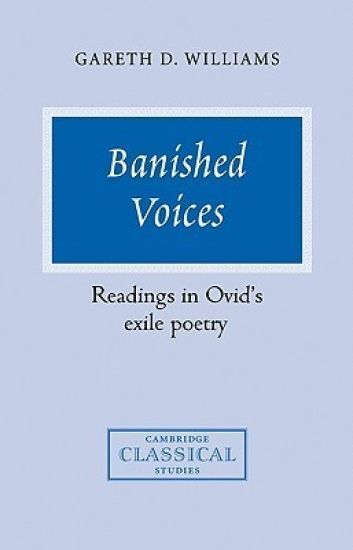
Banished Voices

Gareth D. Williams

Cambridge University Press
2007
pokkari
This study examines the literary complexities of the poetry which Ovid wrote in Tomis, his place of exile on the coast of the Black Sea after he was banished from Rome by the emperor Augustus in AD 8 because of the alleged salaciousness of the Ars Amatoria and a mysterious misdemeanour which is nowhere explained. Exile transforms Ovid into a melancholic poet of despair who claims that his creative faculties are in terminal decline. But research has exposed the ironic disjunction between many of the poet's claims and the latent artistry which belies them. Through a series of close readings which offer an analytical contribution to the scholarly evaluation of the exile poetry, Dr Williams examines the nature and the extent of Ovidian irony in Tomis and demonstrates the complex literary designs which are consistently disguised under a veil of dissimulation.
Banished Voices

Banished Voices

Gareth D. Williams

Cambridge University Press
1994
sidottu
This study examines the literary complexities of the poetry which Ovid wrote in Tomis, his place of exile on the coast of the Black Sea after he was banished from Rome by the emperor Augustus in AD 8 because of the alleged salaciousness of the Ars Amatoria and a mysterious misdemeanour which is nowhere explained. Exile transforms Ovid into a melancholic poet of despair who claims that his creative faculties are in terminal decline. But recent research has exposed the ironic disjunction between many of the poet’s claims and the latent artistry which belies them. Through a series of close readings which offer a new analytical contribution to the scholarly evaluation of the exile poetry, Dr Williams examines the nature and the extent of Ovidian irony in Tomis and demonstrates the complex literary designs which are consistently disguised under a veil of dissimulation.