Kirjojen hintavertailu. Mukana 11 627 381 kirjaa ja 12 kauppaa.

Kirjahaku

Etsi kirjoja tekijän nimen, kirjan nimen tai ISBN:n perusteella.

10 kirjaa tekijältä Garry Boulard

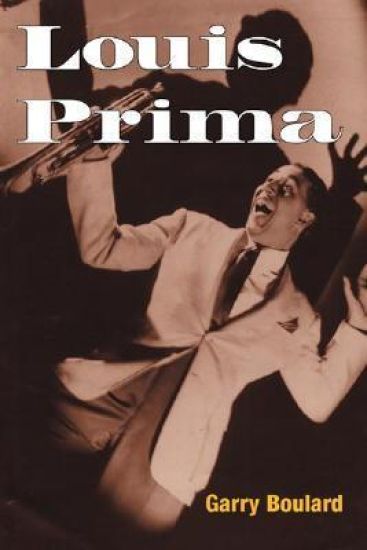
Louis Prima

Louis Prima

Garry Boulard

University of Illinois Press
2002
nidottu
Louis Prima infused the grit and grace of Dixieland jazz with swing and big band sounds, the first whiffs of rock 'n' roll, and a vaudevillian stage presence. Garry Boulard pens the biography of the underrated jazz musician, Las Vegas mainstay, and popular entertainer.A native of New Orleans, Prima was a Guy Lombardo protégé known as "The Italian Satchmo" who became the country's new jazz sensation at New York's Famous Door in the 1930s. He went on to success as a big band leader before virtually creating the lounge act as a Las Vegas nightclub staple. Employing and later marrying singer Keely Smith, Prima rode high with a series of hit songs and smash albums in the Fifties. But Boulard also looks past the over-the-top stage antics to restore Prima's legacy as an overlooked jazz musician and vocalist, and as a bandleader with an uncanny ability to fuse disparate styles into music that kept audiences cheering and dancing for decades.
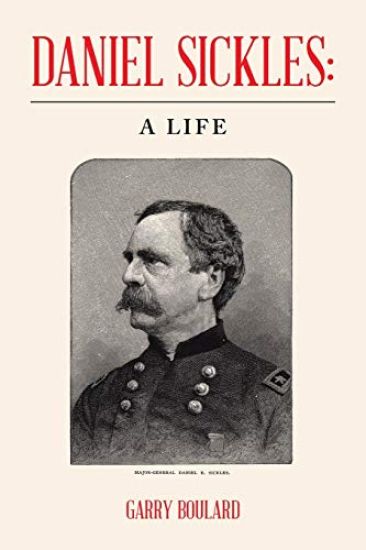
Daniel Sickles

Daniel Sickles

Garry Boulard

iUniverse
2019
pokkari
The name Daniel Sickles and the word controversy are synonymous. Any student of 19th century American political history is familiar with Sickles' 1859 murder of Philip Barton Key, the son of Francis Scott Key, who had seduced Sickles' young wife. That murder, because Sickles was at the time a New York Congressman and Key a district attorney for Washington, captured the country's imagination, a front-page event that inevitably ensnarled President James Buchanan, a close Sickles friend, inviting in the process explorations of what was seen as a sordid Washington society of the late 1850s. Civil War historians know Sickles as the General who led the men of the Union's III Corps out onto the exposed expanse of the Peach Orchard at Gettysburg, a decision many scholars have regarded as disastrous, and one that nearly led to an overall Union defeat at the famous battlefield, while losing for Sickles his right leg from Confederate shelling. But these two singular, if spectacular events, in a very real sense represent only two days out of an extraordinary lifetime of 94 years. The rest of Sickles' career was made up of his rise as a young stalwart of New York's notorious Tammany Hall; his two terms in Congress leading up to the Civil War; his contentious service as a military governor of the Carolinas after the War; his newsworthy tenure as U.S. Minister to Spain in the late 1860s and early 70s; and even his stint, at the age of 70, as the sheriff of the county encompassing New York City. Beyond the headlines were Sickles' relationships with presidents ranging from Franklin Pierce to Abraham Lincoln and Ulysses S. Grant, not to mention an improbable friendship with Theodore Roosevelt at the turn of the century. Daniel Sickles: A Life is the first full-length published treatment looking in depth at the entirely of one man's almost unbelievably colorful and contentious career. Garry Boulard is the author of The Expatriation of Franklin Pierce-The Story of a President and the Civil War (iUniverse, 2006), and The Worst President-The Story of James Buchanan (iUniverse, 2015). Boulard's essays and reviews have appeared in the Journal of Southern History, Journal of Ethnic Studies, Louisiana History, Journal of Mississippi History, and Florida Historical Quarterly, among many other publications.
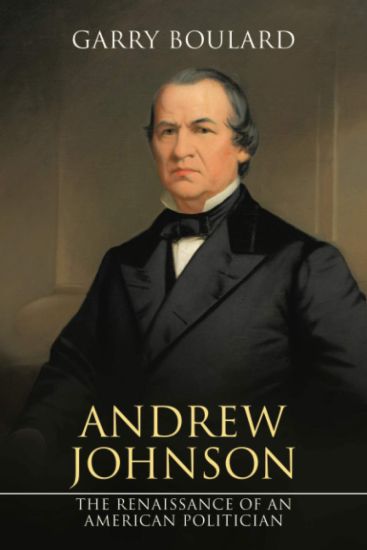
Andrew Johnson

Andrew Johnson

Garry Boulard

iUniverse
2021
pokkari
Few presidents have been as eviscerated in history as Andrew Johnson, who suddenly on a rainy morning in April of 1865 became the nation's new chief executive upon the assassination of Abraham Lincoln. A man who rose from dire poverty through a sheer primal force of will, Johnson was elected to every level of government-always taking his case to the people-in a remarkable, if often chaotic career that included service as a state legislator, member of Congress, Governor of Tennessee, U.S. Senator, vice-president, and finally the presidency itself. During the Civil War, Johnson bravely stood up to Confederates, his life repeatedly threatened serving at Lincoln's pleasure as the Military Governor of Tennessee and pushing for an end to slavery. Yet he is the same man who, upon succeeding Lincoln, could not see his way clear to securing the full Constitutional rights for ex-slaves. Because of his endless fights and many confrontations, Johnson's presidency has since been roundly condemned as one of the most disastrous in U.S. history. Johnson, notes Page Smith in his seminal People's History series, put on full display "a reckless and demonic spirit that drove him to excess, to violence, harsh words and actions." "He was thrust into a role that required tact, flexibility, and sensitivity to the nuance of public opinion-qualities that Lincoln possessed in abundance, but that Johnson lacked," asserts historian Eric Foner, "He was an angry man," notes David Stewart, a chronicler of Johnson's impeachment trial, "and he was rigid, and these were qualities that served him terribly as president." Yet, for all of the scholarly indictments of the 17th President, indictments supported by a recent Siena College Research Institute historians'survey placing him at the bottom in overall performance, Andrew Johnson challenges us as a singularly American story of triumph, defeat, and renewal, a man who overcame the challenges of poverty, class, and alienation to reach the highest peaks of power in the country. That drive was ironically most tellingly on display after Johnson left the White House, denied even the opportunity of a party nomination for another term in office. From the ashes of that loss, Johnson methodically rose again, winning election to the U.S. Senate and improbably returning to national prominence. Andrew Johnson's renaissance, coming 6 years after an unprecedented effort to impeach and remove him from the presidency, represents one of the greatest comebacks in American political history and serves as a testament to a man who could never be totally defeated.
Andrew Johnson and Ulysses S. Grant
In the spring of 1865, after the end of the Civil War and the assassination of Abraham Lincoln, two men bestrode the national government as giants: Andrew Johnson and Ulysses S. Grant. How these two men viewed what a post-war America should look like would determine policy and politics for generations to come, impacting the lives of millions of people, North and South, black and white. While both Johnson and Grant initially shared similar views regarding the necessity of bringing the South back into the Union fold as expeditiously as possible, their differences, particularly regarding the fate of millions of recently-freed African Americans, would soon reveal an unbridgeable chasm. Add to the mix that Johnson, having served at every level of government in a career spanning four decades, very much liked being President and wanted to be elected in his own right in 1868, at the same time that a massive move was underway to make Grant the next president during that same election, and conflict and resentment between the two men became inevitable. In fact, competition between Johnson and Grant would soon evolved into a battle of personal destruction, one lasting well beyond their White House years and representing one of the most all-consuming and obsessive struggles between two presidents in U.S. history.
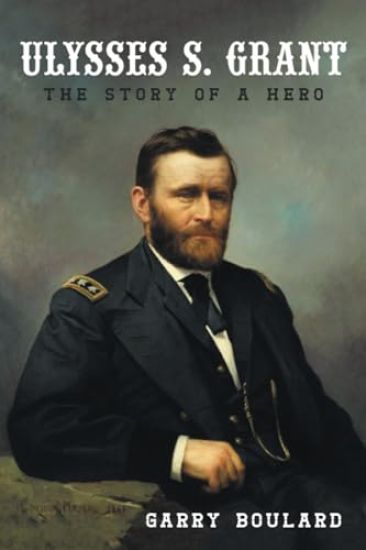
Ulysses S. Grant

Ulysses S. Grant

Garry Boulard

Iuniverse
2024
pokkari
"Tolling, slowly tolling, the alarm bells of all America sent to every heart this morning the news, long expected and long dreaded, that Ulysses S. Grant was dead," announced the Boston Globe on July 23, 1885, just hours after the one-time Commanding General of the U.S. Army and former President of the United States had passed on. Taking note of the extraordinary tributes and declarations of love expressed by people in all regions of the country, black and white, as Grant endured a months-long struggle with throat cancer, the paper asserted that such praise had "sweetened the draught from Death's chalice, till all the bitterness of the deadly poison had passed away, and it was but as drinking from the Holy Grail." In this work, Ulysses S. Grant--The Story of a Hero, Garry Boulard chronicles the career of one of the most consequential figures in American history. Rightly regarded as a great military commander whose skills and strategic vision combined to bring about the end of the Civil War, thus also forever obliterating a slavery that had entrapped nearly 4 million people, Grant would serve two controversial terms as president, working assiduously to foster a regional and racial reconciliation of the country. At the time of his death, he had just completed his monumental two-volume Personal Memoirs of U.S. Grant, since praised by generations of historians and regarded as one of the most important works in all of American non-fiction literature.