Kirjojen hintavertailu. Mukana 11 539 766 kirjaa ja 12 kauppaa.

Kirjahaku

Etsi kirjoja tekijän nimen, kirjan nimen tai ISBN:n perusteella.

22 kirjaa tekijältä Garry Wills

Saint Augustine

Saint Augustine

Garry Wills

The Penguin Press
2005
pokkari
Look out for a new book from Garry Wills, What The Qur'an Meant, coming fall 2017. Pulitzer Prize winner Garry Wills brings the same fresh scholarship, lively prose, and critical appreciation that characterize his well-known books on religion and American history to this outstanding biography of one of the most influential Christian philosophers. Saint Augustine follows its subject from his youth in fourth-century Africa to his conversion and subsequent development as a theologian. It challenges the widely held misconceptions about Augustine's sexual excesses and shows how, in embracing classical philosophy, Augustine managed to enlist "pagan authors" in the defense of Christianity. The result is a biography that makes a spiritual ancestor feel like our contemporary.
What Jesus Meant

What Jesus Meant

Garry Wills

Penguin USA
2007
pokkari
Arguing that Jesus subscribed to no political program in spite of the claims of politicians who cite Christ as an ethical teacher who endorses their views, the author of Papal Sin draws on the gospel to explain Jesus's radical views about class and power and how the Resurrection and Christ's divinity are key factors in his teachings. Reprint. 150,000 first printing.
The Future Of The Catholic Church With Pope Francis
The New York Times-bestselling historian takes on a pressing question in modern religion: Will Pope Francis embrace change? Look out for a new book from Garry Wills, What The Qur'an Meant, coming fall 2017. Pope Francis, the first Jesuit pope and the first from the Americas, offers a challenge to his church. Can he bring about significant change? Should he? Garry Wills, the Pulitzer Prize-winning historian, argues provocatively that, in fact, the history of the church throughout is a history of change. In this brilliant and incisive study, Wills describes the deep and serious changes that have taken place in the church or are in the process of occurring. These include the change from Latin, the growth and withering of the ecclesiastical monarchy, the abandonment of biblical literalism, the assertion and nonassertion of infallibility, and the erosion of church patriarchy. In such developments we see the living church adapting itself to new historical circumstances. As Wills contends, it is only by examining the history of the church that we can understand Pope Francis's and the church's challenges today. -A lively exercise in church history--history intended to orient us in the here and now. It is addressed not only to Catholics but to the entire church as 'the People of God, ' . . . and to anyone else--practicing another religion or emphatically not--who is curious to learn how one of our foremost historians and public intellectuals understands his faith.- --The Chicago Tribune
What Paul Meant

What Paul Meant

Garry Wills

The Penguin Press
2007
pokkari
-If you think you knew Paul, get ready to have all sorts of cherished preconceptions exhilaratingly stripped away. If you've ever been vaguely curious, there is no finer introduction.- (Los Angeles Times) Look out for a new book from Garry Wills, What The Qur'an Meant, coming fall 2017. In his New York Times bestsellers What Jesus Meant and What the Gospels Meant, Garry Wills offers fresh and incisive readings of Jesus' teachings and the four gospels. Here Wills turns to Paul the Apostle, whose writings have provoked controversy throughout Christian history. Upending many common assumptions, Wills argues eloquently that Paul's teachings are not opposed to Jesus' message. Rather, the best way to know Jesus is to discover Paul. In this stimulating and masterly analysis, Wills illuminates how Paul, writing on the road and in the heat of the moment, and often in the midst of controversy, galvanized a movement and offers us the best reflection of those early times.
Head and Heart: A History of Christianity in America
Look out for a new book from Garry Wills, What the Qur'an Meant, coming fall 2017. Gary Wills has won significant acclaim for his bestselling works of religion and history. Here, for the first time, he combines both disciplines in a sweeping examination of Christianity in America throughout the last 400 years. Wills argues that the struggle now, as throughout our nation's history, is between the head and the heart, reason and emotion, enlightenment and Evangelism. A landmark volume for anyone interested in either politics or religion, Head and Heart concludes that, while religion is a fertile and enduring force in American politics, the tension between the two is necessary, inevitable, and unending.
What the Gospels Meant

What the Gospels Meant

Garry Wills

The Penguin Press
2009
pokkari
“A remarkable achievement—a learned yet eminently readable and provocative exploration of the four small books that reveal most of what’s known about the life and death of Jesus.” (Los Angeles Times)Look out for a new book from Garry Wills, What the Qur'an Meant, coming fall 2017. In his New York Times bestsellers What Jesus Meant and What Paul Meant, Garry Wills offers tour-de-force interpretations of Jesus and the Apostle Paul. Here Wills turns his remarkable gift for biblical analysis to the four gospels of Matthew, Mark, Luke, and John. Wills examines the goals, methods, and styles of the evangelists and how these shaped the gospels' messages. Hailed as "one of the most intellectually interesting and doctrinally heterodox Christians writing today" (The New York Times Book Review), Wills guides readers through the maze of meanings within these foundational texts, revealing their essential Christian truths.
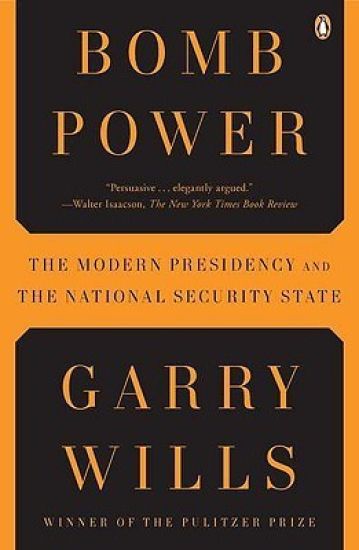
Bomb Power: The Modern Presidency and the National Security State
A groundbreaking examination of how the atomic bomb profoundly altered the nature of American democracy. Look out for a new book from Garry Wills, What the Qur'an Meant, coming fall 2017. In Bomb Power, bestselling author Garry Wills presents a blistering critique of excessive executive power and official secrecy, drawing a direct line from the Manhattan Project to the usurpations of George W. Bush. He reveals how the atomic bomb transformed our nation down to its deepest constitutional roots-by dramatically increasing the power of the modern presidency and redefining the government as a national security state-leaving us in a state of continuous war alert for nearly seven decades. Bold and incisive, Bomb Power casts the history of the postwar period in a new light and sounds an alarm about the continued threat to our Constitution.
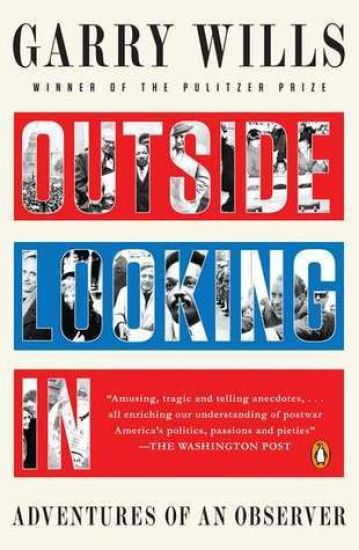
Outside Looking In

Outside Looking In

Garry Wills

Penguin USA
2011
pokkari
A captivating memoir from the incomparable Garry Wills, "one of the country's most distinguished intellectuals" (The New York Times Book Review)Illuminating and provocative, Outside Looking In is a compelling chronicle of an original thinker at work in remarkable times. With his dazzling style and journalist's eye for detail, Garry Wills brings history to life. Whether writing about the civil rights movement, 1960s protests, or close-up studies of the people who have shaped our world, only he could bring together in one book Barry Goldwater, Daniel Berrigan, Beverly Sills, Richard Nixon, and John Waters. Wills shares, as only the best raconteurs can, stories of the fascinating people he has closely observed during more than fifty years of reporting.
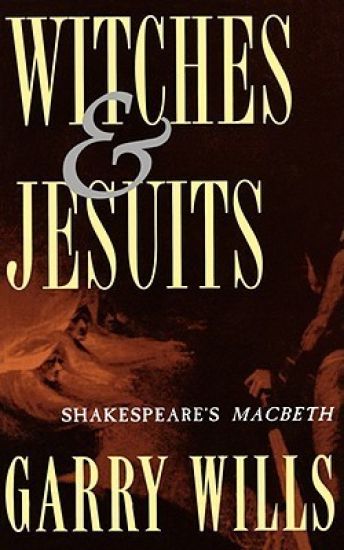
Witches and Jesuits

Witches and Jesuits

Garry Wills

Oxford University Press Inc
1996
nidottu
In his Pulitzer prize-winning 1993 book Lincoln at Gettysburg, Garry Wills showed how the Gettysburg Address revolutionized the conception of modern America. In Witches and Jesuits, Wills again focuses on a single document to open up a window on an entire society. He begins with a simple question: If Macbeth is such a great tragedy, why do performances of it so often fail? After all, the stage history of Macbeth is so riddled with disasters that it has created a legendary curse on the drama. Superstitious actors try to evade the curse by referring to Macbeth only as "the Scottish play," but production after production continues to soar in its opening scenes, only to sputter towards anticlimax in the later acts. By critical consensus there seems to have been only one entirely successful modern performance of the play, Laurence Olivier's in 1955, and even Olivier twisted his ankle on opening night. But Olivier's ankle notwithstanding, Wills maintains that the fault lies not in Shakespeare's play, but in our selves. Drawing on his intimate knowledge of the vivid intrigue and drama of Jacobean England, Wills restores Macbeth's suspenseful tension by returning it to the context of its own time, recreating the burning theological and political crises of Shakespeare's era. He reveals how deeply Macbeth's original 1606 audiences would have been affected by the notorious Gunpowder Plot of 1605, when a small cell of Jesuits came within a hairbreadth of successfully blowing up not only the King, but the Prince his heir, and all members of the court and Parliament. Wills likens their shock to that endured by Americans following Pearl Harbor or the Kennedy assassination. Furthermore, Wills documents, the Jesuits were widely believed to be acting in the service of the Devil, and so pervasive was the fear of witches that just two years before Macbeth's first performance, King James I added to the witchcraft laws a decree of death for those who procured "the skin, bone, or any other part of any dead person - to be employed or used in any manner of witchcraft, sorcery, charm, or enchantment." We see that the treason and necromancy in Macbeth were more than the imaginings of a gifted playwright--they were dramatizations of very real and potent threats to the realm. In this new light, Macbeth is transformed. Wills presents a drama that is more than a well-scripted story of a murderer getting his just penalty, it is the struggle for the soul of a nation. The death of a King becomes a truly apocalyptic event, and Malcolm, the slain King's son, attains the status of a man defying cosmic evil. The guilt of Lady Macbeth takes on the Faustian aspect of one who has singed her hands in hell. The witches on the heath, shrugged off as mere symbols of Macbeth's inner guilt and ambition by twentieth century interpreters, emerge as independent agents of the occult with their own (or their Master's) terrifying agendas. Restoring the theological politics and supernatural elements that modern directors have shied away from, Wills points the way towards a Macbeth that will finally escape the theatrical curse on "the Scottish play." Rich in insight and a joy to read, Witches and Jesuits is a tour de force of scholarship and imagination by one of our foremost writers, essential reading for anyone who loves the language.
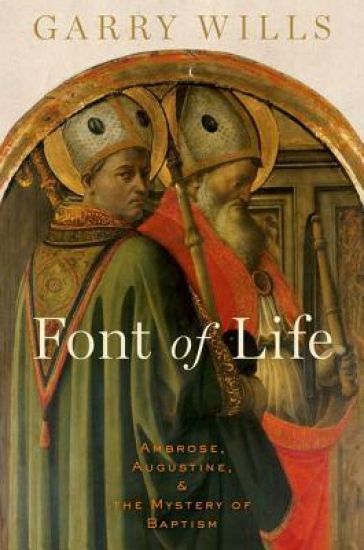
Font of Life: Ambrose, Augustine, and the Mystery of Baptism
No two men were more influential in the early Church than Ambrose, the powerful Bishop of Milan, and Augustine, the philosopher from provincial Africa who would write The Confessions and The City of God. Different in background, they were also extraordinarily different in personality. In Font of Life, Garry Wills explores the remarkable moment when their lives intersected at one of the most important, yet rarely visited, sites in the Christian world. Hidden under the piazza of the Duomo in Milan lies part of the foundations of a fourth-century cathedral where, at dawn on Easter of 387, Augustine and a group of people seeking baptism gathered after an all-night vigil. Ambrose himself performed the sacrament and the catechumens were greeted by their fellows in the faith, which included Augustine's mother Monnica. Though the occasion had deep significance for the participants, this little cluster of devotees was unaware that they were creating the future of the Western church. Ambrose would go on to forge new liturgies, new forms of church music, and new chains of churches; Augustine would return to Africa to become Bishop of Hippo and one of the most influential writers of Christianity. Garry Wills uses the ancient baptistry to chronicle a pivotal chapter in the history of the Church, highlighting the often uncomfortable relationship between the two church fathers and exploring the mystery and meanings of the sacrament of baptism. In addition, he brings long overdue attention to an unjustly neglected landmark of early Christianity.
Making Make-Believe Real

Making Make-Believe Real

Garry Wills

Yale University Press
2015
pokkari
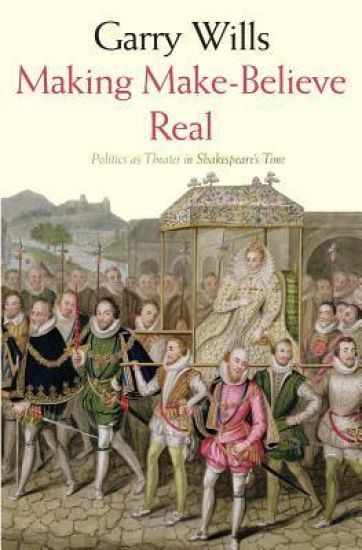
A penetrating study of the images, symbols, pageants, and creative performances ambitious Elizabethans used to secure political power Shakespeare’s plays abound with kings and leaders who crave a public stage and seize every opportunity to make their lives a performance: Antony, Cleopatra, Richard III, Othello, and many others. Such self-dramatizing characters appear in the work of other playwrights of the era as well, Marlowe’s Edward II and Tamburlaine among them. But Elizabethan playwrights were not alone in realizing that a sense of theater was essential to the exercise of power. Real rulers knew it, too, and none better than Queen Elizabeth. In this fascinating study of political stagecraft in the Elizabethan era, Garry Wills explores a period of vast cultural and political change during which the power of make-believe to make power real was not just a theory but an essential truth. Wills examines English culture as Catholic Christianity’s rituals were being overturned and a Protestant queen took the throne. New iconographies of power were necessary for the new Renaissance liturgy to displace the medieval church-state. The author illuminates the extensive imaginative constructions that went into Elizabeth’s reign and the explosion of great Tudor and Stuart drama that provided the imaginative power to support her long and successful rule.
Chesterton

Chesterton

Garry Wills

Image Books
2001
nidottu
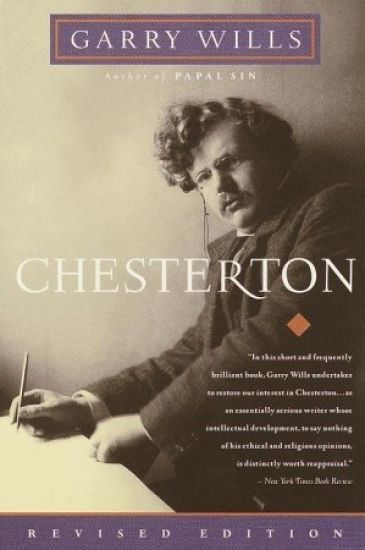
The Pulitzer Prize-winning author of "Lincoln at Gettysburg "and "Papal Sin" captures the many dimensions of one of the twentieth century's most influential writers. Part of a literary circle that included H.G. Wells, George Bernard Shaw, Hillaire Belloc, and Max Beerbohm, G.K. Chesterton (1874-1936) wrote essays of social criticism for contemporary journals, literary criticism (including notable books on Browning, Dickens, and Shaw), and works of theology and religious argument, but may have been best known for his Father Brown mysteries. Chesterton's interest in Catholic Christianity, first expressed in "Orthodoxy," led to his conversion from Anglicanism to Roman Catholicism in 1922. His classic "Saint Francis of Assisi" and the equally acclaimed "Saint Thomas Aquinas" confirmed his reputation as a writer with the rare ability to simultaneously entertain, inform, and enlighten readers. This revised edition of Garry Wills's finely crafted biography includes updates to the text and a new Introduction by the author.
Nixon Agonistes: The Crisis of the Self-Made Man
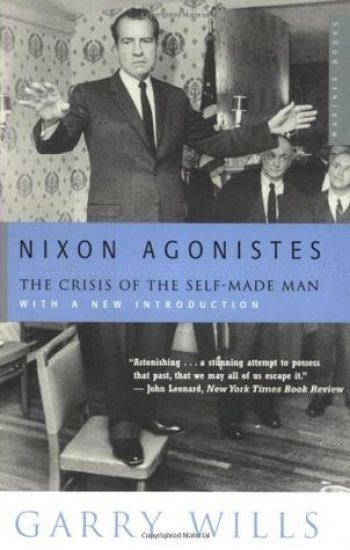
From one of America's most distinguished historians comes this classic analysis of Richard Nixon. By considering some of the president's opinions, Wills comes to the controversial conclusion that Nixon was actually a liberal. Both entertaining and essential, Nixon Agonistes captures a troubled leader and a struggling nation mired in a foolish Asian war, forfeiting the loyalty of its youth, puzzled by its own power, and looking to its cautious president for confidence. In the end, Nixon Agonistes reaches far beyond its assessment of the thirty-seventh president to become an incisive and provocative analysis of the American political machine.
Negro President: Jefferson and the Slave Power
In "Negro President" the Pulitzer Prize-winning historian Garry Wills explores a pivotal moment in American history through the lens of Thomas Jefferson and the now largely forgotten Timothy Pickering, and "prods readers to appreciate essential aspects of our distressed but well-intentioned representative democracy" (Chicago Tribune). In 1800 Jefferson won the presidential election with Electoral College votes derived from the three-fifths representation of slaves -- slaves who could not vote but were still partially counted as citizens. Moving beyond the recent revisionist debate over Jefferson's own slaves and his relationship with Sally Hemings, Wills instead probes the heart of Jefferson's presidency and political life, revealing how the might of the slave states remained a concern behind his most important policies and decisions. In an eye-opening, ingeniously argued expos , Wills restores Timothy Pickering and the Federalists' dramatic struggle to our understanding of Jefferson, the creation of the new nation, and the evolution of our representative democracy. "Garry Wills is a thinker of first rate. He combines the vigor of the social critic with the depth of the historian, and to these he adds the even rarer gifts of the philosopher." -- New Republic "A thorough political analysis of another founding father's involvement in slavery." -- San Francisco Chronicle Garry Wills, a distinguished historian and critic, is the author of numerous books, including the Pulitzer Prize-winning Lincoln at Gettysburg, Saint Augustine, the best-selling Why I Am a Catholic, and Henry Adams and the Making of America.
Henry Adams and the Making of America

Henry Adams and the Making of America

Garry Wills

HOUGHTON MIFFLIN
2007
nidottu
In Henry Adams and the Making of America, Pulitzer Prize winner Garry Wills makes a compelling argument for a reassessment of Henry Adams as our nation's greatest historian and his History as the "nonfiction prose masterpiece of the nineteenth century in America." Adams drew on his own southern fixation, his extensive foreign travel, his political service in the Lincoln administration, and much more to invent the study of history as we know it. His nine-volume chronicle of America from 1800 to 1816 established new standards for employing archival sources, firsthand reportage, eyewitness accounts, and other techniques that have become the essence of modern history. Ambitious in scope, nuanced in detail, Henry Adams and the Making of America throws brilliant light on the historian and the making of history.
Certain Trumpets

Certain Trumpets

Garry Wills

Touchstone
1995
pokkari
In an innovative examination of the interplay between leaders and followers, the Pulitzer Prize-winning author of Lincoln at Gettysburg clarifies the essential elements that contribute to successful leadership. 16 photos.
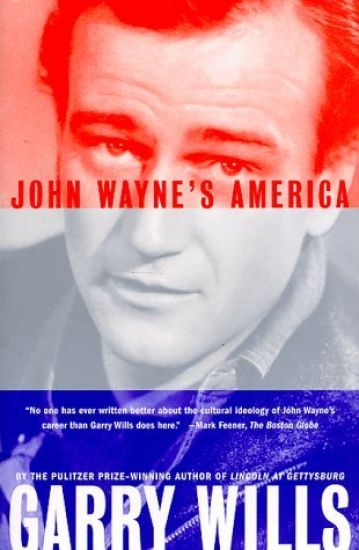
John Wayne's America

John Wayne's America

Garry Wills

Simon Schuster
1998
pokkari
The Pulitzer Prize-winning author of Lincoln at Gettysburg brings his eloquence, wit, and on-target perceptions of American life and politics to this fascinating, well-drawn protrait of a twentieth-century hero. In this work of great originality—the biography of an idea—Garry Wills shows how John Wayne came to embody Amercian values and influenced our cultoure to a degree unmatched by any other public figure of his time. In Wills's hands, Waynes story is tranformed into a compelling narrative about the intersection of popular entertainment and political realities in mid-twentieth-century America.
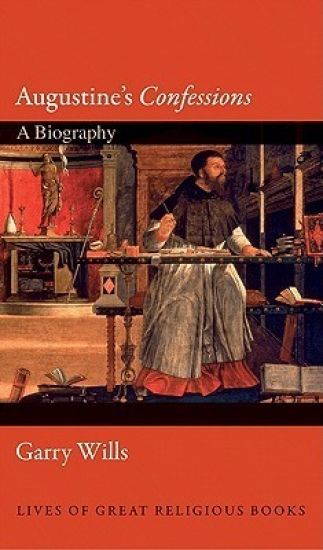
Augustine's Confessions

Augustine's Confessions

Garry Wills

Princeton University Press
2011
sidottu
In this brief and incisive book, Pulitzer Prize-winning historian Garry Wills tells the story of the "Confessions" - what motivated Augustine to dictate it, how it asks to be read, and the many ways it has been misread in the one-and-a-half millennia since it was composed. Following Wills' biography of Augustine and his translation of the "Confessions", this is an unparalleled introduction to one of the most important books in the Christian and Western traditions. Understandably fascinated by the story of Augustine's life, modern readers have largely succumbed to the temptation to read the "Confessions" as autobiography. But, Wills argues, this is a mistake. The book is not autobiography but rather a long prayer, suffused with the language of Scripture and addressed to God, not man. Augustine tells the story of his life not for its own significance but in order to discern how, as a drama of sin and salvation leading to God, it fits into sacred history. 'We have to read Augustine as we do Dante', Wills writes, 'alert to rich layer upon layer of Scriptural and theological symbolism'. Wills also addresses the long afterlife of the book, from controversy in its own time and relative neglect during the Middle Ages to a renewed prominence beginning in the fourteenth century and persisting to today, when the "Confessions" has become an object of interest not just for Christians but also historians, philosophers, psychiatrists, and literary critics. With unmatched clarity and skill, Wills strips away the centuries of misunderstanding that have accumulated around Augustine's spiritual classic.