Kirjojen hintavertailu. Mukana 12 016 292 kirjaa ja 12 kauppaa.

Kirjahaku

Etsi kirjoja tekijän nimen, kirjan nimen tai ISBN:n perusteella.

6 kirjaa tekijältä Garth Fowden

Qusayr  'Amra

Qusayr 'Amra

Garth Fowden

University of California Press
2004
sidottu
From the stony desolation of Jordan's desert, it is but a step through a doorway into the bath house of the Qusayr 'Amra hunting lodge. Inside, multicolored frescoes depict scenes from courtly life and the hunt, along with musicians, dancing girls, and naked bathing women. The traveler is transported to the luxurious and erotic world of a mid-eighth-century Muslim Arab prince. For scholars, though, Qusayr 'Amra, probably painted in the 730s or 740s, has proved a mirage, its concreteness dissolved by doubts about date, patron, and meaning. This is the first book-length contextualization of the mysterious monument through a compelling analysis of its iconography and of the literary sources for the Umayyad period. It illuminates not only the way of life of the early Muslim elite but also the long afterglow of late antique Syria.
Qusayr  'Amra

Qusayr 'Amra

Garth Fowden

University of California Press
2018
pokkari
From the stony desolation of Jordan's desert, it is but a step through a doorway into the bath house of the Qusayr 'Amra hunting lodge. Inside, multicolored frescoes depict scenes from courtly life and the hunt, along with musicians, dancing girls, and naked bathing women. The traveler is transported to the luxurious and erotic world of a mid-eighth-century Muslim Arab prince. For scholars, though, Qusayr 'Amra, probably painted in the 730s or 740s, has proved a mirage, its concreteness dissolved by doubts about date, patron, and meaning. This is the first book-length contextualization of the mysterious monument through a compelling analysis of its iconography and of the literary sources for the Umayyad period. It illuminates not only the way of life of the early Muslim elite but also the long afterglow of late antique Syria.
Empire to Commonwealth

Empire to Commonwealth

Garth Fowden

Princeton University Press
1994
pokkari
In this bold approach to late antiquity, Garth Fowden shows how, from the second-century peak of Rome's prosperity to the ninth-century onset of the Islamic Empire's decline, powerful beliefs in One God were used to justify and strengthen "world empires." But tensions between orthodoxy and heresy that were inherent in monotheism broke the unitary empires of Byzantium and Baghdad into the looser, more pluralistic commonwealths of Eastern Christendom and Islam. With rare breadth of vision, Fowden traces this transition from empire to commonwealth, and in the process exposes the sources of major cultural contours that still play a determining role in Europe and southwest Asia.
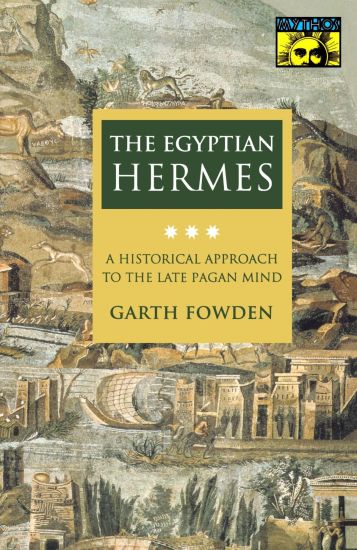
The Egyptian Hermes

The Egyptian Hermes

Garth Fowden

Princeton University Press
1993
pokkari
Sage, scientist, and sorcerer, Hermes Trismegistus was the culture-hero of Hellenistic and Roman Egypt. A human (according to some) who had lived about the time of Moses, but now indisputably a god, he was credited with the authorship of numerous books on magic and the supernatural, alchemy, astrology, theology, and philosophy. Until the early seventeenth century, few doubted the attribution. Even when unmasked, Hermes remained a byword for the arcane. Historians of ancient philosophy have puzzled much over the origins of his mystical teachings; but this is the first investigation of the Hermetic milieu by a social historian. Starting from the complex fusions and tensions that molded Graeco-Egyptian culture, and in particular Hermetism, during the centuries after Alexander, Garth Fowden goes on to argue that the technical and philosophical Hermetica, apparently so different, might be seen as aspects of a single "way of Hermes." This assumption that philosophy and religion, even cult, bring one eventually to the same goal was typically late antique, and guaranteed the Hermetica a far-flung readership, even among Christians. The focus and conclusion of this study is an assault on the problem of the social milieu of Hermetism.
Before and After Muhammad

Before and After Muhammad

Garth Fowden

Princeton University Press
2013
sidottu
Islam emerged amid flourishing Christian and Jewish cultures, yet students of Antiquity and the Middle Ages mostly ignore it. Despite intensive study of late Antiquity over the last fifty years, even generous definitions of this period have reached only the eighth century, whereas Islam did not mature sufficiently to compare with Christianity or rabbinic Judaism until the tenth century. Before and After Muhammad suggests a new way of thinking about the historical relationship between the scriptural monotheisms, integrating Islam into European and West Asian history. Garth Fowden identifies the whole of the First Millennium--from Augustus and Christ to the formation of a recognizably Islamic worldview by the time of the philosopher Avicenna--as the proper chronological unit of analysis for understanding the emergence and maturation of the three monotheistic faiths across Eurasia. Fowden proposes not just a chronological expansion of late Antiquity but also an eastward shift in the geographical frame to embrace Iran. In Before and After Muhammad, Fowden looks at Judaism, Christianity, and Islam alongside other important developments in Greek philosophy and Roman law, to reveal how the First Millennium was bound together by diverse exegetical traditions that nurtured communities and often stimulated each other.
Before and After Muhammad

Before and After Muhammad

Garth Fowden

Princeton University Press
2015
pokkari
Islam emerged amid flourishing Christian and Jewish cultures, yet students of Antiquity and the Middle Ages mostly ignore it. Despite intensive study of late Antiquity over the last fifty years, even generous definitions of this period have reached only the eighth century, whereas Islam did not mature sufficiently to compare with Christianity or rabbinic Judaism until the tenth century. Before and After Muhammad suggests a new way of thinking about the historical relationship between the scriptural monotheisms, integrating Islam into European and West Asian history. Garth Fowden identifies the whole of the First Millennium--from Augustus and Christ to the formation of a recognizably Islamic worldview by the time of the philosopher Avicenna--as the proper chronological unit of analysis for understanding the emergence and maturation of the three monotheistic faiths across Eurasia. Fowden proposes not just a chronological expansion of late Antiquity but also an eastward shift in the geographical frame to embrace Iran. In Before and After Muhammad, Fowden looks at Judaism, Christianity, and Islam alongside other important developments in Greek philosophy and Roman law, to reveal how the First Millennium was bound together by diverse exegetical traditions that nurtured communities and often stimulated each other.