Kirjojen hintavertailu. Mukana 12 390 323 kirjaa ja 12 kauppaa.

Kirjahaku

Etsi kirjoja tekijän nimen, kirjan nimen tai ISBN:n perusteella.

17 kirjaa tekijältä Gary Browning

A History of Modern Political Thought

A History of Modern Political Thought

Gary Browning

Oxford University Press
2016
sidottu
How are we to understand past political thinkers? Is it a matter simply of reading their texts again and again? Do we have to relate past texts of political thought to the contexts in which ideas were composed and in which the aims of past thinkers were formulated? Or should past political theories be deconstructed so as to uncover not what their authors maintain, but what the texts reveal? In this book, theories of interpreting past political thinkers are examined and the interpretive methods of a range of theories are reviewed, including those of Hegel, Marx, Oakeshott, Collingwood, the Cambridge School, Foucault, Derrida and Gadamer. The application of these theories of interpretation to notable modern political theorists, Machiavelli, Hobbes, Locke, Rousseau, Kant, Hegel, Marx, Bentham, Mill, Nietzsche and Beauvoir is then used as a way of understanding modern political thought and of assessing interpretive theories of past political thought. The result is a book which sees the history of modern political thought as more than a procession of political theories but rather as a reflection on the meaning of past political thought and its interpretation. It provides a way of reading the history of modern political thought, in which the question of interpretation matters both for understanding how we interpret the past but also for considering what it means to undertake political thinking.
A History of Modern Political Thought

A History of Modern Political Thought

Gary Browning

Oxford University Press
2016
nidottu
How are we to understand past political thinkers? Is it a matter simply of reading their texts again and again? Do we have to relate past texts of political thought to the contexts in which ideas were composed and in which the aims of past thinkers were formulated? Or should past political theories be deconstructed so as to uncover not what their authors maintain, but what the texts reveal? In this book, theories of interpreting past political thinkers are examined and the interpretive methods of a range of theories are reviewed, including those of Hegel, Marx, Oakeshott, Collingwood, the Cambridge School, Foucault, Derrida and Gadamer. The application of these theories of interpretation to notable modern political theorists, Machiavelli, Hobbes, Locke, Rousseau, Kant, Hegel, Marx, Bentham, Mill, Nietzsche and Beauvoir is then used as a way of understanding modern political thought and of assessing interpretive theories of past political thought. The result is a book which sees the history of modern political thought as more than a procession of political theories but rather as a reflection on the meaning of past political thought and its interpretation. It provides a way of reading the history of modern political thought, in which the question of interpretation matters both for understanding how we interpret the past but also for considering what it means to undertake political thinking.
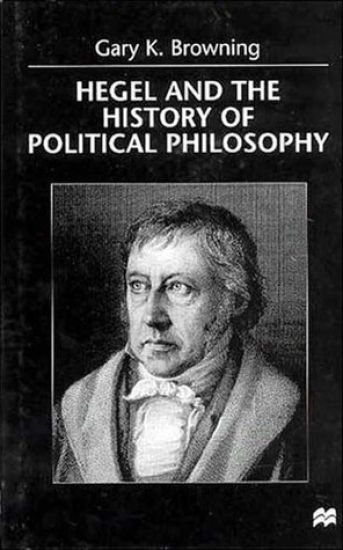
Hegel and the History of Political Philosophy

Hegel and the History of Political Philosophy

Gary Browning

Palgrave Macmillan
1999
sidottu
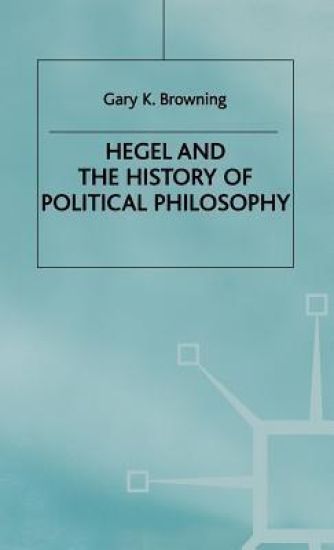
This book relates Hegel to preceding and succeeding political philosophers. The Hegelian notion of the interdependence of political philosophy and its history is demonstrated by the links established between Hegel and his predecessors and successors. Hegel's political theory is illuminated by essays showing its critical assimilation of Plato and Hobbes, and by studies reviewing subsequent critiques of its standpoint by Stirner, Marx and Collingwood. The relevance of Hegel to contemporary political philosophy is highlighted in essays which compare Hegel to Lyotard and Rawls.
Hegel and the History of Political Philosophy

Hegel and the History of Political Philosophy

Gary Browning

Palgrave Macmillan
1999
sidottu
This book relates Hegel to preceding and succeeding political philosophers. The Hegelian notion of the interdependence of political philosophy and its history is demonstrated by the links established between Hegel and his predecessors and successors. Hegel's political theory is illuminated by essays showing its critical assimilation of Plato and Hobbes, and by studies reviewing subsequent critiques of its standpoint by Stirner, Marx and Collingwood. The relevance of Hegel to contemporary political philosophy is highlighted in essays which compare Hegel to Lyotard and Rawls.
Rethinking R.G. Collingwood

Rethinking R.G. Collingwood

Gary Browning

Palgrave Macmillan
2004
sidottu
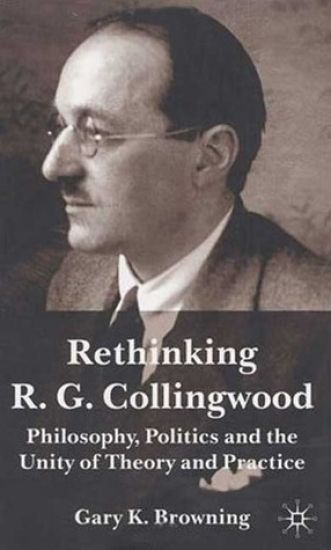
Rethinking R.G. Collingwood reviews Collingwood's thought via his own rethinking of Hegel. It establishes the revisionary character of Collingwood's defence of liberal civilization in theory and practice. Collingwood is seen as avoiding the pitfalls of Hegel's teleological historicism by developing an open and contestable reading of the rationality of liberal civilization, which neither reduces practice to theory nor philosophy to history. The contemporary relevance of Collingwood's standpoint is demonstrated by comparing it with those of recent defenders and critics of liberalism Rawls, Lyotard and MacIntyre.
Plato and Hegel (RLE: Plato)

Plato and Hegel (RLE: Plato)

Gary Browning

Routledge
2012
sidottu
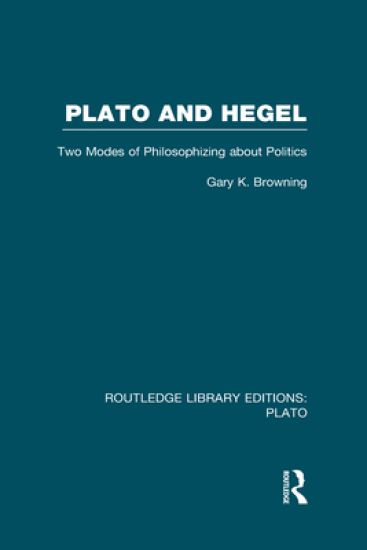
Hegel and Plato are united as political theorists by the convergence of their philosophical aspirations. But their political writings manifest the general disparities involved in their particular ways of seeking to fulfil these aspirations. Professor Browning compares the political thought of Plato and Hegel by locating their political theorizing within the context of their divergent modes of philosophizing.
Plato and Hegel (RLE: Plato)

Plato and Hegel (RLE: Plato)

Gary Browning

Routledge
2014
nidottu
Hegel and Plato are united as political theorists by the convergence of their philosophical aspirations. But their political writings manifest the general disparities involved in their particular ways of seeking to fulfil these aspirations. Professor Browning compares the political thought of Plato and Hegel by locating their political theorizing within the context of their divergent modes of philosophizing.
Lyotard and the End of Grand Narratives

Lyotard and the End of Grand Narratives

Gary Browning

University of Wales Press
2000
nidottu
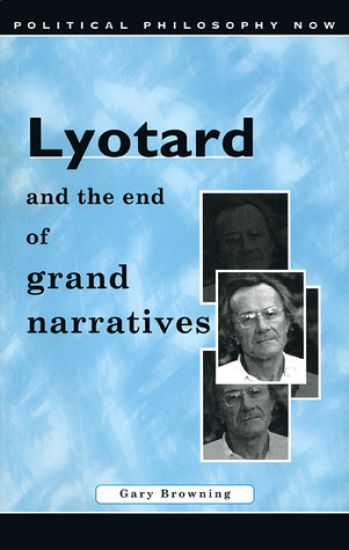
Lyotard's work challenges the presumption and orientation of modern political philosophy. In particular, he repudiates attempts to justify knowledge and society in terms of "grand" narratives of, for example, the liberation of mankind or the immanence of science. He argues that the totalising perspective of these meta-narratives is superseded by a post-modern acceptance of difference and variety and a scepticism towards unifying meta-theories. This study considers Lyotard's notion of a "grand" narraative and analyzes his critique of modernity. In the light of Lyotard's views, it goes on to examine the work of seven political thinkers whose ideas represent different stands of a distinctively modern perspective. The author concludes that, while their theories conform to Lyotard's conept of a metanarrative, they generate insights into the modern world which cannot be dismissed as lightly as their universalistic assumptions. Finally he comments on the plausibility and viability of Lyotard's repudiation of modernity.
Lyotard and the End of Grand Narratives

Lyotard and the End of Grand Narratives

Gary Browning

University of Wales Press
2000
sidottu
Lyotard's work challenges the presumption and orientation of modern political philosophy. In particular, he repudiates attempts to justify knowledge and society in terms of "grand" narratives of, for example, the liberation of mankind or the immanence of science. He argues that the totalising perspective of these meta-narratives is superseded by a post-modern acceptance of difference and variety and a scepticism towards unifying meta-theories. This study considers Lyotard's notion of a "grand" narraative and analyzes his critique of modernity. In the light of Lyotard's views, it goes on to examine the work of seven political thinkers whose ideas represent different stands of a distinctively modern perspective. The author concludes that, while their theories conform to Lyotard's conept of a metanarrative, they generate insights into the modern world which cannot be dismissed as lightly as their universalistic assumptions. Finally he comments on the plausibility and viability of Lyotard's repudiation of modernity.
Rethinking R.G. Collingwood

Rethinking R.G. Collingwood

Gary Browning

Palgrave Macmillan
2004
nidottu
Rethinking R.G. Collingwood reviews Collingwood's thought via his own rethinking of Hegel. It establishes the revisionary character of Collingwood's defence of liberal civilization in theory and practice. Collingwood is seen as avoiding the pitfalls of Hegel's teleological historicism by developing an open and contestable reading of the rationality of liberal civilization, which neither reduces practice to theory nor philosophy to history. The contemporary relevance of Collingwood's standpoint is demonstrated by comparing it with those of recent defenders and critics of liberalism Rawls, Lyotard and MacIntyre.
Why Iris Murdoch Matters

Why Iris Murdoch Matters

Gary Browning

Bloomsbury Academic
2018
nidottu
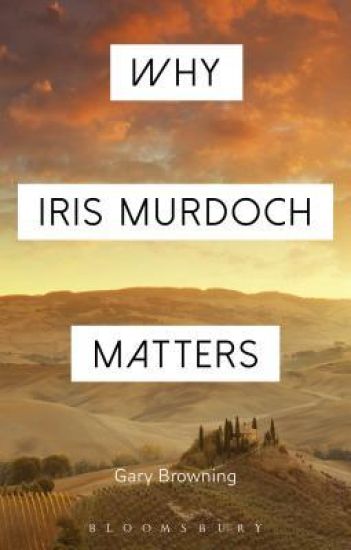
In Why Iris Murdoch Matters Gary Browning draws on as yet unpublished archival material to present an unrivalled overview of Murdoch's work and thought. Browning argues for Murdoch's position amongst the key theorists of modern life, and discusses in detail her engagement with the notion of late modernity. Her multiple perspectives on art, philosophy, religion, politics and the self all relate to how she understands the nature of late modernity.Browning lucidly illustrates that through both her thought and fiction we can grasp the significance of issues that remain of paramount importance today: the possibilities of a moral life without foundations, the meaning of philosophy in a post-metaphysical age, the prospects of politics without ideological certainties and the significance of art after realism.A totally original work arguing persuasively that Iris Murdoch not only matters but is absolutely central to how we think through the contemporary age.
Why Iris Murdoch Matters

Why Iris Murdoch Matters

Gary Browning

Bloomsbury Academic
2018
sidottu
In Why Iris Murdoch Matters Gary Browning draws on as yet unpublished archival material to present an unrivalled overview of Murdoch's work and thought. Browning argues for Murdoch's position amongst the key theorists of modern life, and discusses in detail her engagement with the notion of late modernity. Her multiple perspectives on art, philosophy, religion, politics and the self all relate to how she understands the nature of late modernity.Browning lucidly illustrates that through both her thought and fiction we can grasp the significance of issues that remain of paramount importance today: the possibilities of a moral life without foundations, the meaning of philosophy in a post-metaphysical age, the prospects of politics without ideological certainties and the significance of art after realism.A totally original work arguing persuasively that Iris Murdoch not only matters but is absolutely central to how we think through the contemporary age.
Iris Murdoch and the Political

Iris Murdoch and the Political

Gary Browning

Oxford University Press
2024
sidottu
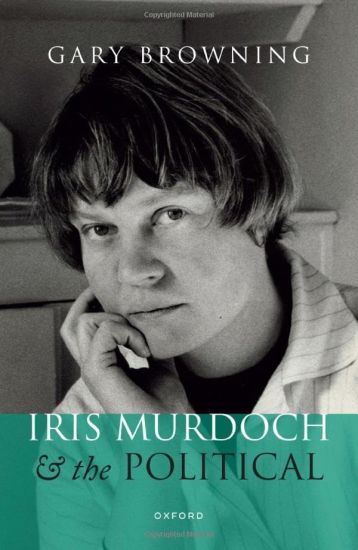
Iris Murdoch is a celebrated philosopher and novelist. Was she a political theorist? Many say that she focused upon the personal and the moral at the expense of the social and the political. However, this book argues the contrary. Murdoch had lifelong interests in politics, just as she did in literature and philosophy. She saw historical experience as the foundation upon which the inter-linked activities of literature, philosophy and politics are based. In reading Murdoch we get a clear insight into the nature of the modern political world. From an early political radicalism to a later anti-utopianism, Murdoch reacted to the great political events of the twentieth century, notably the Holocaust, the rise and fall of ideologies, sexual repression, and the realities of totalitarianism. Her political philosophy conceptualized relations between moral and political spheres, and her novels deal imaginatively with questions of migration, refugees, sexuality and freedom. Her letters and journals provide moment to moment reactions to major political events. Iris Murdoch and the Political presents a lively discussion of Iris Murdoch and her political thought, taking in the nature of socialist thought, the New Left and liberalism in the UK in the latter part of the twentieth century. The book is based upon a wide variety of sources, including Murdoch's journals, letters, reviews, essays, novels and books. It draws upon scholarship in philosophy, literature and intellectual history in developing a coherent sense of how Murdoch theorized the political.
Hegel on History, Politics and Philosophy

Hegel on History, Politics and Philosophy

Gary Browning

Springer Nature Switzerland AG
2026
sidottu
The essays in this volume reflect Gary Browning’s engagement with Hegel over a number of years, and, collectively, they show how Hegel’s political theory is linked to his reading of history and philosophy, and they make a case for the continued relevance of Hegel’s political and international theory.
The Political Art of Bob Dylan

The Political Art of Bob Dylan

David Boucher; Gary Browning

Palgrave Macmillan
2004
nidottu
David Boucher and Gary Browning provide a multi-faceted analysis of the political art of Bob Dylan. The contributions cover Dylan's career as a whole, dealing with such themes as alienation, protest, non-conformity and the American Dream. Dylan's work is examined from a variety of perspectives including the aesthetic theory of Kant, Adorno, Lyotard and Collingwood. The assembled authors are notable specialists in political theory, literary criticism and popular culture. They do not tackle Dylan from a single standpoint but collectively question how Dylan's work relates to the theory and practice of politics.
The Political Art of Bob Dylan

The Political Art of Bob Dylan

David Boucher; Gary Browning

Palgrave Macmillan
2004
sidottu
David Boucher and Gary Browning provide a multi-faceted analysis of the political art of Bob Dylan. The contributions cover Dylan's career as a whole, dealing with such themes as alienation, protest, non-conformity and the American Dream. Dylan's work is examined from a variety of perspectives including the aesthetic theory of Kant, Adorno, Lyotard and Collingwood. The assembled authors are notable specialists in political theory, literary criticism and popular culture. They do not tackle Dylan from a single standpoint but collectively question how Dylan's work relates to the theory and practice of politics.