Kirjojen hintavertailu. Mukana 12 016 292 kirjaa ja 12 kauppaa.

Kirjahaku

Etsi kirjoja tekijän nimen, kirjan nimen tai ISBN:n perusteella.

15 kirjaa tekijältä Gary Cross

The Cute and the Cool

The Cute and the Cool

Gary Cross

Oxford University Press Inc
2004
sidottu
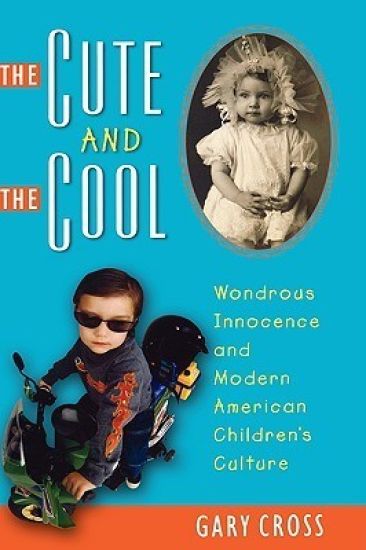
The cute child -- spunky, yet dependent, naughty but nice -- is largely a 20th-century invention. In this book, Gary Cross examines how that look emerged in American popular culture and how the cute turned into the cool, seemingly its opposite, in stories and games. Cross shows how adults have created the ideal of the innocent childhood and have used this to project adult needs and frustrations rather than concerns about protecting and nurturing the young -- and how the images, goods, and rituals of childhood have been co-opted by the commercial world. Magazine and TV ads, articles from the popular press, comic strips, movies, radio scripts, childrearing manuals, and government publications support this argument and the book is illustrated with cartoons, toys, ads, and photos.
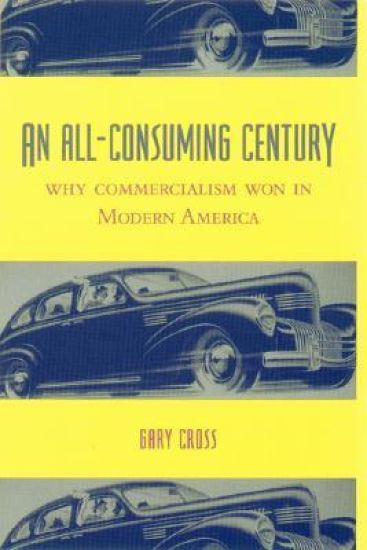
An All-Consuming Century

An All-Consuming Century

Gary Cross

Columbia University Press
2000
sidottu
The unqualified victory of consumerism in America was not a foregone conclusion. The United States has traditionally been the home of the most aggressive and often thoughtful criticism of consumption, including Puritanism, Prohibition, the simplicity movement, the '60s hippies, and the consumer rights movement. But at the dawn of the twenty-first century, not only has American consumerism triumphed, there isn't even an "ism" left to challenge it. An All-Consuming Century is a rich history of how market goods came to dominate American life over that remarkable hundred years between 1900 and 2000 and why for the first time in history there are no practical limits to consumerism. By 1930 a distinct consumer society had emerged in the United States in which the taste, speed, control, and comfort of goods offered new meanings of freedom, thus laying the groundwork for a full-scale ideology of consumer's democracy after World War II. From the introduction of Henry Ford's Model T ("so low in price that no man making a good salary will be unable to own one") and the innovations in selling that arrived with the department store (window displays, self service, the installment plan) to the development of new arenas for spending (amusement parks, penny arcades, baseball parks, and dance halls), Americans embraced the new culture of commercialism-with reservations. However, Gary Cross shows that even the Depression, the counterculture of the 1960s, and the inflation of the 1970s made Americans more materialistic, opening new channels of desire and offering opportunities for more innovative and aggressive marketing. The conservative upsurge of the 1980s and '90s indulged in its own brand of self-aggrandizement by promoting unrestricted markets. The consumerism of today, thriving and largely unchecked, no longer brings families and communities together; instead, it increasingly divides and isolates Americans. Consumer culture has provided affluent societies with peaceful alternatives to tribalism and class war, Cross writes, and it has fueled extraordinary economic growth. The challenge for the future is to find ways to revive the still valid portion of the culture of constraint and control the overpowering success of the all-consuming twentieth century.
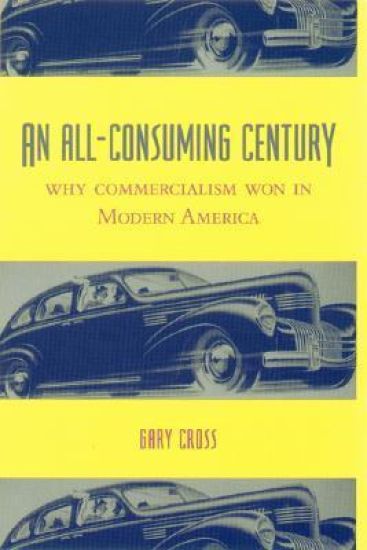
An All-Consuming Century

An All-Consuming Century

Gary Cross

Columbia University Press
2002
pokkari
The unqualified victory of consumerism in America was not a foregone conclusion. The United States has traditionally been the home of the most aggressive and often thoughtful criticism of consumption, including Puritanism, Prohibition, the simplicity movement, the '60s hippies, and the consumer rights movement. But at the dawn of the twenty-first century, not only has American consumerism triumphed, there isn't even an "ism" left to challenge it. An All-Consuming Century is a rich history of how market goods came to dominate American life over that remarkable hundred years between 1900 and 2000 and why for the first time in history there are no practical limits to consumerism. By 1930 a distinct consumer society had emerged in the United States in which the taste, speed, control, and comfort of goods offered new meanings of freedom, thus laying the groundwork for a full-scale ideology of consumer's democracy after World War II. From the introduction of Henry Ford's Model T ("so low in price that no man making a good salary will be unable to own one") and the innovations in selling that arrived with the department store (window displays, self service, the installment plan) to the development of new arenas for spending (amusement parks, penny arcades, baseball parks, and dance halls), Americans embraced the new culture of commercialism-with reservations. However, Gary Cross shows that even the Depression, the counterculture of the 1960s, and the inflation of the 1970s made Americans more materialistic, opening new channels of desire and offering opportunities for more innovative and aggressive marketing. The conservative upsurge of the 1980s and '90s indulged in its own brand of self-aggrandizement by promoting unrestricted markets. The consumerism of today, thriving and largely unchecked, no longer brings families and communities together; instead, it increasingly divides and isolates Americans. Consumer culture has provided affluent societies with peaceful alternatives to tribalism and class war, Cross writes, and it has fueled extraordinary economic growth. The challenge for the future is to find ways to revive the still valid portion of the culture of constraint and control the overpowering success of the all-consuming twentieth century.
Men to Boys

Men to Boys

Gary Cross

Columbia University Press
2008
sidottu
Adam Sandler movies, HBO's Entourage, and such magazines as Maxim and FHM all trade in and appeal to one character--the modern boy-man. Addicted to video games, comic books, extreme sports, and dressing down, the boy-man would rather devote an afternoon to Grand Theft Auto than plan his next career move. He would rather prolong the hedonistic pleasures of youth than embrace the self-sacrificing demands of adulthood. When did maturity become the ultimate taboo? Men have gone from idolizing Cary Grant to aping Hugh Grant, shunning marriage and responsibility well into their twenties and thirties. Gary Cross, renowned cultural historian, identifies the boy-man and his habits, examining the attitudes and practices of three generations to make sense of this gradual but profound shift in American masculinity. Cross matches the rise of the American boy-man to trends in twentieth-century advertising, popular culture, and consumerism, and he locates the roots of our present crisis in the vague call for a new model of leadership that, ultimately, failed to offer a better concept of maturity. Cross does not blame the young or glorify the past. He finds that men of the "Greatest Generation" might have embraced their role as providers but were confused by the contradictions and expectations of modern fatherhood. Their uncertainty gave birth to the Beats and men who indulged in childhood hobbies and boyish sports. Rather than fashion a new manhood, baby-boomers held onto their youth and, when that was gone, embraced Viagra. Without mature role models to emulate or rebel against, Generation X turned to cynicism and sensual intensity, and the media fed on this longing, transforming a life stage into a highly desirable lifestyle. Arguing that contemporary American culture undermines both conservative ideals of male maturity and the liberal values of community and responsibility, Cross concludes with a proposal for a modern marriage of personal desire and ethical adulthood.
Men to Boys

Men to Boys

Gary Cross

Columbia University Press
2010
pokkari
Adam Sandler movies, HBO's Entourage, and such magazines as Maxim and FHM all trade in and appeal to one character--the modern boy-man. Addicted to video games, comic books, extreme sports, and dressing down, the boy-man would rather devote an afternoon to Grand Theft Auto than plan his next career move. He would rather prolong the hedonistic pleasures of youth than embrace the self-sacrificing demands of adulthood. When did maturity become the ultimate taboo? Men have gone from idolizing Cary Grant to aping Hugh Grant, shunning marriage and responsibility well into their twenties and thirties. Gary Cross, renowned cultural historian, identifies the boy-man and his habits, examining the attitudes and practices of three generations to make sense of this gradual but profound shift in American masculinity. Cross matches the rise of the American boy-man to trends in twentieth-century advertising, popular culture, and consumerism, and he locates the roots of our present crisis in the vague call for a new model of leadership that, ultimately, failed to offer a better concept of maturity. Cross does not blame the young or glorify the past. He finds that men of the "Greatest Generation" might have embraced their role as providers but were confused by the contradictions and expectations of modern fatherhood. Their uncertainty gave birth to the Beats and men who indulged in childhood hobbies and boyish sports. Rather than fashion a new manhood, baby-boomers held onto their youth and, when that was gone, embraced Viagra. Without mature role models to emulate or rebel against, Generation X turned to cynicism and sensual intensity, and the media fed on this longing, transforming a life stage into a highly desirable lifestyle. Arguing that contemporary American culture undermines both conservative ideals of male maturity and the liberal values of community and responsibility, Cross concludes with a proposal for a modern marriage of personal desire and ethical adulthood.
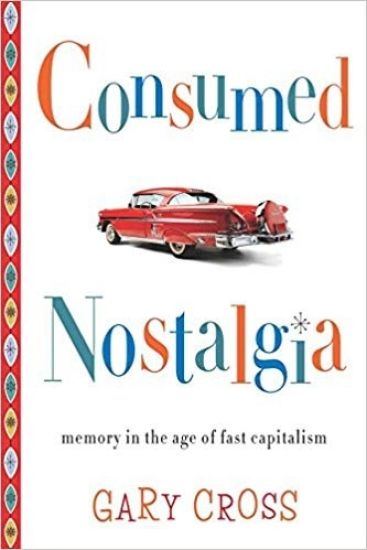
Consumed Nostalgia

Consumed Nostalgia

Gary Cross

Columbia University Press
2015
sidottu
Nostalgia isn't what it used to be. For many of us, modern memory is shaped less by a longing for the social customs and practices of the past or for family heirlooms handed down over generations and more by childhood encounters with ephemeral commercial goods and fleeting media moments in our age of fast capitalism. This phenomenon has given rise to communities of nostalgia whose members remain loyal to the toys, television, and music of their youth. They return to the theme parks and pastimes of their upbringing, hoping to reclaim that feeling of childhood wonder or teenage freedom. Consumed nostalgia took definite shape in the 1970s, spurred by an increase in the turnover of consumer goods, the commercialization of childhood, and the skillful marketing of nostalgia. Gary Cross immerses readers in this fascinating and often delightful history, unpacking the cultural dynamics that turn pop tunes into oldies and childhood toys into valuable commodities. He compares the limited appeal of heritage sites such as Colonial Williamsburg to the perpetually attractive power of a Disney theme park and reveals how consumed nostalgia shapes how we cope with accelerating change. Today nostalgia can be owned, collected, and easily accessed, making it less elusive and often more fun than in the past, but its commercialization has sometimes limited memory and complicated the positive goals of recollection. By unmasking the fascinating, idiosyncratic character of modern nostalgia, Cross helps us better understand the rituals of recall in an age of fast capitalism.
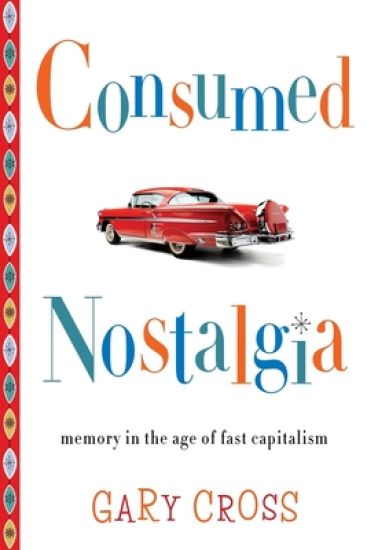
Consumed Nostalgia

Consumed Nostalgia

Gary Cross

Columbia University Press
2017
pokkari
Nostalgia isn't what it used to be. For many of us, modern memory is shaped less by a longing for the social customs and practices of the past or for family heirlooms handed down over generations and more by childhood encounters with ephemeral commercial goods and fleeting media moments in our age of fast capitalism. This phenomenon has given rise to communities of nostalgia whose members remain loyal to the toys, television, and music of their youth. They return to the theme parks and pastimes of their upbringing, hoping to reclaim that feeling of childhood wonder or teenage freedom. Consumed nostalgia took definite shape in the 1970s, spurred by an increase in the turnover of consumer goods, the commercialization of childhood, and the skillful marketing of nostalgia. Gary Cross immerses readers in this fascinating and often delightful history, unpacking the cultural dynamics that turn pop tunes into oldies and childhood toys into valuable commodities. He compares the limited appeal of heritage sites such as Colonial Williamsburg to the perpetually attractive power of a Disney theme park and reveals how consumed nostalgia shapes how we cope with accelerating change. Today nostalgia can be owned, collected, and easily accessed, making it less elusive and often more fun than in the past, but its commercialization has sometimes limited memory and complicated the positive goals of recollection. By unmasking the fascinating, idiosyncratic character of modern nostalgia, Cross helps us better understand the rituals of recall in an age of fast capitalism.
Worktowners at Blackpool

Worktowners at Blackpool

Gary Cross

Routledge
1990
sidottu
Gary Cross publishes the findings of this largely forgotten study by the Mass-Observers who followed the annual pilgrimage of labourers to Blackpool, hoping to discover what attracted workers to this centre of Victorian culture.
Worktowners at Blackpool

Worktowners at Blackpool

Gary Cross

Routledge
2014
nidottu
Gary Cross publishes the findings of this largely forgotten study by the Mass-Observers who followed the annual pilgrimage of labourers to Blackpool, hoping to discover what attracted workers to this centre of Victorian culture.
A Quest for Time

A Quest for Time

Gary Cross

University of California Press
2022
pokkari
This title is part of UC Press's Voices Revived program, which commemorates University of California Press’s mission to seek out and cultivate the brightest minds and give them voice, reach, and impact. Drawing on a backlist dating to 1893, Voices Revived makes high-quality, peer-reviewed scholarship accessible once again using print-on-demand technology. This title was originally published in 1989.
A Quest for Time

A Quest for Time

Gary Cross

University of California Press
2022
sidottu
This title is part of UC Press's Voices Revived program, which commemorates University of California Press’s mission to seek out and cultivate the brightest minds and give them voice, reach, and impact. Drawing on a backlist dating to 1893, Voices Revived makes high-quality, peer-reviewed scholarship accessible once again using print-on-demand technology. This title was originally published in 1989.
Kids' Stuff

Kids' Stuff

Gary Cross

Harvard University Press
1999
nidottu
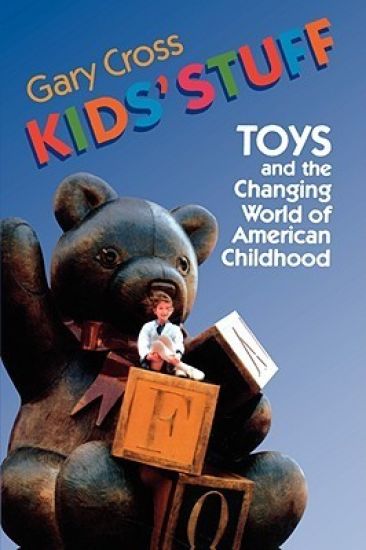
To sort out who's who and what's what in the enchanting, vexing world of Barbies® and Ninja Turtles®, Tinkertoys® and teddy bears, is to begin to see what's become of childhood in America. It is this changing world, and what it unveils about our values, that Gary Cross explores in Kids' Stuff, a revealing look into the meaning of American toys through this century.Early in the 1900s toys reflected parents' ideas about children and their futures. Erector sets introduced boys to a realm of business and technology, while baby dolls anticipated motherhood and building blocks honed the fine motor skills of the youngest children. Kids' Stuff chronicles the transformation that occurred as the interests and intentions of parents, children, and the toy industry gradually diverged--starting in the 1930s when toymakers, marketing playthings inspired by popular favorites like Shirley Temple and Buck Rogers, began to appeal directly to the young. TV advertising, blockbuster films like Star Wars®, and Saturday morning cartoons exploited their youthful audience in new and audacious ways. Meanwhile, powerful social and economic forces were transforming the nature of play in American society. Cross offers a richly textured account of a culture in which erector sets and baby dolls are no longer alone in preparing children for the future, and in which the toys that now crowd the racks are as perplexing for parents as they are beguiling for little boys and girls. Whether we want our children to be high achievers in a competitive world or playful and free from the worries of adult life, the toy store confronts us with many choices.What does the endless array of action figures and fashion dolls mean? Are children--or parents--the dupes of the film, television, and toy industries, with their latest fads and fantasies? What does this say about our time, and what does it bode for our future? Tapping a vein of rich cultural history, Kids' Stuff exposes the serious business behind a century of playthings.
Exploring the Way of Epictetus

Exploring the Way of Epictetus

Gary Cross

Createspace Independent Publishing Platform
2014
pokkari
Epictetus, a Greek Stoic philosopher who lived 1900 years ago, suggested that we all seek to be calm, free and have our desires met. This book explores Epictetus' way to achieving these - including the problems that Epictetus identifies as the reasons for us not achieving these; the directions that Epictetus offers to help us to achieve these; and finally, the strategies that Epictetus offers to help us to overcome the problems, to successfully follow his directions and ultimately to be calm, free and have our desires satisfied. Quotations are new translations from the Greek texts available today. All key words are linked to the original Greek words together with their meanings and nuances, allowing readers to explore the full richness of the original Greek words and to choose the meanings and nuances that they think better suit particular quotations. This book is part of the series 'Ways of the World' in which Gary explores different ways of the world that have helped to shape his mind, and he suggests, the minds of many in the world today - including religious, philosophical and secular ways. Books in this series currently include: 'Exploring the Way of Epictetus', 'Exploring the Way of Lao Tzu', 'Exploring the Way of the Buddha', 'Exploring the Way of Jesus', and this book 'Exploring the Way of Epictetus'.
The Adventures of Major John Tiltborough
Retired Major John Tiltborough was enjoying his time in the high mountain ranges in the snow and cold hunting for deer. Unbeknown to John, he was about to stumble across a massive child abduction and pornography organisation. After saving three young teenage children he now has to get his old team on side to develop a mission to save hundreds of children. Along the way he encounters romance, and forbidden pleasures from his new Mossad wife. Then the race truly begins to see if John's extensive military experience can save the children before he is hunted down and killed instead. If he survives, he will need to master a plan to kill off those linked with this organisation called The Centre.
The Adventures of Major John Tiltborough
Retired Major John Tiltborough was enjoying his time in the high mountain ranges in the snow and cold hunting for deer. Unbeknown to John, he was about to stumble across a massive child abduction and pornography organisation. After saving three young teenage children he now has to get his old team on side to develop a mission to save hundreds of children. Along the way he encounters romance, and forbidden pleasures from his new Mossad wife. Then the race truly begins to see if John's extensive military experience can save the children before he is hunted down and killed instead. If he survives, he will need to master a plan to kill off those linked with this organisation called The Centre.