Kirjojen hintavertailu. Mukana 11 627 220 kirjaa ja 12 kauppaa.

Kirjahaku

Etsi kirjoja tekijän nimen, kirjan nimen tai ISBN:n perusteella.

5 kirjaa tekijältä Gary D. Libecap

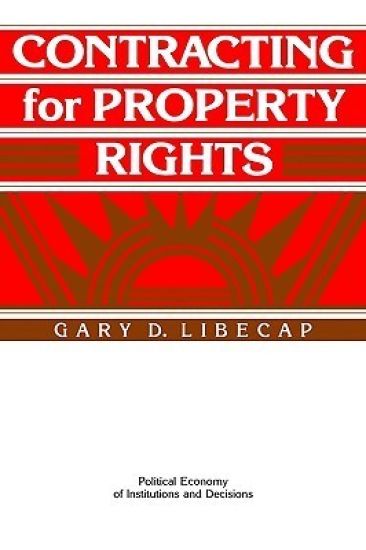
Contracting for Property Rights

Contracting for Property Rights

Gary D. Libecap

Cambridge University Press
1994
pokkari
In this book the author examines the problems encountered in negotiations among claimants and the political and economic considerations that influence property rights arrangements. The histories of mineral rights, rights to range and timber land, and fishery and crude oil production rights in the United States are examined and reveal a surprising variety of contractual negotiations and economic outcomes. The author concludes that in addition to an analysis of distributional outcomes, an examination of the details of the political bargaining underlying property rights contracts is essential to an understanding of why rights emerge as they do. The book is an important contribution to both property rights theory and to American economic history.
Owens Valley Revisited

Owens Valley Revisited

Gary D. Libecap

Stanford University Press
2007
sidottu
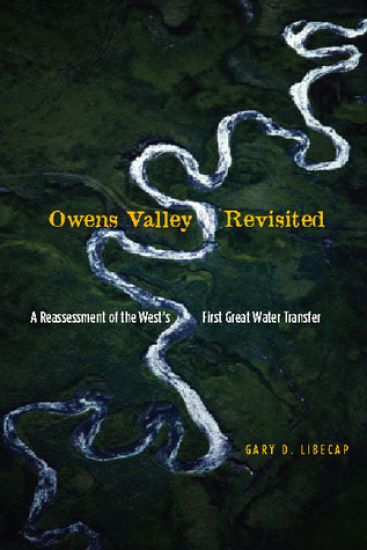
In the contemporary West, pressures to more effectively reallocate water to meet growing urban and environmental demands are increasing as environmental awareness grows and climate change threatens existing water supplies. The legacy of Owens Valley raises concerns about how reallocation can occur. Although it took place over seventy years ago, the water transfer from Owens Valley to Los Angeles still plays an important role in perceptions of how water markets work. The memory of Owens Valley transfer is one of theft and environmental destruction at the hands of Los Angeles. In reassessing the infamous transfer, one could say that there was no "theft." Owens Valley landowners fared well in their land and water sales, earning more than if they had stayed in agriculture. In another sense, however, "theft" did occur. The water was not literally stolen, but there was a sharp imbalance in gains from the trade—with most of the benefits going to Los Angeles. Owens Valley, then, demonstrates the importance of distributional issues in water trades when the stakes are large. Los Angeles water rights in the Owens Valley and Mono Basin have again been a front-page issue since 1970. New environmental and recreational values and air pollution concerns have ushered in demands to curtail the shipment of water from source regions for urban use. Owen's Valley Revisited: A Reassesment of the West's First Great Water Transfer carefully explores how these sagas were addressed, considering the costs involved, and alternative approaches that might have resulted in more rapid and less contentious remedies. This analysis offers insights to guide the ongoing conversation about water politics and the future thereof.
Owens Valley Revisited

Owens Valley Revisited

Gary D. Libecap

Stanford University Press
2007
pokkari
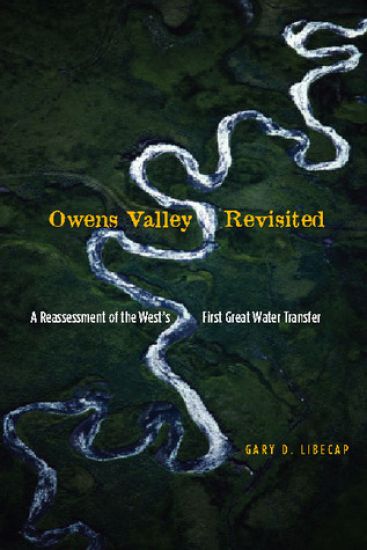
In the contemporary West, pressures to more effectively reallocate water to meet growing urban and environmental demands are increasing as environmental awareness grows and climate change threatens existing water supplies. The legacy of Owens Valley raises concerns about how reallocation can occur. Although it took place over seventy years ago, the water transfer from Owens Valley to Los Angeles still plays an important role in perceptions of how water markets work. The memory of Owens Valley transfer is one of theft and environmental destruction at the hands of Los Angeles. In reassessing the infamous transfer, one could say that there was no "theft." Owens Valley landowners fared well in their land and water sales, earning more than if they had stayed in agriculture. In another sense, however, "theft" did occur. The water was not literally stolen, but there was a sharp imbalance in gains from the trade—with most of the benefits going to Los Angeles. Owens Valley, then, demonstrates the importance of distributional issues in water trades when the stakes are large. Los Angeles water rights in the Owens Valley and Mono Basin have again been a front-page issue since 1970. New environmental and recreational values and air pollution concerns have ushered in demands to curtail the shipment of water from source regions for urban use. Owen's Valley Revisited: A Reassesment of the West's First Great Water Transfer carefully explores how these sagas were addressed, considering the costs involved, and alternative approaches that might have resulted in more rapid and less contentious remedies. This analysis offers insights to guide the ongoing conversation about water politics and the future thereof.
Where's Coase?

Where's Coase?

Gary D. Libecap

Cambridge University Press
2026
pokkari
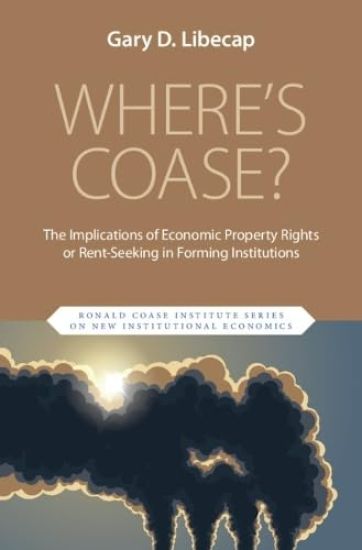
Ronald Coase's Nobel work outlined gains by reducing transaction costs and promoting property rights and markets to confront externalities. Countering market failure assertions and calls for centralized government intervention, Coase retorted that decentralized market negotiations could be welfare-improving by promoting collaborative, efficient problem solving, and releasing resources to the general economy. Despite this, his approach is not central to any US environmental law implemented after 1970. Federal government mandates dominate. Where's Coase? explains why. The private objectives of political agents lead to policies that are likely to be too costly and inequitable, despite provision of public goods. Citizens face high collective action costs and lack information to distinguish between public goods and private agent benefits. Examining three major environmental laws: the Clean Air Act, the Magnuson Stevens Fishery Act, and the Endangered Species Act, the book explores policy development and assesses the resulting costs relative to Coase's framework.
Where's Coase?

Where's Coase?

Gary D. Libecap

Cambridge University Press
2026
sidottu
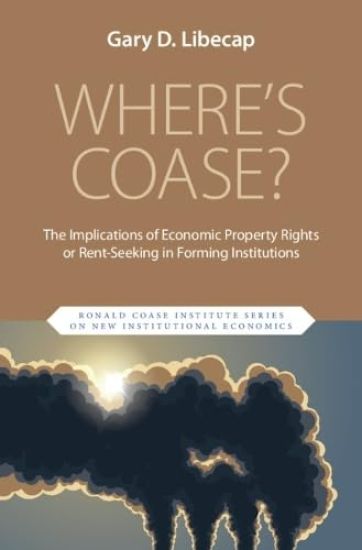
Ronald Coase's Nobel work outlined gains by reducing transaction costs and promoting property rights and markets to confront externalities. Countering market failure assertions and calls for centralized government intervention, Coase retorted that decentralized market negotiations could be welfare-improving by promoting collaborative, efficient problem solving, and releasing resources to the general economy. Despite this, his approach is not central to any US environmental law implemented after 1970. Federal government mandates dominate. Where's Coase? explains why. The private objectives of political agents lead to policies that are likely to be too costly and inequitable, despite provision of public goods. Citizens face high collective action costs and lack information to distinguish between public goods and private agent benefits. Examining three major environmental laws: the Clean Air Act, the Magnuson Stevens Fishery Act, and the Endangered Species Act, the book explores policy development and assesses the resulting costs relative to Coase's framework.