Kirjojen hintavertailu. Mukana 12 390 323 kirjaa ja 12 kauppaa.

Kirjahaku

Etsi kirjoja tekijän nimen, kirjan nimen tai ISBN:n perusteella.

26 kirjaa tekijältä Gary Greenberg

The Book of Woe: The DSM and the Unmaking of Psychiatry
"Gary Greenberg has become the Dante of our psychiatric age, and the DSM-5 is his Inferno." --Errol Morris Since its debut in 1952, the American Psychiatric Association's Diagnostic and Statistical Manual of Mental Disorders has set down the "official" view on what constitutes mental illness. Homosexuality, for instance, was a mental illness until 1973. Each revision has created controversy, but the DSM-5 has taken fire for encouraging doctors to diagnose more illnesses--and to prescribe sometimes unnecessary or harmful medications.Respected author and practicing psychotherapist Gary Greenberg embedded himself in the war that broke out over the fifth edition, and returned with an unsettling tale. Exposing the deeply flawed process behind the DSM-5's compilation, The Book of Woe reveals how the manual turns suffering into a commodity--and made the APA its own biggest beneficiary.
The Beer Diet

The Beer Diet

Gary Greenberg

Cosmic Cafe Press
2020
pokkari
Beer has been around since the tail end of the Stone Age, and it's more popular than ever in the 21st Century as the craft brewing industry explodes across America and beyond. Unfortunately, that creates a problem that beer-lovers tend to wear around their middle. But it doesn't have to be that way. In The Beer Diet: How to Drink Beer and Not Gain Weight, natural health journalist and avid homebrewer Gary Greenberg explains how small adjustments in your life can make a huge difference in your waistline, and your overall health. The Beer Diet not only offers invaluable health tips but also pays homage to the world's most popular beverage and even shows you how to brew your own. Witty, fun and informative, this book is must reading for anyone who enjoys tipping back a few - especially if it's occasionally a few too many
The Judas Brief

The Judas Brief

Gary Greenberg

PERESET PRESS
2021
sidottu
Based on detailed historical evidence and logical analysis of inconsistencies within the gospel accounts of the events leading up to the arrest and execution of Jesus, Greenberg argues that Judas never betrayed Jesus and that the Jewish priests never sought to have Jesus executed. According to Greenberg, Judas, acting on behalf of Jesus, together with the Jewish High Priest, negotiated a deal with Pilate to avoid Roman military assaults in a crowded city by keeping Jesus under house arrest with the High Priest until after the Passover holiday and then allowing him to go back to Galilee. But Herod Antipas, ruler of Galilee, feared Jesus' popularity back home and successfully pressured Pilate to break the agreement and execute Jesus. This landmark study is the first major historically-based challenge to Christian accusations of Jewish involvement in the death of Jesus. Catholic Biblical Quarterly wrote that Greenberg "has a keen eye for the ways religious and political motives have shaped the story of Jesus' arrest and execution."
The Moses Mystery

The Moses Mystery

Gary Greenberg

PERESET PRESS
2021
sidottu
What Do History and Archaeology Really say about the origins of ancient Israel? Although the bible says that Israel's formative history took place in ancient Egypt, biblical scholars and Egyptologists have steadfastly refused to explore the role of Egyptian history and literature on the origins of Jewish religion. The Moses Mystery attempts to set the record straight. Based on extensive research into biblical and Egyptian history, archaeology, literature and mythology Greenberg argues that the first Israelites were Egyptians, followers of the monotheistic teachings of Pharaoh Akhenaten. Some of the many intriguing revelations in The Moses Mystery include: -Ancient Egyptian records specifically identify Moses as Akhenaten's chief priest and describe the Exodus as the result of a civil war for control over the Egyptian throne - Abraham, Isaac, and Jacob were characters from Egyptian mythology - The Twelve Tribes of Israel never existed
Scotland

Scotland

Gary Greenberg

New London Librarium
2014
nidottu
Reviewing Gary Greenberg's 2013 expose about American psychiatry, the New York Times's Dwight Garner wrote that "Greenberg paces the psychiatric stage as if he were part George Carlin, part Gregory House." But on a spring night in 2013, he found himself pacing the stage of a grade school gym as if he were Hester Prynne. Two registered sex offenders had come to live in the small town Greenberg had called home for thirty years, and his fellow citizens, terrified and enraged, had come out to pin the blame on him. In this riveting memoir about a modern-day witch hunt, Greenberg recounts with his trademark acerbic humor what it is like to be the target of an entire town's wrath. As he describes his Hawthornian moment, he vividly sketches the characters and landscapes that make up a classic New England village and reflects on sex, panic, betrayal, and the sometimes beautiful, sometimes terrible ties that bind communities together.This new expanded edition includes an epilogue.
Manufacturing Depression

Manufacturing Depression

Gary Greenberg

Bloomsbury Publishing PLC
2011
nidottu
Has the antidepressant industry manufactured not only an illness but an idea of humanity that denies our full potential?'Impressive and fascinating' New ScientistAccording to the Office of National Statistics, depression occurs in 1 in 10 adults in Britain at any one time. But what constitutes depression? And what role have the pharmaceutical companies played in creating an idea of depression that turns human beings into neurochemical machines? Where does that leave the human spirit?Do we ask and expect too much of science, rather than accepting that there are important matters about which we may always be unsure? Could this lack of certainty be at the heart of what it means to be human?In his fascinating account of the close relationship between psychiatric diagnosis and the pharmaceutical industries, Gary Greenberg uses his personal experience over a two-year exposure to drug testing and different therapies for depression, backed up by twenty years of professional practice as a psychotherapist, to answer these questions and unravel the ‘Secret History of a Modern Disease'.
Manufacturing Depression: The Secret History of a Modern Disease
Am I depressed or just unhappy? In the last two decades, antidepressants have become staples of our medicine cabinets--doctors now write 120 million prescriptions annually, at a cost of more than 10 billion dollars. At the same time, depression rates have skyrocketed; twenty percent of Americans are now expected to suffer from it during their lives. Doctors, and drug companies, claim that this convergence is a public health triumph: the recognition and treatment of an under-diagnosed illness. Gary Greenberg, a practicing therapist and longtime depressive, raises a more disturbing possibility: that the disease has been manufactured to suit (and sell) the cure. Greenberg draws on sources ranging from the Bible to current medical journals to show how the idea that unhappiness is an illness has been packaged and sold by brilliant scientists and shrewd marketing experts--and why it has been so successful. Part memoir, part intellectual history, part expos --including a vivid chronicle of his participation in a clinical antidepressant trial--Manufacturing Depression is an incisive look at an epidemic that has changed the way we have come to think of ourselves.
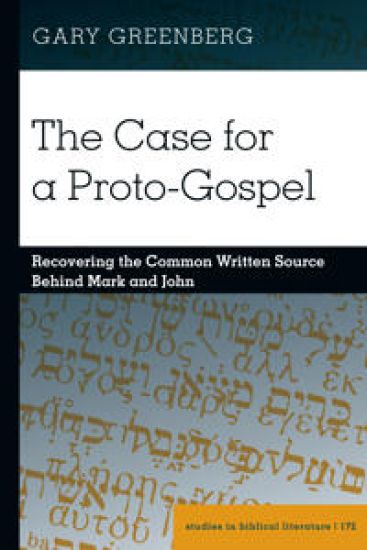
The Case for a Proto-Gospel

The Case for a Proto-Gospel

Gary Greenberg

Peter Lang Publishing Inc
2020
sidottu
In this landmark study of the literary relationship between the gospel of John and the synoptic gospels, Gary Greenberg presents compelling evidence for the existence of a written pre-canonical Alpha gospel that contained almost all of the main episodes in the adult life of Jesus (excluding major speeches, such as discourses, parables, and "I Am" sayings) and which became the written source for the core biography of Jesus in Mark, Luke, John, and Matthew. While Mark used the Alpha gospel with only slight variations, John had profound theological disagreements with it, objecting to its theological message about how to obtain eternal life, the depiction of Jesus, and other matters. This induced him to rewrite the Alpha gospel so that it conformed to his own very different theological agenda. Consequently, John’s gospel functions as a thorough theological critique of Mark, but the changes he introduced made it difficult to see how he and Mark worked from the same written source. By using John’s theological concerns as a filter for reading and understanding what objections John would have with Mark’s Jesus stories, The Case for a Proto-Gospel reverse-engineers the editorial path taken by John and reconstructs the content of the Alpha gospel. Finally, the author discusses the relationship of the other two synoptic gospels to the Alpha gospel, asserting that Luke also knew the Alpha gospel but used Mark as his primary source, and that while Matthew did not know the Alpha gospel, his use of Mark as a primary source ensured that his core biography of Jesus also derived from this earlier source. Overall, Greenberg’s The Case for a Proto-Gospel is a fascinating work that contains ingenious ideas that introduce new possibilities for understanding John and for rethinking its relationship with the Synoptics. The monograph succeeds in highlighting the notable similarities and differences between the gospels, in stimulating discussions about the interpretation of specific Johannine passages, and in raising important questions about the composition of John’s Gospel that can only lead to a deepening of scholarly interest in the topic. Jonathan W. Lo, Review of Biblical Literature Greenberg’s massive book will prove to be a useful conversation partner to all who are involved in the study of John’s relation to the synoptics and the larger discussion of the synoptic problem. I especially welcome Greenberg’s attempt to draw the academic community’s attention to the extraordinary complexity of the data involved in the discussion. His ability to illustrate said complexity, even as the hypothesis of Johannine dependence on the synoptics is currently gaining momentum in the field, is why this book is so timely and necessary. Revue Biblique
The Case for a Proto-Gospel

The Case for a Proto-Gospel

Gary Greenberg

PETER LANG PUBLISHING INC
2022
nidottu
In this landmark study of the literary relationship between the gospel of John and the synoptic gospels, Gary Greenberg presents compelling evidence for the existence of a written pre-canonical Alpha gospel that contained almost all of the main episodes in the adult life of Jesus (excluding major speeches, such as discourses, parables, and "I Am" sayings) and which became the written source for the core biography of Jesus in Mark, Luke, John, and Matthew. While Mark used the Alpha gospel with only slight variations, John had profound theological disagreements with it, objecting to its theological message about how to obtain eternal life, the depiction of Jesus, and other matters. This induced him to rewrite the Alpha gospel so that it conformed to his own very different theological agenda. Consequently, John’s gospel functions as a thorough theological critique of Mark, but the changes he introduced made it difficult to see how he and Mark worked from the same written source. By using John’s theological concerns as a filter for reading and understanding what objections John would have with Mark’s Jesus stories, The Case for a Proto-Gospel reverse-engineers the editorial path taken by John and reconstructs the content of the Alpha gospel. Finally, the author discusses the relationship of the other two synoptic gospels to the Alpha gospel, asserting that Luke also knew the Alpha gospel but used Mark as his primary source, and that while Matthew did not know the Alpha gospel, his use of Mark as a primary source ensured that his core biography of Jesus also derived from this earlier source. Overall, Greenberg’s The Case for a Proto-Gospel is a fascinating work that contains ingenious ideas that introduce new possibilities for understanding John and for rethinking its relationship with the Synoptics. The monograph succeeds in highlighting the notable similarities and differences between the gospels, in stimulating discussions about the interpretation of specific Johannine passages, and in raising important questions about the composition of John’s Gospel that can only lead to a deepening of scholarly interest in the topic. Jonathan W. Lo, Review of Biblical Literature Greenberg’s massive book will prove to be a useful conversation partner to all who are involved in the study of John’s relation to the synoptics and the larger discussion of the synoptic problem. I especially welcome Greenberg’s attempt to draw the academic community’s attention to the extraordinary complexity of the data involved in the discussion. His ability to illustrate said complexity, even as the hypothesis of Johannine dependence on the synoptics is currently gaining momentum in the field, is why this book is so timely and necessary. Revue Biblique
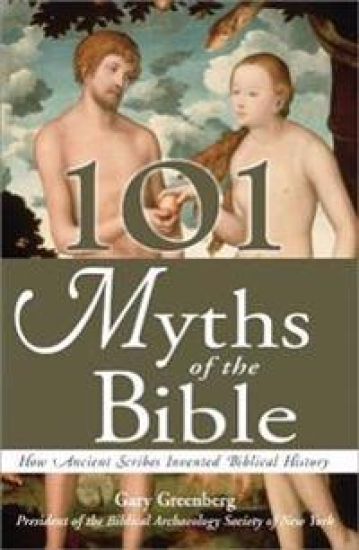
101 Myths of the Bible

101 Myths of the Bible

Gary Greenberg

Sourcebooks, Inc
2002
nidottu
In his startling book, Gary Greenberg exposes the reality behind the greatest story ever told. Learn about the Egyptian myths and ancient folklore that survive in one of history’s most sacred texts, and discover how:-King David’s bodyguard, not David, killed Goliath-Noah’s Ark did not land on Mount Ararat-Samson did not pull down a Philistine temple-There are at least two versions of the Ten Commandments-The walls of Jericho were destroyed 300 years before Joshua arrived there-Sodom and Gomorrah were mythical cities that never existed-The story of Esther had nothing to do with the Jews of Persia-And much, much more101 Myths of the Bible provides a new dimension of biblical studies for believers, historians and anyone who has ever wondered about the facts behind the legends. By looking deeper into history, Greenberg shows that the true story makes the Bible more interesting than ever imagined!
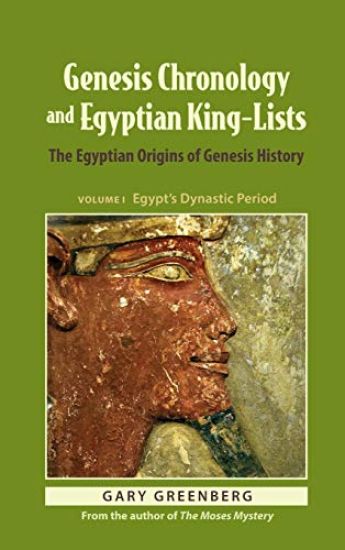
Genesis Chronology and Egyptian King-Lists
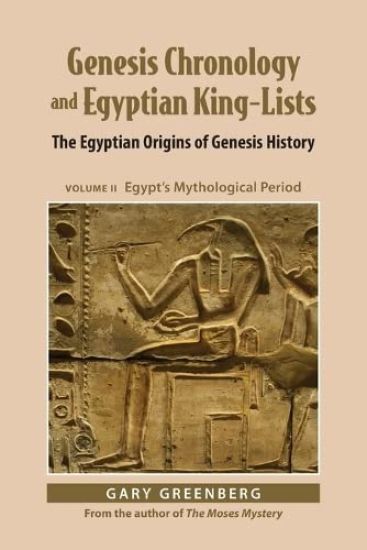
If Volume I shocked you, wait until you read Volume II Continuing his astonishing study of Egyptian influences on the Book of Genesis, Gary Greenberg moves from Egypt's historical chronology to its mythological chronology, meticulously uncovering the biblical book's deep dependence on Egyptian sources for some of its most famous stories, including the seven days of creation, Adam and Eve in the Garden of Eden, Cain and Abel, Noah and the Flood, and the family of nations descended from Ham, Shem, and Japheth. Despite the biblical narrative showing that Israel's formative period as a nation took place in Egypt, almost all biblical scholars and Egyptologists refuse to take such claims seriously, rarely looking at anything more than an occasional peripheral link. Greenberg's thorough scholarly examination of the biblical and Egyptological sources tears through this "papyrus curtain" and presents clear and convincing evidence that the original authors of Genesis worked from a solid knowledge of Egypt's literary and historical sources and used them as the basis of the Bible's primeval history. Only long after, when Genesis source documents were significantly re-edited and heavily redacted during the Second Temple period, did the Hebrews lose touch with their Egyptian roots. Greenberg sets the record straight and the results are impressive. Some of the stunning discoveries in Genesis Chronology and Egyptian King-Lists: The Egyptian Origins of Genesis History, Volume II Egypt's Mythical Period - How did the Genesis author determine in what year each of the first Patriarchs, from Adam to Jared, fathered their first son? Egypt's mythical chronology holds the answers. - The story of Noah and the flood was the original Genesis creation story and it was based on Egypt's most famous creation myths. - Who was the mysterious light that appeared on the first day of creation? (Yes, who, not what; No, it wasn't Jesus.) - Who were the biblical generations of Heaven and Earth and who were these children? - Egyptian deities in the Garden of Eden? What is the hidden Egyptian secret behind the Tree of Knowledge of Good and Evil and the Tree of Life? - How long did the flood last and what does that have to do with the Egyptian calendar? - Were there seven days of creation or eight?
Genesis Chronology and Egyptian King-Lists
Continuing his astonishing study of Egyptian influences on the Book of Genesis, Gary Greenberg moves from Egypt's historical chronology to its mythological chronology, meticulously uncovering the biblical book's deep dependence on Egyptian sources for some of its most famous stories, including the seven days of creation, Adam and Eve in the Garden of Eden, Cain and Abel, Noah and the Flood, and the family of nations descended from Ham, Shem, and Japheth. Despite the biblical narrative showing that Israel's formative period as a nation took place in Egypt, almost all biblical scholars and Egyptologists refuse to take such claims seriously, rarely looking at anything more than an occasional peripheral link. Greenberg's thorough scholarly examination of the biblical and Egyptological sources tears through this "papyrus curtain" and presents clear and convincing evidence that the original authors of Genesis worked from a solid knowledge of Egypt's literary and historical sources and used them as the basis of the Bible's primeval history. Only long after, when Genesis source documents were significantly re-edited and heavily redacted during the Second Temple period, did the Hebrews lose touch with their Egyptian roots. Greenberg sets the record straight and the results are impressive.Some of the stunning discoveries in Genesis Chronology and Egyptian King-Lists: The Egyptian Origins of Genesis History, Volume II Egypt's Mythical Period - How did the Genesis author determine in what year the first Patriarchs, from Adam to Jared, fathered their first son? Egypt's mythical chronology holds the answers. - The story of Noah and the flood was the original Genesis creation story and it was based on Egypt's most famous creation myths. - Who was the mysterious light that appeared on the first day of creation? (Yes, who, not what; No, it wasn't Jesus.) - Who were the biblical generations of Heaven and Earth and who were these children? - Egyptian deities in the Garden of Eden? What is the hidden Egyptian secret behind the Tree of Knowledge of Good and Evil and the Tree of Life? - How long did the flood last and what does that have to do with the Egyptian calendar? - Were there seven days of creation or eight?