Kirjojen hintavertailu. Mukana 11 717 486 kirjaa ja 12 kauppaa.

Kirjahaku

Etsi kirjoja tekijän nimen, kirjan nimen tai ISBN:n perusteella.

8 kirjaa tekijältä Gary Hart

Restoration of the Republic

Restoration of the Republic

Gary Hart

Oxford University Press Inc
2002
sidottu
Rarely does scholarship anticipate the most dramatic events of the moment. In this timely work Gary Hart does just that, arguing for the restoration of republican virtues and for homeland security as an important first step. The American democratic republic has from its founding been a paradoxical success. Simultaneously attached to state and national power, citizens' rights and citizens' duties, American democracy has uniquely turned its reliance on consent from the governed into a powerful governing of the consenting. In a remarkable political feat, America's founders combined mixed government, the language of popular sovereignty and a self-conscious emphasis on checks and balances to forge a republic that has weathered the test of time. The complex realities of the twenty-first century, however, have fundamentally challenged the underpinnings of this enduring American experiment, repeatedly exposing the tensions at the heart of America's mixed system of government. What then is the nature of an American republic in an age of democracy? How can the democratic values of social justice and equality be balanced with republican values of civic duty and popular sovereignty? Bringing to light a long-neglected aspect of Thomas Jefferson's political philosophy--the "ward republic"--Gary Hart here offers a wholly original blueprint for republican restoration in which every citizen can participate democratically in the governing of his or her own life. Of crucial relevance for contemporary society, including its startlingly prescient plan for homeland security, Restoration of the Republic provides original insights into issues of national urgency as well as the timeless questions that bedevil the American democratic experiment.
Restoration of the Republic

Restoration of the Republic

Gary Hart

Oxford University Press Inc
2004
nidottu
Rarely does scholarship anticipate the most dramatic events of the moment. In this timely work Gary Hart does just that, arguing for the restoration of republican virtues and for homeland security as an important first step. The American democratic republic has from its founding been a paradoxical success. Simultaneously attached to state and national power, citizens' rights and citizens' duties, American democracy has uniquely turned its reliance on consent from the governed into a powerful governing of the consenting. In a remarkable political feat, America's founders combined mixed government, the language of popular sovereignty and a self-conscious emphasis on checks and balances to forge a republic that has weathered the test of time. The complex realities of the twenty-first century, however, have fundamentally challenged the underpinnings of this enduring American experiment, repeatedly exposing the tensions at the heart of America's mixed system of government. What then is the nature of an American republic in an age of democracy? How can the democratic values of social justice and equality be balanced with republican values of civic duty and popular sovereignty? Bringing to light a long-neglected aspect of Thomas Jefferson's political philosophy--the "ward republic"--Gary Hart here offers a wholly original blueprint for republican restoration in which every citizen can participate democratically in the governing of his or her own life. Of crucial relevance for contemporary society, including its startlingly prescient plan for homeland security, Restoration of the Republic provides original insights into issues of national urgency as well as the timeless questions that bedevil the American democratic experiment.
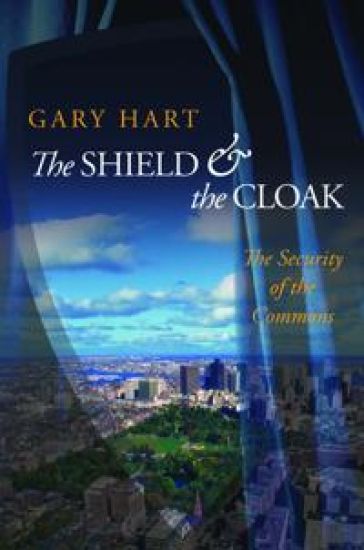
The Shield and the Cloak

The Shield and the Cloak

Gary Hart

Oxford University Press Inc
2006
sidottu
Gary Hart has long been one of the nation's foremost experts on national security, combining a deep knowledge of national security policy with first-hand experience of the political realities that influence how America safeguards itself and its interests. In his new book, Hart outlines, in clear, simple prose, the fundamental changes with which America must grapple when confronting a terrorist threat that has no state and no geographic homebase and thus offers no genuine target for the world's largest and most sophisticated military force. Security can only be achieved, Hart argues, by applying new tactics, new players, and a nuanced understanding of the radical changes in the security environment. The old security required massive weapons in massive numbers. The new security requires special forces, individual warrior teams seeking out terrorists in the most remote corners of the world and in the heart of American cities, as well as cooperation among intelligence services. The old security required economic dominance. The new security requires economic integration in a world of international markets, trade, and finance. The new security will be both national and international, defensive and offensive, and will require a shield for the homeland as well as a cloak of non-military security.
The Shield and the Cloak

The Shield and the Cloak

Gary Hart

Oxford University Press Inc
2007
nidottu
Gary Hart has long been one of the nation's foremost experts on national security, combining a deep knowledge of national security policy with first-hand experience of the political realities that influence how America safeguards itself and its interests. In his new book, Hart outlines the fundamental changes with which America must grapple when confronting the current terrorist threat--a threat with no state and no geographic home-base and thus no real target for the world's largest and most sophisticated military force. Hart argues for a security of the commons, emphasizing that the new security will require a shield for the homeland as well as a cloak of non-military security, including security of income, community, environment, and energy.
The Patriot

The Patriot

Gary Hart

The Free Press
1998
pokkari
Reflecting the experience and wisdom Gary Hart has accumulated during a lifetime of public service, The Patriot addresses the fundamental challenges to democratic leadership posed by a new century and a new millennium. Written as a handbook of advice to an aspiring younger politician in the tradition of Machiavelli's The Prince, Hart's compact and incisive book identifies the primary challenge facing American leaders today as the restoration of trust between the people and their government. The healthy skepticism Americans have historically held toward politics has been replaced by enervating cynicism, which breeds suspicion, anger, systematic alienation, and ultimately cultural dis-integration. Hart lays the blame for this problem squarely at the feet of today's political leaders, whose mistrust of the people themselves has inspired a like mistrust of the people for their government. Such an atmosphere, Hart argues, is conductive to the flourishing success of new "barbarians" - found today on both left and right - who denigrate our culture and heritage, divide our society, and utilize the political process to bludgeon and destroy their opponents at any price. Speaking the language of revolution and violence, these new barbarians coarsen political discourse and cheapen the moral capital required to maintain our democratic republic - a healthy sense of public spirit and a patriotic pride in our accomplishments and history. The tools of leadership espoused by Machiavelli - mystery, force, and fraud - gave us four centuries of realpolitik. But the conditions of modern governance in a media-saturated society require openness and candor from our leaders, Hart maintains, and in a powerful and persuasive collection of short, interconnected essays, he sets forth new principles for leadership and counsels citizens and politicians alike in the art of democratic renewal. Unlike other politicians whose youthful idealism has been corrupted by actual political experience, Hart remains an optimist. Believing that our politics can still be ennobled by great leadership, he looks to the rising generation to create a political culture that is both idealistic and practical. Hart has witnessed the brutality of politics up close. Yet he has risen above the bitterness of his own reversals to light the way to a new kind of political probity for the next generation.
James Monroe

James Monroe

Gary Hart

Times Books
2005
sidottu
A thorough analysis of America's fifth president looks at the military and political accomplishments of James Monroe, describing his service during the Revolutionary War; his diverse roles as senator, governor, ambassador, secretary of state, secretary of war, and president; and his creation of the Monroe Doctrine as a policy to establish American national security.
The Courage of Our Convictions

The Courage of Our Convictions

Gary Hart

Henry Holt Company Inc
2007
pokkari
A rallying cry "for Democrats who dream about governing and are eager to get their party back on track." "CBS News"In this powerful and provocative manifesto, former senator Gary Hart offers a call to action for Democrats to embrace moral principles and progressive leadership and not to fall back into a pattern of caution and calculation. He urges a return to the principles bequeathed to the party by its great twentieth-century presidents: Franklin D. Roosevelt's commitment to a single national community; Harry S. Truman's security through internationalism; John F. Kennedy's ideal of civic duty and service to the nation; and Lyndon B. Johnson's insistence on equality for all citizens. With the Democrats now in control of Congress, Hart speaks directly and passionately to those who seek to transform this political opportunity into a robust progressive program. As the 2008 presidential election approaches, it is the wake-up call so many Americans have been waiting for."
The Minuteman

The Minuteman

Gary Hart

Free Press
2011
pokkari
A nation defines itself by the kind of army it creates for its protection. By that standard, America at the close of the twentieth century is large, powerful, and technologically sophisticated. But it is also muscle-bound, confused, wasteful, and desperately in search of a mission. In "The Minuteman, " former Senator Gary Hart proposes a provocative and radical restructuring of America's armed forces, asking the questions that have gone unanswered for too long: Why do we have 1.5 million men and women under arms with no major threat to our security? Why is our military budget at the same level as during the Cold War? Why are we spending more money for fewer weapons? Why are the best service personnel taking early retirement? Why is it taboo even to question the structure of our bloated military establishment? Drawing on his long experience as a leader in the field of military reform (including twelve years on the Senate Armed Services Committee), Hart proposes a return to the oldest principles of the republic, making an impassioned case for replacing the present Cold War military with a smaller standing army and a much larger, well-trained citizen reserve -- an "army of the people." The professional nucleus would be a rapid-response force responsible for dealing with immediate crises and low-intensity conflicts, while the larger army of citizen-soldiers would be called up when national interests required a larger, sustained military presence. From ancient times to the present, the heroes of democracy have consistently upheld two principles: that it is dangerous to maintain a large standing army in peacetime; and that free people have a civic duty to participate in their own defense. Contemporary America, by contrast, has sunk into "Eisenhower's Nightmare," beholden to a powerful military-industrial complex embracing the armed forces, military contractors, unions, Congress, and military communities economically dependent on military spending. The only way to break this cycle of dependence, Hart argues, is to restore a citizen military -- a true militia, like the one that defended Lexington and Concord. If we reject this path, he warns, we risk being truly ill-prepared for the challenges facing our nation in the century about to dawn.