Kirjojen hintavertailu. Mukana 11 244 527 kirjaa ja 12 kauppaa.

Kirjahaku

Etsi kirjoja tekijän nimen, kirjan nimen tai ISBN:n perusteella.

27 kirjaa tekijältä Gary Lachman

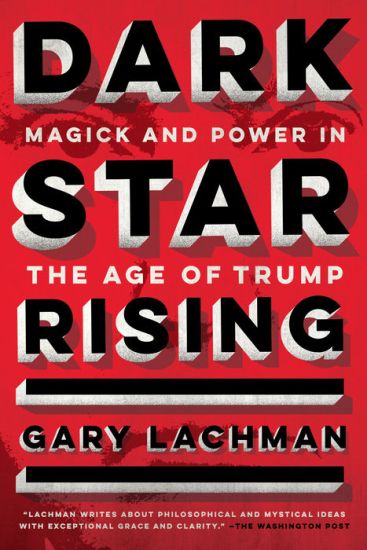
Dark Star Rising

Dark Star Rising

Gary Lachman

J.P.Tarcher,U.S./Perigee Bks.,U.S.
2018
nidottu
Within the concentric circles of Trump's regime lies an unseen culture of occultists, power-seekers, and mind-magicians whose influence is on the rise. In this unparalleled account, historian Gary Lachman examines the influence of occult and esoteric philosophy on the unexpected rise of the alt-right. Did positive thinking and mental science help put Donald Trump in the White House? And are there any other hidden powers of the mind and thought at work in today's world politics? In Dark Star Rising: Magick and Power in the Age of Trump, historian and cultural critic Gary Lachman takes a close look at the various magical and esoteric ideas that are impacting political events across the globe. From New Thought and Chaos Magick to the far-right esotericism of Julius Evola and the Traditionalists, Lachman follows a trail of mystic clues that involve, among others, Norman Vincent Peale, domineering gurus and demagogues, Ayn Rand, Pepe the Frog, Rene Schwaller de Lubicz, synarchy, the Alt-Right, meme magic, and Vladimir Putin and his postmodern Rasputin. Come take a drop down the rabbit hole of occult politics in the twenty-first century and find out the post-truths and alternative facts surrounding the 45th President of the United States with one of the leading writers on esotericism and its influence on modern culture.
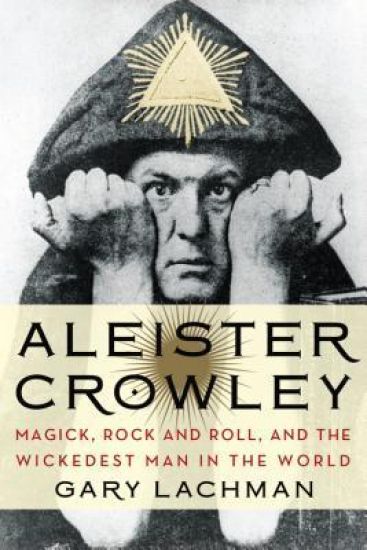
Aleister Crowley

Aleister Crowley

Gary Lachman

Tarcher/Putnam,US
2014
nidottu
This definitive work on the occult's "great beast" traces the arc of his controversial life and influence on rock-and-roll giants, from the Rolling Stones to Led Zeppelin to Black Sabbath. When Aleister Crowley died in 1947, he was not an obvious contender for the most enduring pop-culture figure of the next century. But twenty years later, Crowley's name and image were everywhere. The Beatles put him on the cover of "Sgt. Pepper's Lonely Hearts Club Band." The Rolling Stones were briefly serious devotees. Today, his visage hangs in goth clubs, occult temples, and college dorm rooms, and his methods of ceremonial magick animate the passions of myriad occultists and spiritual seekers. "Aleister Crowley" is more than just a biography of this compelling, controversial, and divisive figure--it's also a portrait of his unparalleled influence on modern pop culture.
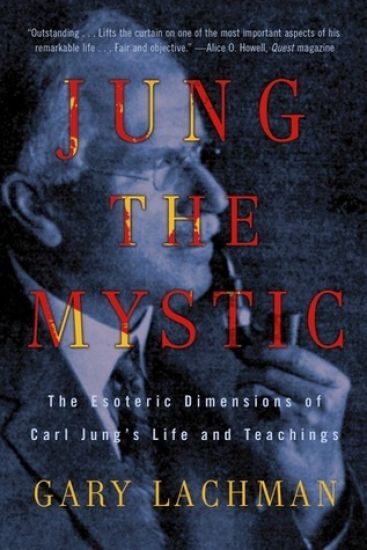
Jung the Mystic

Jung the Mystic

Gary Lachman

Tarcher/Putnam,US
2012
nidottu
Now in paperback, this bold new biography fills a gap in our understanding of the pioneering psychologist by focusing on the occult and mystical aspects of Jung's thought and career."Outstanding . . . lifts the curtain on one of the most important aspects of his remarkable life . . . fair and objective." --Alice O. Howell, Quest magazine"How the Swiss psychologist lived a life rich in the paranormal." --Los Angeles Times"A serious but comprehensible new biography of Jung and his interest in the esoteric." --New Age Retailer"Fascinating . . . Fully engaging from beginning to end." --Dell HoroscopeAlthough he is often called the "founding father of the New Age," Carl Jung, the legendary Swiss psychiatrist best known for his groundbreaking concepts such as the collective unconscious, archetype theory, and synchronicity, often took pains to avoid any explicit association with mysticism or the occult. Yet Jung lived a life rich in paranormal experiences--arguing for the existence of poltergeists in a debate with Sigmund Freud, participating in s ances, incorporating astrology into his therapeutic work, reporting a near-death experience, and analyzing the work of pioneering ESP researcher J. B. Rhine. It is these critical experiences--often fleetingly touched on in other biographies or critical studies, and frequently used to make a case against Jung and his philosophies--that form the core of this significant new biography.
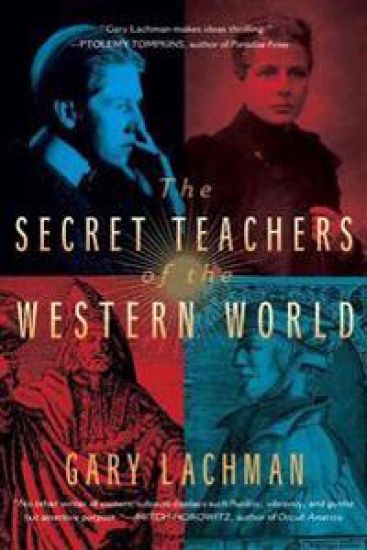
The Secret Teachers of the Western World

The Secret Teachers of the Western World

Gary Lachman

Perigee Books,U.S.
2015
nidottu
This epic study unveils the esoteric masters who have covertly impacted the intellectual development of the West, from Pythagoras and Zoroaster to the little-known modern icons Jean Gebser and Schwaller de Lubicz. Running alongside the mainstream of Western intellectual history there is another current which, in a very real sense, should take pride of place, but which for the last few centuries has occupied a shadowy, inferior position, somewhere underground. This "other" stream forms the subject of Gary Lachman's epic history and analysis, The Secret Teachers of the Western World. In this clarifying, accessible, and fascinating study, the acclaimed historian explores the Western esoteric tradition - a thought movement with ancient roots and modern expressions, which, in a broad sense, regards the cosmos as a living, spiritual, meaningful being and humankind as having a unique obligation and responsibility in it. The historical roots of our "counter tradition," as Lachman explores, have their beginning in Alexandria around the time of Christ. It was then that we find the first written accounts of the ancient tradition, which had earlier been passed on orally. Here, in this remarkable city, filled with teachers, philosophers, and mystics from Egypt, Greece, Asia, and other parts of the world, in a multi-cultural, multi-faith, and pluralistic society, a synthesis took place, a creative blending of different ideas and visions, which gave the hidden tradition the eclectic character it retains today. The history of our esoteric tradition roughly forms three parts: Part One After looking back at the earliest roots of the esoteric tradition in ancient Egypt and Greece, the historical narrative opens in Alexandria in the first centuries of the Christian era. Over the following centuries, it traces our "other" tradition through such agents as the Hermeticists; Kabbalists; Gnostics; Neoplatonists; and early Church fathers, among many others. We examine the reemergence of the lost Hermetic books in the Renaissance and their influence on the emerging modern mind. Part Two begins with the fall of Hermeticism in the late Renaissance and the beginning of "the esoteric counterculture." In 1614, the same year that the Hermetic teachings fell from grace, a strange document appeared in Kassel, Germany announcing the existence of a mysterious fraternity: the Rosicrucians. Part two charts the impact of the Rosicrucians and the esoteric currents that followed, such as the Romance movement and the European occult revival of the late nineteenth century, including Madame Blavatsky and the opening of the western mind to the wisdom of the East, and the fin-de-si cle occultism of the Hermetic Order of the Golden Dawn. Part Three chronicles the rise of "modern esotericism," as seen in the influence of Rudolf Steiner, Gurdjieff, Annie Besant, Krishnamurti, Aleister Crowley, R. A Schwaller de Lubicz, and many others. Central is the life and work of C.G. Jung, perhaps the most important figure in the development of modern spirituality. The book looks at the occult revival of the "mystic sixties" and our own New Age, and how this itself has given birth to a more critical, rigorous investigation of the ancient wisdom. With many detours and dead ends, we now seem to be slowly moving into a watershed. It has become clear that the dominant, left-brain, reductionist view, once so liberating and exciting, has run out of steam, and the promise of that much-sought-after "paradigm change" seems possible. We may be on the brink of a culminating moment of the esoteric intellectual tradition of the West.
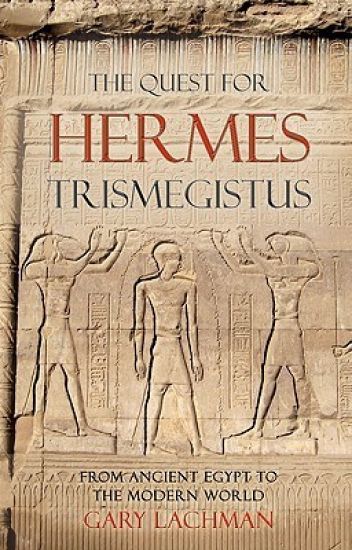
The Quest For Hermes Trismegistus

The Quest For Hermes Trismegistus

Gary Lachman

Floris Books
2011
nidottu
From the sands of Alexandria via the Renaissance palaces of the Medicis, to our own times, this spiritual adventure story traces the profound influence of Hermes Trismegistus -- the 'thrice-great one', as he was often called -- on the western mind. For centuries his name ranked among the most illustrious of the ancient world.Considered by some a contemporary of Moses and a forerunner of Christ, this almost mythical figure arose in fourth century BC Alexandria, from a fusion of the Egyptian god Thoth and the Greek god Hermes. Master of magic, writing, science, and philosophy, Hermes was thought to have walked with gods and be the source of the divine wisdom granted to man at the dawn of time.Gary Lachman has written many books exploring ancient traditions for the modern mind. In The Quest for Hermes Trismegistus, he brings to life the mysterious character of this great spiritual guide, exposing the many theories and stories surrounding him, and revitalizing his teachings for the modern world.Through centuries of wars, conquests and religious persecutions, the fragile pages of the teachings of Hermes Trismegistus have still survived. This is a book for all thinkers and enquirers who want to recover that lost knowledge and awaken a shift in human consciousness.
A Dark Muse

A Dark Muse

Gary Lachman

Thunder's Mouth Press
2004
pokkari
The author of A Secret History of Consciousness and Turn Off Your Mind explores the influence of the occult on history and thought from the Renaissance through the modern age, discussing its impact on Emanuel Swedenborg, Charles Boudelaire, Edgar Allan Poe, and many others. Original.
A Secret History of Consciousness

A Secret History of Consciousness

Gary Lachman

Lindisfarne Books
2003
nidottu
-- What is consciousness like?-- How can consciousness be achieved?Gary Lachman argues that consciousness is not a result of neurons and molecules, but is actually responsible for them. Meaning, he proposes, is not imported from the outer world, but rather creates the world.He shows that consciouness is a living, evolving presence whose development can be traced through different historical periods. Concentrating on the late nineteenth-century onwards, Lachman exposes the 'secret history' of consciousness through thinkers such as P. D. Ouspensky, Rudolf Steiner, and Colin Wilson, as well as more mainstream philosophers like Henri Bergson, William James, Owen Barfield and psychologist Andreas Mavromatis.Two little known but important thinkers play a major role in Lachman?s argument: Jurij Moskvitin, who showed how our consciousness relates to the mechanisms of perception and to the external world; and Jean Gebster, who presented perhaps the most impressive case for the evolution of consciousness.This is a far-reaching book from an exciting contemporary thinker.
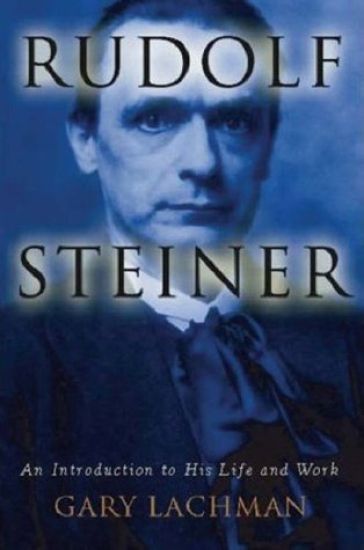
Rudolph Steiner

Rudolph Steiner

Gary Lachman

Jeremy P Tarcher
2007
nidottu
A portrait of the influential twentieth-century mystic and founder of the Waldorf schools traces his Austrian heritage; pioneering work in alternative education, holistic health, and environmental research; and the legacy of his work in Biodynamic farming. Original.
Swedenborg

Swedenborg

Gary Lachman

TarcherPerigee
2012
nidottu
A clear and concise overview of the life and work of the immensely influential but little understood eighteenth-century mystic-scientist Emanuel Swedenborg. "Lachman identifies all the roles Swedenborg inhabited (spiritual thinker, psychic, scientist, inventor, statesman, traveler, and possibly even spy) and does an exceptionally good job of suggesting why this little-known polymath deserves more substantial critical attention." - The Independent on Sunday (UK)It is difficult to imagine modern Western alternative spirituality without the influence of Swedish scientist and mystic Emanuel Swedenborg (1688-1772). Every movement in alternative spirituality - from mental-healing and Spiritualism to New Age mysticism and the twelve-step recovery movement - owes an immeasurable debt to the ideas he exploded upon the Western world. Yet Swedenborg's work can be challenging for modern readers. His influence, everywhere at once, is difficult to get a handle on. Now, however, Gary Lachman provides an accessible, lively, and masterful introduction to the life and ideas of this spiritual giant. Lachman takes us to Swedenborg's roots as brilliant rationalist and scientist who, well into mid-life, began to experience visions of other realms. From this point Swedenborg produced an extraordinary range of writings based on his out-of-body experiences, in which he related encounters with angels, other-planetary beings, and "the world of spirits." As Lachman explores, Swedenborg's work opened up a radically liberal and refreshing ideal of religion. The great mystic saw humanity, and all of nature, as phenomena emerging from the "spiritual world," and man as a vessel for divine influences. This vision inspired Western seekers to see man as a product of spiritual phenomena, and thus a being intimately connected with the cosmos. From this perspective grew bold new ideas about channeling, spiritual healing, mystical experience, mediumship - a litany of concepts that prefigured the revolutions in alternative and therapeutic spirituality.
The Return of Holy Russia

The Return of Holy Russia

Gary Lachman

Inner Traditions Bear and Company
2020
sidottu
A history of how mystical and spiritual influences have shaped Russia’s identity and politics and what it means for the future of world civilization • Examines Russia’s spiritual history, from its pagan origins and Eastern Orthodox mysticism to secret societies, Rasputin, Roerich, Blavatsky, and Dostoyevsky • Explains the visionary writings of the spiritual philosophers of Russia’s Silver Age, which greatly influence Putin today • Explores what Russia’s unique identity and its history of messianic politics and apocalyptic thought mean for its future on the world stage At the turn of the 20th century, a period known as the Silver Age, Russia was undergoing a powerful spiritual and cultural rebirth. It was a time of magic and mysticism that saw a vital resurgence of interest in the occult and a creative intensity not seen in the West since the Renaissance. This was the time of the God-Seekers, pilgrims of the soul and explorers of the spirit who sought the salvation of the world through art and ideas. These sages and their visions of Holy Russia are returning to prominence now through Russian president Vladimir Putin, who, inspired by their ideas, envisions a new “Eurasian” civilization with Russia as its leader. Exploring Russia’s long history of mysticism and apocalyptic thought, Gary Lachman examines Russia’s unique position between East and West and its potential role in the future of the world. Lachman discusses Russia’s original Slavic paganism and its eager adoption of mystical and apocalyptic Eastern Orthodox Christianity. He explores the Silver Age and its “occult revival” with a look at Rasputin’s prophecies, Blavatsky’s Theosophy, Roerich’s “Red Shambhala,” and the philosophies of Berdyaev and Solovyov. He looks at Russian Rosicrucianism, the Illuminati Scare, Russian Freemasonry, and the rise of other secret societies in Russia. He explores the Russian character as that of the “holy fool,” as seen in the great Russian literature of the 19th century, especially Dostoyevsky. He also examines the psychic research performed by the Russian government throughout the 20th century and the influence of Evola and the esoteric right on the spiritual and political milieus in Russia. Through in-depth exploration of the philosophies that inspire Putin’s political regime and a look at Russia’s unique cultural identity, Lachman ponders what they will mean for the future of Russia and the world. What drives the Russian soul to pursue the apocalypse? Will these philosophers lead Russia to dominate the world, or will they lead it into a new cultural epoch centered on spiritual power and mystical wisdom?
Maurice Nicoll

Maurice Nicoll

Gary Lachman

INNER TRADITIONS BEAR AND COMPANY
2024
sidottu
A biography of the influential teacher of the Fourth Way In 1922, Maurice Nicoll (1884-1953) abandoned his successful London psychiatry practice and his direct studies with Carl Jung to move his family just outside of Paris to the Institute for the Harmonious Development of Man, a center recently opened by philosopher, mystic, and spiritual guru G.I. Gurdjieff, the founder of the esoteric system that became known as the “Fourth Way.” Nicoll went on to become one of the most passionate teachers of the Fourth Way, committing the final three decades of his life to teaching “The Work” in his own unorthodox style. In this revealing biography, Gary Lachman draws on recently uncovered diaries to explore the unusual, syncretic approach Nicoll brought to his teaching of the Fourth Way. He shows how Nicoll is unique in having Jung, Gurdjieff, and Ouspensky as teachers and to have known each of these important figures in esoteric history personally, yet—as Lachman reveals—Nicoll was not a blind devotee by any stretch. The author shows how he incorporated elements of Jungian psychology and Emanuel Swedenborg-inspired mysticism into his exploration and teaching of both Gurdjieff’s and Ouspensky’s ideas, as well as into his best-known work, Psychological Commentaries on the Teaching of Gurdjieff and Ouspensky. Lachman reveals the unorthodox side of Nicoll in fuller detail than ever before through excerpts from recently shared diaries, in which Nicoll included detailed accounts of his own solitary “self-sex” erotic experimentations to reach visionary states, along with recordings of his dreams and other personal and mystical reflections. The social details of Nicoll’s life are also examined, including vivid portraits of the occult scene in the early-to-mid-20th century and the communal living situations in which Nicoll sometimes resided. Drawing on his familiarity with hermetic practices and his own experiences with “The Work,” Lachman comprehensively explores the significance of Nicoll and the novelty of his thought, offering a profound, needed, and sympathetic but critical study of this man so instrumental to the development and legacy of the Fourth Way.