Kirjojen hintavertailu. Mukana 12 016 292 kirjaa ja 12 kauppaa.

Kirjahaku

Etsi kirjoja tekijän nimen, kirjan nimen tai ISBN:n perusteella.

9 kirjaa tekijältä Gary Scott Smith

Mark Twain

Mark Twain

Gary Scott Smith

Oxford University Press
2021
sidottu
Mark Twain's literary works have intrigued and inspired readers from the late 1860s to the present. His varied experiences as a journeyman printer, river boat pilot, prospector, journalist, novelist, humorist, businessman, and world traveller, combined with his incredible imagination and astonishing creativity, enabled him to devise some of American literature's most memorable characters and engaging stories. Twain had a complicated relationship with Christianity. He strove to understand, critique, and sometimes promote various theological ideas and insights. His religious perspective was often inconsistent and even contradictory. While many scholars have overlooked Twain's strong interest in religious matters, others disagree sharply about his religious views--with many labelling him a secularist, an agnostic, or an atheist. In this compelling biography, Gary Scott Smith shows that throughout his life Twain was an entertainer, satirist, novelist, and reformer, but also functioned as a preacher, prophet, and social philosopher. Twain tackled universal themes with penetrating insight and wit including the character of God, human nature, sin, providence, corruption, greed, hypocrisy, poverty, racism, and imperialism. Moreover, his life provides a window into the principal trends and developments in American religion from 1865 to 1910.
Faith and the Presidency

Faith and the Presidency

Gary Scott Smith

Oxford University Press Inc
2006
sidottu
In the wake of the 2004 election, pundits were shocked at exit polling that showed that 22% of voters thought "moral values" was the most important issue at stake. People on both sides of the political divide believed this was the key to victory for George W. Bush, who professes a deep and abiding faith in God. While some fervent Bush supporters see him as a man chosen by God for the White House, opponents see his overt commitment to Christianity as a dangerous and unprecedented bridging of the gap between church and state. In fact, Gary Scott Smith shows, none of this is new. Religion has been a major part of the presidency since George Washington's first inaugural address. Despite the mounting interest in the role of religion in American public life, we actually know remarkably little about the faith of our presidents. Was Thomas Jefferson an atheist, as his political opponents charged? What role did Lincoln's religious views play in his handling of slavery and the Civil War? How did born-again Southern Baptist Jimmy Carter lose the support of many evangelicals? Is George W. Bush, as his critics often claim, a captive of the religious right? In this fascinating book, Smith answers these questions and many more. He takes a sweeping look at the role religion has played in presidential politics and policies. Drawing on extensive archival research, Smith paints compelling portraits of the religious lives and presidencies of eleven chief executives for whom religion was particularly important. Faith and the Presidency meticulously examines what each of its subjects believed and how those beliefs shaped their presidencies and, in turn, the course of our history.
Faith and the Presidency

Faith and the Presidency

Gary Scott Smith

Oxford University Press Inc
2009
nidottu
In the wake of the 2004 election, pundits were shocked at exit polling that showed that 22% of voters thought 'moral values' was the most important issue at stake. People on both sides of the political divide believed this was the key to victory for George W. Bush, who professes a deep and abiding faith in God. While some fervent Bush supporters see him as a man chosen by God for the White House, opponents see his overt commitment to Christianity as a dangerous and unprecedented bridging of the gap between church and state. In fact, Gary Scott Smith shows, none of this is new. Religion has been a major part of the presidency since George Washington's first inaugural address. Despite the mounting interest in the role of religion in American public life, we actually know remarkably little about the faith of our presidents. Was Thomas Jefferson an atheist, as his political opponents charged? What role did Lincoln's religious views play in his handling of slavery and the Civil War? How did born-again Southern Baptist Jimmy Carter lose the support of many evangelicals? Was George W. Bush, as his critics often claimed, a captive of the religious right? In this fascinating book, Smith answers these questions and many more. He takes a sweeping look at the role religion has played in presidential politics and policies. Drawing on extensive archival research, Smith paints compelling portraits of the religious lives and presidencies of eleven chief executives for whom religion was particularly important. Faith and the Presidency meticulously examines what each of its subjects believed and how those beliefs shaped their presidencies and, in turn, the course of our history.
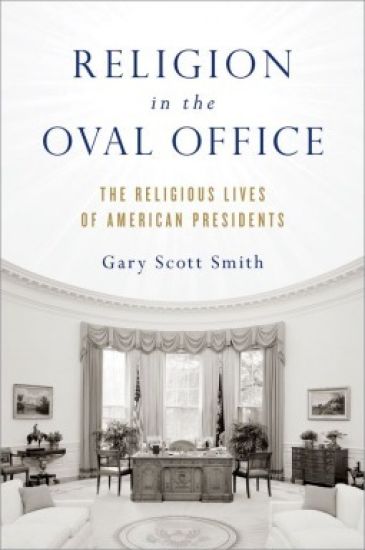
Religion in the Oval Office

Religion in the Oval Office

Gary Scott Smith

Oxford University Press Inc
2015
sidottu
In Faith and the Presidency, Gary Scott Smith offered comprehensive, even-handed examinations of the role of religion in the lives, politics, and policies of eleven US presidents. In this book he takes on eleven more chief executives, drawing on a wide range of sources, and paying close attention to historical context and America's shifting social and moral values. Smith scrutinizes the convictions, use of religious rhetoric, and character of these eleven presidents by examining their lives, beliefs, policies, elections, and relationships of some of the nation's more colorful, charismatic, and complex leaders: John Adams, James Madison, John Quincy Adams, Andrew Jackson, William McKinley, Herbert Hoover, Harry Truman, Richard Nixon, George H. W. Bush, Bill Clinton, and Barack Obama. Religious commitments, Smith shows, strongly affected policy, from John Quincy Adams' treatment of native Americans and diplomacy, to William McKinley's decision to declare war against Spain in 1898 and take control of the Philippines, to Herbert Hoover's quest to reform prisons and defend civil liberties, to Harry Truman's approach to the Cold War and decision to recognize Israel, to Bill Clinton's promotion of religious liberty and reform of welfare, to Barack Obama's policies on poverty and gay rights. This volume will offer an invaluable resource for anyone interested in the presidency and the role of religion in politics.
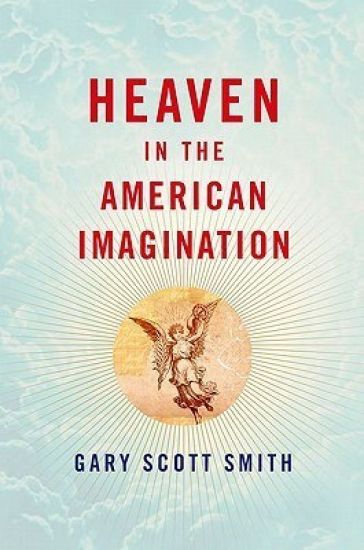
Heaven in the American Imagination

Heaven in the American Imagination

Gary Scott Smith

Oxford University Press Inc
2011
sidottu
Does heaven exist? If so, what is it like? And how does one get in? Throughout history, painters, poets, philosophers, pastors, and many ordinary people have pondered these questions. Perhaps no other topic captures the popular imagination quite like heaven. In this book, Gary Scott Smith looks at heaven through an American lens, tracing the history of heaven in the American imagination from the Puritans to the present. Concepts of heaven, he argues, are ever-changing, constantly adapting to the spirit of the age. In the colonial era, heaven focused primarily on the glory of God. For the Victorians, heaven was a warm comfortable home where people would live forever with their family and friends. Today, heaven has less Christian identity; many see it as a celestial entertainment center or a paradise where everyone can reach their full potential. Drawing on an astounding array of sources, including works of art, music, sociology, psychology, folklore, liturgy, sermons, poetry, fiction, and devotional books, Smith paints a sweeping, provocative portrait of what Americans--from Jonathan Edwards to Mitch Albom--have thought about heaven.
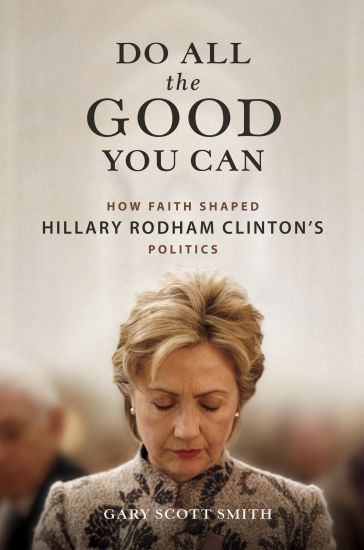
Do All the Good You Can

Do All the Good You Can

Gary Scott Smith

UNIVERSITY OF ILLINOIS PRESS
2023
sidottu
Methodism in the public and private lives of the politician After more than forty contentious years in the public eye, Hillary Rodham Clinton is one of the best-known political figures in the nation. Yet the strong religious faith at the heart of her politics and personal life often remains confounding, if not mysterious, to longtime observers. Even many of her admirers would be surprised to hear Clinton state that her Methodist outlook has “been a huge part of who I am and how I have seen the world, and what I believe in, and what I have tried to do in my life.” Gary Scott Smith’s biography of Clinton’s journey in faith begins with her Methodist upbringing in Park Ridge, Illinois, where she faithfully attended worship services, Sunday school, and youth group meetings. Like many mainline Protestants, Clinton’s spiritual commitment developed gradually throughout childhood, while her combination of missionary zeal and impressive personal talents has informed her career from the time of her pro bono work at Yale on behalf of children to the present. Her Methodist faith has been very important to many of Clinton’s high-profile endeavors and in helping her cope with the prominent travails brought on by two presidential campaigns, never-ending conservative rancor, and her husband’s infidelity. Smith’s account examines Clinton’s faith in the context of work ranging from her 1990s pursuit of healthcare reform to a “Hillary doctrine” of foreign policy focused on her longtime goal of providing basic human rights for children and women--a project she saw as essential to United States security. The result is an enlightening reconsideration of an extraordinary political figure who has defied private doubts and public controversy to live by John Wesley’s dictum: “Do all the good you can, by all the means you can, in all the ways you can, in all the places you can, at all the times you can, to all the people you can, as long as ever you can.”
Duty and Destiny

Duty and Destiny

Gary Scott Smith

William B Eerdmans Publishing Co
2021
sidottu
A nuanced portrait of a great historical figure considered everything from a "God-haunted man" to a "stalwart nonbeliever" What did faith mean to Winston Churchill? Churchill was far from transparent about his religious beliefs and never regularly attended church services as an adult, even considering himself "not a pillar of the church but a buttress," in the sense that he supported it "from the outside." But Gary Scott Smith assembles pieces of Churchill's life and words to convey the profound sense of duty and destiny, partly inspired by his religious convictions, that undergirded his outlook. Reflecting on becoming prime minister in 1940, he wrote, "It felt as if I were walking with destiny, and that all my past life had been but a preparation for this hour and for this trial." In a similarly grand fashion, he described opposing the Nazis--and later the Soviets--as a struggle between light and darkness, driven by the duty to preserve "humane, enlightened, Christian society." Though Churchill harbored intellectual doubts about Christianity throughout his life, he nevertheless valued it greatly and drew on its resources, especially in the crucible of war. In Duty and Destiny, Smith unpacks Churchill's paradoxical religious views and carefully analyzes the complexities of his legacy. This thorough examination of Churchill's religious life provides a new narrative structure to make sense of one of the most important figures of the twentieth century.
A History of Christianity in Pittsburgh

A History of Christianity in Pittsburgh

Gary Scott Smith

History Press Library Editions
2018
sidottu
Christians have played a vital role in the history of Pittsburgh as community leaders, activists, athletes and more. Their ministries have inspired many worshipers and improved the community. Leading Pirates, Steelers and Penguins who have powerfully promoted Christianity here include Andrew McCutchen, Clint Hurdle, Troy Polamalu, Mike Tomlin and Dan Bylsma. A diversity of parachurch organizations and congregations, from Baptist to Presbyterian and Catholic to nondenominational, have shaped and advanced the faith. Gary Scott Smith tells the exciting story of their quest, as Episcopal rector Samuel Shoemaker put it, "to make Pittsburgh as famous for God as for steel."