Kirjojen hintavertailu. Mukana 11 605 943 kirjaa ja 12 kauppaa.

Kirjahaku

Etsi kirjoja tekijän nimen, kirjan nimen tai ISBN:n perusteella.

30 kirjaa tekijältä Gary Snyder

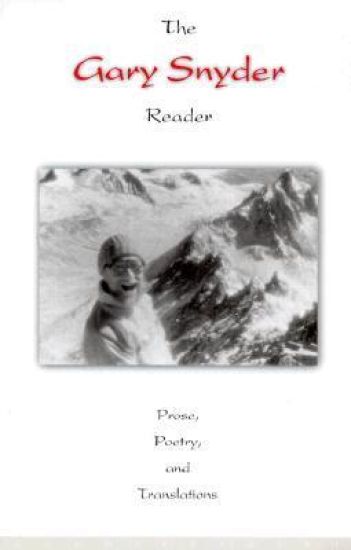
The Gary Snyder Reader

The Gary Snyder Reader

Gary Snyder

Counterpoint
2000
nidottu
Gary Snyder has been a major cultural force in America for five decades-prize-winning poet, environmental activist, Zen Buddhist, and reluctant counterculture guru. Having expanded far beyond the Beat poems that first brought his work into the public eye, Snyder has produced a wide-ranging body of work that encompasses his fluency in Eastern literature and culture, his commitment to the environment, and his concepts of humanity's place in the cosmos. The Gary Snyder Reader showcases the panoramic range of his literary vision in a single-volume survey that will appeal to students and general readers alike.
Gary Snyder: Essential Prose (Loa #391)

Gary Snyder: Essential Prose (Loa #391)

Gary Snyder

Library of America
2025
sidottu
In one volume, the indispensable prose of our "poet laureate of deep ecology" Here is Gary Snyder's own selection of his pathbreaking environmental essays, Buddhist journals, poetic notebooks, and more, including previously uncollected material Gathered for the first time in a single volume and completing the definitive Library of America edition of his works, here is the essential prose of our "poet laureate of deep ecology" philosophical essays, travel journals, poetic notebooks, reflections on Buddhism, environmental polemics, memoirs, speeches, interviews, letters, and other writings spanning the entire arc of Snyder's lauded, seventy-year career. All of Snyder's published prose collections are represented, omitting only items he feels are repetitious or merely occasional, followed by a selection of from his private journals. The volume includes: Earth House Hold describing his life as a fire lookout in Washington State in the early 1950s, and his experiences as an initiate in a Kyoto monastery"Poetry and the Primitive," a kind of "ecological survival technique""Buddhism and the Coming Revolution," which imagines the "nation-shaking implications" of spiritual discoveryHe Who Hunted Birds in His Father's Village, charting Snyder's deep engagements with Native American mythologyPassage Through India about a six-month pilgrimage with his wife and the poet Allen Ginsberg, culminating in a meeting with the Dalai Lama. The Practice of the Wild a classic of American environmental writing in the tradition of Thoreau, Aldo Leopold, and Annie DillardThe essays in A Place in Space and Back on the Fire exploring bioregionalism, forestry practices, sustainability, and the ecosystems of the Sierra Nevada, where Snyder has lived since 1970The Great Clod a mediation on the intersections of nature and culture in Asian history and literature. It's all here, the profound reflections and inspiring meditations of our greatest living guide to the nature of meaning and the meaning of nature.
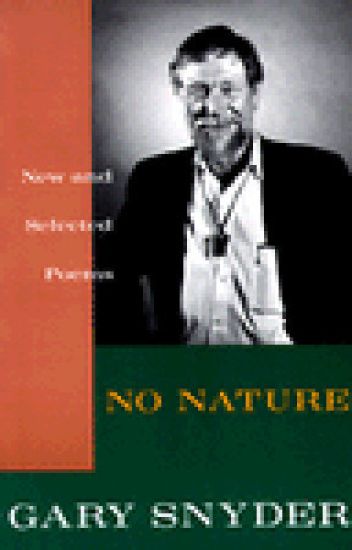
No Nature

No Nature

Gary Snyder

Pantheon Books Inc
1993
pokkari
"The greatest of living nature poets. . . . It helps us to go on, having Gary Snyder in our midst."--Los Angeles Times. Snyder is the author of many volumes of poetry and prose, including The Practice of the Wild and the Pulitzer Prize-winning Turtle Island. Reading tour.
The Back Country

The Back Country

Gary Snyder

New Directions Publishing Corporation
1971
nidottu
This collection is made up of four sections: "Far West"—poems of the Western mountain country where, as a young man. Gary Snyder worked as a logger and forest ranger; "Far East"—poems written between 1956 and 1964 in Japan where he studied Zen at the monastery in Kyoto; "Kali"—poems inspired by a visit to India and his reading of Indian religious texts, particularly those of Shivaism and Tibetan Buddhism; and "Back"—poems done on his return to this country in 1964 which look again at our West with the eyes of India and Japan. The book concludes with a group of translations of the Japanese poet Miyazawa Kenji (1896-1933), with whose work Snyder feels a close affinity. The title, The Back Country, has three major associations; wilderness. the "backward" countries, and the “back country" of the mind with its levels of being in the unconscious.
Earth House Hold

Earth House Hold

Gary Snyder

New Directions Publishing Corporation
1969
nidottu
"As a poet," Snyder tells us, "I hold the most archaic values on earth. They go back to the late Paleolithic; the fertility of the soil, the magic of animals, the power-vision in solitude, the terrifying intuition and rebirth; the love and ecstasy of the dance, the common work of the tribe." He develops, as replacement for shattered social structures. a concept of tribal tradition which could lead to "growth and enlightenment in self-disciplined freedom. Whatever it is or ever was in any other culture can be reconstructed from the unconscious through meditation...the coming revolution will close the circle and link us in many ways with the most creative aspects of our archaic past."
Regarding Wave: Poetry

Regarding Wave: Poetry

Gary Snyder

New Directions Publishing Corporation
1970
nidottu
"Wild nature as the ultimate ground of human affairs"––the beautiful, precarious balance among forces and species forms a unifying theme for the new poems in this collection. The title, Regarding Wave, reflects "a half-buried series of word origins dating back through the Indo-European language: intersections of energy, woman, song and 'Gone Beyond Wisdom.'" Central to the work is a cycle of songs for Snyder's wife, Masa, and their first son, Kai. Probing even further than Snyder's previous collection of poems, The Back Country, this new volume freshly explores "the most archaic values on earth… the fertility of the soil, the magic of animals, the power-vision in solitude, the terrifying initiation and rebirth, the love and ecstasy of the dance, the common work of the tribe…”
Turtle Island

Turtle Island

Gary Snyder

NEW DIRECTIONS PUBLISHING CORPORATION
1974
sidottu
Describing the title of his collection of poetry and occasional prose pieces, Gary Snyder writes in his introductory note that Turtle Island is "the old / new name for the continent, based on many creation myths of the people who have been here for millennia, and reapplied by some of them to 'North America' in recent years." The nearly five dozen poems in the book range from the lucid, lyrical, almost mystical to the mytho-biotic, while a few are frankly political. All, however, share a common vision: a rediscovery of this land and the ways by which we might become natives of the place, ceasing to think and act (after all these centuries) as newcomers and invaders.Of particular interest is the full text of the ever more relevant "Four Changes," Snyder's seminal manifesto for environmental awareness.
Myths & Texts

Myths & Texts

Gary Snyder

New Directions Publishing Corporation
1978
nidottu
The three sequences in the book—"Logging," "Hunting," "Burning"—show the remarkable cohesiveness in Snyder's writings over the years, for we find the poet absorbed, then as now, with Buddhist and Amerindian lore and other interconnections East and West, but above all with the premedical devotion to the land and work.
Look Out

Look Out

Gary Snyder

New Directions Publishing Corporation
2002
nidottu
Beginning with the publication of The Back Country in 1968, Gary Snyder's long-cherished association with New Directions continued through the publication of his poetry books: the Pulitzer Prize-winning and bestselling Turtle Island (1974), and Myths & Texts (1978), as well as his prose works, Earth House Hold (1969) and The Real Work (1980), all essential titles on the New Directions list. Snyder's No Nature: New and Selected Poems, a finalist for the National Book Award, was published in 1993 by Pantheon, and his long-anticipated epic poem Mountains and Rivers without End was published by Counterpoint in 1997. Snyder has had a seminal place among American landscape writers. "As a poet," he once wrote, "I hold the most archaic values on earth." He has long been associated with Beat writers such as Jack Kerouac, Allen Ginsberg, and other poets such as Kenneth Rexroth, Robert Creeley, and Robert Duncan. His poetics are founded in Poundian modernism, Chinese and Japanese poetry, and ancient oral native traditions. Look Out is a collection personally compiled by Gary Snyder for New Directions, containing poems and essays from all his New Directions books. It offers first-time readers a chance to see the evolution of his thought and poetry, spanning two decades, and old-time fans the opportunity to behold all the favorites, in a new Bibelot edition. Also included here is Snyder's Introduction, as well as a new poem written about the late New Directions founder James Laughlin.
Mountains And Rivers Without End

Mountains And Rivers Without End

Gary Snyder

Counterpoint
2008
nidottu
In simple, striking verse, legendary poet Gary Snyder weaves an epic discourse on the topics of geology, prehistory, and mythology. First published in 1996, this landmark work encompasses Asian artistic traditions, as well as Native American storytelling and Zen Buddhist philosophy, and celebrates the disparate elements of the Earth  sky, rock, water  while exploring the human connection to nature with stunning wisdom. Winner of the Bollingen Poetry Prize, the Robert Kirsch Lifetime Achievement Award, and the Orion Society's John Hay Award, among others, Gary Snyder finds his quiet brilliance celebrated in this new edition of one of his most treasured works.
A Place in Space

A Place in Space

Gary Snyder

Counterpoint
2008
pokkari
In this classic collection of 29 pieces that span half a century, Gary Snyder explores humans' complex, ever-evolving attitudes toward the environment. He argues that nature is not separate from humanity, but intrinsic to it, and that since societies are natural constructs, it's imperative to go beyond racial, ethnic, and religious identities to find a shared concern for acts that benefit humans and nonhumans alike. Included in the collection is his 1971 environmental manifesto  Four Changes," which, as he writes in a postscript, is unfortunately truer than ever. In this new edition, Snyder sends out a call-to-action that challenges all beings to take moral responsibility, a call that resounds with readers discovering the book for the first time or those returning to an old favorite.
Riprap And Cold Mountain Poems

Riprap And Cold Mountain Poems

Gary Snyder

Counterpoint
2010
nidottu
By any measure, Gary Snyder is one of the greatest poets in America in the last century. From his first book of poems to his latest collection of essays, his work and his example, standing between Tu Fu and Thoreau, have been influential all over the world. Riprap, his first book of poems, was published in Japan in 1959 by Origin Press, and it is the fiftieth anniversary of that groundbreaking book we celebrate with this edition. A small press reprint of that book included Snyder's translations of Han Shan's Cold Mountain Poems, perhaps the finest translations of that remarkable poet ever made into English. Reintroducing one of the twentieth century's foremost collections of poetry, this edition will please those already familiar with this work and excite a new generation of readers with its profound simplicity and spare elegance.
Danger On Peaks

Danger On Peaks

Gary Snyder

Counterpoint
2004
sidottu
In his first collection of new poems since Axe Handles (1983), Gary Snyder includes fifty-five new poems and prose poems. As longtime readers will recognize, this collection is unique in Snyder's oeuvre, finding the poet experimenting with a wide variety of styles, including an extended foray in the Japanese form haibun, "making it an American form," as the poet remarks. Two sections of poems exploring "intimate immediate life, gossip and insight" are some of the poet's most personal work.Danger on Peaks begins with the poet's first climb of Mount St. Helens on August 13, 1945, and his learning on the morning after his descent about the atomic bombs dropped on Japan. Again the poet visits Mount St. Helens in 2000 to view the blast site of the 1980 eruption. Then follow poems for the Buddhas of Bamiyan Valley and the World Trade Towers. More than a mere gathering of unrelated poems, Danger on Peaks is a constructed work, where every part contributes to the whole.
Danger On Peaks

Danger On Peaks

Gary Snyder

Counterpoint
2005
nidottu
The first collection of poems by the acclaimed poet in two decades experiments with the Japanese poetic form known as "haibun" while exploring the immediacies of intimate contacts and gossip, with poems about an ascent up Mount St. Helens and the destruction of Hiroshima. Reprint.
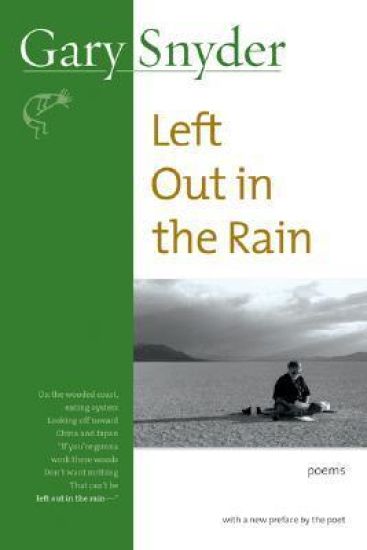
Left Out In The Rain

Left Out In The Rain

Gary Snyder

Counterpoint
2005
nidottu
Inspired by the ancient Chinese proverb,  There's nothing you can own that can't be left out in the rain," this collection charts the journeys of the poet from 1947 to 1985. This book is unique among Gary Snyder's numerable works, and the poems contained here are as broad in style as the compilation is in timeframe. With a new introduction by the author, Left Out in the Rain captures the evolution of the poet and the man.Readers will travel with Snyder from the American West to the Far East. From Berkeley to Kyoto, his imagery provides insight into the natural world as well as the human experience. With the span of a few words, Snyder can reveal a universe and then two pages later deftly handle a villanelle. Sensual, sardonic, meditative, epigrammatic, formalist whatever the tone or structure, these poems all bear the indelible stamp of a master. Always evocative, they remind us why Snyder is one of our most heralded and beloved contemporary poets.
Back On The Fire

Back On The Fire

Gary Snyder

Counterpoint
2008
nidottu
This collection of essays by Gary Snyder, now in paperback, blazes with insight. In his most autobiographical writing to date, Snyder employs fire as a metaphor for the crucial moment when deeply held viewpoints yield to new experiences, and our spirits and minds broaden and mature. Snyder here writes and riffs on a wide range of topics, from our sense of place and a need to review forestry practices, to the writing life and Eastern thought. Surveying the current wisdom that fires are in some cases necessary for ecosystems of the wild, he contemplates the evolution of his view on the practice, while exploring its larger repercussions on our perceptions of nature and the great landscapes of the West. These pieces include recollections of his boyhood, his involvement with the literary community of the Bay Area, his travels to Japan, as well as his thoughts on American culture today. All maintain Snyder's reputation as an intellect to be reckoned with, while often revealing him at his most emotionally vulnerable. The final impression is holistic: We perceive not a collection of essays, but a cohesive presentation of Snyder's life and work expressed in his characteristically straightforward prose.
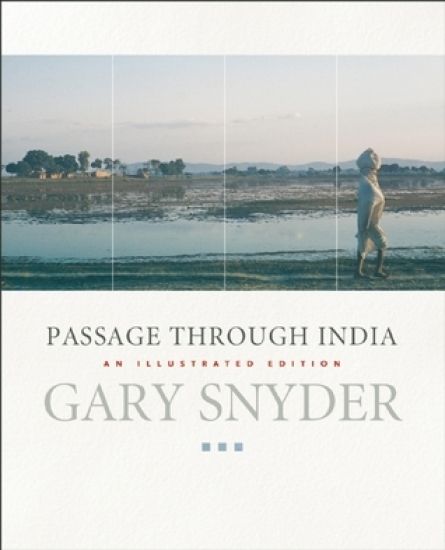
Passage Through India

Passage Through India

Gary Snyder

Counterpoint
2009
nidottu
In 1962, after studying Buddhism in Japan, Gary Snyder, with his former wife, the poet Joanne Kyger, joined Allen Ginsberg and his companion Peter Orlovsky for a long trip to India  to see the hearth-land of the Buddha's teachings."Snyder kept extensive journals of his travels and, in this particular case, also wrote the whole account in one long letter to his sister. Passage Through India brings both together in celebration of and reverence for India and its teachings. As Snyder writes in his original preface,  I honor India for many things: those neolithic cattle breeders who sang daily songs of love to God and Cow, as a family, and whose singing is echoed even today . . . The finest love poetry and love sculpture on earth . . . But most, the spectacle of a high civilization that accomplished art, literature, and ceremony without imposing a narrow version of itself on every tribe and village." Complete with over a hundred photos from Snyder's personal collection, Passage Through India is an opportunity to join one of our most heralded and beloved poets on a great spiritual journey under  an eternal sky of stars, and on a beginningless earth."