Kirjojen hintavertailu. Mukana 12 016 292 kirjaa ja 12 kauppaa.

Kirjahaku

Etsi kirjoja tekijän nimen, kirjan nimen tai ISBN:n perusteella.

14 kirjaa tekijältä Gary W. Gallagher

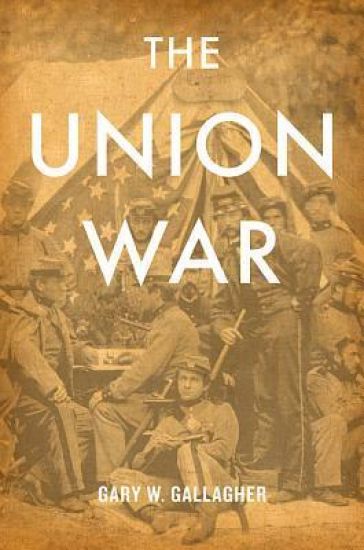
The Union War

The Union War

Gary W. Gallagher

Harvard University Press
2012
nidottu
Even one hundred and fifty years later, we are haunted by the Civil War—by its division, its bloodshed, and perhaps, above all, by its origins. Today, many believe that the war was fought over slavery. This answer satisfies our contemporary sense of justice, but as Gary Gallagher shows in this brilliant revisionist history, it is an anachronistic judgment.In a searing analysis of the Civil War North as revealed in contemporary letters, diaries, and documents, Gallagher demonstrates that what motivated the North to go to war and persist in an increasingly bloody effort was primarily preservation of the Union. Devotion to the Union bonded nineteenth-century Americans in the North and West against a slaveholding aristocracy in the South and a Europe that seemed destined for oligarchy. Northerners believed they were fighting to save the republic, and with it the world’s best hope for democracy.Once we understand the centrality of union, we can in turn appreciate the force that made northern victory possible: the citizen-soldier. Gallagher reveals how the massive volunteer army of the North fought to confirm American exceptionalism by salvaging the Union. Contemporary concerns have distorted the reality of nineteenth-century Americans, who embraced emancipation primarily to punish secessionists and remove slavery as a future threat to union—goals that emerged in the process of war. As Gallagher recovers why and how the Civil War was fought, we gain a more honest understanding of why and how it was won.
The Confederate War

The Confederate War

Gary W. Gallagher

Harvard University Press
1999
nidottu
If one is to believe contemporary historians, the South never had a chance. Many allege that the Confederacy lost the Civil War because of internal division or civilian disaffection; others point to flawed military strategy or ambivalence over slavery. But, argues distinguished historian Gary Gallagher, we should not ask why the Confederacy collapsed so soon but rather how it lasted so long. In The Confederate War he reexamines the Confederate experience through the actions and words of the people who lived it to show how the home front responded to the war, endured great hardships, and assembled armies that fought with tremendous spirit and determination. Gallagher’s portrait highlights a powerful sense of Confederate patriotism and unity in the face of a determined adversary. Drawing on letters, diaries, and newspapers of the day, he shows that Southerners held not only an unflagging belief in their way of life, which sustained them to the bitter end, but also a widespread expectation of victory and a strong popular will closely attuned to military events. In fact, the army’s “offensive-defensive” strategy came remarkably close to triumph, claims Gallagher—in contrast to the many historians who believe that a more purely defensive strategy or a guerrilla resistance could have won the war for the South. To understand why the South lost, Gallagher says we need look no further than the war itself: after a long struggle that brought enormous loss of life and property, Southerners finally realized that they had been beaten on the battlefield. Gallagher’s interpretation of the Confederates and their cause boldly challenges current historical thinking and invites readers to reconsider their own conceptions of the American Civil War.
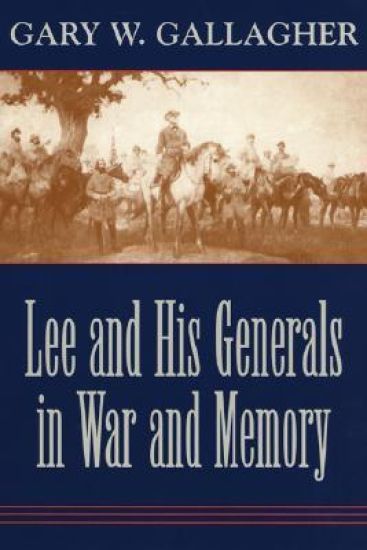
Lee and His Generals in War and Memory

Lee and His Generals in War and Memory

Gary W. Gallagher

Louisiana State University Press
2004
nidottu
In this collection, Civil War historian Gary W. Gallagher examines Robert E. Lee, his principal subordinates, the treatment they have received in the literature on Confederate military history, and the continuing influence of Lost Cause arguments in the late-twentieth-century United States. Historical images of Lee and his lieutenants were shaped to a remarkable degree by the reminiscences and other writings of ex-Confederates who formulated what became known as the Lost Cause interpretation of the conflict. Lost Cause advocates usually portrayed Lee as a perfect Christian warrior and Stonewall Jackson as his peerless ""right arm"" and often explained Lee's failings as the result of inept performances by other generals. Many historians throughout the twentieth century have approached Lee and other Confederate military figures within an analytical framework heavily influenced by the Lost Cause school.The twelve pieces in Lee and His Generals in War and Memory explore the effect of Lost Cause arguments on popular perceptions of Lee and his lieutenants. Part I offers four essays on Lee, followed in Part II by five essays that scrutinize several of Lee's most famous subordinates, including Stonewall Jackson, John Bankhead Magruder, James Longstreet, A.P. Hill, Richard S. Ewell, and Jubal Early. Taken together, these pieces not only consider how Lost Cause writings enhanced or diminished Confederate military reputations but also illuminate the various ways post--Civil War writers have interpreted the actions and impacts of these commanders.Part III contains two articles that shift the focus to the writings of Jubal Early and LaSalle Corbell Pickett, both of whom succeeded in advancing the notion of gallant Lost Cause warriors. The final two essays, which contemplate the current debate over the Civil War's meaning for modern Americans, focus on Ken Burns's documentary The Civil War and on the issue of battlefield preservation. Gallagher adeptly highlights the chasm that often separates academic and popular perceptions of the Civil War and discusses some of the ways in which the Lost Cause continues to resonate.Lee and His Generals in War and Memory will certainly attract those interested in Lee and his campaigns, the Army of Northern Virginia, the establishment of popular images of the Confederate military, and the manner in which historical memory is created and perpetuated.
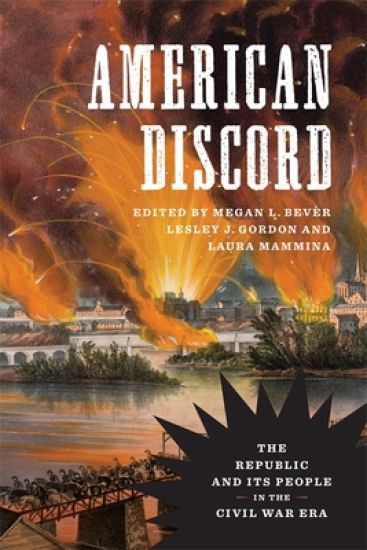
American Discord

American Discord

Gary W. Gallagher

Louisiana State University Press
2020
sidottu
A panoramic collection of essays written by both established and emerging scholars, American Discord examines critical aspects of the Civil War era, including rhetoric and nationalism, politics and violence, gender, race, and religion. Beginning with an overview of the political culture of the 1860s, the collection reveals that most Americans entered the decade opposed to political compromise. Essays from Megan L. Bever, Glenn David Brasher, Lawrence A. Kreiser Jr., and Christian McWhirter discuss the rancorous political climate of the day and the sense of racial superiority woven into the political fabric of the era.Shifting focus to the actual war, Rachel K. Deale, Lindsay Rae Privette, Adam H. Petty, and A. Wilson Greene contribute essays on internal conflict, lack of compromise, and commitment to white supremacy. Here, contributors adopt a broad understanding of ""battle,"" considering environmental effects and the impact of the war after the battles were over. Essays by Laura Mammina and Charity Rakestraw and Kristopher A. Teters reveal that while the war blurred the boundaries, it ultimately prompted Americans to grasp for the familiar established hierarchies of gender and race.Examinations of chaos and internal division suggest that the political culture of Reconstruction was every bit as contentious as the war itself. Former Confederates decried the barbarity of their Yankee conquerors, while Republicans portrayed Democrats as backward rubes in need of civilizing. Essays by Kevin L. Hughes, Daniel J. Burge, T. Robert Hart, John F. Marszalek, and T. Michael Parrish highlight Americans' continued reliance on hyperbolic rhetoric. American Discord embraces a multifaceted view of the Civil War and its aftermath, attempting to capture the complicated human experiences of the men and women caught in the conflict. These essays acknowledge that ordinary people and their experiences matter, and the dynamics among family members, friends, and enemies have far-reaching consequences.
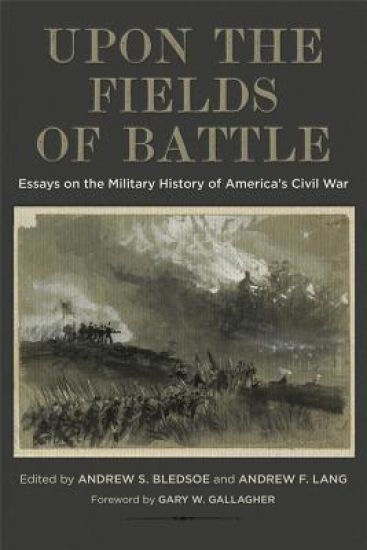
Upon the Fields of Battle

Upon the Fields of Battle

Gary W. Gallagher

Louisiana State University Press
2018
sidottu
New developments in Civil War scholarship owe much to removal of artificial divides by historians seeking to explore the connections between the home front and the battlefield. Indeed, scholars taking a holistic view of the war have contributed to our understanding of the social complexities of emancipation, of freedom in a white republic, and the multifaceted experiences of both civilians and soldiers. Given these accomplishments, research focusing on military history prompts prominent and recurring debates among Civil War historians. Critics of traditional military history see it as old-fashioned, too technical, or irrelevant to the most important aspects of the war. Proponents of this area of study view these criticisms as a misreading of its nature and potential to illuminate the war. The collected essays in Upon the Fields of Battle bridge this intellectual divide, demonstrating how historians enrich Civil War studies by approaching the period through the specific but nonetheless expansive lens of military history.Drawing together contributions from Keith Altavilla, Robert L. Glaze, John J. Hennessy, Earl J. Hess, Brian Matthew Jordan, Kevin M. Levin, Brian D. McKnight, Jennifer M. Murray, and Kenneth W. Noe, editors Andrew S. Bledsoe and Andrew F. Lang present an innovative volume that deeply integrates and analyses the ideas and practices of the military during the Civil War. Furthermore, by grounding this collection in both traditional and pioneering methodologies, the authors assess the impact of this field within the social, political, and cultural contexts of Civil War studies.Upon the Fields of Battle reconceives traditional approaches to subjects like battles and battlefields, practice and policy, command and culture, the environment, the home front, civilians and combatants, atrocity and memory, revealing a more balanced understanding of the military aspects of the Civil War's evolving history.
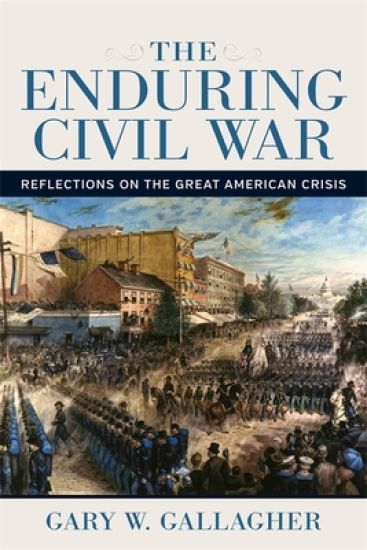
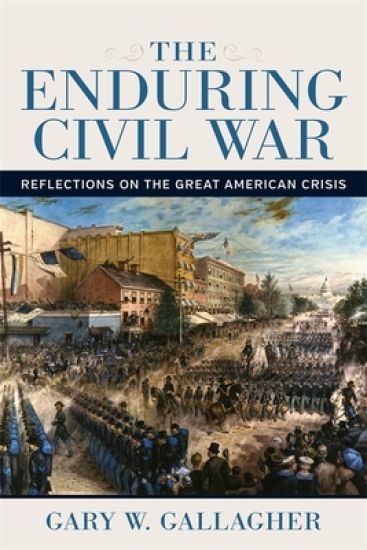
The Enduring Civil War

The Enduring Civil War

Gary W. Gallagher

Louisiana State University Press
2020
sidottu
In the seventy-three succinct essays gathered in The Enduring Civil War, celebrated historian Gary W. Gallagher highlights the complexity and richness of the war, from its origins to its memory, as topics for study, contemplation, and dispute. He places contemporary understanding of the Civil War, both academic and general, in conversation with testimony from those in the Union and the Confederacy who experienced and described it, investigating how mid-nineteenth-century perceptions align with, or deviate from, current ideas regarding the origins, conduct, and aftermath of the war. The tension between history and memory forms a theme throughout the essays, underscoring how later perceptions about the war often took precedence over historical reality in the minds of many Americans. The array of topics Gallagher addresses is striking. He examines notable books and authors, both Union and Confederate, military and civilian, famous and lesser known. He discusses historians who, though their names have receded with time, produced works that remain pertinent in terms of analysis or information. He comments on conventional interpretations of events and personalities, challenging, among other things, commonly held notions about Gettysburg and Vicksburg as decisive turning points, Ulysses S. Grant as a general who profligately wasted Union manpower, the Gettysburg Address as a watershed that turned the war from a fight for Union into one for Union and emancipation, and Robert E. Lee as an old-fashioned general ill-suited to waging a modern mid-nineteenth-century war. Gallagher interrogates recent scholarly trends on the evolving nature of Civil War studies, addressing crucial questions about chronology, history, memory, and the new revisionist literature. The format of this provocative and timely collection lends itself to sampling, and readers might start in any of the subject groupings and go where their interests take them.
The Enduring Civil War

The Enduring Civil War

Gary W. Gallagher

LOUISIANA STATE UNIVERSITY PRESS
2022
pokkari
In the seventy-three succinct essays gathered in The Enduring Civil War, celebrated historian Gary W. Gallagher highlights the complexity and richness of the war, from its origins to its memory, as topics for study, contemplation, and dispute. He places contemporary understanding of the Civil War, both academic and general, in conversation with testimony from those in the Union and the Confederacy who experienced and described it, investigating how mid-nineteenth-century perceptions align with, or deviate from, current ideas regarding the origins, conduct, and aftermath of the war. The tension between history and memory forms a theme throughout the essays, underscoring how later perceptions about the war often took precedence over historical reality in the minds of many Americans. The array of topics Gallagher addresses is striking. He examines notable books and authors, both Union and Confederate, military and civilian, famous and lesser known. He discusses historians who, though their names have receded with time, produced works that remain pertinent in terms of analysis or information. He comments on conventional interpretations of events and personalities, challenging, among other things, commonly held notions about Gettysburg and Vicksburg as decisive turning points, Ulysses S. Grant as a general who profligately wasted Union manpower, the Gettysburg Address as a watershed that turned the war from a fight for Union into one for Union and emancipation, and Robert E. Lee as an old-fashioned general ill-suited to waging a modern mid-nineteenth-century war. Gallagher interrogates recent scholarly trends on the evolving nature of Civil War studies, addressing crucial questions about chronology, history, memory, and the new revisionist literature. The format of this provocative and timely collection lends itself to sampling, and readers might start in any of the subject groupings and go where their interests take them.
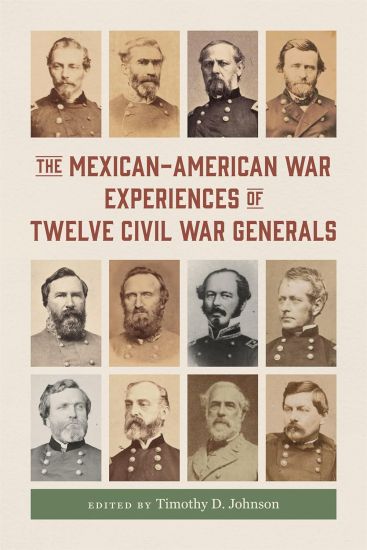
The Mexican-American War Experiences of Twelve Civil War Generals

The Mexican-American War Experiences of Twelve Civil War Generals

Gary W. Gallagher

LOUISIANA STATE UNIVERSITY PRESS
2024
sidottu
Long overshadowed by the American Civil War, the Mexican-American War (1846-1848) has received significantly less attention from historians partly because of its questionable origin and controversial outcome. Rather than treat the conflict with a form of historical amnesia, the contributors to this volume argue that the Mexican-American War was a formative experience for the more than three hundred future Civil War generals who served in it as lower-grade officers. The Mexican War was the first combat experience for many of them, a laboratory that equipped a generation of young officers with practical lessons in strategy, tactics, logistics, and interpersonal relationships that they would use later to command forces during the Civil War.
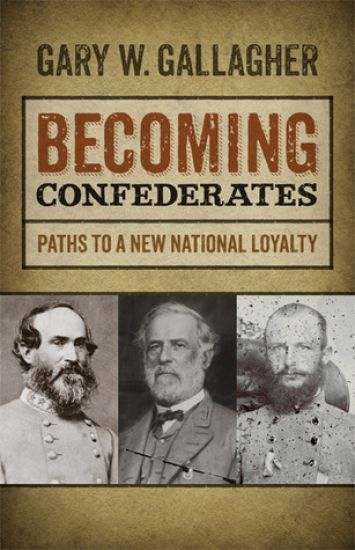
Becoming Confederates

Becoming Confederates

Gary W. Gallagher

University of Georgia Press
2013
sidottu
In Becoming Confederates, Gary W. Gallagher explores loyalty in the era of the Civil War, focusing on Robert E. Lee, Stephen Dodson Ramseur, and Jubal A. Early—three prominent officers in the Army of Northern Virginia who became ardent Confederate nationalists. Loyalty was tested and proved in many ways leading up to and during the war. Looking at levels of allegiance to their native state, to the slaveholding South, to the United States, and to the Confederacy, Gallagher shows how these men represent responses to the mid-nineteenth-century crisis.Lee traditionally has been presented as a reluctant convert to the Confederacy whose most powerful identification was with his home state of Virginia—an interpretation at odds with his far more complex range of loyalties. Ramseur, the youngest of the three, eagerly embraced a Confederate identity, highlighting generational differences in the equation of loyalty. Early combined elements of Lee's and Ramseur's reactions—a Unionist who grudgingly accepted Virginia's departure from the United States but later came to personify defiant Confederate nationalism.The paths of these men toward Confederate loyalty help delineate important contours of American history. Gallagher shows that Americans juggled multiple, often conflicting, loyalties and that white southern identity was preoccupied with racial control transcending politics and class. Indeed, understanding these men's perspectives makes it difficult to argue that the Confederacy should not be deemed a nation. Perhaps most important, their experiences help us understand why Confederates waged a prodigiously bloody war and the manner in which they dealt with defeat.
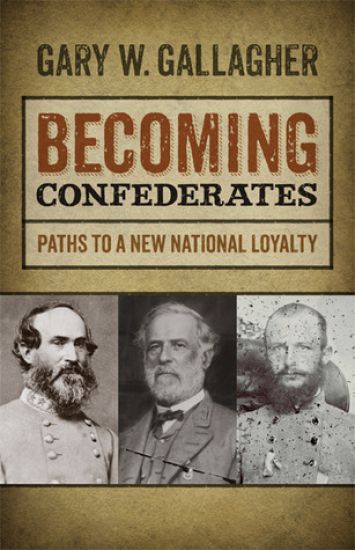
Becoming Confederates

Becoming Confederates

Gary W. Gallagher

University of Georgia Press
2013
pokkari
In Becoming Confederates, Gary W. Gallagher explores loyalty in the era of the Civil War, focusing on Robert E. Lee, Stephen Dodson Ramseur, and Jubal A. Early—three prominent officers in the Army of Northern Virginia who became ardent Confederate nationalists. Loyalty was tested and proved in many ways leading up to and during the war. Looking at levels of allegiance to their native state, to the slaveholding South, to the United States, and to the Confederacy, Gallagher shows how these men represent responses to the mid-nineteenth-century crisis.Lee traditionally has been presented as a reluctant convert to the Confederacy whose most powerful identification was with his home state of Virginia—an interpretation at odds with his far more complex range of loyalties. Ramseur, the youngest of the three, eagerly embraced a Confederate identity, highlighting generational differences in the equation of loyalty. Early combined elements of Lee's and Ramseur's reactions—a Unionist who grudgingly accepted Virginia's departure from the United States but later came to personify defiant Confederate nationalism.The paths of these men toward Confederate loyalty help delineate important contours of American history. Gallagher shows that Americans juggled multiple, often conflicting, loyalties and that white southern identity was preoccupied with racial control transcending politics and class. Indeed, understanding these men's perspectives makes it difficult to argue that the Confederacy should not be deemed a nation. Perhaps most important, their experiences help us understand why Confederates waged a prodigiously bloody war and the manner in which they dealt with defeat.
Contested Loyalty

Contested Loyalty

Gary W. Gallagher

Fordham University Press
2018
sidottu
Embroiled in the Civil War, northerners wrote and spoke with frequency about the subject of loyalty. The word was common in newspaper articles, political pamphlets, and speeches, appeared on flags, broadsides, and prints, was written into diaries and letters and the stationary they appeared on, and even found its way into sermons. Its ubiquity suggests that loyalty was an important concept…but what did it mean to those who used it? Contested Loyalty examines the significance of loyalty across fault lines of gender, social class, and education, race and ethnicity, and political or religious affiliation. These differing vantage points reveal the complicated ways in which loyalties were defined, prioritized, acted upon, and related. While most of the scholarly work on Civil War Era nationalism has focused on southern identity and Confederate nationhood, the essays in Contested Loyalty examine the variable, fluid constructions of these concepts in the north. Essays explore the limitations and incomplete nature of national loyalty and how disparate groups struggled to control its meaning. The authors move beyond the narrow partisan debate over Democratic dissent to examine other challenges to and competing interpretations of national loyalty. Today's leading and emerging scholars examine loyalty through: the frame of politics at the state and national level; the viewpoints of college educated men as well as the women they courted; the attitudes of northern Protestant churches on issues of patriotism and loyalty; working class men and women in military industries; how employers could use the language of loyalty to take away the rights of workers; and the meaning of loyalty in contexts of race and ethnicity. The Union cause was a powerful ideology committing millions of citizens, in the ranks and at home, to a long and bloody war. But loyalty to the Union cause imperfectly explains how citizens reacted to the traumas of war or the ways in which conflicting loyalties played out in everyday life. The essays in this collection point us down the path of greater understanding.
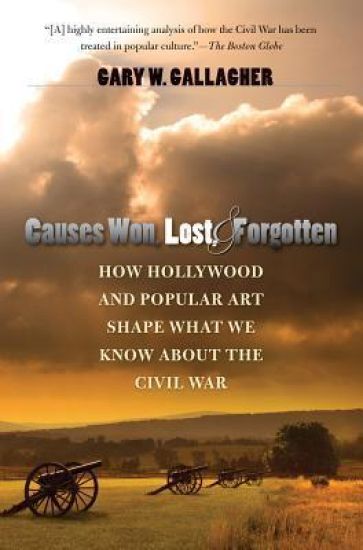
Causes Won, Lost, and Forgotten

Causes Won, Lost, and Forgotten

Gary W. Gallagher

The University of North Carolina Press
2013
nidottu
More than 60,000 books have been published on the Civil War. Most Americans, though, get their ideas about the war--why it was fought, what was won, what was lost--not from books but from movies, television, and other popular media. In an engaging and accessible survey, Gary W. Gallagher guides readers through the stories told in recent film and art, showing how these stories have both reflected and influenced the political, social, and racial currents of their times.
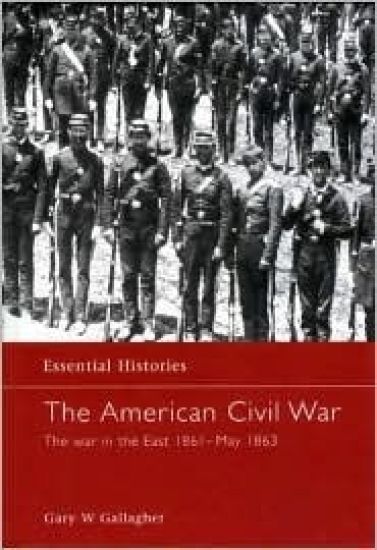
The American Civil War

The American Civil War

Gary W. Gallagher

Routledge Member of the Taylor and Francis Group
2001
sidottu
In April 1861 the United States erupted into fighting at Fort Sumter, South Carolina, beginning what would become the most cataclysmic military struggle in the western world between Waterloo and the First World War. This volume focuses on events in the Virginia theater during the conflict's first two years, highlighting Union and Confederate strengths and weaknesses, leadership and strategy on each side, and the ways in which events on the battlefield influenced politics, diplomacy, and debates about emancipation.
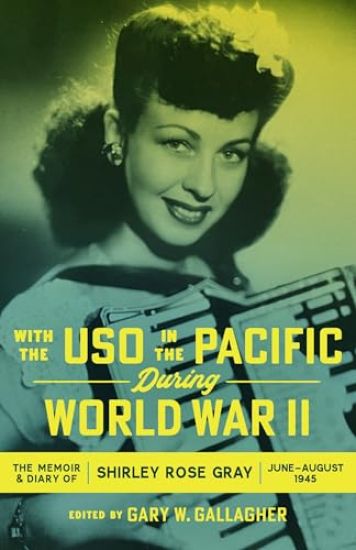
With the USO in the Pacific During World War II

With the USO in the Pacific During World War II

Gary W. Gallagher

LOUISIANA STATE UNIVERSITY PRESS
2026
sidottu
Shirley Rose Gray's memoir and diary chronicle her World War II experiences with a USO show in the Pacific Theater during the summer of 1945. Part of comedic film actor Eddie Bracken's troupe of entertainers, the twenty-two-year-old native of Los Angeles performed on bitterly contested islands such as Guam, Peleliu, Tinian, and Saipan, as well as aboard the aircraft carrier USS Ticonderoga and other naval vessels. Her narrative recounts traveling on crowded planes, performing in wet clothes amid stifling heat, and dealing with homesickness and physical exhaustion. In addition to encountering utterly foreign people and landscapes, Gray witnessed the human and material destruction of ferocious battles. She and the other members of Bracken's show developed a sense of camaraderie, different but somewhat akin to that among veterans. Gray's time on the islands included memorable moments apart from her performances. She spent many hours in hospitals talking to wounded men and often served food to grateful enlisted personnel. On Peleliu, she squeezed into a cave, once used by Japanese forces as a hospital, that contained decomposing corpses of slain soldiers. She spent an hour flying in a Navy dive bomber and, encouraged by Marines, briefly steered an amphibious tank. She met many well-known figures, including Admiral Richard E. Byrd, the famous polar explorer, who gave her the stars off his uniform's collar. A bomber crew painted her picture on the nose of their aircraft and named it the "Squirrelly Shirley." Gray's highly personal memoir, episodic in nature, is descriptive rather than contemplative. No passages explain why the U.S. military endeavor merited praise; instead, Gray takes for granted that the uniformed men who attended Bracken's show fought for a just cause. Her straightforward prose leaves no doubt that she believed the troupe contributed to the war effort, and that she derived satisfaction from her efforts on stage and in other interactions with U.S. servicemen as the war entered its final phase.