Kirjojen hintavertailu. Mukana 12 411 078 kirjaa ja 12 kauppaa.

Kirjahaku

Etsi kirjoja tekijän nimen, kirjan nimen tai ISBN:n perusteella.

4 kirjaa tekijältä Gaurav Desai

Commerce with the Universe

Commerce with the Universe

Gaurav Desai

Columbia University Press
2013
sidottu
Reading the life narratives and literary texts of South Asians writing in and about East Africa, Gaurav Desai builds a surprising, alternative history of Africa's experience with slavery, migration, colonialism, nationalism, and globalization. Consulting Afrasian texts that are literary and nonfictional, political and private, he broadens the scope of African and South Asian scholarship and inspires a more nuanced understanding of the Indian Ocean's fertile routes of exchange. Desai shows how the Indian Ocean engendered a number of syncretic identities and shaped the medieval trade routes of the Islamicate empire, the early independence movements galvanized in part by Gandhi's southern African experiences, the invention of new ethnic nationalisms, and the rise of plural, multiethnic African nations. Calling attention to lives and literatures long neglected by traditional scholars, Desai introduces rich, interdisciplinary ways of thinking not only about this specific region but also about the very nature of ethnic history and identity. Traveling from the twelfth century to today, he concludes with a look at contemporary Asian populations in East Africa and their struggle to decide how best to participate in the development and modernization of their postcolonial nations without sacrificing their political autonomy.
Commerce with the Universe

Commerce with the Universe

Gaurav Desai

Columbia University Press
2016
pokkari
Reading the life narratives and literary texts of South Asians writing in and about East Africa, Gaurav Desai builds a surprising, alternative history of Africa's experience with slavery, migration, colonialism, nationalism, and globalization. Consulting Afrasian texts that are literary and nonfictional, political and private, he broadens the scope of African and South Asian scholarship and inspires a more nuanced understanding of the Indian Ocean's fertile routes of exchange. Desai shows how the Indian Ocean engendered a number of syncretic identities and shaped the medieval trade routes of the Islamicate empire, the early independence movements galvanized in part by Gandhi's southern African experiences, the invention of new ethnic nationalisms, and the rise of plural, multiethnic African nations. Calling attention to lives and literatures long neglected by traditional scholars, Desai introduces rich, interdisciplinary ways of thinking not only about this specific region but also about the very nature of ethnic history and identity. Traveling from the twelfth century to today, he concludes with a look at contemporary Asian populations in East Africa and their struggle to decide how best to participate in the development and modernization of their postcolonial nations without sacrificing their political autonomy.
Subject to Colonialism

Subject to Colonialism

Gaurav Desai

Duke University Press
2001
sidottu
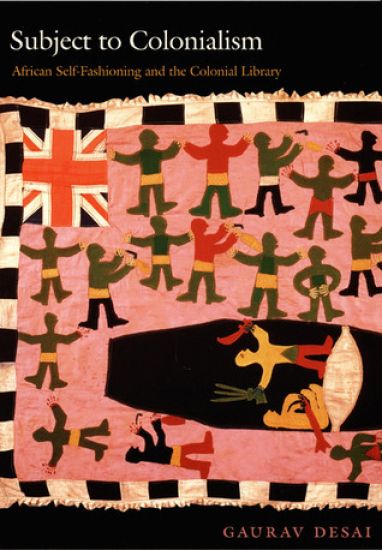
Subject to Colonialism provides a much needed revisionist perspective on the way twentieth-century Africa is viewed and analyzed among scholars. Employing literary, historical, and anthropological techniques, Gaurav Desai attempts to generate a new understanding of issues that permeate discussions of Africa by disrupting the centrality of postcolonial texts and focusing instead on the cultural and intellectual production of colonial Africans. In particular, Desai calls for a reevaluation of the “colonial library”-that set of representations and texts that have collectively “invented” Africa as a locus of difference and alterity. Presenting colonialism not as a singular, monolithic structure but rather as a practice frought with contradictions and tensions, Desai works to historicize the foundation of postcolonialism by decentering both canonical texts and privileged categories of analysis such as race, capitalism, empire, and nation. To achieve this, he focuses on texts that construct or reform-rather than merely reflect-colonialism, placing explicit emphasis on processes, performances, and the practices of everyday life. Reading these texts not merely for the content of their assertions but also for how they were created and received, Desai looks at works such as Jomo Kenyatta’s ethnography of the Gikuyu and Akiga Sai’s history of the Tiv and makes a particular plea for the canonical recuperation of African women’s writing.Scholars in African history, literature, and philosophy, postcolonial studies, literary criticism, and anthropology will welcome publication of this book.
Subject to Colonialism

Subject to Colonialism

Gaurav Desai

Duke University Press
2001
pokkari
Subject to Colonialism provides a much needed revisionist perspective on the way twentieth-century Africa is viewed and analyzed among scholars. Employing literary, historical, and anthropological techniques, Gaurav Desai attempts to generate a new understanding of issues that permeate discussions of Africa by disrupting the centrality of postcolonial texts and focusing instead on the cultural and intellectual production of colonial Africans. In particular, Desai calls for a reevaluation of the “colonial library”-that set of representations and texts that have collectively “invented” Africa as a locus of difference and alterity. Presenting colonialism not as a singular, monolithic structure but rather as a practice frought with contradictions and tensions, Desai works to historicize the foundation of postcolonialism by decentering both canonical texts and privileged categories of analysis such as race, capitalism, empire, and nation. To achieve this, he focuses on texts that construct or reform-rather than merely reflect-colonialism, placing explicit emphasis on processes, performances, and the practices of everyday life. Reading these texts not merely for the content of their assertions but also for how they were created and received, Desai looks at works such as Jomo Kenyatta’s ethnography of the Gikuyu and Akiga Sai’s history of the Tiv and makes a particular plea for the canonical recuperation of African women’s writing.Scholars in African history, literature, and philosophy, postcolonial studies, literary criticism, and anthropology will welcome publication of this book.