Kirjojen hintavertailu. Mukana 11 944 791 kirjaa ja 12 kauppaa.

Kirjahaku

Etsi kirjoja tekijän nimen, kirjan nimen tai ISBN:n perusteella.

9 kirjaa tekijältä Gavin Booth

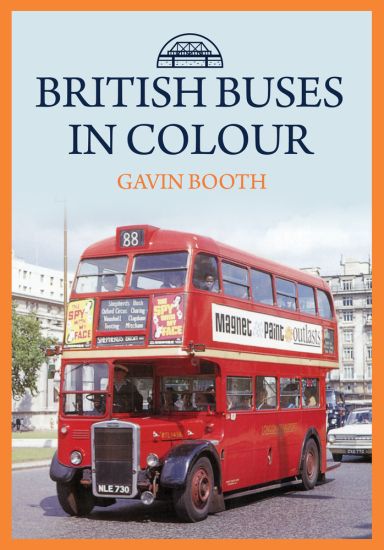
British Buses in Colour

British Buses in Colour

Gavin Booth

Amberley Publishing
2019
nidottu
The buses on Britain’s roads went through a period of great change between 1950 and 1986. In 1950 the bus manufacturers were at last recovering from the effects of the Second World War, and had new and innovative designs to offer. By the time bus services were deregulated in 1986, buses were very different - longer, wider, more powerful and often with rear engines - and the industry had changed dramatically, with changes of ownership affecting nearly every major operator. This book uses 150 colour photographs to tell the story of the buses that served Britain between 1950 and 1986 and traces the progression from the time-served pre-war buses that survived well into the 1950s, through the early underfloor-engined single-deckers; the lightweight era; the rear-engined double-deckers; the often unsuccessful rear-engined single-deckers; through to the types that could be seen on the streets in the 1990s, including the first of the new-generation minibuses.
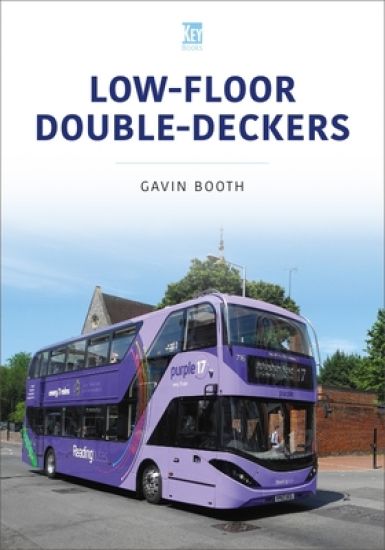
Low-Floor Double-Deckers

Low-Floor Double-Deckers

Gavin Booth

KEY PUBLISHING LTD
2022
nidottu
In just under 25 years, double-deck buses in the UK have undergone a transformation. Every double-decker in normal service in the UK today is a low-floor bus offering easy access to everyone. This book traces the story of the UK's low-floor double-deckers, from the first tentative steps to the widespread adoption of this layout and the moves from diesel buses to diesel-electric hybrids, to gas, electric and even hydrogen buses built for bus companies of all sizes. It covers the London operators that initially drove the low-floor revolution, along with the major groups, the remaining local authority fleets and a range of enterprising independents that operate them. Where once every double-decker for service in the UK was built in the UK, today many chassis come from mainland Europe and, increasingly, from manufacturers based in other and more distant parts of the world - and UK builders have gained an important foothold in Europe, North America, and the Far East as well. The story is told for the first time, on a model-by-model basis, supported by many unseen colour images, which show the buses in use throughout the UK.
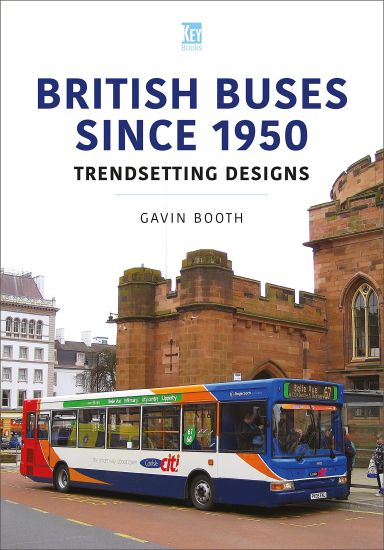
British Buses Since 1950: Trendsetting Designs
Bus design has certainly evolved in the seven decades since 1950, but it has not been a steady process. Advances in bus design have caused manufacturers to rush back to the drawing board for fear of being left behind. In 1950, the first of the new breed of underfloor-engined single-deckers appeared, and, just six years later, came the first rear-engined double-decker. Buses got longer, and one result in the 1960s was a rash of new rear-engined single-deck models. Efforts to make buses accessible for all passengers led to low-floor models in the 1990s, and then, in the 2000s, concerns about the environment prompted diesel-electric hybrid, gas, electric and hydrogen buses. Covering the designs that led the way with varying degrees of success over the past 70 years, and illustrated with over 170 colour images and period advertisements, this book showcases the good, the bad and the ugly of British bus design.
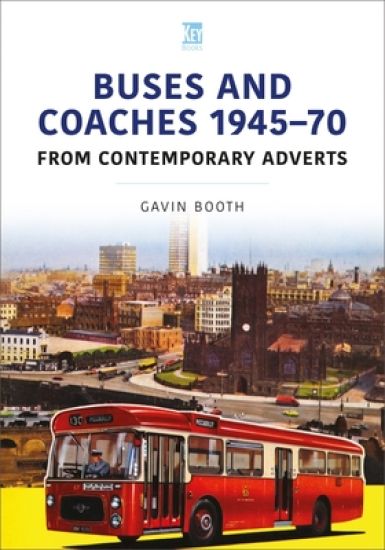
Buses and Coaches 1945-70: From Contemporary Adverts
Bus and coach manufacturers advertised in the trade magazines for various reasons it was to sell their products, of course, but also to keep their names in front of the people who made the decisions, to keep their shareholders happy, to boast about their successes and to support the trade press. Over the years, the number of manufacturers promoting their wares has fluctuated from several dozen bus builders competing for orders in the years following World War Two, to the late 1960s, when British Leyland had acquired much of the competition and was starting to abandon popular brands as it moved to rationalise its product range. This impacted the monthly trade magazines as the number of advertisers dwindled, and this led to the closure of the market-leading magazine Bus & Coach in 1970. The book uses trade adverts that appeared in the years between 1945 and 1970 to illustrate the development of new bus and coach chassis and bodies, and the constantly changing visual styles used by advertisers to catch the eye of potential customers.
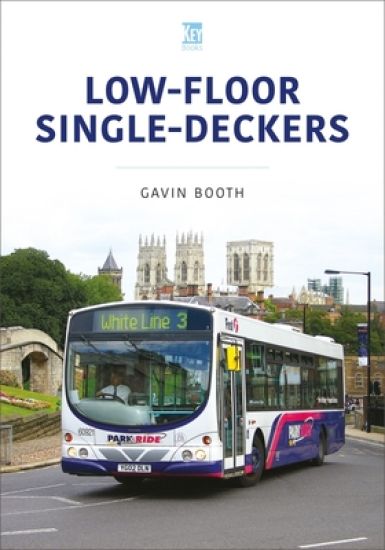
Low-Floor Single-Deckers

Low-Floor Single-Deckers

Gavin Booth

KEY PUBLISHING LTD
2023
nidottu
For years, passengers with disabilities, wheelchair users and parents with children in buggies were unable to use single-deck buses with steep steps leading to a high floor. However, in the 1980s, a new breed of bus was being developed, with stepless entrances and flat floors. These were first seen in the UK in 1992, and gradually, operators moved away from older single-deckers as new models became available. These were often adaptations of existing models from mainland Europe, but UK-based manufacturers like Dennis, Optare and Wright have developed simpler and cheaper models tailored for the home market, the most notable being the best-selling Dennis Dart, which developed into the Alexander Dennis Enviro200 range. Where once every new low-floor single-decker was invariably diesel-engined, in the early 2000s, environmental concerns led engineers to rethink the concept, first with diesel-electric hybrids, then gas buses, battery electric buses and now hydrogen-powered buses. There are signs that diesel models are on the way out as new zero-emission models are becoming increasingly popular. With over 150 images, this book traces the development of low-floor single-deckers from the first tentative steps 30 years ago, up to the latest gas, electric and hydrogen models.
Alexander Dennis Buses

Alexander Dennis Buses

Gavin Booth

KEY PUBLISHING LTD
2024
nidottu
Dennis and Alexander both grew separately. Dennis was very much a specialist chassis builder with a list of regular customers, while Alexander’s roots were in building bodies for a group of Scottish bus companies. Alexander broadened its customer base from the 1950s and was soon supplying bodies for bus operators throughout the UK and in several export markets. Dennis expanded dramatically in the 1980s with its best-selling Dart model. Since the two companies came together as Alexander Dennis Ltd in 2004, it has concentrated on designing and building a range of best-selling bus models. The coachbuilder Plaxton, established in 1907, joined Alexander Dennis in 2007, mainly producing coaches, but doubling up with Falkirk to produce the bus range. Alexander Dennis is one of the very few manufacturers building buses in the United Kingdom. With over 180 images, this book provides the history of the company and its subsequent emergence as a clear market leader.
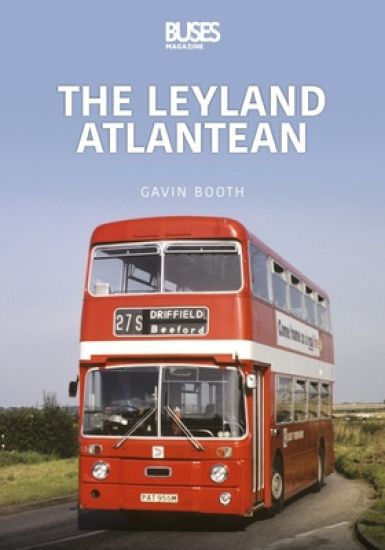
The Leyland Atlantean

The Leyland Atlantean

Gavin Booth

KEY PUBLISHING LTD
2022
nidottu
By the end of the 1960s, economics dictated that the traditional front-engined double-decker had had its day. In the Atlantean and its competitors, the British bus and coach industry had vehicles capable of taking on and meeting the challenges, both at home and abroad, that the contemporary world presented. The Atlantean was probably the last British-designed and -built bus to achieve massive sales worldwide, with the list of operators both at home and abroad being legion. In this fully illustrated book, Gavin Booth looks back at the development of the Leyland Atlantean from its origins in the 1950s and examines its importance over the past half-century. Although the Atlantean has largely disappeared from public service, its influence remains and, through the handful that remain in service and those that survive in preservation and through the pages of this book, it is possible to pay tribute to one of the most significant bus designs of the second half of the 20th century.
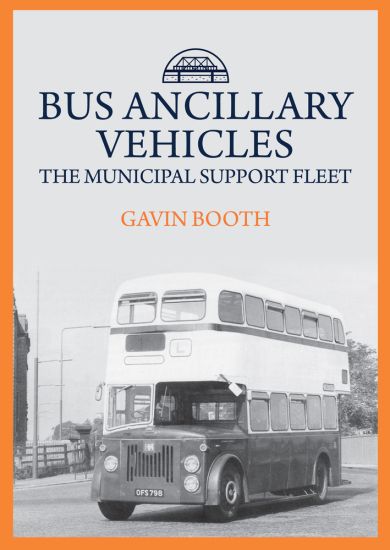
Bus Ancillary Vehicles

Bus Ancillary Vehicles

Gavin Booth

Amberley Publishing
2020
nidottu
Although to many enthusiasts, municipal vehicles never extended beyond the trams, trolleybuses and buses that were required to provide the basic public service, behind them were a range of vehicles that were required to enable operations to proceed smoothly. These vehicles – tower wagons, tree-loppers, towing vehicles, training vehicles, mobile canteens and numerous others – are vehicles that, historically, have tended to be ignored when writing the history of municipal operators but without which operation would have been impossible. Some of these vehicles were often elderly buses converted for new duties, others were specially constructed for their somewhat specialised tasks; all, however, are fascinating examples of historic municipal vehicles. Gavin Booth, one of the country’s leading experts on the subject of public transport history, has delved deep into the archives of many of the country’s leading transport photographers to produce a fascinating survey of these often ignored vehicles. Dividing the subject into each of the specialised tasks, he shows how the various types of vehicle evolved during the twentieth century. Alongside the excellent photographs, the author’s well-researched text and detailed captions make the book an essential work of reference for all those interested in the history of Britain’s municipal bus operations.