Kirjojen hintavertailu. Mukana 12 016 292 kirjaa ja 12 kauppaa.

Kirjahaku

Etsi kirjoja tekijän nimen, kirjan nimen tai ISBN:n perusteella.

4 kirjaa tekijältä Gavin Butt

Between You and Me

Between You and Me

Gavin Butt

Duke University Press
2005
sidottu
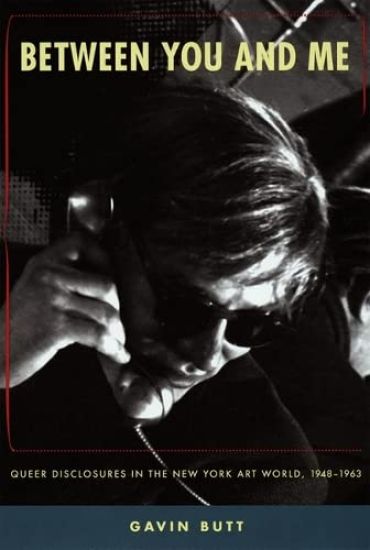
In the decades preceding the Stonewall riots-in the wake of the 1948 publication of Alfred Kinsey’s controversial report on male sexuality and in the midst of a cold war culture of suspicion and paranoia-discussions of homosexuality within the New York art world necessarily circulated via gossip and rumor. Between You and Me explores this informal, everyday talk and how it shaped artists’ lives, their work, and its reception. Revealing the “trivial” and “unserious” aspects of the postwar art scene as key to understanding queer subjectivity, Gavin Butt argues for a richer, more expansive concept of historical evidence, one that supplements the verifiable facts of traditional historical narrative with the gossipy fictions of sexual curiosity.Focusing on the period from 1948 to 1963, Butt draws on the accusations and denials of homosexuality that appeared in the popular press, on early homophile publications such as One and the Mattachine Review, and on biographies, autobiographies, and interviews. In a stunning exposition of Larry Rivers’s work, he shows how Rivers incorporated gossip into his paintings, just as his friend and lover Frank O’Hara worked it into his poetry. He describes how the stories about Andy Warhol being too “swish” to be taken seriously as an artist changed following his breakthrough success, reconstructing him as an asexual dandy. Butt also speculates on the meanings surrounding a MoMA curator’s refusal in 1958 to buy Jasper Johns’s Target with Plaster Casts on the grounds that it was too scandalous for the museum to acquire. Between You and Me sheds new light on a pivotal moment in American cultural production as it signals new directions for art history.
Between You and Me

Between You and Me

Gavin Butt

Duke University Press
2005
pokkari
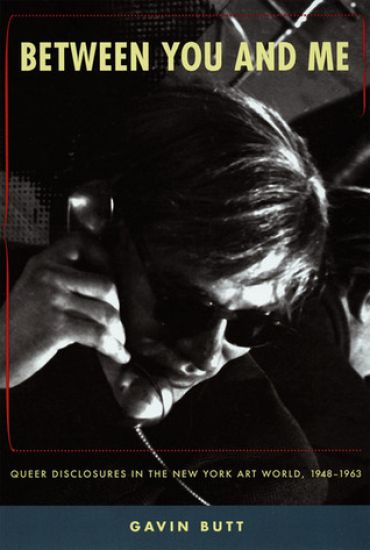
In the decades preceding the Stonewall riots-in the wake of the 1948 publication of Alfred Kinsey’s controversial report on male sexuality and in the midst of a cold war culture of suspicion and paranoia-discussions of homosexuality within the New York art world necessarily circulated via gossip and rumor. Between You and Me explores this informal, everyday talk and how it shaped artists’ lives, their work, and its reception. Revealing the “trivial” and “unserious” aspects of the postwar art scene as key to understanding queer subjectivity, Gavin Butt argues for a richer, more expansive concept of historical evidence, one that supplements the verifiable facts of traditional historical narrative with the gossipy fictions of sexual curiosity.Focusing on the period from 1948 to 1963, Butt draws on the accusations and denials of homosexuality that appeared in the popular press, on early homophile publications such as One and the Mattachine Review, and on biographies, autobiographies, and interviews. In a stunning exposition of Larry Rivers’s work, he shows how Rivers incorporated gossip into his paintings, just as his friend and lover Frank O’Hara worked it into his poetry. He describes how the stories about Andy Warhol being too “swish” to be taken seriously as an artist changed following his breakthrough success, reconstructing him as an asexual dandy. Butt also speculates on the meanings surrounding a MoMA curator’s refusal in 1958 to buy Jasper Johns’s Target with Plaster Casts on the grounds that it was too scandalous for the museum to acquire. Between You and Me sheds new light on a pivotal moment in American cultural production as it signals new directions for art history.
No Machos or Pop Stars

No Machos or Pop Stars

Gavin Butt

DUKE UNIVERSITY PRESS
2022
sidottu
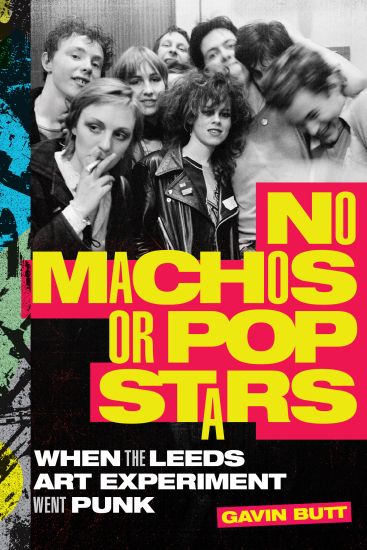
After punk’s arrival in 1976, many art students in the northern English city of Leeds traded their paintbrushes for guitars and synthesizers. In bands ranging from Gang of Four, Soft Cell, and Delta 5 to the Mekons, Scritti Politti, and Fad Gadget, these artists-turned-musicians challenged the limits of what was deemed possible in rock and pop music. Taking avant-garde ideas to the record-buying public, they created situationist antirock and art punk, penned deconstructed pop ditties about Jacques Derrida, and took the aesthetics of collage and shock to dark, brooding electro-dance music. In No Machos or Pop Stars Gavin Butt tells the fascinating story of the post-punk scene in Leeds, showing how England’s state-funded education policy brought together art students from different social classes to create a fertile ground for musical experimentation. Drawing on extensive interviews with band members, their associates, and teachers, Butt details the groups who wanted to dismantle both art world and music industry hierarchies by making it possible to dance to their art. Their stories reveal the subversive influence of art school in a regional music scene of lasting international significance.
No Machos or Pop Stars

No Machos or Pop Stars

Gavin Butt

DUKE UNIVERSITY PRESS
2022
pokkari
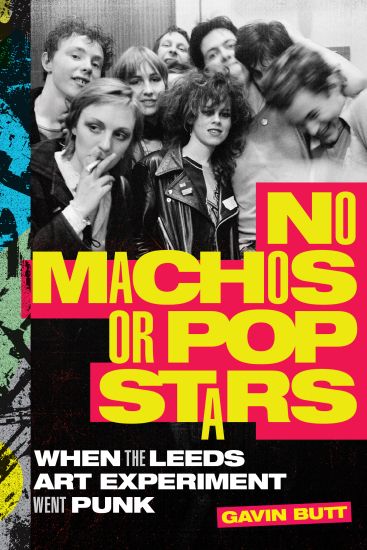
After punk’s arrival in 1976, many art students in the northern English city of Leeds traded their paintbrushes for guitars and synthesizers. In bands ranging from Gang of Four, Soft Cell, and Delta 5 to the Mekons, Scritti Politti, and Fad Gadget, these artists-turned-musicians challenged the limits of what was deemed possible in rock and pop music. Taking avant-garde ideas to the record-buying public, they created situationist antirock and art punk, penned deconstructed pop ditties about Jacques Derrida, and took the aesthetics of collage and shock to dark, brooding electro-dance music. In No Machos or Pop Stars Gavin Butt tells the fascinating story of the post-punk scene in Leeds, showing how England’s state-funded education policy brought together art students from different social classes to create a fertile ground for musical experimentation. Drawing on extensive interviews with band members, their associates, and teachers, Butt details the groups who wanted to dismantle both art world and music industry hierarchies by making it possible to dance to their art. Their stories reveal the subversive influence of art school in a regional music scene of lasting international significance.