Kirjojen hintavertailu. Mukana 11 342 296 kirjaa ja 12 kauppaa.

Kirjahaku

Etsi kirjoja tekijän nimen, kirjan nimen tai ISBN:n perusteella.

9 kirjaa tekijältä Gavin Flood

The Truth Within

The Truth Within

Gavin Flood

Oxford University Press
2015
nidottu
The idea that there is a truth within the person linked to the discovery of a deeper, more fundamental, more authentic self, has been a common theme in many religions throughout history and an idea that is still with us today. This inwardness or interiority unique to me as an essential feature of who I am has been an aspect of culture and even a defining characteristic of human being; an authentic, private sphere to which we can retreat that is beyond the conflicts of the outer world. This inner world becomes more real than the outer, which is seen as but a pale reflection. Remarkably, the image of the truth within is found across cultures and this book presents an account of this idea in the pre-modern history of Christianity, Hinduism, and Buddhism. Furthermore, in theistic religions, Christianity and some forms of Hinduism, the truth within is conflated with the idea of God within and in all cases this inner truth is thought to be not only the heart of the person, but also the heart of the universe itself. Gavin Flood examines the metaphor of inwardness and the idea of truth within, along with the methods developed in religions to attain it such as prayer and meditation. These views of inwardness that link the self to cosmology can be contrasted with a modern understanding of the person. In examining the truth within in Christianity, Hinduism, and Buddhism, Flood offers a hermeneutical phenomenology of inwardness and a defence of comparative religion.
Religion and the Philosophy of Life

Religion and the Philosophy of Life

Gavin Flood

Oxford University Press
2019
sidottu
Religion and the Philosophy of Life considers how religion as the source of civilization transforms the fundamental bio-sociology of humans through language and the somatic exploration of religious ritual and prayer. Gavin Flood offers an integrative account of the nature of the human, based on what contemporary scientists tell us, especially evolutionary science and social neuroscience, as well as through the history of civilizations. Part one contemplates fundamental questions and assumptions: what the current state of knowledge is concerning life itself; what the philosophical issues are in that understanding; and how we can explain religion as the driving force of civilizations in the context of human development within an evolutionary perspective. It also addresses the question of the emergence of religion and presents a related study of sacrifice as fundamental to religions' views about life and its transformation. Part two offers a reading of religions in three civilizational blocks--India, China, and Europe/the Middle East--particularly as they came to formation in the medieval period. It traces the history of how these civilizations have thematised the idea of life itself. Part three then takes up the idea of a life force in part three and traces the theme of the philosophy of life through to modern times. On the one hand, the book presents a narrative account of life itself through the history of civilizations, and on the other presents an explanation of that narrative in terms of life.
The Truth Within

The Truth Within

Gavin Flood

Oxford University Press
2013
sidottu
The idea that there is a truth within the person linked to the discovery of a deeper, more fundamental, more authentic self, has been a common theme in many religions throughout history and an idea that is still with us today. This inwardness or interiority unique to me as an essential feature of who I am has been an aspect of culture and even a defining characteristic of human being; an authentic, private sphere to which we can retreat that is beyond the conflicts of the outer world. This inner world becomes more real than the outer, which is seen as but a pale reflection. Remarkably, the image of the truth within is found across cultures and this book presents an account of this idea in the pre-modern history of Christianity, Hinduism and Buddhism. Furthermore, in theistic religions, Christianity and some forms of Hinduism, the truth within is conflated with the idea of God within and in all cases this inner truth is thought to be not only the heart of the person, but also the heart of the universe itself. Gavin Flood examines the metaphor of inwardness and the idea of truth within, along with the methods developed in religions to attain it such as prayer and meditation. These views of inwardness that link the self to cosmology can be contrasted with a modern understanding of the person. In examining the truth within in Christianity, Hinduism and Buddhism, Flood offers a hermeneutical phenomenology of inwardness and a defence of comparative religion.
Beyond Phenomenology

Beyond Phenomenology

Gavin Flood

Continuum International Publishing Group Ltd.
1999
nidottu
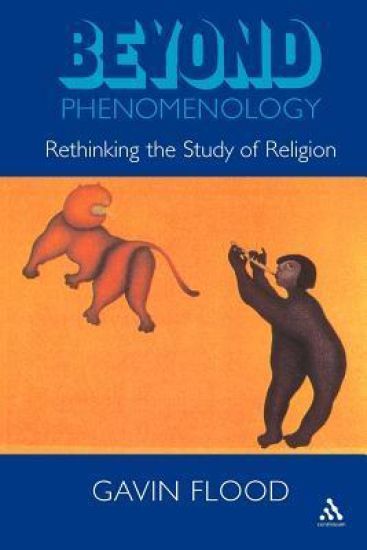
This book argues that the understanding and explanation of religion is always historically contingent. Grounded in the work of Bakhtin and Ricoeur, Flood positions the academic study of religion within contemporary debates in the social sciences and humanities concerning modernity and postmodernity, particularly contested issues regarding truth and knowledge. It challenges the view that religions are privileged, epistemic objects, argues for the importance of metatheory, and presents an argument for the dialogical nature of inquiry. The study of religion should begin with language and culture, and this shift in emphasis to the philosophy of the sign in hermeneutics and away from the philosophy of consciousness in phenomenology has far-reaching implications. It means a new ethic of practice which is sensitive to the power relationship in any epistemology; it opens the door to feminist and postcolonial critique, and it provides a methodology which allows for the interface between religious studies, theology, and the social sciences.
The Ascetic Self

The Ascetic Self

Gavin Flood

Cambridge University Press
2004
sidottu
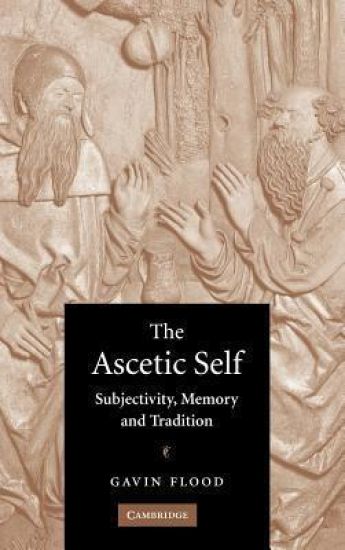
This 2004 book is about the ascetic self in the scriptural religions of Christianity, Buddhism and Hinduism. The author claims that asceticism can be understood as the internalisation of tradition, the shaping of the narrative of a life in accordance with the narrative of tradition that might be seen as the performance of the memory of tradition. Such a performance contains an ambiguity or distance between the general intention to eradicate the will, or in some sense to erase the self, and the affirmation of will in ascetic performance such as weakening the body through fasting. Asceticism must therefore be seen in the context of ritual. The book also offers a paradigm for comparative religion more generally, one that avoids the inadequate choices of either examining religions through overarching categories on the one hand and the abandoning of any comparative endeavour that focuses purely on area-specific study on the other.
The Concept of Mind in Hindu Tantra

The Concept of Mind in Hindu Tantra

Gavin Flood

TAYLOR FRANCIS LTD
2024
sidottu
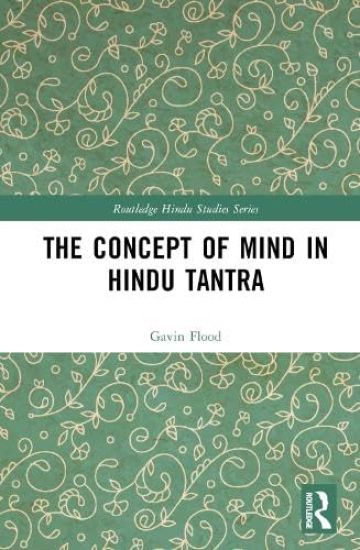
This book presents an account of the concept of mind in Hindu Tantra through a study of religious and philosophical texts in the medieval period.Offering an understanding on how the mind is conceptualized both as that which keeps a person bound to the cycle of reincarnation and as having transformative potential in allowing a person to achieve liberation or salvation, this book examines mostly previously untranslated sources. It shows how there are different understandings of the mind that relate to different ideas of redemption. The main tantric tradition, the Saiva Siddhanta, adopts a model of mind from Yoga in which the wandering mind keeps us trapped, whereas the nondualist Saiva tradition, sometimes called ‘Kashmir’ Saivism, sees the mind as inherently pure and free. The book traces a history of the concept of mind from early sources, especially Buddhism, through to the tantric medieval period, and ending with the eighteenth century. The author shows how the concept changes and what is retained. A comparison of the tantric ideas of mind with those of some European philosophy – notably Descartes’ dualism and German idealism’s non-dualism – sharpens the concept of mind in the tantric tradition.A historical and philosophical study of key ideas in the tantric traditions, this book will be of interest to researchers in the field of Religious Studies, Asian Religion, Hindu Studies, Indian philosophy, and comparative philosophy.
The Importance of Religion

The Importance of Religion

Gavin Flood

Wiley-Blackwell (an imprint of John Wiley Sons Ltd)
2011
nidottu
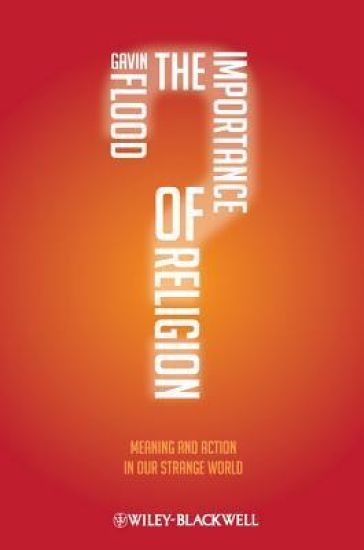
The Importance of Religion reveals the significance of religion in modern times, showing how it provides people with meaning to their lives and helps guide them in their everyday moral choices Provides readers with a new understanding of religion, demonstrating how in its actions, texts and world views religion is enduring and vividly engages with the mystery of the worldOffers striking arguments about the relationship of religion to science, art and politicsEngagingly written by a highly respected scholar of religion with an international reputation
The Importance of Religion

The Importance of Religion

Gavin Flood

Wiley-Blackwell (an imprint of John Wiley Sons Ltd)
2011
sidottu
The Importance of Religion reveals the significance of religion in modern times, showing how it provides people with meaning to their lives and helps guide them in their everyday moral choices Provides readers with a new understanding of religion, demonstrating how in its actions, texts and world views religion is enduring and vividly engages with the mystery of the worldOffers striking arguments about the relationship of religion to science, art and politicsEngagingly written by a highly respected scholar of religion with an international reputation
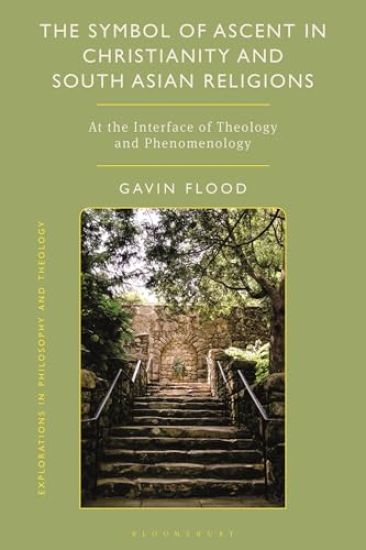
The Symbol of Ascent in Christianity and South Asian Religions
Taking a phenomenological approach, Gavin Flood explores the symbol of ascent in Christianity and south Asian religions, and uncovers its significance as a cultural idea that is both transcendent and rooted in the world. Throughout history civilizations have believed there is a spiritual reality beyond this universe and that the purpose of life is to realize this truth. This has been expressed in the symbol of ascent, a metaphoric and artistic representation of a hierarchy of levels through which the soul ascends to a transcendent reality at the peak of the cosmos. This book charts the history of this idea in Christianity and south Asian religions, including Hinduism, Buddhism and Jainism. It also examines the wider cultural importance of the symbol through numerous literary case studies, from Dante and Golding to the Upanishads and the poetry of North Indian Saints such as Mirabai and Namdev. Outlining and employing the theology/phenomenology debate, The Symbol of Ascent in Christianity and South Asian Religions further asks whether ascent is transcendent or of this world, and moreover whether phenomenology should be concerned with the former. To answer this question it engages numerous interlocutors, including Abhinavagupta, Plato, Kant, Hegel, Nietzsche and Brentano, as well as Jane Bennett’s new materialism and Françoise d’Eaubonne’s ecofeminism. Flood argues ultimately that ascent is at the interface of theology and phenomenology as it contains both a philosophy of the sign and a philosophy of consciousness. Crossing centuries and continents, this phenomenological study reveals how ascent has been a central theme to understanding human reality, a theme that Flood proposes will continue to be relevant, as post- and trans-human philosophies seek transcendence of the limited human to the unlimited, AI-enhanced one we now know possible.