Kirjojen hintavertailu. Mukana 11 244 527 kirjaa ja 12 kauppaa.

Kirjahaku

Etsi kirjoja tekijän nimen, kirjan nimen tai ISBN:n perusteella.

4 kirjaa tekijältä Gavin Fridell

Coffee

Coffee

Gavin Fridell

Polity Press
2014
sidottu
In a world of high finance, unprecedented technological change, and cyber billionaires, it is easy to forget that a major source of global wealth is, literally, right under our noses. Coffee is one of the most valuable Southern exports, generating billions of dollars in corporate profits each year, even while the majority of the world’s 25 million coffee families live in relative poverty. But who is responsible for such vast inequality? Many analysts point to the coffee market itself, its price volatility and corporate oligarchy, and seek to "correct" it through fair trade, organic and sustainable coffee, corporate social responsibility, and a number of market-driven projects. The result has been widespread acceptance that the "market" is both the cause of underdevelopment and its potential solution. Against this consensus, Gavin Fridell provocatively argues that state action, both good and bad, has been and continues to be central to the everyday operations of the coffee industry, even in today’s world of "free trade". Combining rich history with an incisive analysis of key factors shaping the coffee business, Fridell challenges the notion that injustice in the industry can be solved "one sip at a time" - as ethical trade promoters put it. Instead, he points to the centrality of coffee statecraft both for preserving the status quo and for initiating meaningful changes to the coffee industry in the future.

Coffee

Coffee

Gavin Fridell

Polity Press
2014
nidottu
In a world of high finance, unprecedented technological change, and cyber billionaires, it is easy to forget that a major source of global wealth is, literally, right under our noses. Coffee is one of the most valuable Southern exports, generating billions of dollars in corporate profits each year, even while the majority of the world’s 25 million coffee families live in relative poverty. But who is responsible for such vast inequality? Many analysts point to the coffee market itself, its price volatility and corporate oligarchy, and seek to "correct" it through fair trade, organic and sustainable coffee, corporate social responsibility, and a number of market-driven projects. The result has been widespread acceptance that the "market" is both the cause of underdevelopment and its potential solution. Against this consensus, Gavin Fridell provocatively argues that state action, both good and bad, has been and continues to be central to the everyday operations of the coffee industry, even in today’s world of "free trade". Combining rich history with an incisive analysis of key factors shaping the coffee business, Fridell challenges the notion that injustice in the industry can be solved "one sip at a time" - as ethical trade promoters put it. Instead, he points to the centrality of coffee statecraft both for preserving the status quo and for initiating meaningful changes to the coffee industry in the future.
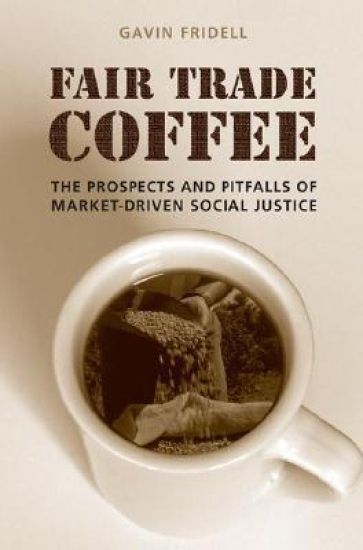
Fair Trade Coffee

Fair Trade Coffee

Gavin Fridell

University of Toronto Press
2007
pokkari
Over the past two decades, sales of fair trade coffee have grown significantly and the fair trade network has emerged as an important international development project. Activists and commentators have been quick to celebrate this sales growth, which has allowed socially just trade, labour, and environmental standards and practices to be extended to hundreds of thousands of small farmers and poor rural workers throughout the Global South. While recent assessments of the fair trade network have focused on its impact on local poverty alleviation, however, the broader political-economic and historically rooted structures that frame it have been left largely unexamined. In this study, Gavin Fridell argues that while local level analysis is important, examination of the impacts of broader structures on fair trade coffee networks, and vice versa, are of equal if not greater significance in determining their long-term developmental potential. Using case studies from Mexico and Canada, Fridell examines the fair trade coffee movement at both the global and local level, assessing its effectiveness and locating it within political and development theory. In addition, Fridell provides in-depth historical analysis of fair trade coffee in the context of global trade, and compares it with a variety of postwar development projects within the coffee industry. Timely, meticulously researched, and engagingly written, this study challenges many commonly held assumptions about the long-term prospects and pitfalls of the fair trade network's market-driven strategy in the era of globalization.
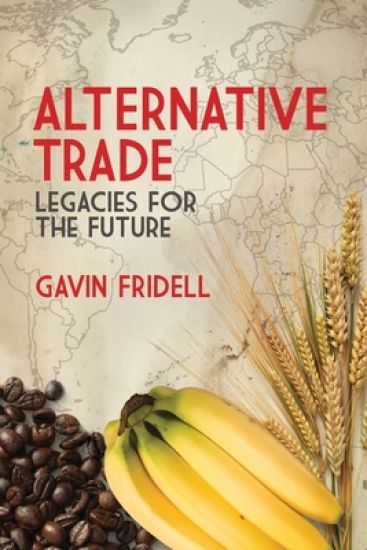
Alternative Trade

Alternative Trade

Gavin Fridell

Fernwood Publishing Co Ltd
2013
nidottu
Free trade does not make a significantly positive contribution to a society’s well being, nor does real free trade exist. In Alternative Trade, Gavin Fridell confronts these assumptions through a passionate and rigorous appraisal of alternative trade and its imperfect legacy. Examining the history of alternative trade models – the International Coffee Agreement, the Canadian Wheat Board and the European-Caribbean banana regime – Fridell exposes the unbridgeable gap between “free trade” proclamations and the lack of actually existing free trade, arguing that the alternative trade models are much more socially efficient than what followed in their wake.Additionally, Fridell places politics, history, social change, class power and violence front-and-centre in his analysis and examines alternative trade within a broader social and historical context to uncover lessons for a more cooperative, socially just world order.