Kirjojen hintavertailu. Mukana 11 342 296 kirjaa ja 12 kauppaa.

Kirjahaku

Etsi kirjoja tekijän nimen, kirjan nimen tai ISBN:n perusteella.

6 kirjaa tekijältä Gavin Hopps

Romanticism and Religion from William Cowper to Wallace Stevens
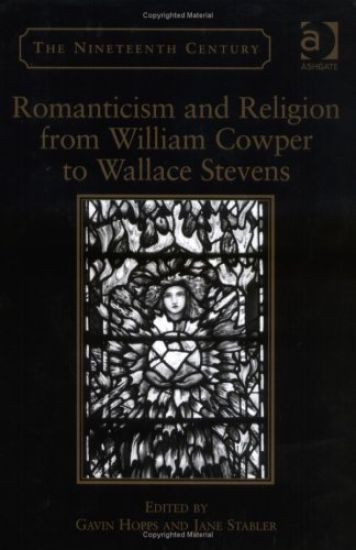
The relationship between literature and religion is one of the most groundbreaking and challenging areas of Romantic studies. Covering the entire field of Romanticism from its eighteenth-century origins in the writing of William Cowper and its proleptic stirrings in Paradise Lost to late-twentieth-century manifestations in the work of Wallace Stevens, the essays in this timely volume explore subjects such as Romantic attitudes towards creativity and its relation to suffering and religious apprehension; the allure of the 'veiled' and the figure of the monk in Gothic and Romantic writing; Miltonic light and inspiration in the work of Blake, Wordsworth, Shelley, and Keats; the relationship between Southey's and Coleridge's anti-Catholicism and definitions of religious faith in the Romantic period; the stammering of Romantic attempts to figure the ineffable; the emergence of a feminised Christianity and a gendered sublime; the development of Calvinism and its role in contemporary religious controversies. Its primary focus is the canonical Romantic poets, with a particular emphasis on Byron, whose work is most in need of critical re-evaluation given its engagement with the Christian and Islamic worlds and its critique of totalising religious and secular readings. The collection is an original and much-needed intervention in Romantic studies, bringing together the contextual awareness of recent historicist scholarship with the newly awakened interest in matters of form and an appreciation of the challenges of postmodern theory.
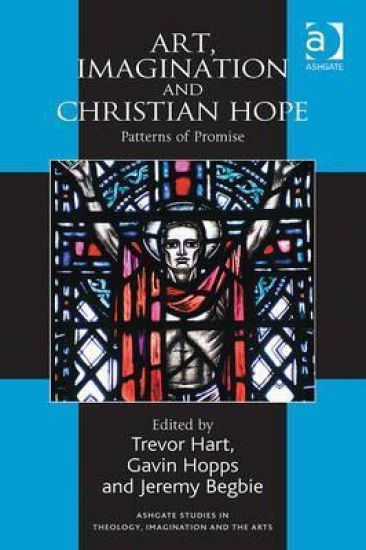
Art, Imagination and Christian Hope

Art, Imagination and Christian Hope

Gavin Hopps

Ashgate Publishing Limited
2012
sidottu
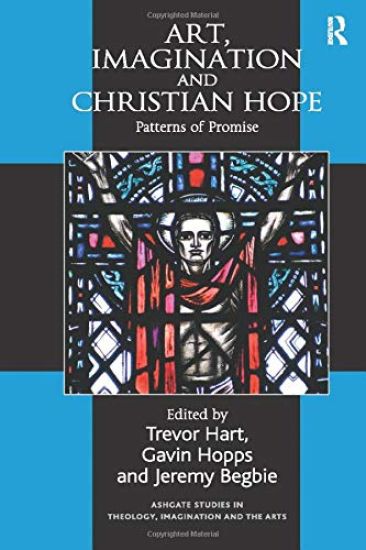
In hope, Christian faith reconfigures the shape of what is familiar in order to pattern the contours of God's promised future. In this process, the present is continuously re-shaped by ventures of hopeful and expectant living. In art, this same poetic interplay between past, present and future takes specific concrete forms, furnishing vital resources for sustaining an imaginative ecology of hope. This volume attends to the contributions that architecture, drama, literature, music and painting can make, as artists trace patterns of promise, resisting the finality of modernity's despairing visions and generating hopeful living in a present which, although marked by sin and death, is grasped imaginatively as already pregnant with future.
Morrissey

Morrissey

Gavin Hopps

Continuum International Publishing Group Ltd.
2009
sidottu
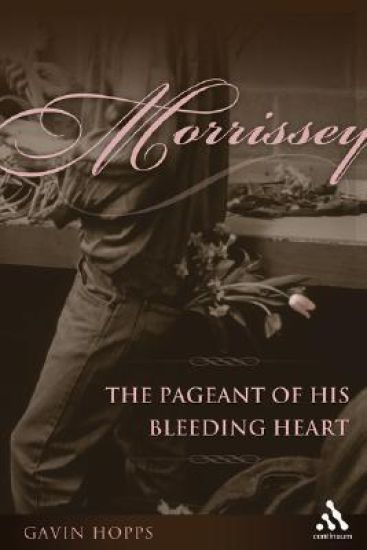
Morrissey is arguably the greatest disturbance popular music has ever known. Even more than the choreographed carelessness of punk and the hyperbolic gestures of glam rock and the New Romantics, Morrissey's early bookish ineptitude, his celebration of the ordinary, and his subversive endorsement of celibacy, abstinence and rock 'n' roll revolutionised the world of British pop. As an increasingly pugnacious solo artist, he consistently adopts the outsider's perspective and dares us to confront genuinely uncomfortable subjects. In his brilliant and original book, Gavin Hopps examines the work of this compelling performer, whose intelligence, humour, suffering and awkwardness have fascinated audiences around the world for the last 25 years. Hopps traces the trajectory of Morrissey's career - from its beginning in the early 80s with the Smiths to the release of his latest album, "Ringleader of the Tormentors" - and outlines the contours and contradictions of the singer's elusive persona. The book illuminates Morrissey's coyness (how can he remain a mystery when he tells us too much?) , his dramatised melancholy (surely more of a radical existential protest than the gimmick some believe it to be) and his complex attitudes towards loneliness and alienation, as well as his intriguing sense of the religious. In the course of this penetrating study of Morrissey's oeuvre, Hopps offers close readings of individual lyrics and illuminating comparisons with a range of literary figures - such as Lord Byron, Mary Shelley, George Eliot, Christina Rossetti, Oscar Wilde, Samuel Beckett, Paul Celan and Philip Larkin. "Morrissey: The Pageant of His Bleeding Heart", at once erudite and accessible, argues convincingly for Morrissey's inclusion in the pantheon of literary greats.
Art, Imagination and Christian Hope
In hope, Christian faith reconfigures the shape of what is familiar in order to pattern the contours of God's promised future. In this process, the present is continuously re-shaped by ventures of hopeful and expectant living. In art, this same poetic interplay between past, present and future takes specific concrete forms, furnishing vital resources for sustaining an imaginative ecology of hope. This volume attends to the contributions that architecture, drama, literature, music and painting can make, as artists trace patterns of promise, resisting the finality of modernity's despairing visions and generating hopeful living in a present which, although marked by sin and death, is grasped imaginatively as already pregnant with future.
Morrissey

Morrissey

Gavin Hopps

Continuum Publishing Corporation
2012
nidottu
This is the first full-length scholarly study of Morrissey's career - as a writer, performer, and troublemaker. Morrissey is arguably the greatest disturbance popular music has ever known. Even more than the choreographed carelessness of punk and the hyperbolic gestures of glam rock and the New Romantics, Morrissey's early bookish ineptitude, his celebration of the ordinary, and his subversive endorsement of celibacy, abstinence and rock 'n' roll revolutionized the world of British pop. As a solo artist, too, he consistently adopts the outsider's perspective and dares us to confront uncomfortable subjects. In his brilliant book, Gavin Hopps examines the work of this compelling performer, whose intelligence, humour, suffering and awkwardness have fascinated audiences around the world for the last 25 years. Hopps traces the trajectory of Morrissey's career and outlines the contours and contradictions of the singer's elusive persona. The book illuminates Morrissey's coyness (how can he remain a mystery when he tells us too much?) , his dramatized melancholy (surely more of a radical existential protest than the gimmick some believe it to be), and his complex attitudes towards loneliness and alienation, as well as his intriguing sense of the religious.
Enchantment in Romantic Literature

Enchantment in Romantic Literature

Gavin Hopps

LIVERPOOL UNIVERSITY PRESS
2025
sidottu
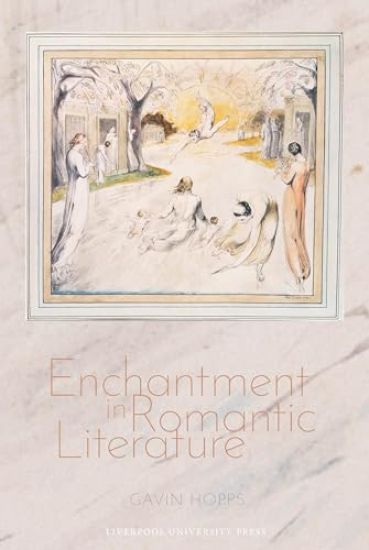
Ebook available to libraries exclusively as part of the JSTOR Path to Open intiative. At the end of ‘Ode to a Nightingale’, Keats’s speaker famously asks of the foregoing reverie: ‘Was it a vision, or a waking dream?’ This book is concerned with such ‘enchanted’ imaginings and the intimations of transcendence they convey, along with the suspicions they reflexively engender and the uncertainties with which they invite us to dwell. The book argues that it is necessary to think anew about the Romantics’ ‘imaginative metaphysics’ on account of recent theoretical developments — to do with such things as affect theory, eco-theology, new materialism and the re-enchantment of the West — but also due to a lingering allergy to ideas of transcendence, which can be traced back to the ‘demystifying’ materialist approaches to Romanticism that dominated post-1960s criticism. It is further suggested that under the gaze of these critical approaches, Romantic literature has been consciously cut off from the life of the reader and its affective, epiphanic and utopian dimensions have been neglected. What The Enchanted Moment proposes instead is a ‘post-secular’ approach that seeks to preserve the ontological hospitality of Romantic literature, whilst also endorsing a more participatory engagement with the text, in which the act of reading is allowed to become an existentially relevant exploration of the possible, which can transfigure our vision and open up new ways of being in the world. Although in one sense the study is a work of ‘meta-criticism’, which seeks to recover excluded possibilities and facets of Romanticism that have been discredited by some of its most influential critics, its contentions are illustrated and their cogency explored by way of provocatively new close readings of works by Barbauld, Blake, Byron, Coleridge, Keats, Radcliffe, P.B. Shelley, Wollstonecraft and Wordsworth.