Kirjojen hintavertailu. Mukana 11 244 527 kirjaa ja 12 kauppaa.

Kirjahaku

Etsi kirjoja tekijän nimen, kirjan nimen tai ISBN:n perusteella.

14 kirjaa tekijältä Gavin Lucas

An Archaeology of Colonial Identity

An Archaeology of Colonial Identity

Gavin Lucas

Kluwer Academic/Plenum Publishers
2004
sidottu
This book is the based on the work of many people, and while I discuss many of them in the general context of this book in Chapter 1,1 would like to emphasize here the contribution of all those people involved. My apologies in advance to any I have omitted to mention. The backbone of the book is based on a project, 'Farm Lives' conducted between 1999 and 2002, funded exclusively by the McDonald Institute for Archaeolog- ical Research at the University of Cambridge; without their essential financial support, this would not have been possible. The project involved three components: archaeological fieldwork, archive research and oral history interviews. For the fieldwork, spe- cial thanks goes to Marcus Abbott, Jenny Bredenberg, Glenda Cox, Olivia Cyster, Andy Hall, Odile Peterson, and Sarah Winter; for po- excavation analysis of materials, I thank Duncan Miller (University of Cape Town), Peter Nilsson (South African Museum) and Jane Klose (University of Cape Town). For the archive research, I would like to thank J. Malherbe (Huguenot Museum) and Harriet Clift (South African Heritage Resources Agency), but most of all, Jaline de Villiers (Paarl Museum). For the oral history, my thanks go to Sarah Winter, Rowena Peterson and Jaline de Villiers for conducting interviews, and to the informants, Johanna Dressier, Louisa Adams, Geoffrey Leslie Hendricks, William Davids, Absolom David Lackay, John Cyster November and Lillian Aubrey Idas.
An Archaeology of Colonial Identity

An Archaeology of Colonial Identity

Gavin Lucas

Kluwer Academic/Plenum Publishers
2006
nidottu
This book is the based on the work of many people, and while I discuss many of them in the general context of this book in Chapter 1,1 would like to emphasize here the contribution of all those people involved. My apologies in advance to any I have omitted to mention. The backbone of the book is based on a project, 'Farm Lives' conducted between 1999 and 2002, funded exclusively by the McDonald Institute for Archaeolog- ical Research at the University of Cambridge; without their essential financial support, this would not have been possible. The project involved three components: archaeological fieldwork, archive research and oral history interviews. For the fieldwork, spe- cial thanks goes to Marcus Abbott, Jenny Bredenberg, Glenda Cox, Olivia Cyster, Andy Hall, Odile Peterson, and Sarah Winter; for po- excavation analysis of materials, I thank Duncan Miller (University of Cape Town), Peter Nilsson (South African Museum) and Jane Klose (University of Cape Town). For the archive research, I would like to thank J. Malherbe (Huguenot Museum) and Harriet Clift (South African Heritage Resources Agency), but most of all, Jaline de Villiers (Paarl Museum). For the oral history, my thanks go to Sarah Winter, Rowena Peterson and Jaline de Villiers for conducting interviews, and to the informants, Johanna Dressier, Louisa Adams, Geoffrey Leslie Hendricks, William Davids, Absolom David Lackay, John Cyster November and Lillian Aubrey Idas.
Writing the Past

Writing the Past

Gavin Lucas

Routledge
2018
sidottu
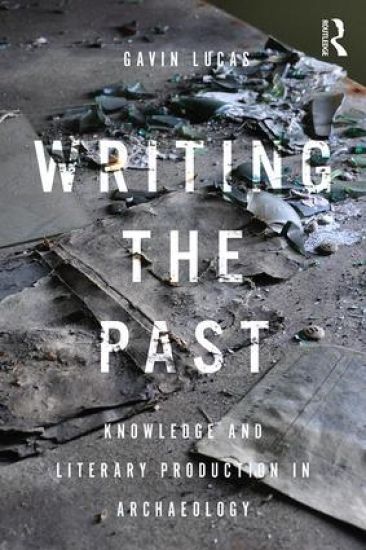
How do archaeologists make knowledge? Debates in the latter half of the twentieth century revolved around broad, abstract philosophies and theories such as positivism and hermeneutics which have all but vanished today. By contrast, in recent years there has been a great deal of attention given to more concrete, practice-based study, such as fieldwork. But where one was too abstract, the other has become too descriptive and commonly evades issues of epistemic judgement.Writing the Past attempts to reintroduce a normative dimension to knowledge practices in archaeology, especially in relation to archaeological practice further down the ‘assembly line’ in the production of published texts, where archaeological knowledge becomes most stabilized and is widely disseminated. By exploring the composition of texts in archaeology and the relation between their structural, performative characteristics and key epistemic virtues, this book aims to move debate in both knowledge and writing practices in a new direction.Although this book will be of particular interest to archaeologists, the argument offered has relevance for all academic disciplines concerned with how knowledge production and textual composition intertwine.
Writing the Past

Writing the Past

Gavin Lucas

Routledge
2018
nidottu
How do archaeologists make knowledge? Debates in the latter half of the twentieth century revolved around broad, abstract philosophies and theories such as positivism and hermeneutics which have all but vanished today. By contrast, in recent years there has been a great deal of attention given to more concrete, practice-based study, such as fieldwork. But where one was too abstract, the other has become too descriptive and commonly evades issues of epistemic judgement.Writing the Past attempts to reintroduce a normative dimension to knowledge practices in archaeology, especially in relation to archaeological practice further down the ‘assembly line’ in the production of published texts, where archaeological knowledge becomes most stabilized and is widely disseminated. By exploring the composition of texts in archaeology and the relation between their structural, performative characteristics and key epistemic virtues, this book aims to move debate in both knowledge and writing practices in a new direction.Although this book will be of particular interest to archaeologists, the argument offered has relevance for all academic disciplines concerned with how knowledge production and textual composition intertwine.
Making Time

Making Time

Gavin Lucas

Routledge
2021
nidottu
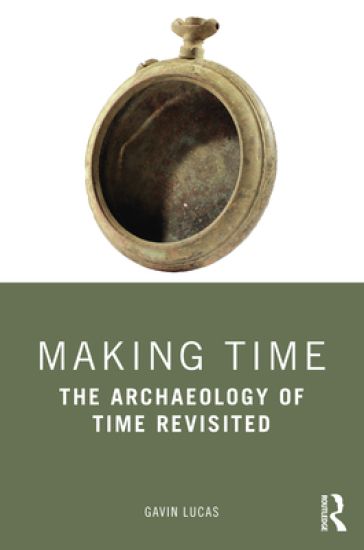
Making Time grapples with a range of issues that have crystallized in the wake of 15 years of discussion on time in archaeology, since the author's seminal volume The Archaeology of Time, synthesizing them for a new generation of scholars. The general understanding of time held by both archaeologists and non-archaeologists is often very simple: a linear notion where time flows along a single path from the past into the future. This book sets out to complicate this image, to draw out the key problems and issues with time that impact archaeological interpretation. Using concrete examples drawn from different periods and places, the book challenges the reader to think again. Ultimately, the book will suggest that if we want to understand what archaeological time is, then we need to accept that things do not exist in time, they make time. The crucial question then becomes: what kinds of time do archaeological materialities produce?Written for upper level undergraduates and researchers in archaeology, the book is also accessible to non-academics with an interest in the topic. The book is relevant for cognate disciplines, especially history, heritage studies and philosophy.
Making Time

Making Time

Gavin Lucas

Routledge
2021
sidottu
Making Time grapples with a range of issues that have crystallized in the wake of 15 years of discussion on time in archaeology, since the author's seminal volume The Archaeology of Time, synthesizing them for a new generation of scholars. The general understanding of time held by both archaeologists and non-archaeologists is often very simple: a linear notion where time flows along a single path from the past into the future. This book sets out to complicate this image, to draw out the key problems and issues with time that impact archaeological interpretation. Using concrete examples drawn from different periods and places, the book challenges the reader to think again. Ultimately, the book will suggest that if we want to understand what archaeological time is, then we need to accept that things do not exist in time, they make time. The crucial question then becomes: what kinds of time do archaeological materialities produce?Written for upper level undergraduates and researchers in archaeology, the book is also accessible to non-academics with an interest in the topic. The book is relevant for cognate disciplines, especially history, heritage studies and philosophy.
Archaeological Situations

Archaeological Situations

Gavin Lucas

TAYLOR FRANCIS LTD
2022
nidottu
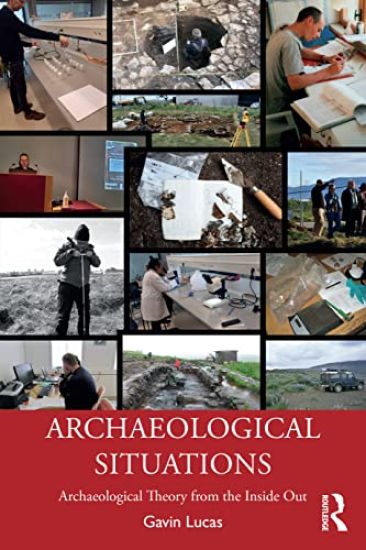
This book is an introduction to theory in archaeology – but with a difference. Archaeological Situations avoids talking about theory as if it was something you apply but rather as something embedded in archaeological practice from the start.Rather than see theory as something worked from the outside in, this book explores theory from the inside out, which means it focuses on specific archaeological practices rather than specific theories. It starts from the kinds of situations that students find themselves in and learn about in other archaeology courses, avoiding the gap between practice and theory from the very beginning. It shows students the theoretical implications of almost everything they engage in as archaeologists, from fieldwork, recording, writing up and making and assessing an argument to exploring the very nature of archaeology and justifying its relevance. Essentially, it adopts a structure which attempts to pre-empt one of the most common complaints of students taking theory courses: how is this applicable?Aimed primarily at undergraduates, this book is the ideal way to engage students with archaeological theory.
Archaeological Situations

Archaeological Situations

Gavin Lucas

TAYLOR FRANCIS LTD
2022
sidottu
This book is an introduction to theory in archaeology – but with a difference. Archaeological Situations avoids talking about theory as if it was something you apply but rather as something embedded in archaeological practice from the start.Rather than see theory as something worked from the outside in, this book explores theory from the inside out, which means it focuses on specific archaeological practices rather than specific theories. It starts from the kinds of situations that students find themselves in and learn about in other archaeology courses, avoiding the gap between practice and theory from the very beginning. It shows students the theoretical implications of almost everything they engage in as archaeologists, from fieldwork, recording, writing up and making and assessing an argument to exploring the very nature of archaeology and justifying its relevance. Essentially, it adopts a structure which attempts to pre-empt one of the most common complaints of students taking theory courses: how is this applicable?Aimed primarily at undergraduates, this book is the ideal way to engage students with archaeological theory.
Critical Approaches to Fieldwork
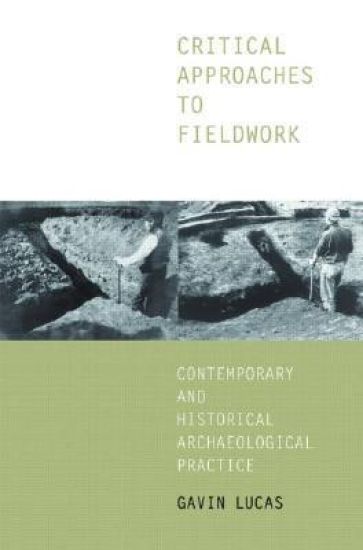
This work takes as its starting point the role of fieldwork and how this has changed over the past 150 years. The author argues against progressive accounts of fieldwork and instead places it in its broader intellectual context to critically examine the relationship between theoretical paradigms and everyday archaeological practice. In providing a much-needed historical and critical evaluation of current practice in archaeology, this book opens up a topic of debate which affects all archaeologists, whatever their particular interests.
Critical Approaches to Fieldwork
This work takes as its starting point the role of fieldwork and how this has changed over the past 150 years. The author argues against progressive accounts of fieldwork and instead places it in its broader intellectual context to critically examine the relationship between theoretical paradigms and everyday archaeological practice. In providing a much-needed historical and critical evaluation of current practice in archaeology, this book opens up a topic of debate which affects all archaeologists, whatever their particular interests.
The Archaeology of Time

The Archaeology of Time

Gavin Lucas

Routledge
2004
sidottu
It might seem obvious that time lies at the heart of archaeology, since archaeology is about the past. However, the issue of time is complicated and often problematic, and although we take it very much for granted, our understanding of time affects the way we do archaeology.This book is an introduction not just to the issues of chronology and dating, but time as a theoretical concept and how this is understood and employed in contemporary archaeology. It provides a full discussion of chronology and change, time and the nature of the archaeological record, and the perception of time and history in past societies. Drawing on a wide range of archaeological examples from a variety of regions and periods, The Archaeology of Time provides students with a crucial source book on one of the key themes of archaeology.
The Archaeology of Time

The Archaeology of Time

Gavin Lucas

Routledge
2004
nidottu
It might seem obvious that time lies at the heart of archaeology, since archaeology is about the past. However, the issue of time is complicated and often problematic, and although we take it very much for granted, our understanding of time affects the way we do archaeology.This book is an introduction not just to the issues of chronology and dating, but time as a theoretical concept and how this is understood and employed in contemporary archaeology. It provides a full discussion of chronology and change, time and the nature of the archaeological record, and the perception of time and history in past societies. Drawing on a wide range of archaeological examples from a variety of regions and periods, The Archaeology of Time provides students with a crucial source book on one of the key themes of archaeology.
Understanding the Archaeological Record

Understanding the Archaeological Record

Gavin Lucas

Cambridge University Press
2012
pokkari
This book explores the diverse understandings of the archaeological record in both historical and contemporary perspective, while also serving as a guide to reassessing current views. Gavin Lucas argues that archaeological theory has become both too fragmented and disconnected from the particular nature of archaeological evidence. The book examines three ways of understanding the archaeological record - as historical sources, through formation theory and as material culture - then reveals ways to connect these three domains through a reconsideration of archaeological entities and archaeological practice. Ultimately, Lucas calls for a rethinking of the nature of the archaeological record and the kind of history and narratives written from it.
Understanding the Archaeological Record

Understanding the Archaeological Record

Gavin Lucas

Cambridge University Press
2012
sidottu
This book explores the diverse understandings of the archaeological record in both historical and contemporary perspective, while also serving as a guide to reassessing current views. Gavin Lucas argues that archaeological theory has become both too fragmented and disconnected from the particular nature of archaeological evidence. The book examines three ways of understanding the archaeological record - as historical sources, through formation theory and as material culture - then reveals ways to connect these three domains through a reconsideration of archaeological entities and archaeological practice. Ultimately, Lucas calls for a rethinking of the nature of the archaeological record and the kind of history and narratives written from it.