Kirjojen hintavertailu. Mukana 11 627 220 kirjaa ja 12 kauppaa.

Kirjahaku

Etsi kirjoja tekijän nimen, kirjan nimen tai ISBN:n perusteella.

8 kirjaa tekijältä Gavin Murray-Miller

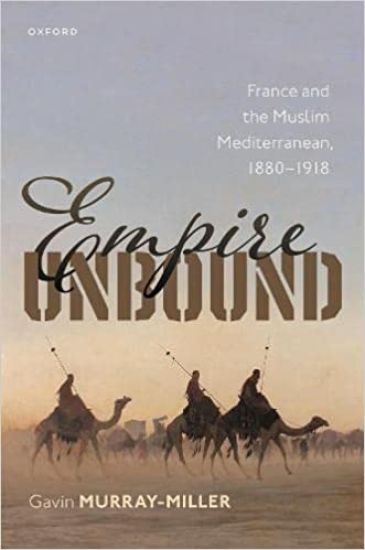
Empire Unbound

Empire Unbound

Gavin Murray-Miller

Oxford University Press
2022
sidottu
European empires were commonly depicted in bright color-coded maps printed during the nineteenth and twentieth centuries that conveyed the expanse of European power across the globe. Despite this familiar image of a world divided up into neat imperial enclaves, the reality of empire-building often told a different story. Empire Unbound argues that European empires were never the bounded, stable entities that imperialists imagined. In examining Mediterranean empire-building in a comparative context, Gavin Murray-Miller demonstrates that the era of 'new imperialism' which arose in the late nineteenth century fostered connections and synergies between regional powers that influenced the trajectories of imperial states in fundamental ways. Breaking with conventional national approaches, Murray-Miller traces the development of France's North African empire, noting how empire-building relied upon transnational networks and cooperation with Muslims elites across borders just as much as military conquest. By looking at the inter-connected relationships linking the French, British, Italian, and Ottoman empires from the 1880s through the First World War, Empire Unbound proposes a novel spatial framework for imperial studies, showing how migrations, extraterritorial legal regimes, and cross-border interactions both abetted and frustrated imperial designs at the turn of the century.
The Cult of the Modern

The Cult of the Modern

Gavin Murray-Miller

University of Nebraska Press
2017
sidottu
The Cult of the Modern focuses on nineteenth-century France and Algeria and examines the role that ideas of modernity and modernization played in both national and colonial programs during the years of the Second Empire and the early Third Republic. Gavin Murray-Miller rethinks the subject by examining the idiomatic use of modernity in French cultural and political discourse. The Cult of the Modern argues that the modern French republic is a product of nineteenth-century colonialism rather than a creation of the Enlightenment or the French Revolution. This analysis contests the predominant Parisian and metropolitan contexts that have traditionally framed French modernity studies, noting the important role that colonial Algeria and the administration of Muslim subjects played in shaping understandings of modern identity and governance among nineteenth-century politicians and intellectuals. In synthesizing the narratives of continental France and colonial North Africa, Murray-Miller proposes a new framework for nineteenth-century French political and cultural history, bringing into sharp relief the diverse ways in which the French nation was imagined and represented throughout the country’s turbulent postrevolutionary history, as well as the implications for prevailing understandings of France today.
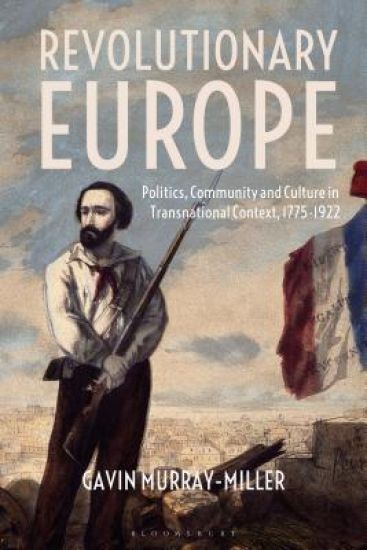
Revolutionary Europe

Revolutionary Europe

Gavin Murray-Miller

Bloomsbury Academic
2020
nidottu
CHOICE Outstanding Academic Title 2021 Revolutionary Europe is an original examination of radical political movements during Europe’s long 19th century. It employs both national and transnational contexts, incorporating new debates in Atlantic history, empire studies and cultural history to give a comprehensive narrative of the period from 1775 to 1922.Rather than assessing revolution as a purely theoretical, socially-driven force or a structural phenomenon, the book presents revolution as a process of community building and cultural identification born from instances of acute social and political crisis. Taking into account various moments of political upheaval during the 19th century, including the French, Russian and 1848 revolutions, it explores the ways in which political actors attempted to construct new definitions of sovereignty and social unity in a period characterized by vast social, economic and governmental change.In a wide-ranging text that covers Britain and much of continental Europe in detail, as well as reaching out to the Americas and Atlantic and Mediterranean Worlds, Gavin Murray-Miller provides an authoritative transnational study of revolution in the 19th-century age of high nationalism.
Revolutionary Europe

Revolutionary Europe

Gavin Murray-Miller

Bloomsbury Academic
2020
sidottu
CHOICE Outstanding Academic Title 2021 Revolutionary Europe is an original examination of radical political movements during Europe’s long 19th century. It employs both national and transnational contexts, incorporating new debates in Atlantic history, empire studies and cultural history to give a comprehensive narrative of the period from 1775 to 1922.Rather than assessing revolution as a purely theoretical, socially-driven force or a structural phenomenon, the book presents revolution as a process of community building and cultural identification born from instances of acute social and political crisis. Taking into account various moments of political upheaval during the 19th century, including the French, Russian and 1848 revolutions, it explores the ways in which political actors attempted to construct new definitions of sovereignty and social unity in a period characterized by vast social, economic and governmental change.In a wide-ranging text that covers Britain and much of continental Europe in detail, as well as reaching out to the Americas and Atlantic and Mediterranean Worlds, Gavin Murray-Miller provides an authoritative transnational study of revolution in the 19th-century age of high nationalism.
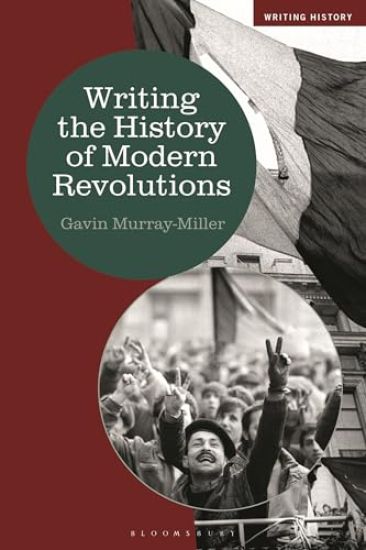
Writing the History of Modern Revolutions

Writing the History of Modern Revolutions

Gavin Murray-Miller

BLOOMSBURY PUBLISHING PLC
2025
sidottu
Writing the History of Modern Revolutions provides students with a comprehensive overview of the history of revolutions and how these histories have been framed, debated, and understood since the nineteenth century. Beginning in the 19th century with historical accounts of the French Revolution, the book traces how contemporary politics and new developments in the humanities and social sciences have shaped existing scholarship and analysis of revolutionary phenomenon. The book offers a concise and synthetic account of how scholars have addressed contemporary critical political and social issues in a historical context, which will be of value to both scholars across disciplines as well as students taking courses in political science, sociology, and modern history. The book will provide students with a solid understanding of some of the most dramatic moments in modern history, including revolutions relevant to Europe, the Americas, Asia, and the post-colonial world. It encourages students to think critically about how the history of modern revolutions has been written and provides them with a thorough understanding of the approaches to revolution, key works and scholars in the field, as well as an understanding of the wider contexts in which these revolutions occurred.
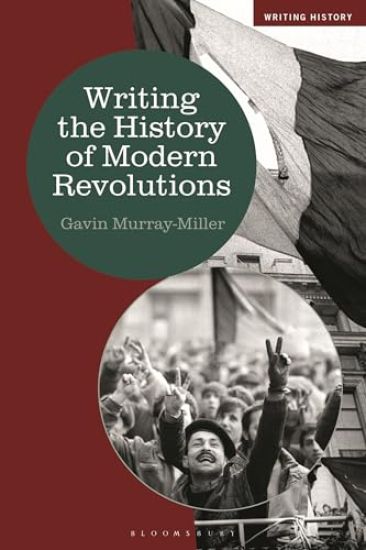
Writing the History of Modern Revolutions

Writing the History of Modern Revolutions

Gavin Murray-Miller

BLOOMSBURY PUBLISHING PLC
2025
nidottu
Writing the History of Modern Revolutions provides students with a comprehensive overview of the history of revolutions and how these histories have been framed, debated, and understood since the nineteenth century.Beginning in the 19th century with historical accounts of the French Revolution, the book traces how contemporary politics and new developments in the humanities and social sciences have shaped existing scholarship and analysis of revolutionary phenomenon. Not only this, but the book also offers a concise and synthetic account of how scholars have addressed contemporary critical political and social issues in a historical context, which will be of value to both scholars across disciplines as well as students taking courses in political science, sociology, and modern history.The book will provide students with a solid understanding of some of the most dramatic moments in modern history, including Revolutions relevant to Europe, the Americas, Asia, and the post-colonial world. It will encourage students to think critically about how the history of modern revolutions have been written and provide them with a thorough understanding of the approaches to revolution, key works and scholars in the field, as well as an understanding of the wider contexts in which these revolutions occurred.
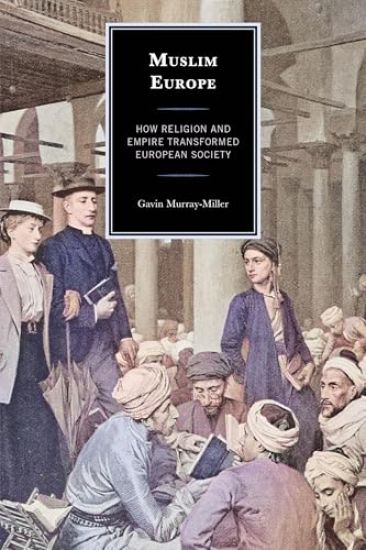
Muslim Europe

Muslim Europe

Gavin Murray-Miller

BLOOMSBURY PUBLISHING PLC
2024
sidottu
Europe and the Islamic world have shared a long and conflicted history. From the Middle Ages to the global War on Terror, the image of two civilizations perpetually at war has endured. However, a closer look at the past suggests this was not always the case. Muslim Europe follows the lives of imperialists, journalists, and Muslim activists who attempted to challenge the idea of two opposing civilizations locked in eternal conflict. Rich in detail, it tells the stories of English officials who once declared Britain the greatest “Muslim power” on the face of the earth and recounts the extraordinary political campaign that saw a French Muslim elected to the National Assembly against all odds. The “age of empire” brought Islam into European public life like never-before, inspiring Muslims on the continent to take to the press and mount political movements guided by desires for greater social recognition. In chronicling the forgotten history of Europe’s early Muslim communities across empires, Muslim Europe proposes a new history for Europe, highlighting the contributions made by Muslim subjects and citizens in search of a more just and tolerant society.