Kirjojen hintavertailu. Mukana 11 342 296 kirjaa ja 12 kauppaa.

Kirjahaku

Etsi kirjoja tekijän nimen, kirjan nimen tai ISBN:n perusteella.

12 kirjaa tekijältä Geert Lovink

Zero Comments

Zero Comments

Geert Lovink

Routledge
2007
sidottu
In Zero Comments, internationally renowned media theorist and 'net critic' Geert Lovink revitalizes worn out concepts about the Internet and interrogates the latest hype surrounding blogs and social network sites. In this third volume of his studies into critical Internet culture, following the influential Dark Fiber and My First Recession, Lovink develops a 'general theory of blogging.' He unpacks the ways that blogs exhibit a 'nihilist impulse' to empty out established meaning structures. Blogs, Lovink argues, are bringing about the decay of traditional broadcast media, and they are driven by an in-crowd dynamic in which social ranking is a primary concern. The lowest rung of the new Internet hierarchy are those blogs and sites that receive no user feedback or 'zero comments'.Zero Comments also explores other important changes to Internet culture, as well, including the silent globalization of the Net in which the West is no longer the main influence behind new media culture, as countries like India, China and Brazil expand their influence and looks forward to speculate on the Net impact of organized networks, free cooperation and distributed aesthetics.

Zero Comments

Zero Comments

Geert Lovink

Routledge
2007
nidottu
In Zero Comments, internationally renowned media theorist and 'net critic' Geert Lovink revitalizes worn out concepts about the Internet and interrogates the latest hype surrounding blogs and social network sites. In this third volume of his studies into critical Internet culture, following the influential Dark Fiber and My First Recession, Lovink develops a 'general theory of blogging.' He unpacks the ways that blogs exhibit a 'nihilist impulse' to empty out established meaning structures. Blogs, Lovink argues, are bringing about the decay of traditional broadcast media, and they are driven by an in-crowd dynamic in which social ranking is a primary concern. The lowest rung of the new Internet hierarchy are those blogs and sites that receive no user feedback or 'zero comments'.Zero Comments also explores other important changes to Internet culture, as well, including the silent globalization of the Net in which the West is no longer the main influence behind new media culture, as countries like India, China and Brazil expand their influence and looks forward to speculate on the Net impact of organized networks, free cooperation and distributed aesthetics.
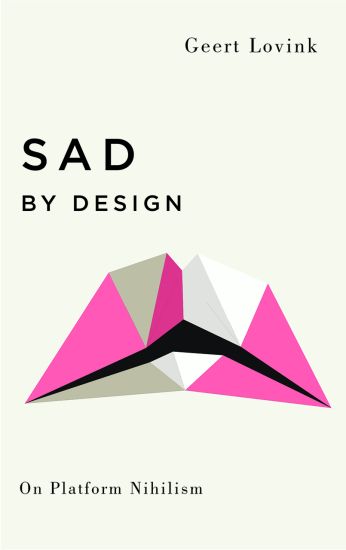
Sad by Design

Sad by Design

Geert Lovink

Pluto Press
2019
pokkari
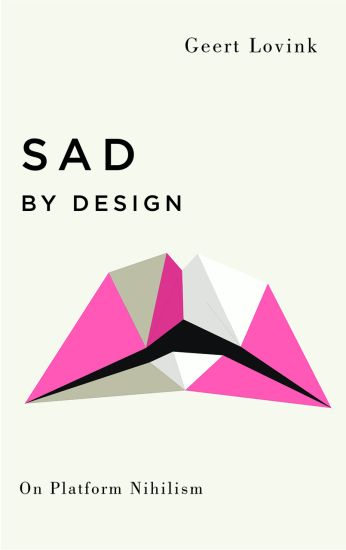
Sadness is now a design problem. The highs and lows of melancholy are coded into social media platforms. After all the clicking, browsing, swiping and liking, all we are left with is the flat and empty aftermath of time lost to the app. Sad by Design offers a critical analysis of the growing social media controversies such as fake news, toxic viral memes and online addiction. The failed search for a grand design has resulted in depoliticised internet studies unable to generate either radical critique or a search for alternatives. Geert Lovink calls for us to embrace the engineered intimacy of social media, messenger apps and selfies, because boredom is the first stage of overcoming 'platform nihilism'. Then, after the haze, we can organise to disrupt the data extraction industries at their core.
Sad by Design

Sad by Design

Geert Lovink

Pluto Press
2019
sidottu
Sadness is now a design problem. The highs and lows of melancholy are coded into social media platforms. After all the clicking, browsing, swiping and liking, all we are left with is the flat and empty aftermath of time lost to the app. Sad by Design offers a critical analysis of the growing social media controversies such as fake news, toxic viral memes and online addiction. The failed search for a grand design has resulted in depoliticised internet studies unable to generate either radical critique or a search for alternatives. Geert Lovink calls for us to embrace the engineered intimacy of social media, messenger apps and selfies, because boredom is the first stage of overcoming 'platform nihilism'. Then, after the haze, we can organise to disrupt the data extraction industries at their core.
Networks Without a Cause

Networks Without a Cause

Geert Lovink

Polity Press
2012
sidottu
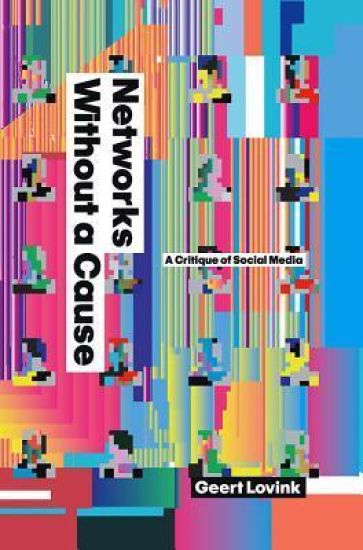
With the vast majority of Facebook users caught in a frenzy of ‘friending’, ‘liking’ and ‘commenting’, at what point do we pause to grasp the consequences of our info-saturated lives? What compels us to engage so diligently with social networking systems? Networks Without a Cause examines our collective obsession with identity and self-management coupled with the fragmentation and information overload endemic to contemporary online culture. With a dearth of theory on the social and cultural ramifications of hugely popular online services, Lovink provides a path-breaking critical analysis of our over-hyped, networked world with case studies on search engines, online video, blogging, digital radio, media activism and the Wikileaks saga. This book offers a powerful message to media practitioners and theorists: let us collectively unleash our critical capacities to influence technology design and workspaces, otherwise we will disappear into the cloud. Probing but never pessimistic, Lovink draws from his long history in media research to offer a critique of the political structures and conceptual powers embedded in the technologies that shape our daily lives.
Networks Without a Cause

Networks Without a Cause

Geert Lovink

Polity Press
2012
nidottu
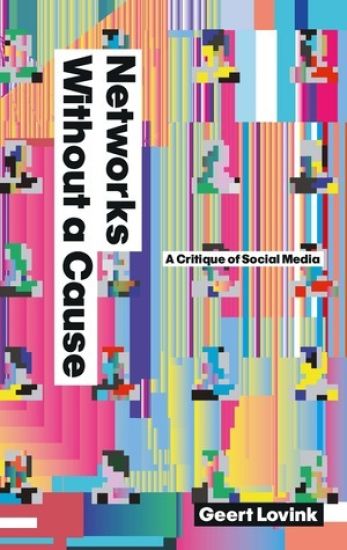
With the vast majority of Facebook users caught in a frenzy of ‘friending’, ‘liking’ and ‘commenting’, at what point do we pause to grasp the consequences of our info-saturated lives? What compels us to engage so diligently with social networking systems? Networks Without a Cause examines our collective obsession with identity and self-management coupled with the fragmentation and information overload endemic to contemporary online culture. With a dearth of theory on the social and cultural ramifications of hugely popular online services, Lovink provides a path-breaking critical analysis of our over-hyped, networked world with case studies on search engines, online video, blogging, digital radio, media activism and the Wikileaks saga. This book offers a powerful message to media practitioners and theorists: let us collectively unleash our critical capacities to influence technology design and workspaces, otherwise we will disappear into the cloud. Probing but never pessimistic, Lovink draws from his long history in media research to offer a critique of the political structures and conceptual powers embedded in the technologies that shape our daily lives.
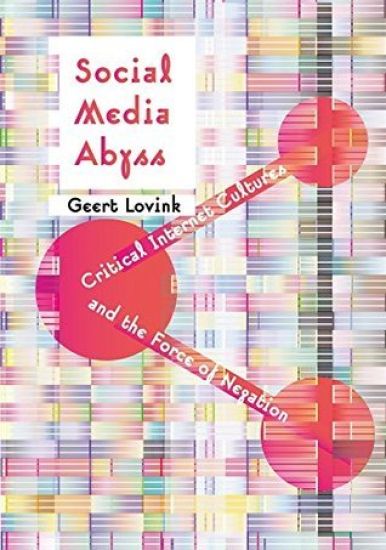
Social Media Abyss

Social Media Abyss

Geert Lovink

Polity Press
2016
sidottu
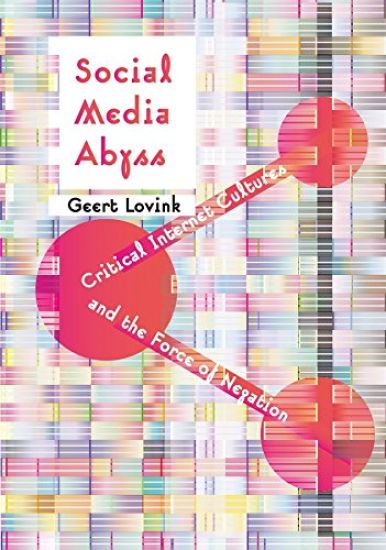
Social Media Abyss plunges into the paradoxical condition of the new digital normal versus a lived state of emergency. There is a heightened, post-Snowden awareness; we know we are under surveillance but we click, share, rank and remix with a perverse indifference to technologies of capture and cultures of fear. Despite the incursion into privacy by companies like Facebook, Google and Amazon, social media use continues to be a daily habit with shrinking gadgets now an integral part of our busy lives. We are thrown between addiction anxiety and subliminal, obsessive use. Where does art, culture and criticism venture when the digital vanishes into the background?Geert Lovink strides into the frenzied social media debate with Social Media Abyss - the fifth volume of his ongoing investigation into critical internet culture. He examines the symbiotic yet problematic relation between networks and social movements, and further develops the notion of organized networks. Lovink doesn't just submit to the empty soul of 24/7 communication but rather provides the reader with radical alternatives.Selfie culture is one of many Lovink's topics, along with the internet obsession of American writer Jonathan Franzen, the internet in Uganda, the aesthetics of Anonymous and an anatomy of the Bitcoin religion. Will monetization through cybercurrencies and crowdfunding contribute to a redistribution of wealth or further widen the gap between rich and poor? In this age of the free, how a revenue model of the 99% be collectively designed? Welcome back to the Social Question.
Social Media Abyss

Social Media Abyss

Geert Lovink

Polity Press
2016
nidottu
Social Media Abyss plunges into the paradoxical condition of the new digital normal versus a lived state of emergency. There is a heightened, post-Snowden awareness; we know we are under surveillance but we click, share, rank and remix with a perverse indifference to technologies of capture and cultures of fear. Despite the incursion into privacy by companies like Facebook, Google and Amazon, social media use continues to be a daily habit with shrinking gadgets now an integral part of our busy lives. We are thrown between addiction anxiety and subliminal, obsessive use. Where does art, culture and criticism venture when the digital vanishes into the background?Geert Lovink strides into the frenzied social media debate with Social Media Abyss - the fifth volume of his ongoing investigation into critical internet culture. He examines the symbiotic yet problematic relation between networks and social movements, and further develops the notion of organized networks. Lovink doesn't just submit to the empty soul of 24/7 communication but rather provides the reader with radical alternatives.Selfie culture is one of many Lovink's topics, along with the internet obsession of American writer Jonathan Franzen, the internet in Uganda, the aesthetics of Anonymous and an anatomy of the Bitcoin religion. Will monetization through cybercurrencies and crowdfunding contribute to a redistribution of wealth or further widen the gap between rich and poor? In this age of the free, how a revenue model of the 99% be collectively designed? Welcome back to the Social Question.
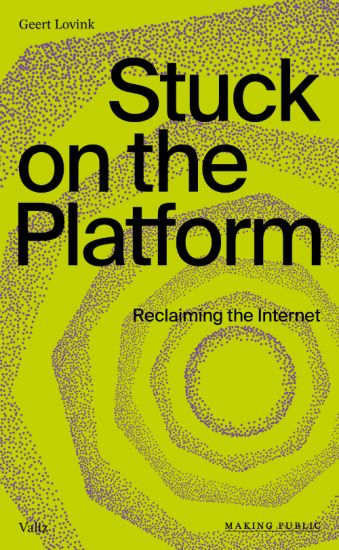
Stuck on the Platform

Stuck on the Platform

Geert Lovink

Valiz
2022
pokkari
A plea to reclaim the internet from addictive platform capitalism, from the author of Sad by DesignHowever often you delete apps from your phone, the seduction of the platform draws you back. There is a rising disaffection with "platform" culture--with megacorporations such as Google and Facebook that provide the foundational software for others to use, and to which we are almost all addicted. What can be done against it?In Stuck on the Platform, Geert Lovink--whose work has been championed by Jodi Dean, Bernard Stiegler and Eva Illouz, among others--diagnoses this condition and suggests exit strategies. Analyzing the toxic symptoms of platform capitalism, Lovink proposes assembling a techno-social exodus movement; campaigns to break up monopoly platforms; the rebuilding of the internet as a public infrastructure; and the removal of certain corporations from internet governance bodies.Geert Lovink (born 1959) is a Dutch media theorist and author of Uncanny Networks (2002), My First Recession (2003), Social Media Abyss (2016) and Sad by Design (2019).